Sample Management Contract For Music Artist In Nassau
Description










Get your form ready online
Our built-in tools help you complete, sign, share, and store your documents in one place.
Make edits, fill in missing information, and update formatting in US Legal Forms—just like you would in MS Word.
Download a copy, print it, send it by email, or mail it via USPS—whatever works best for your next step.
Sign and collect signatures with our SignNow integration. Send to multiple recipients, set reminders, and more. Go Premium to unlock E-Sign.
If this form requires notarization, complete it online through a secure video call—no need to meet a notary in person or wait for an appointment.
We protect your documents and personal data by following strict security and privacy standards.

Make edits, fill in missing information, and update formatting in US Legal Forms—just like you would in MS Word.

Download a copy, print it, send it by email, or mail it via USPS—whatever works best for your next step.

Sign and collect signatures with our SignNow integration. Send to multiple recipients, set reminders, and more. Go Premium to unlock E-Sign.

If this form requires notarization, complete it online through a secure video call—no need to meet a notary in person or wait for an appointment.

We protect your documents and personal data by following strict security and privacy standards.
Looking for another form?



Form popularity
FAQ
When Does an Artist Need a Music Manager? If you're working on your very first album release, the chances are slim that your career can really benefit from having a music manager. However, artists whose careers are beginning to take off usually enjoy significant advantages through having a good manager.
Comments Section Networking: Attend industry events, music conferences, and shows to meet people in the industry. Research: Look for managers who work with artists in your genre and have a track record of success. Referrals: Ask fellow musicians and industry contacts for recommendations.
As a general rule, managers take a percentage of all income generated by the artist in exchange for their management services. Commission rates typically range from 15-25% of the artist's gross income from: Recording royalties: Sales, streaming and licensing of recorded music.
Your Music Recording Contract should cover details like: Compensation and royalties. Where and when the album will be recorded. The album's release date. Who has creative control over specific elements of the album. The termination clause. The exclusive agreement clause. Dispute resolution. Promotional appearances.
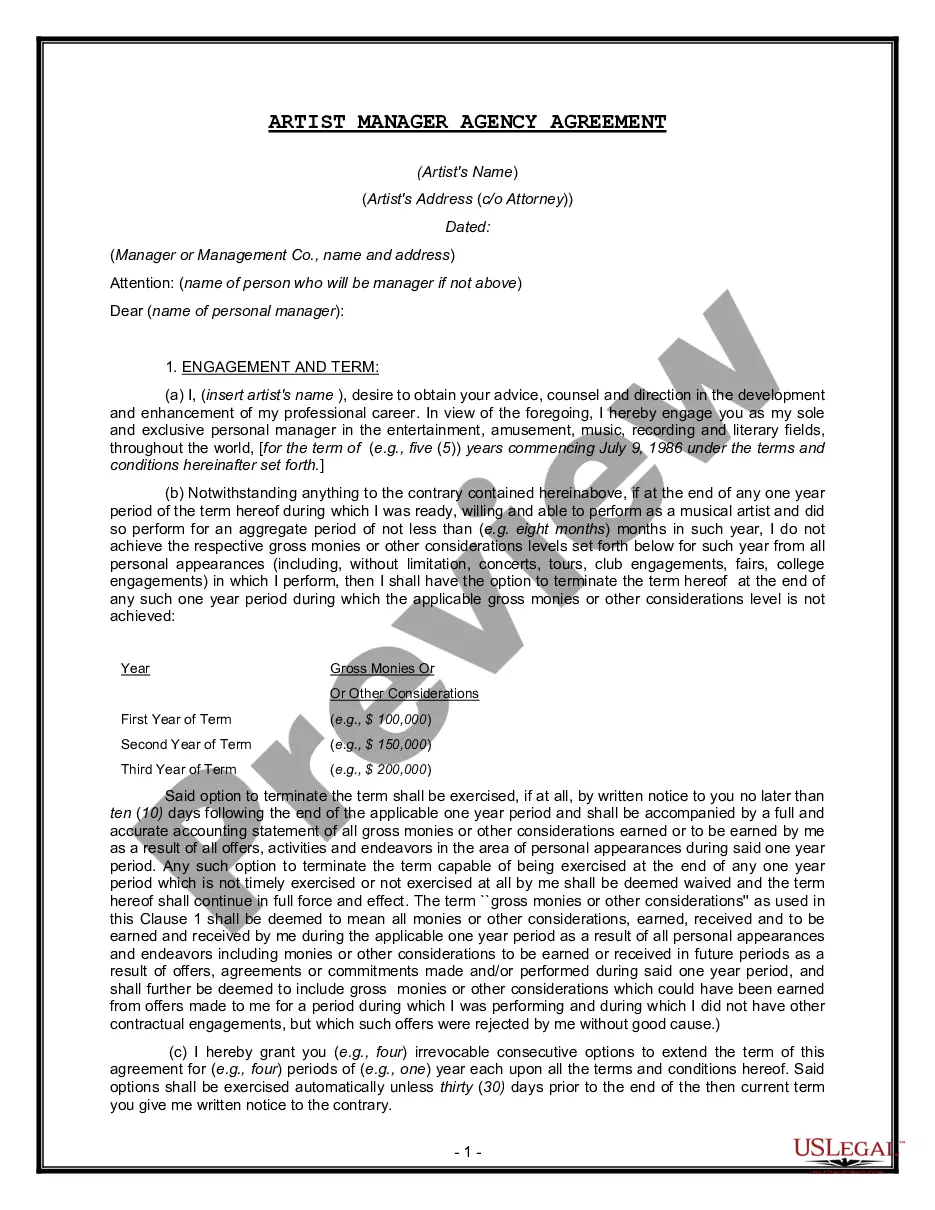
An Artist Management Agreement is used by a personal manager to contract with a recording and performing musical artist to set the terms for managing the artist's career. The manager receives a percentage of all the income generated by the artist for the management services provided.
The core of the artist's team consists of publishers, record labels, concert promoters and booking agents. The Artist Managers are the grand overseer of that whole team, and they are the ones getting that band together in the first place.
Your Music Recording Contract should cover details like: Compensation and royalties. Where and when the album will be recorded. The album's release date. Who has creative control over specific elements of the album. The termination clause. The exclusive agreement clause. Dispute resolution. Promotional appearances.
