Artist Agreement Form Statement For Middle School In Montgomery
Description

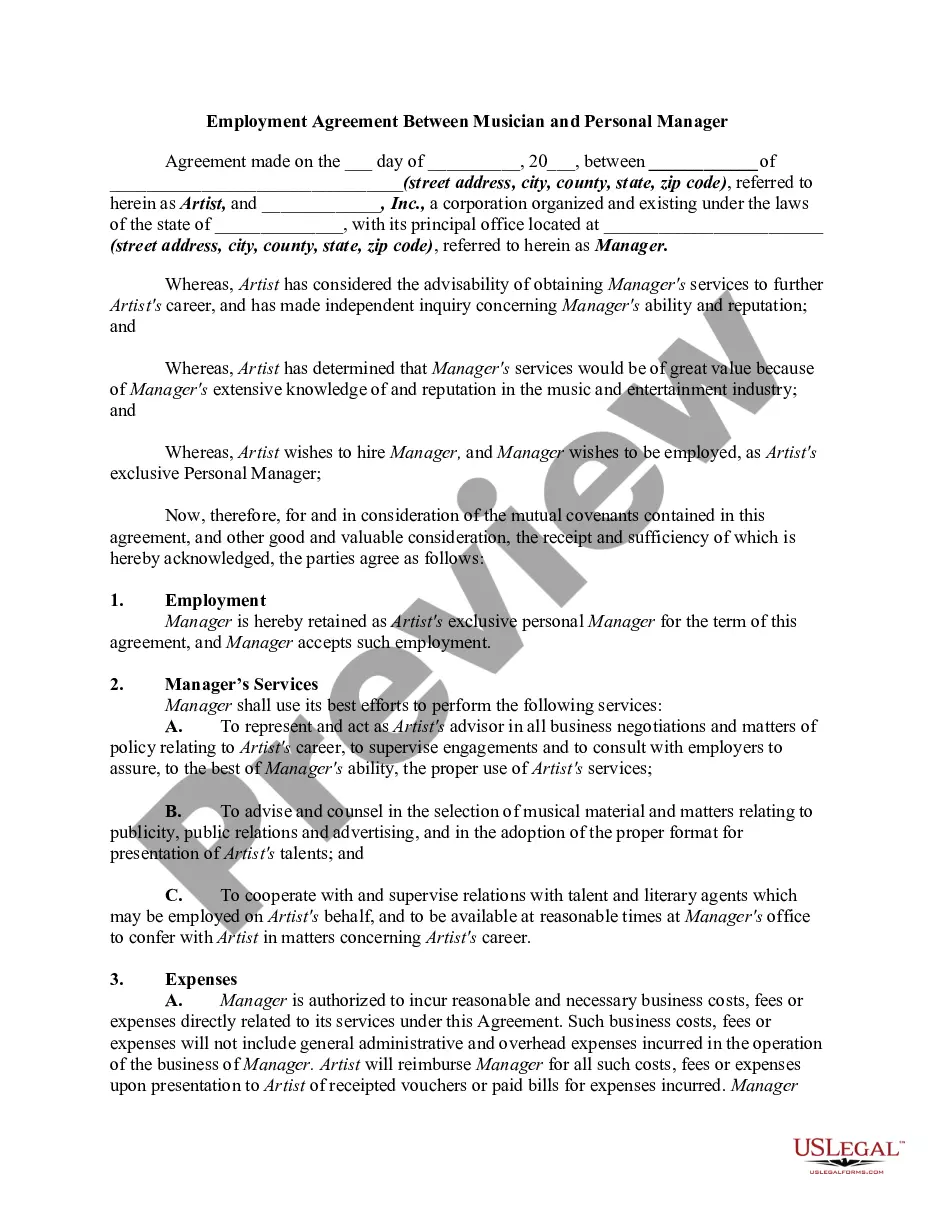
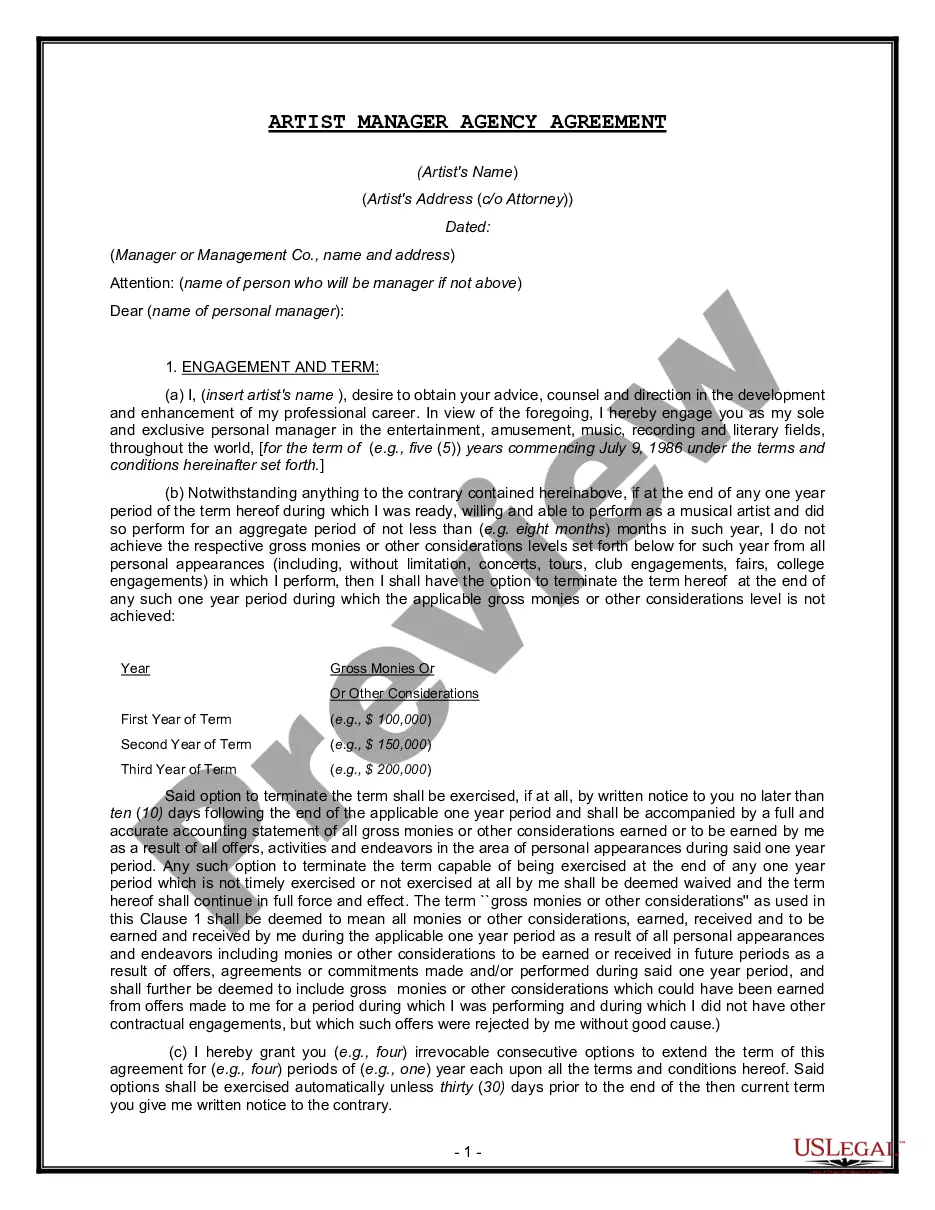
Get your form ready online
Our built-in tools help you complete, sign, share, and store your documents in one place.
Make edits, fill in missing information, and update formatting in US Legal Forms—just like you would in MS Word.
Download a copy, print it, send it by email, or mail it via USPS—whatever works best for your next step.
Sign and collect signatures with our SignNow integration. Send to multiple recipients, set reminders, and more. Go Premium to unlock E-Sign.
If this form requires notarization, complete it online through a secure video call—no need to meet a notary in person or wait for an appointment.
We protect your documents and personal data by following strict security and privacy standards.

Make edits, fill in missing information, and update formatting in US Legal Forms—just like you would in MS Word.

Download a copy, print it, send it by email, or mail it via USPS—whatever works best for your next step.

Sign and collect signatures with our SignNow integration. Send to multiple recipients, set reminders, and more. Go Premium to unlock E-Sign.

If this form requires notarization, complete it online through a secure video call—no need to meet a notary in person or wait for an appointment.

We protect your documents and personal data by following strict security and privacy standards.
Looking for another form?
Form popularity
FAQ
Important clauses in the artist agreement Parties. This clause defines the parties to the agreement, one would be the producer and the other would be the artist. Project. Payment/compensation. Service/work by an artist/engagement. Terms and conditions. Term/duration. Rights of the parties. Artists obligations.
An artist statement is piece of writing by you that helps the audience access or understand your artistic work. It is written in the first person, while artist bios are written in the third person. Both represent you as an artist, even while you are not there.
How to Write an Artistic Statement Brainstorm. The first hurdle is to figure out what to write about. Freewrite. The process of writing without judgment or self-editing can help artists get at their basic philosophy. Rewrite what stands out. In general, be specific. Be clear and concise. Proofread. Use your own voice.
What information does an artist's statement need to include? There are three elements to consider: the “how,” the “what,” and the “why.” There should be enough information in your artist statement that someone can begin to imagine the art that you make without having it in front of them.
Statements that do not reflect the work that is presented cannot score highly against the marking criteria. Less is more. While the word limits for SL ad HL are 400 and 700 words respectively, most curatorial statements written for exhibitions in galleries are between 300 and 500 words.
An artist's statement should tell the viewer what they need to know about you and your artwork in a simple and concise way. Generally, an artist's statement shouldn't be 150 to 200 words.
If writing a full-page statement, you can include some of the following points: Why you have created the work and its history. Your overall vision. What you expect from your audience and how they will react. How your current work relates to your previous work. Where your work fits in with current contemporary art.
Do's - Best practices to create a successful artist statement Keep your artist statement short. Be specific and on the point. Bring clarity, confidence and focus on your statement. Write about 'Why' you created the artwork. Use precise details such as where you are from, where you live, your medium and style of work.
“My work is a collection of a variety of resources, a collection of experiences. It's about understanding history, understanding the power of history, the power of power, the power of beauty, the power of transformation, and the power of purpose.”
