Management Business Examples In Maryland
Description









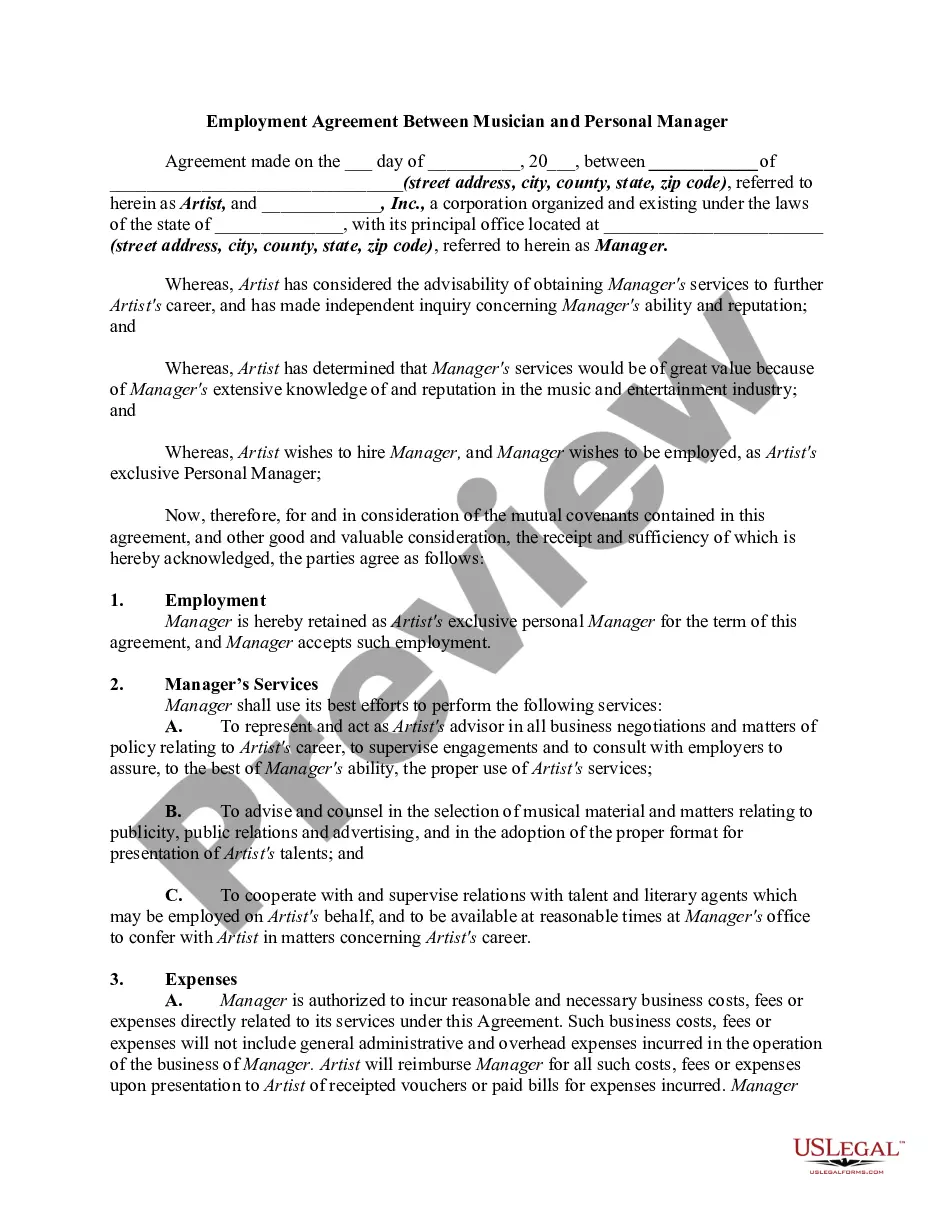


Get your form ready online
Our built-in tools help you complete, sign, share, and store your documents in one place.
Make edits, fill in missing information, and update formatting in US Legal Forms—just like you would in MS Word.
Download a copy, print it, send it by email, or mail it via USPS—whatever works best for your next step.
Sign and collect signatures with our SignNow integration. Send to multiple recipients, set reminders, and more. Go Premium to unlock E-Sign.
If this form requires notarization, complete it online through a secure video call—no need to meet a notary in person or wait for an appointment.
We protect your documents and personal data by following strict security and privacy standards.

Make edits, fill in missing information, and update formatting in US Legal Forms—just like you would in MS Word.

Download a copy, print it, send it by email, or mail it via USPS—whatever works best for your next step.

Sign and collect signatures with our SignNow integration. Send to multiple recipients, set reminders, and more. Go Premium to unlock E-Sign.

If this form requires notarization, complete it online through a secure video call—no need to meet a notary in person or wait for an appointment.

We protect your documents and personal data by following strict security and privacy standards.
Looking for another form?





Form popularity
FAQ
Maryland LLC Name Requirement The name of an LLC must end with "Limited Liability Company," "L.L.C., "LLC," "L.C." or "LC." The name may not contain language stating or implying that the LLC is organized for a purpose other than the one permitted by the Articles of Organization.
“Small business” means a corporation, partnership, sole proprietorship, or other business entity, including its affiliates, that: (i) is independently owned and operated; (ii) is not dominant in its field; and (iii) employs 50 or fewer full–time employees.
The Most Profitable Small Business Ideas in Maryland Idea #1: Tour Guide Services. Idea #2: Information Technology. Idea #3: Hospitality and Lodging. Idea #4: Home-Baked Goods and Homemade Snacks. Idea #5: Software Development. Idea #6: Fitness Training. Idea #7: Translation Services. Idea #8: Commercial Fishing.
The Most Profitable Small Business Ideas in Maryland Idea #1: Tour Guide Services. Idea #2: Information Technology. Idea #3: Hospitality and Lodging. Idea #4: Home-Baked Goods and Homemade Snacks. Idea #5: Software Development. Idea #6: Fitness Training. Idea #7: Translation Services. Idea #8: Commercial Fishing.
The most common forms of business are the sole proprietorship, partnership, corporation, and S corporation. A limited liability company (LLC) is a business structure allowed by state statute.
Website and app development. It should be no surprise that tech is one of the fastest-growing industries. Financial consulting. Online business consulting. Information security. Digital marketing. Social media marketing. Writer or author. Graphic design.
Maryland's leading industries by employment are health care, social assistance, state and local government, retail trade, and professional and technical services.
A business in a high-growth industry with low startup costs, less competition and a good long-term outlook is most likely to be profitable. Examples are financial services, personal services (like personal training or pet care), pet and baby supplies and well-positioned retail stores.
Managers Have Effective Leadership Skills They adapt their leadership style to communicate objectives and expectations clearly to team members, encouraging feedback and collaboration. They also lead by example, set high standards of performance and ethics, and guide their subordinates toward success.
Managers can, for example, work with their team to help them set goals to move up in their careers. Managers must have leadership skills to use these five operations successfully. They are responsible for coaching their team members by helping them recognize their strengths and weaknesses and improve their performance.
