Talent Management Contract For The Twenty-first Century In Los Angeles
Description

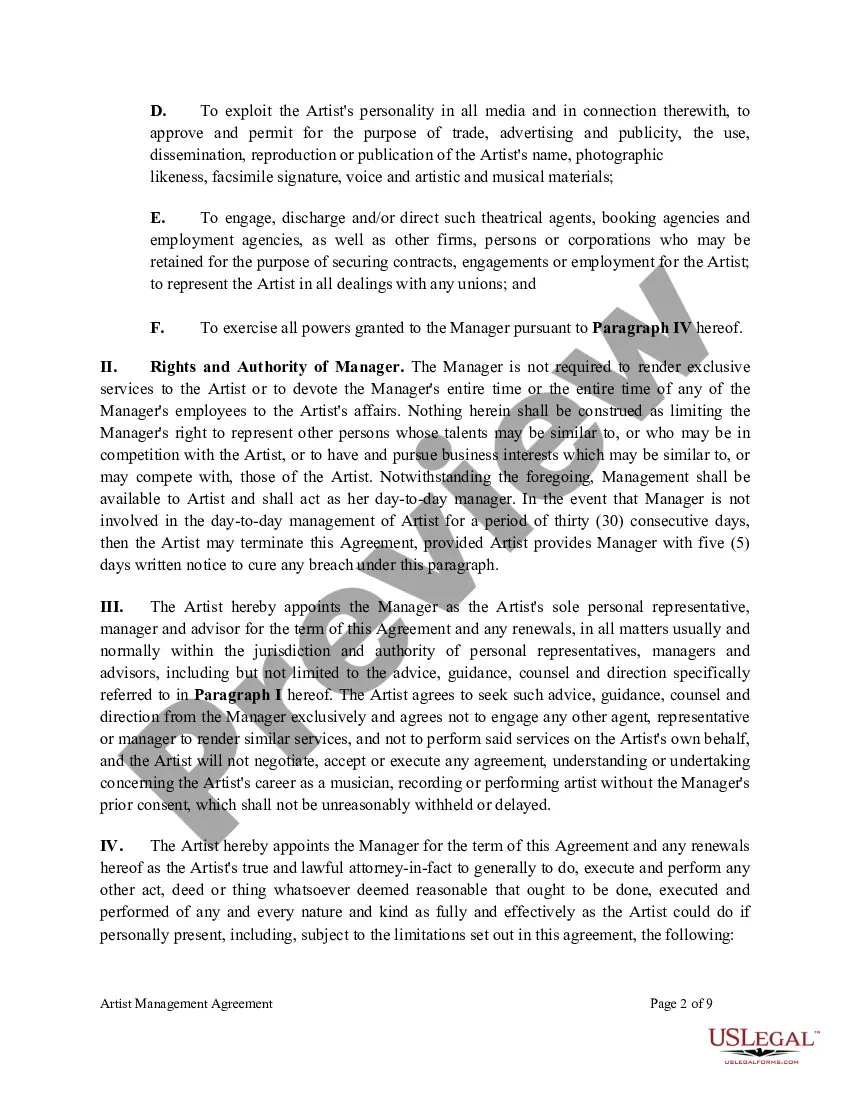
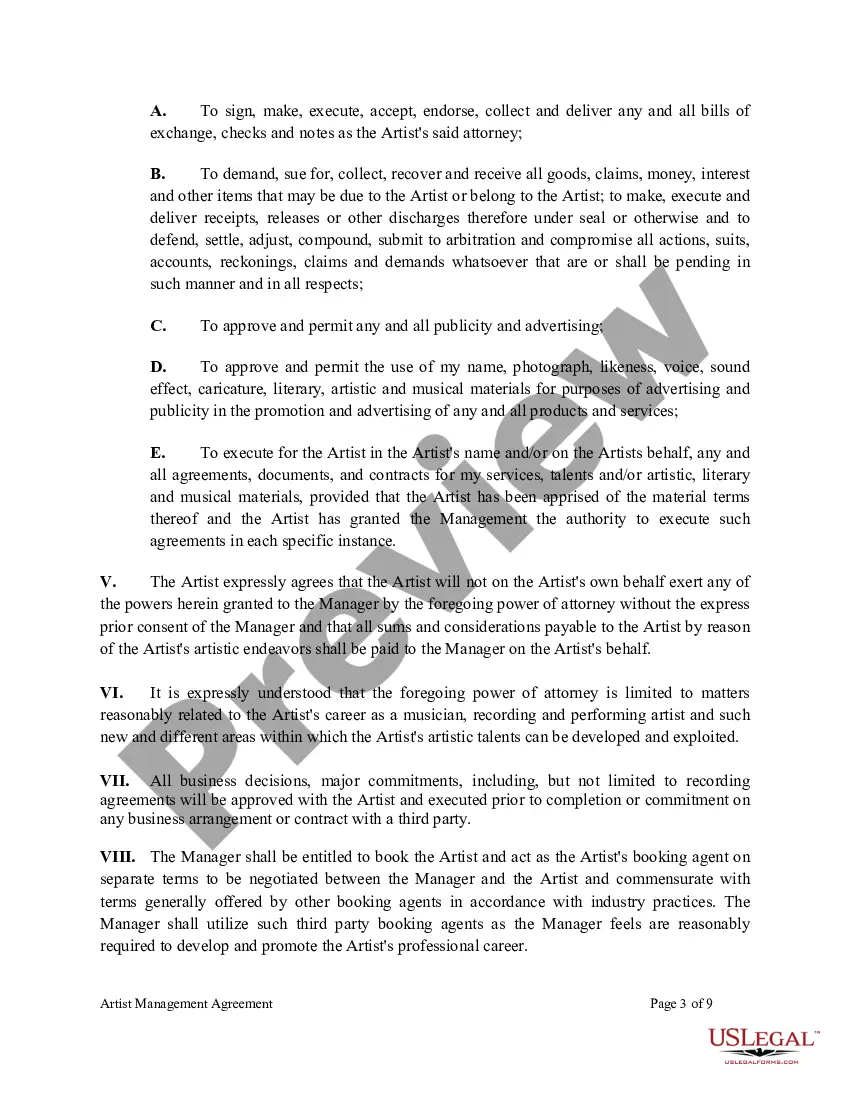
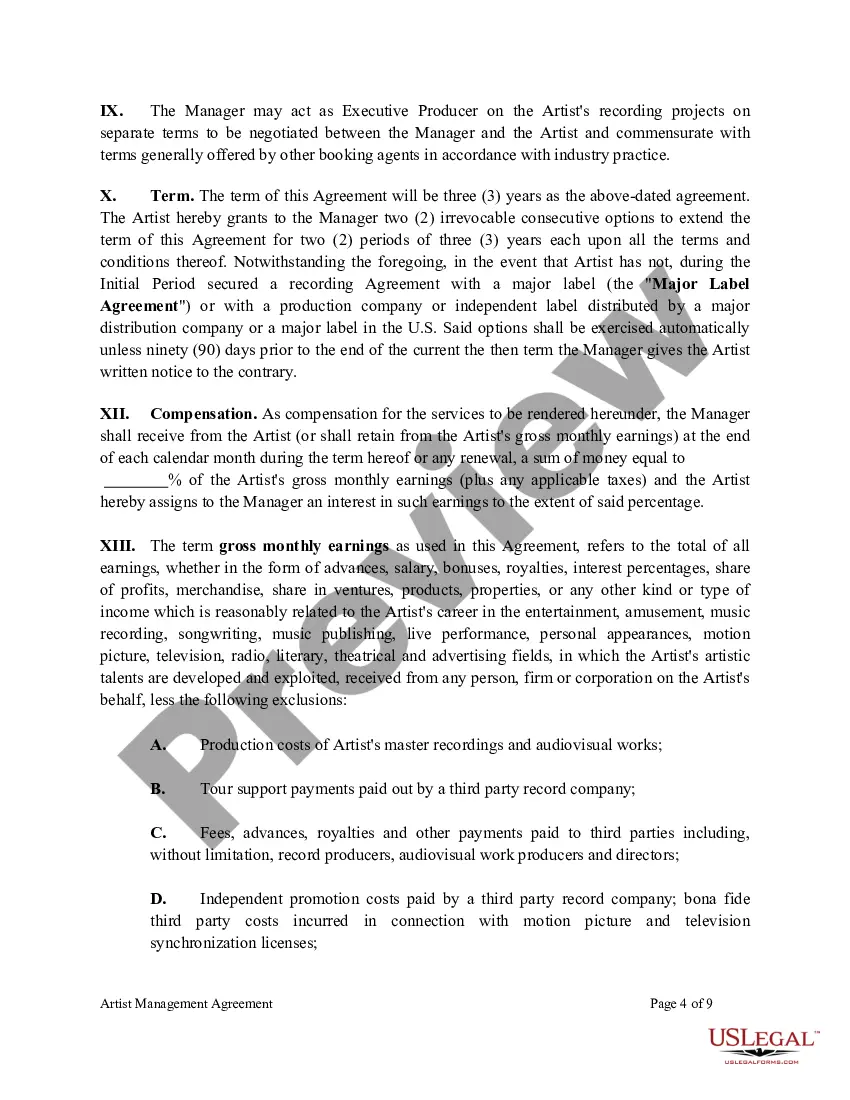
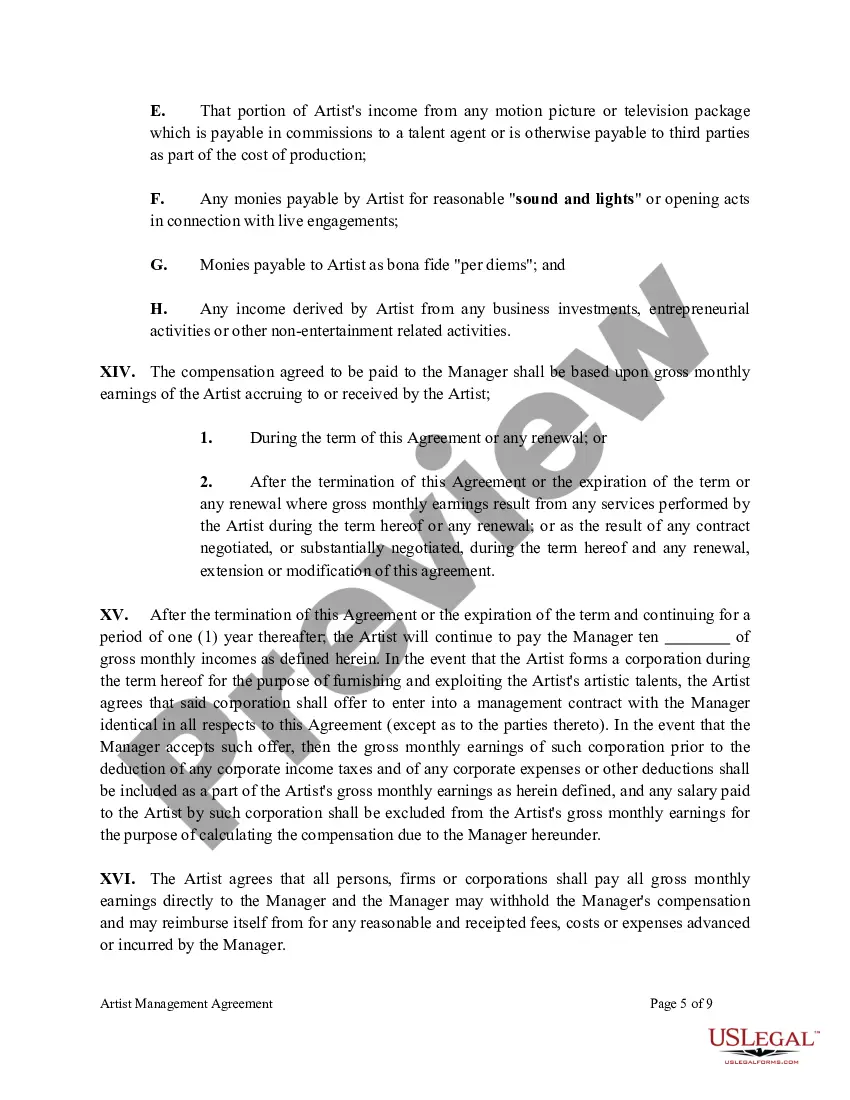
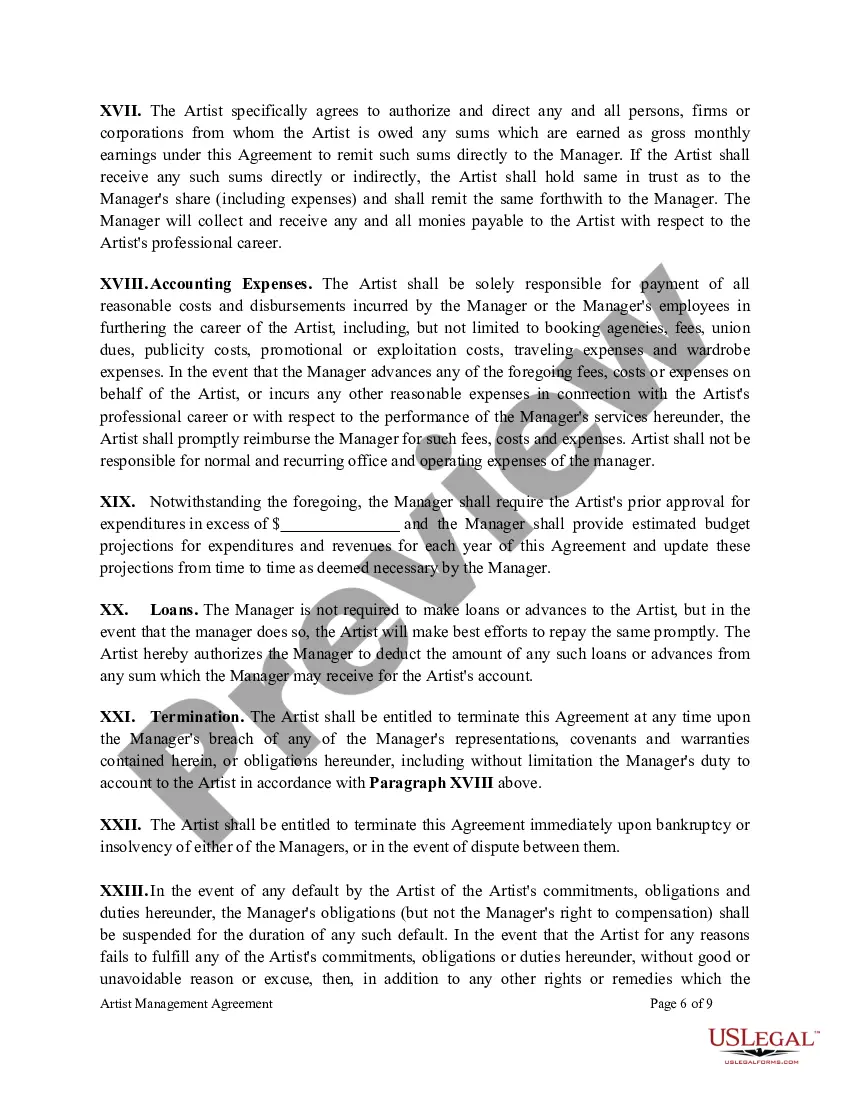
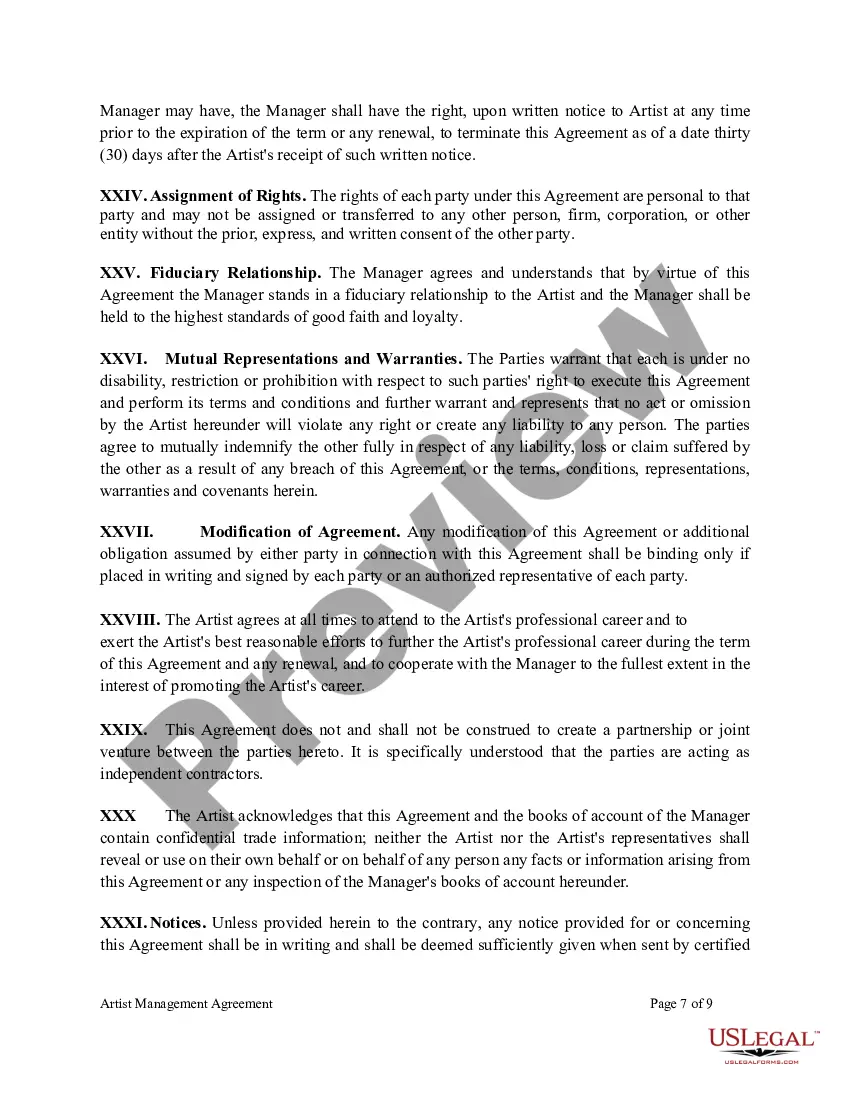
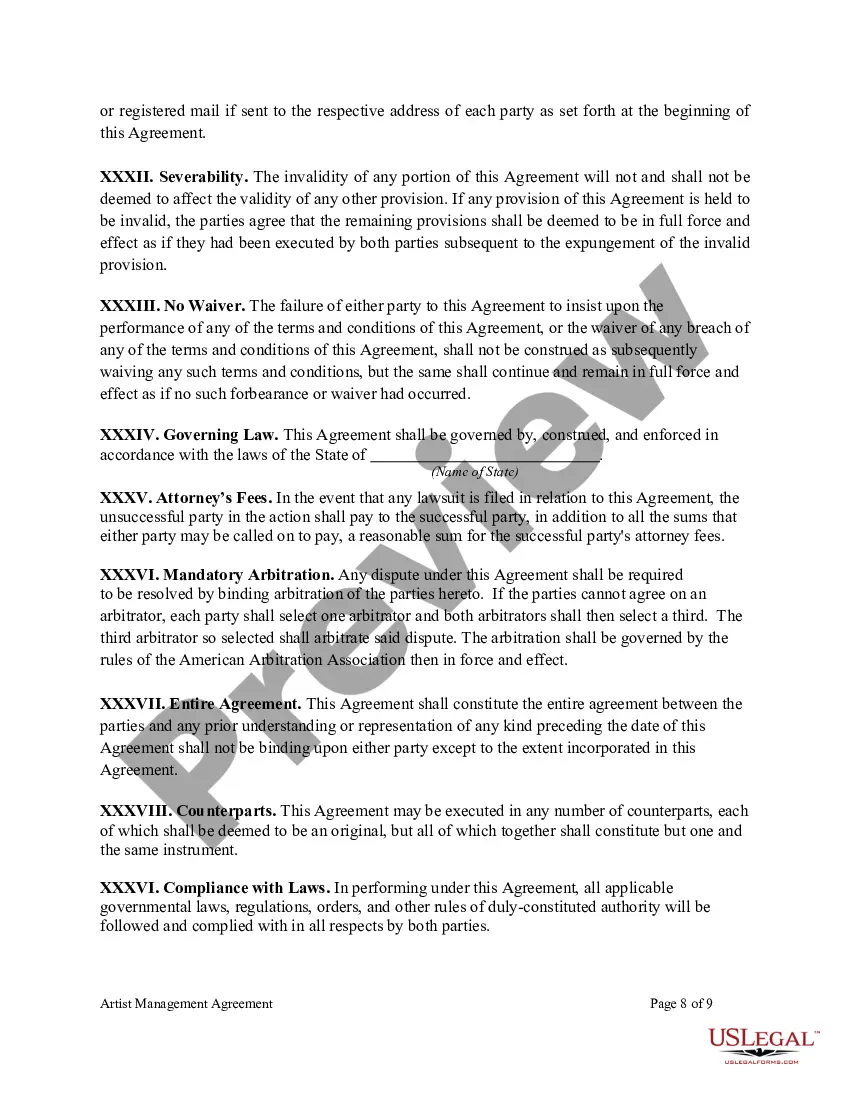
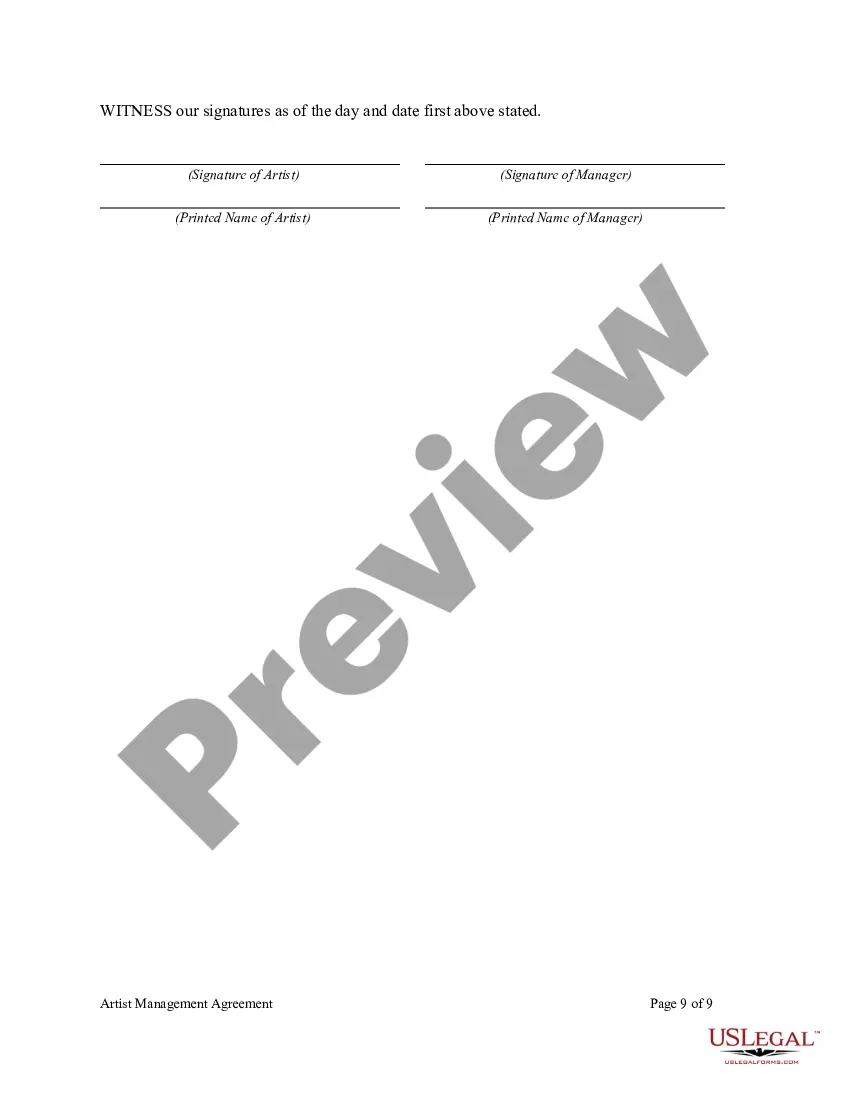
Get your form ready online
Our built-in tools help you complete, sign, share, and store your documents in one place.
Make edits, fill in missing information, and update formatting in US Legal Forms—just like you would in MS Word.
Download a copy, print it, send it by email, or mail it via USPS—whatever works best for your next step.
Sign and collect signatures with our SignNow integration. Send to multiple recipients, set reminders, and more. Go Premium to unlock E-Sign.
If this form requires notarization, complete it online through a secure video call—no need to meet a notary in person or wait for an appointment.
We protect your documents and personal data by following strict security and privacy standards.

Make edits, fill in missing information, and update formatting in US Legal Forms—just like you would in MS Word.

Download a copy, print it, send it by email, or mail it via USPS—whatever works best for your next step.

Sign and collect signatures with our SignNow integration. Send to multiple recipients, set reminders, and more. Go Premium to unlock E-Sign.

If this form requires notarization, complete it online through a secure video call—no need to meet a notary in person or wait for an appointment.

We protect your documents and personal data by following strict security and privacy standards.
Looking for another form?








Form popularity
FAQ
The future of talent management is a blend of advanced technologies, agile processes, and a deep commitment to inclusivity, well-being, and continuous growth. In this new era, organizations that recognize their greatest asset is the collective potential of their workforce will thrive.
A typical talent management framework may include the following areas: Talent strategy and planning. Talent acquisition. Employee performance management. Training and development. Succession planning and identifying. Total rewards.
Typically, the term of a Talent Agency Agreement will range anywhere between six months to three years. For Talent engaging their first Agency, it is advisable for Talent to try to negotiate a relatively short initial term (e.g., a one-year initial term).
The Marine Corps released its update on Talent Management 2030, which includes lines of effort around retaining Marines and giving Marines more agency when it comes to decisions about their future in the service.
The first step in building a solid talent pipeline is to understand the future needs of the business. This means strategic planning to identify the skills and roles that the business will require as it grows and evolves. Look at the business plan for the next five to ten years to identify key areas of expansion.
The future of talent management is a blend of advanced technologies, agile processes, and a deep commitment to inclusivity, well-being, and continuous growth. In this new era, organizations that recognize their greatest asset is the collective potential of their workforce will thrive.
Simply, high-potential talent is someone who has the likelihood and ability to accelerate their growth to rapidly develop toward a future leadership role.
The talent management process usually includes the following steps: Planning. Attracting talent. Selecting. Developing. Retaining. Transitioning.
There are various degrees you can earn to help you develop a career as a talent manager. One option you may want to consider is a Bachelor of Science in Sports and Entertainment Management. A bachelor's degree in sports and entertainment management can teach you many skills that will be of value in this field.
Who Needs a License? Any person or entity involved in arranging employment for an artist in the entertainment field must get a license to operate as a talent agency.
