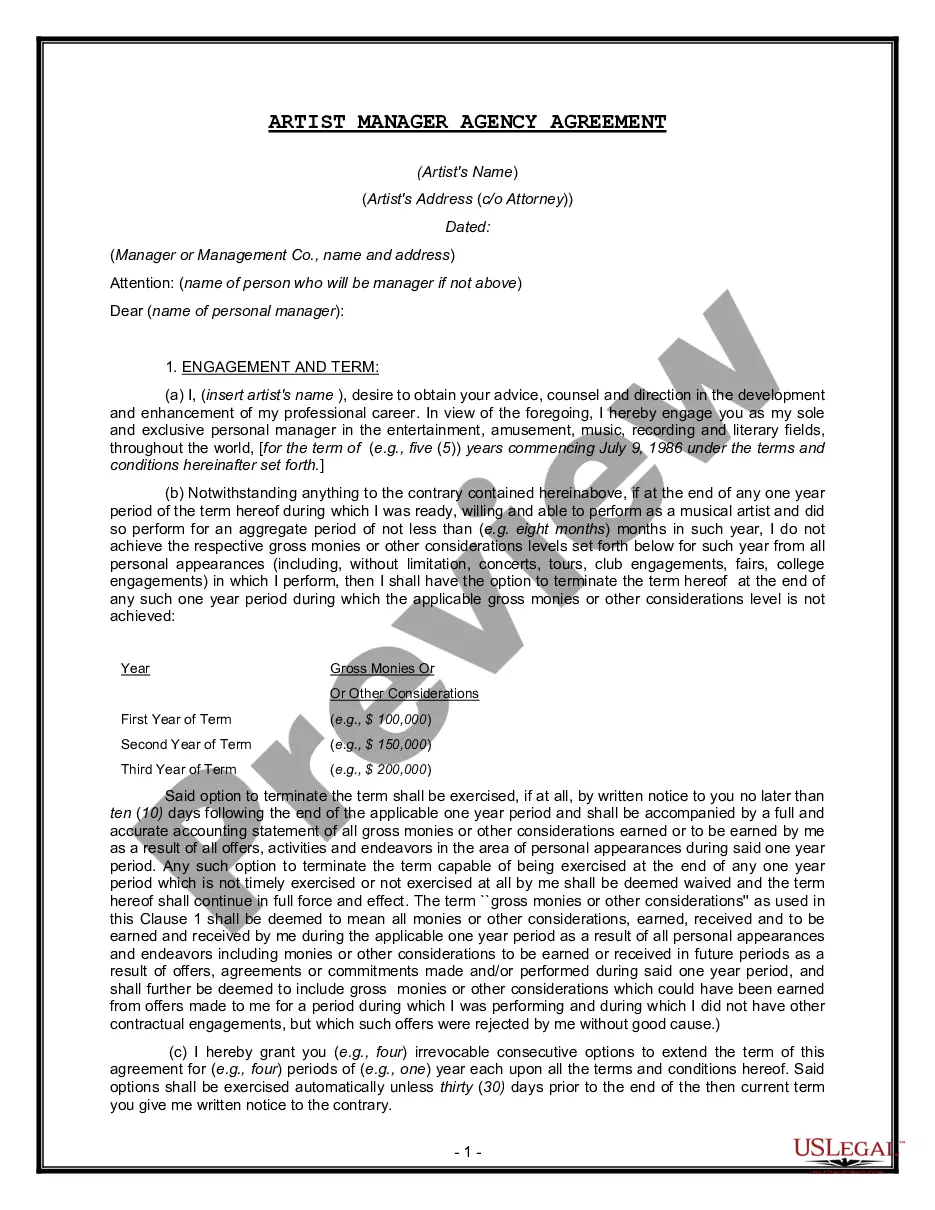
Talent Management Contract For Employees In Los Angeles
Description



Get your form ready online
Our built-in tools help you complete, sign, share, and store your documents in one place.
Make edits, fill in missing information, and update formatting in US Legal Forms—just like you would in MS Word.
Download a copy, print it, send it by email, or mail it via USPS—whatever works best for your next step.
Sign and collect signatures with our SignNow integration. Send to multiple recipients, set reminders, and more. Go Premium to unlock E-Sign.
If this form requires notarization, complete it online through a secure video call—no need to meet a notary in person or wait for an appointment.
We protect your documents and personal data by following strict security and privacy standards.

Make edits, fill in missing information, and update formatting in US Legal Forms—just like you would in MS Word.

Download a copy, print it, send it by email, or mail it via USPS—whatever works best for your next step.

Sign and collect signatures with our SignNow integration. Send to multiple recipients, set reminders, and more. Go Premium to unlock E-Sign.

If this form requires notarization, complete it online through a secure video call—no need to meet a notary in person or wait for an appointment.

We protect your documents and personal data by following strict security and privacy standards.
Looking for another form?




Form popularity
FAQ
Who Needs a License? Any person or entity involved in arranging employment for an artist in the entertainment field must get a license to operate as a talent agency.
Comments Section get a referral from someone you know. avoid those that are your type, or at too large of an agency (unless you're very young) go to agent workshops submit to agencies that openly ask for submissions then - the blast to all kinds of agencies that are a right fit.
The best way to find an agent is to do some online research. Google for your location and the words ``talent agent'' and you should find a few. Call them and ask if they're taking on clients right now. If they're not, you might ask what kinds of clients they usually look for: how much experience, union membership, etc.
The easiest route to getting an agent in Los Angeles is by personal recommendation from a casting director, producer, director, manager, or even another actor. These personal connections are worth their weight in social capital gold.
Develop relationships. See if there's someone that has a rep that might be a good fit, and ask respectfully for a referral. Otherwise, make a list of contacts that you have a decent relationship and email those people for their thoughts. All actors know that referrals are something you just have to ask for.
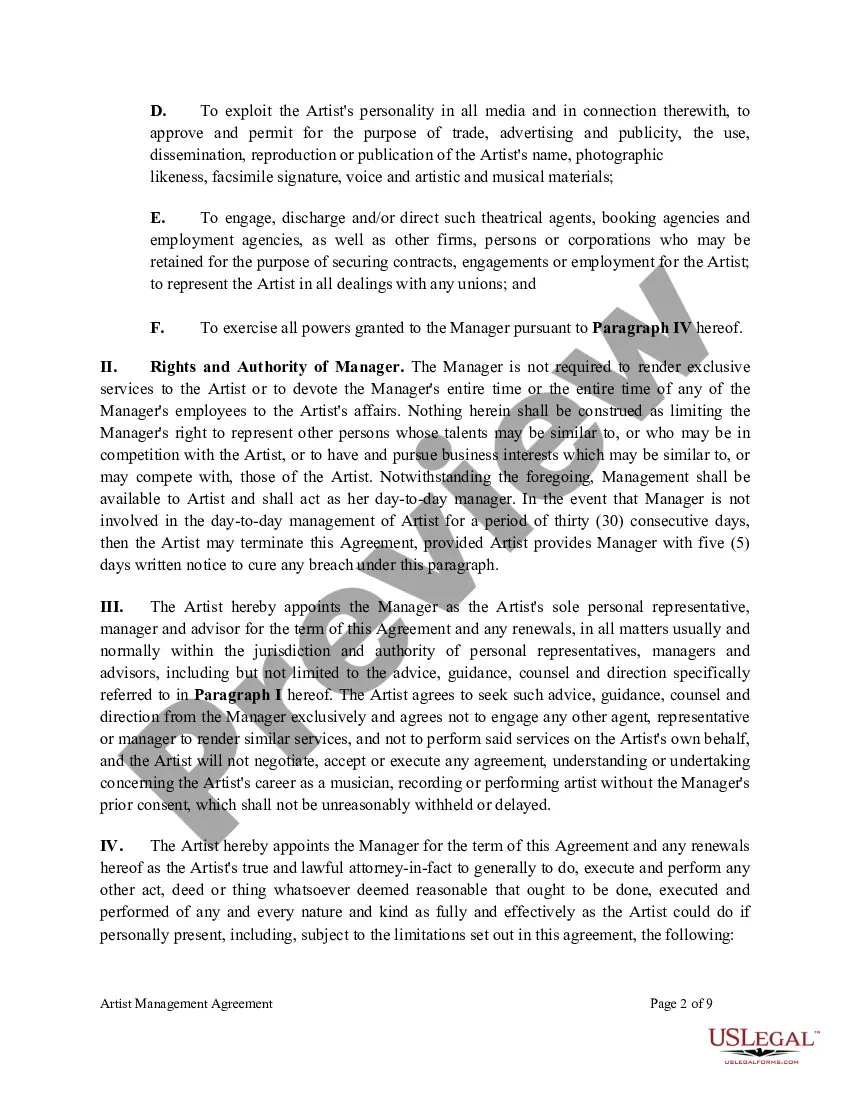
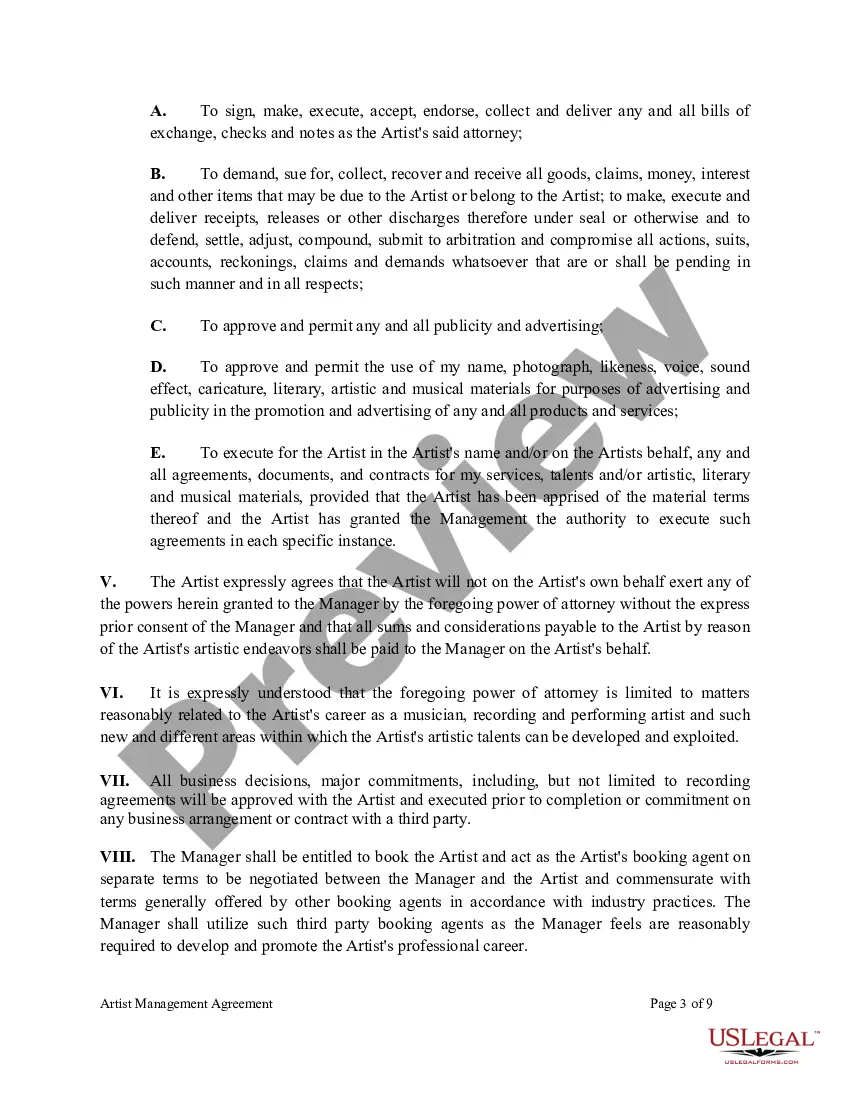
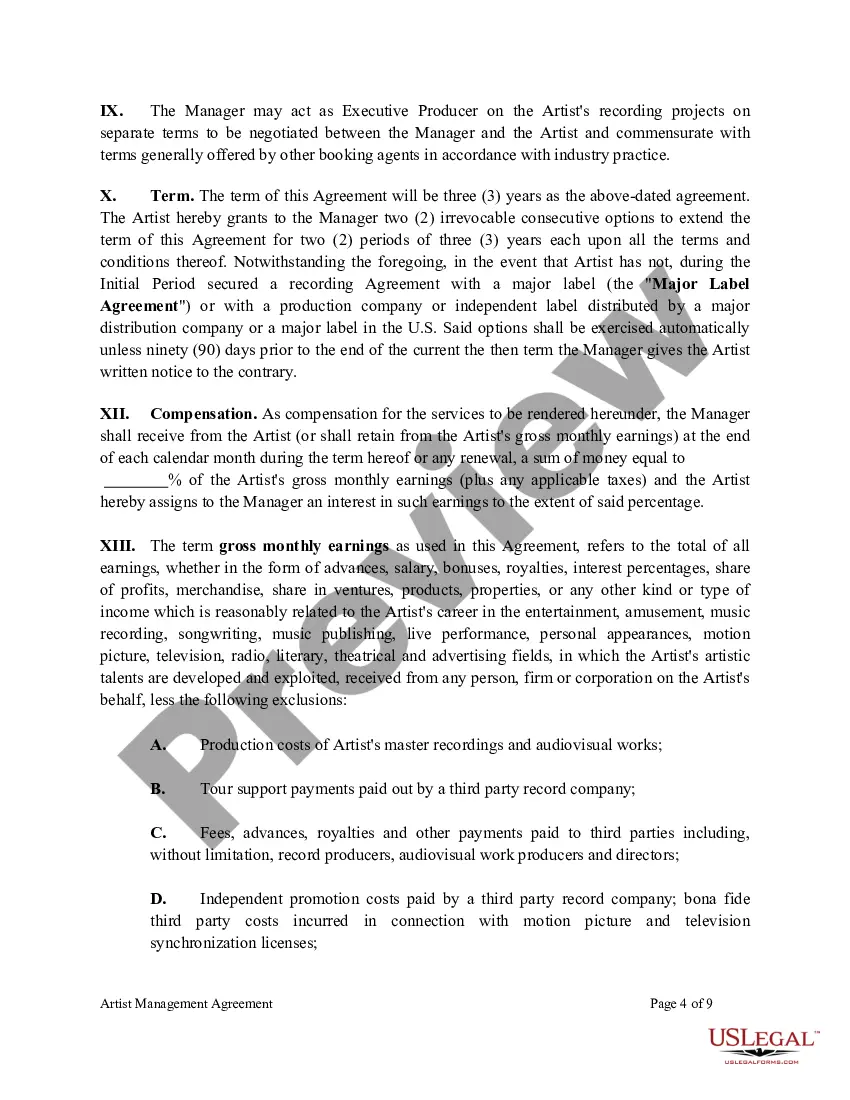
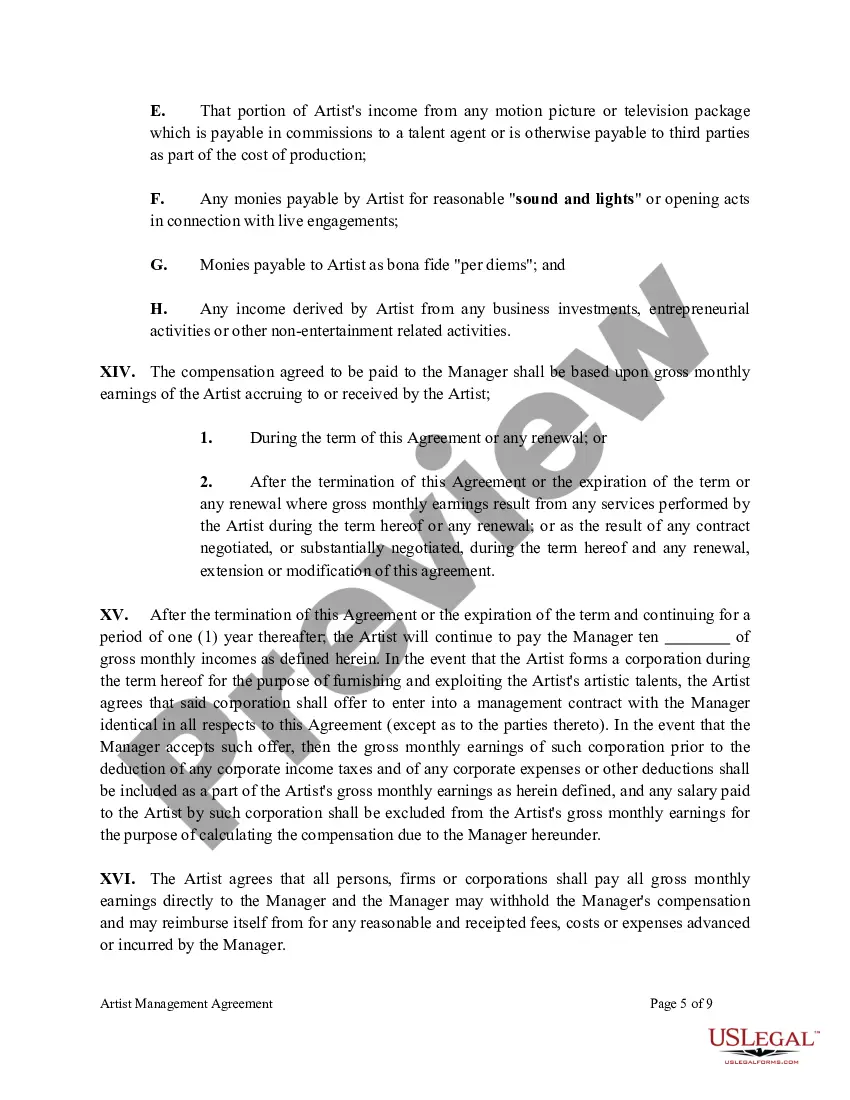
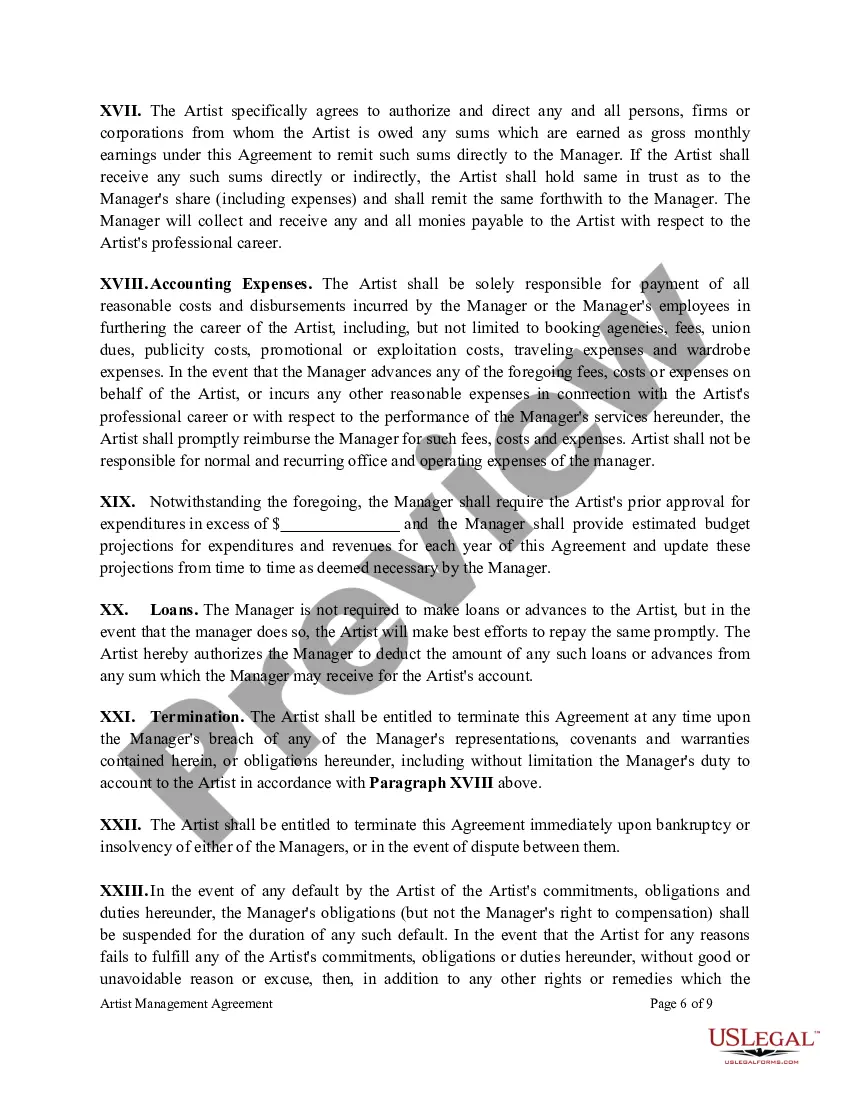
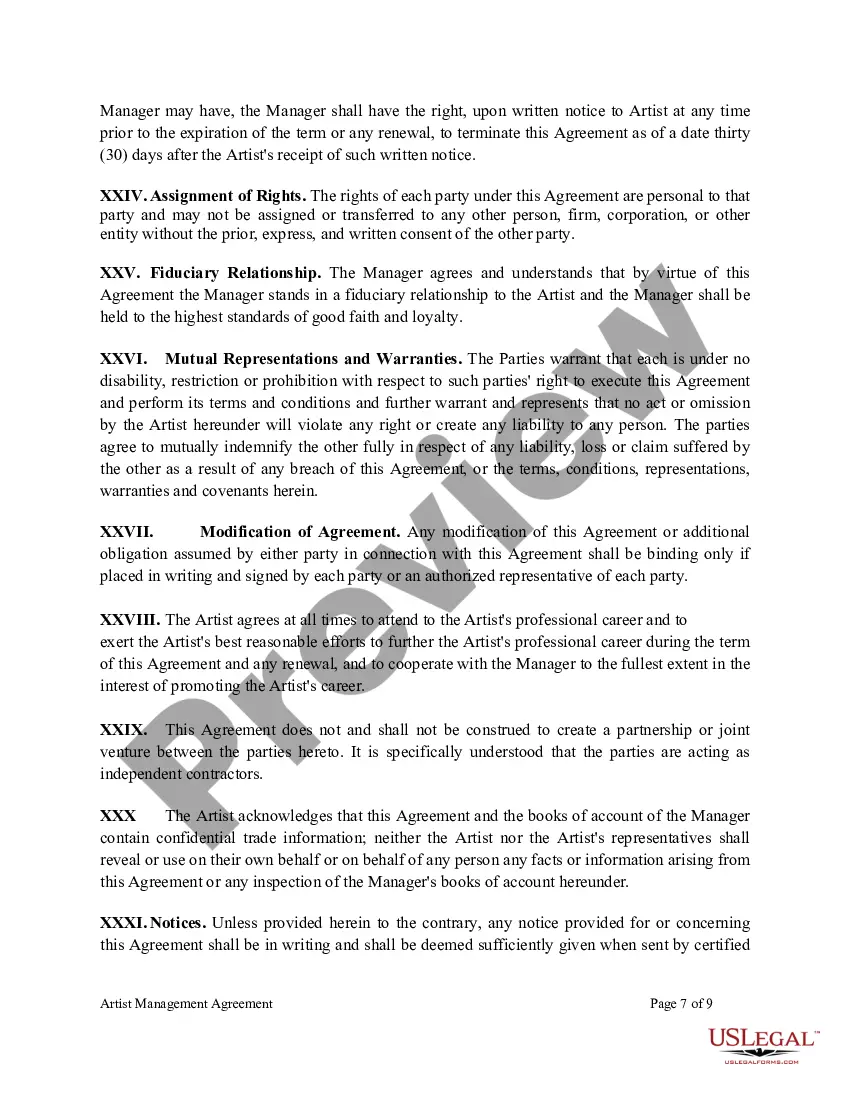
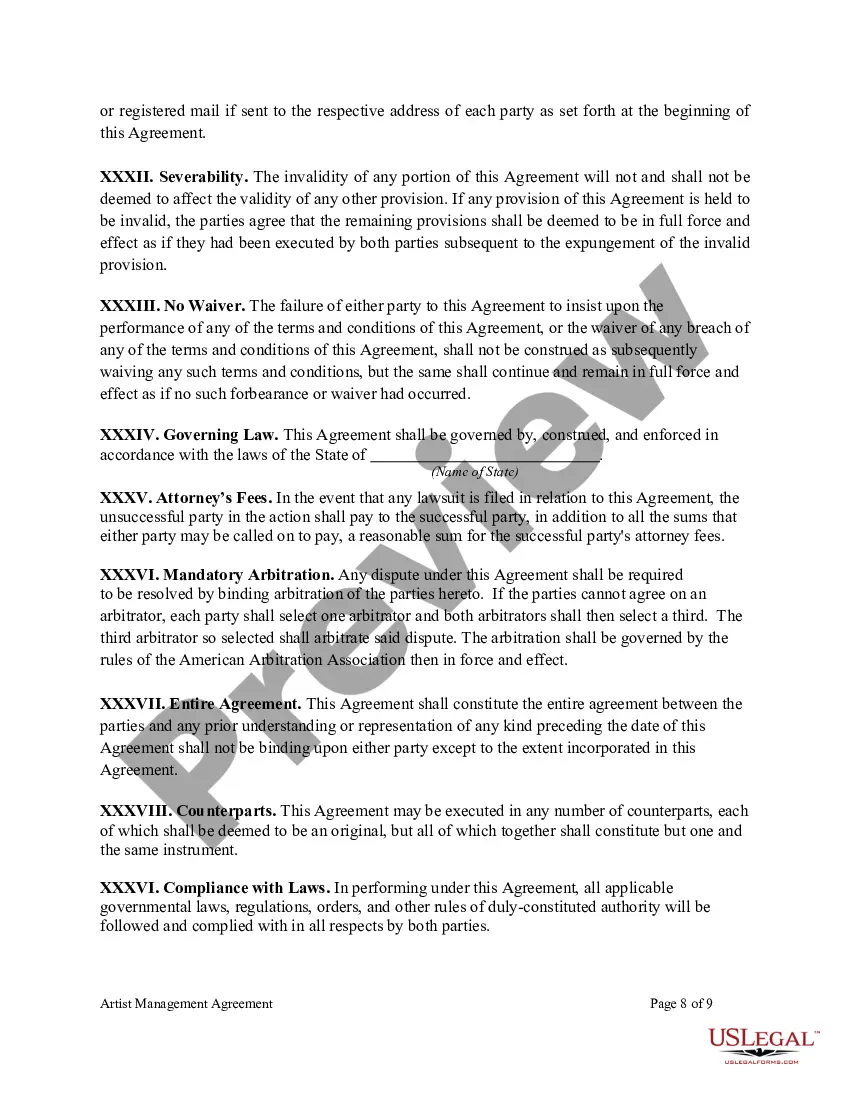
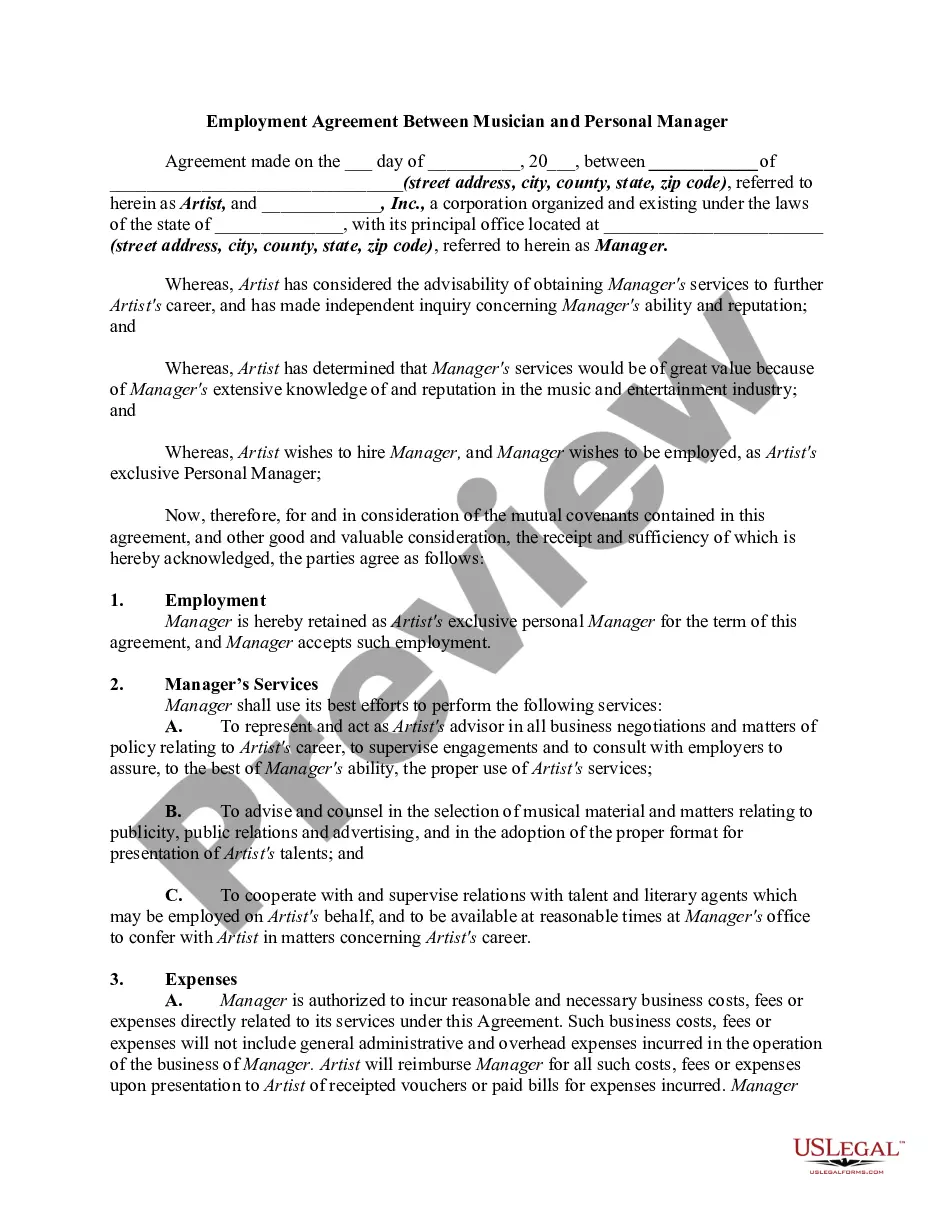
Common Sections in Artist Management Agreements ARTIST MANAGEMENT AGREEMENT. BACKGROUND. Services Of The Manager. Rights And Authority Of The Manager. Term. Compensation. Accounting. Expenses.
Agents are not allowed to take more than 10% of their client's earnings ing to union guidelines, but managers don't suffer from the same restriction. Many accept 10%, but quite a few ask for 15%, and others work on a sliding scale.
Managers generally take, on average, 10-15 percent commission. Fifteen percent is considered higher- end compensation in the industry. This should be clearly spelled out in your agreement with your personal manager.
Managers usually takes a percentage of the artist's income. This typically ranges between 10 to 20% and is usually 15% for indie artists in my experience.
A talent manager will receive a 15 percent commission on all bookings. This means that if you are working with both a manager and an agent, 25% of your earnings will go to representation.
