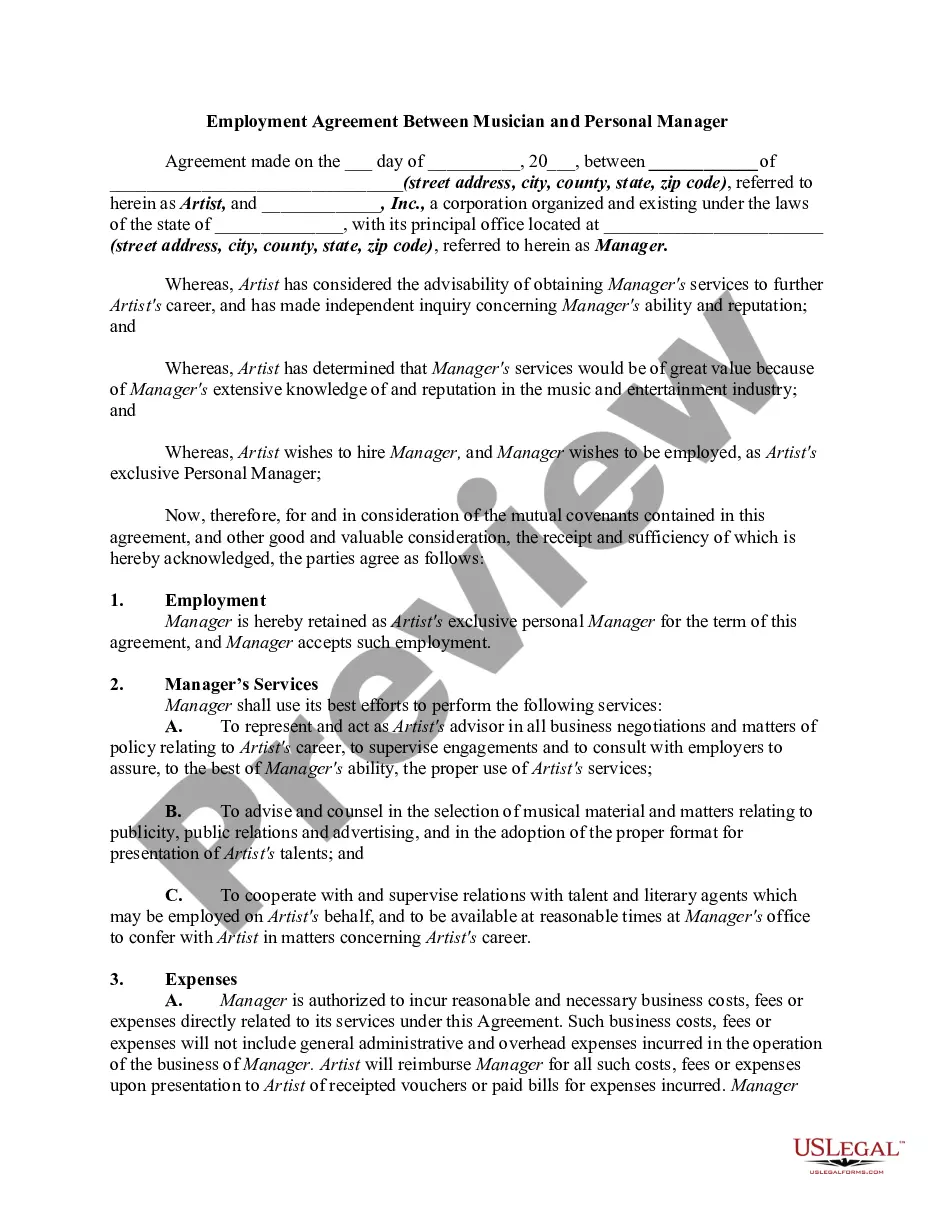
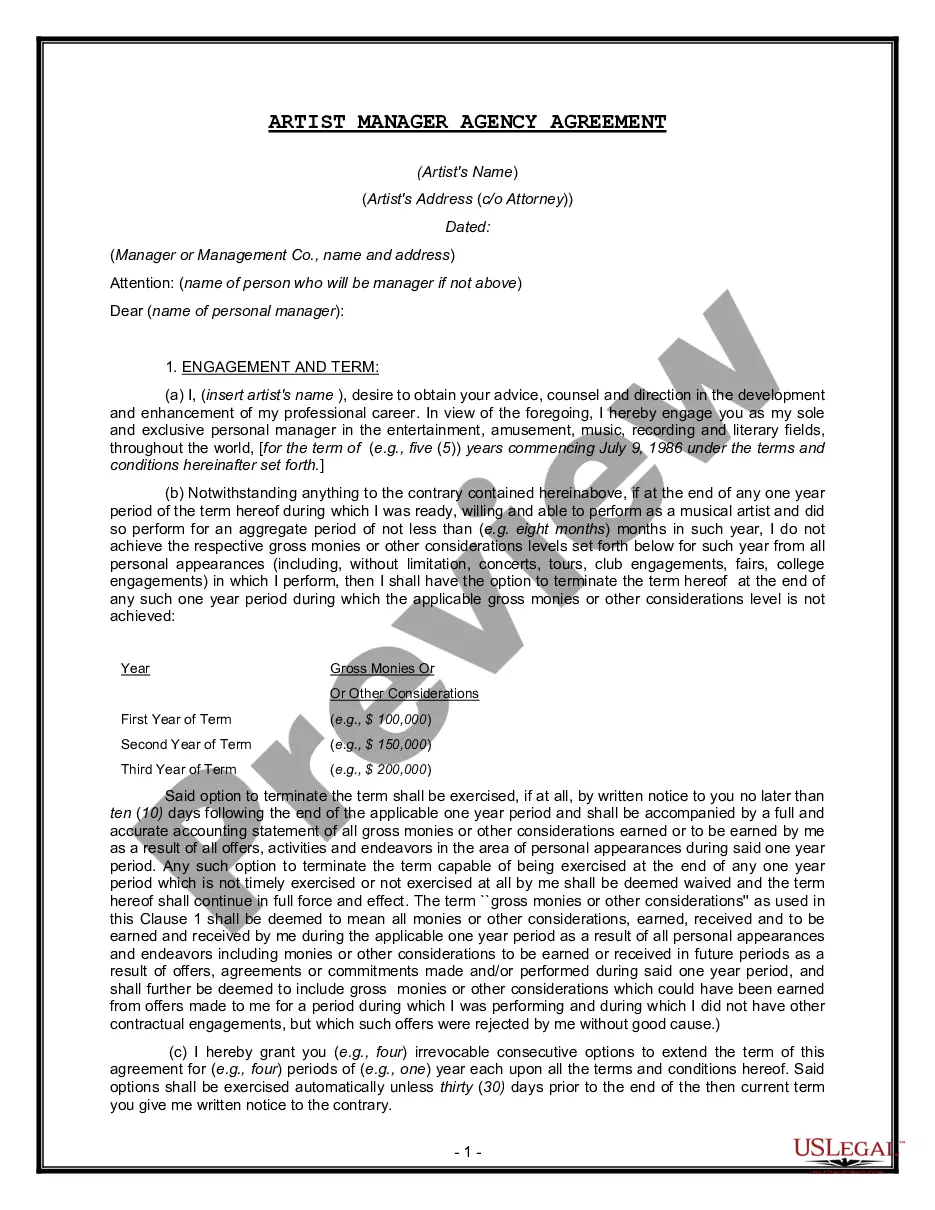
Management Contract Music Artist With Face Tattoos In Illinois
Description


Get your form ready online
Our built-in tools help you complete, sign, share, and store your documents in one place.
Make edits, fill in missing information, and update formatting in US Legal Forms—just like you would in MS Word.
Download a copy, print it, send it by email, or mail it via USPS—whatever works best for your next step.
Sign and collect signatures with our SignNow integration. Send to multiple recipients, set reminders, and more. Go Premium to unlock E-Sign.
If this form requires notarization, complete it online through a secure video call—no need to meet a notary in person or wait for an appointment.
We protect your documents and personal data by following strict security and privacy standards.

Make edits, fill in missing information, and update formatting in US Legal Forms—just like you would in MS Word.

Download a copy, print it, send it by email, or mail it via USPS—whatever works best for your next step.

Sign and collect signatures with our SignNow integration. Send to multiple recipients, set reminders, and more. Go Premium to unlock E-Sign.

If this form requires notarization, complete it online through a secure video call—no need to meet a notary in person or wait for an appointment.

We protect your documents and personal data by following strict security and privacy standards.
Looking for another form?





Form popularity
FAQ
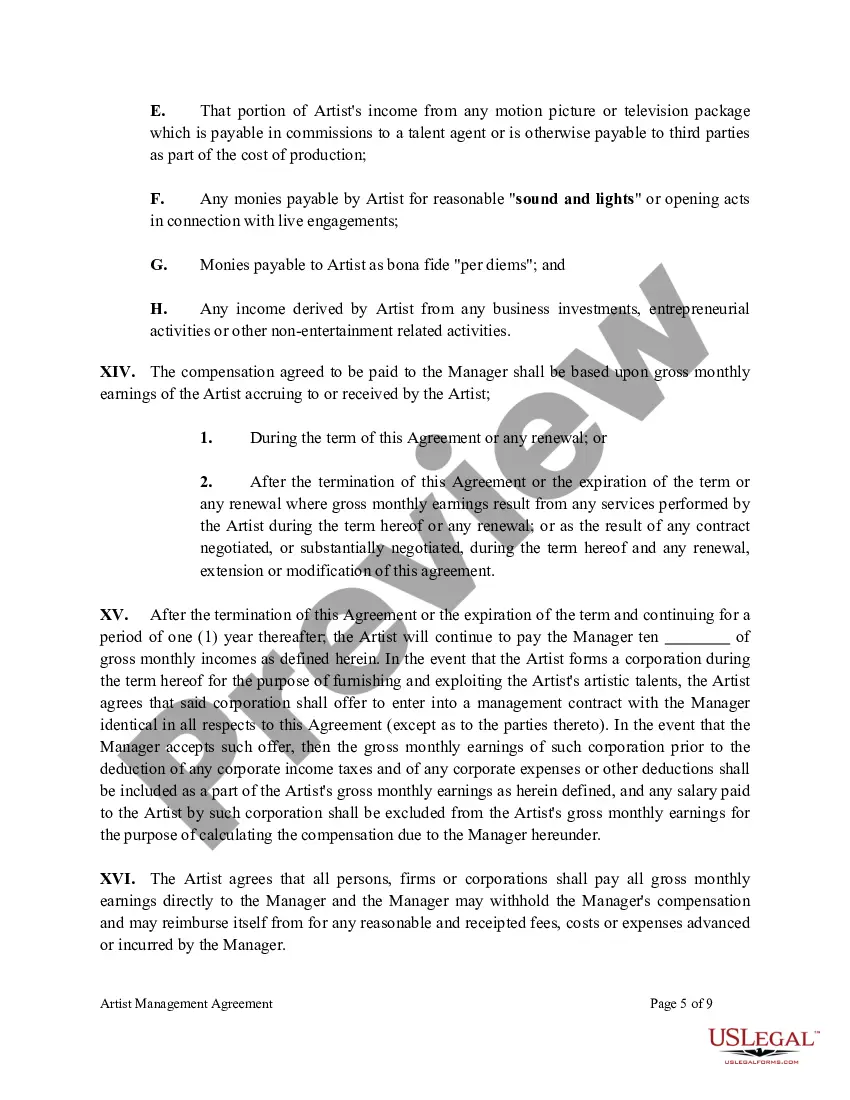
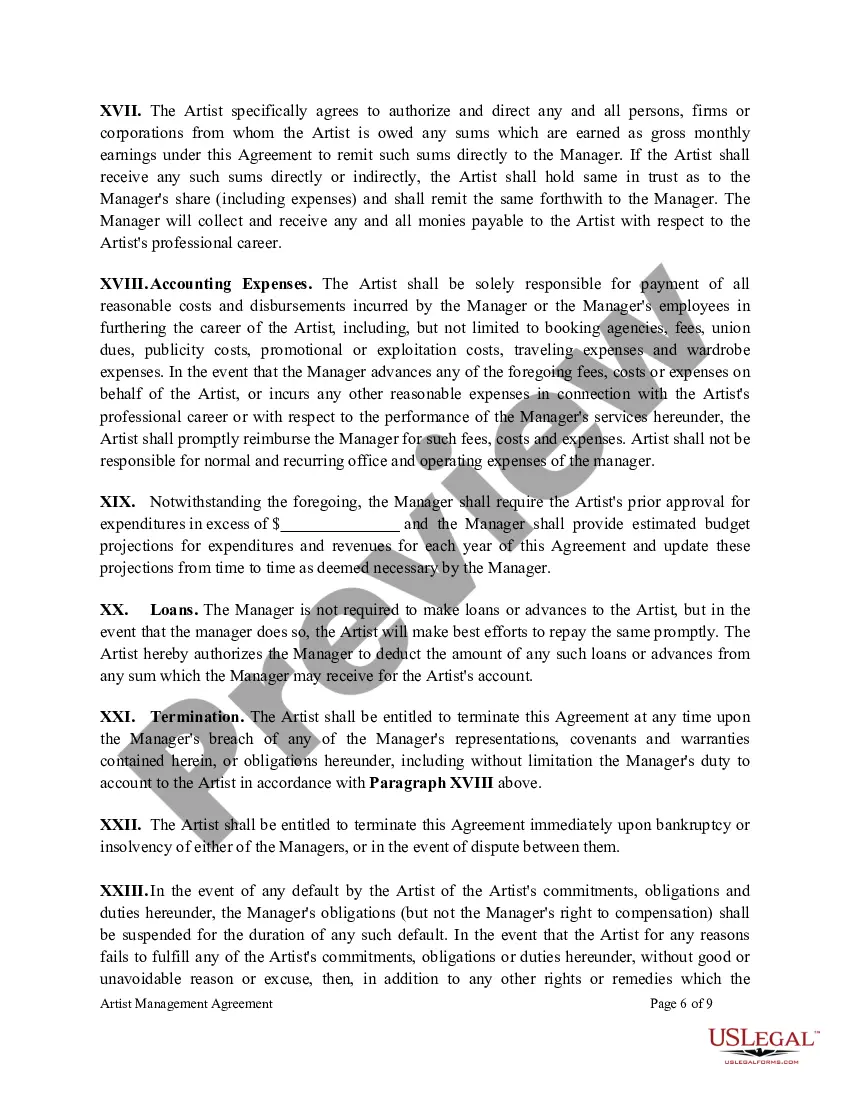
What Percentage Do They Make? The most common, or easiest gauging point for management percentage, at least in North America, is 15 to 20% of gross artist revenue. I personally don't know of anyone who charges 15% of gross but I have heard through the industry that some people do. I personally hear of 20% more often.
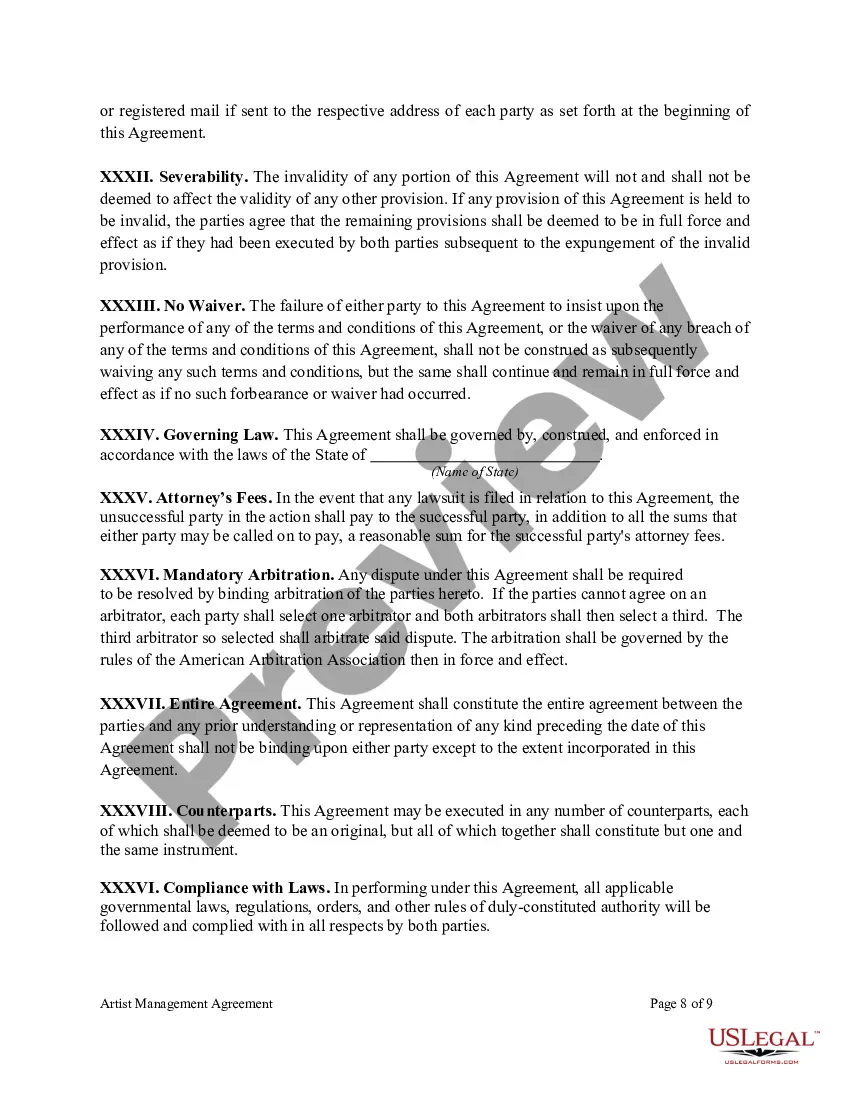
Your Music Recording Contract should cover details like: Compensation and royalties. Where and when the album will be recorded. The album's release date. Who has creative control over specific elements of the album. The termination clause. The exclusive agreement clause. Dispute resolution. Promotional appearances.
When Does an Artist Need a Music Manager? If you're working on your very first album release, the chances are slim that your career can really benefit from having a music manager. However, artists whose careers are beginning to take off usually enjoy significant advantages through having a good manager.
Music Management Contracts Explained Most managers receive a percentage of the artist's gross income, typically between 15-30 percent. Before signing a management contract, artists should thoroughly review the terms and consider seeking legal advice.
A business management agreement formalizes the working relationship between a business and its manager. The contract will include information such as budgeting, the percentage of business revenue owed to the manager, and confidentiality requirements.
Managers' commissions are typically between 15 to 20% of an artist's gross income. Whether it's 15% or 20% really depends on the level of the band and the bargaining power of each party. I've seen some net deals, but they are extremely rare. That being said, I always push for a net commission on merchandise.
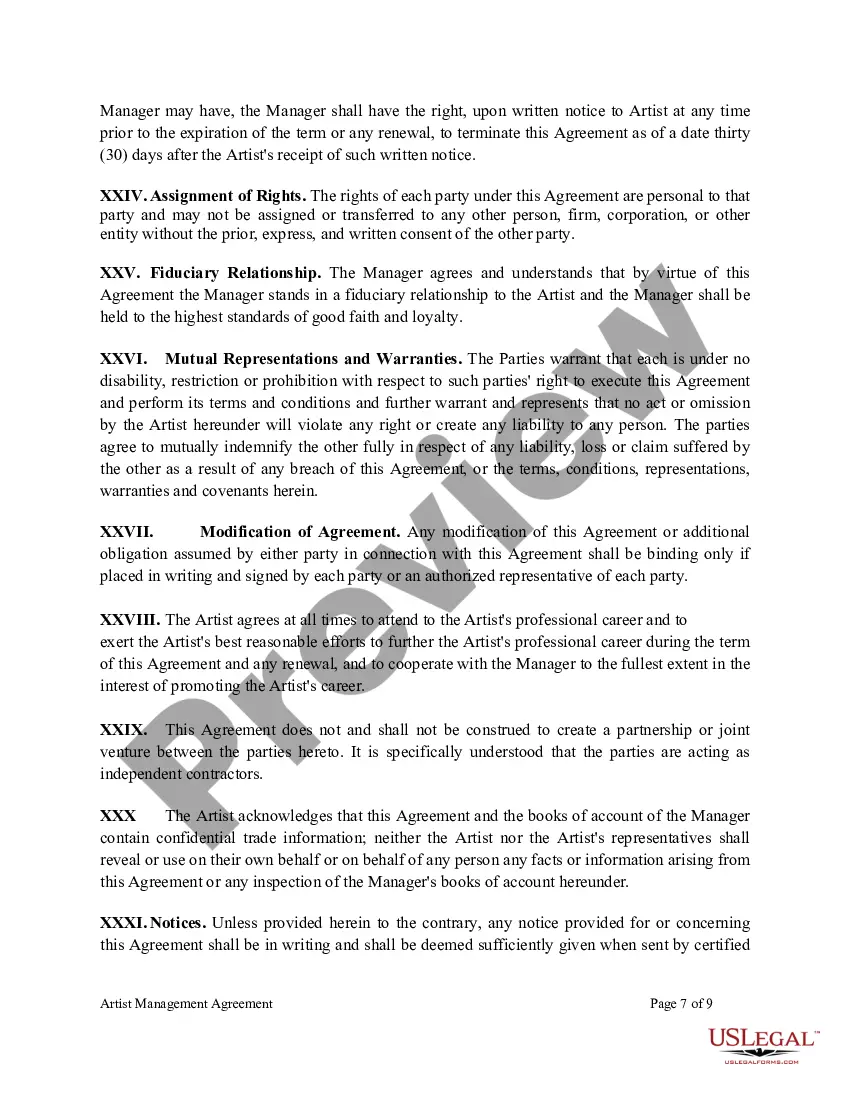
A sunset clause specifies that the manager's commission rights extend for a period of time even after the termination of the agreement.
This typically involves providing written notice within the specified timeframe and adhering to any other requirements stated in the agreement. Remember, getting out of a music management contract can be a complex process, and it's important to approach it carefully before terminating.
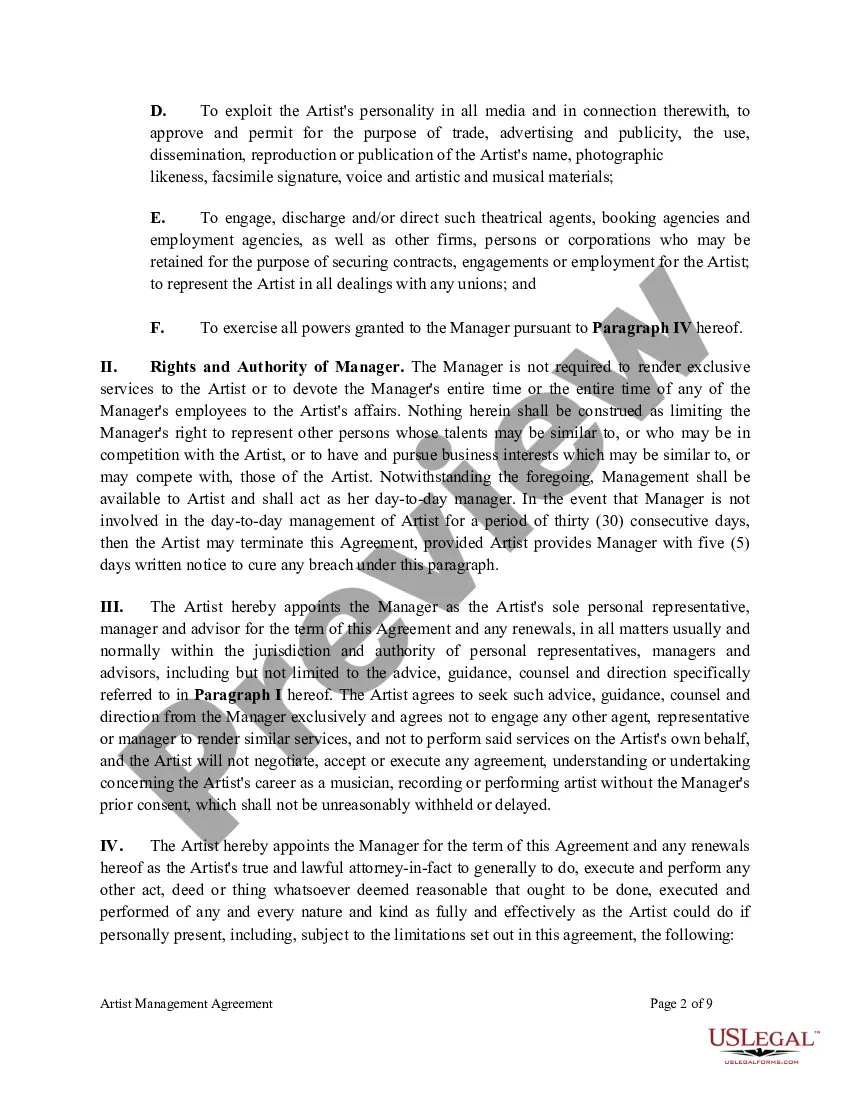
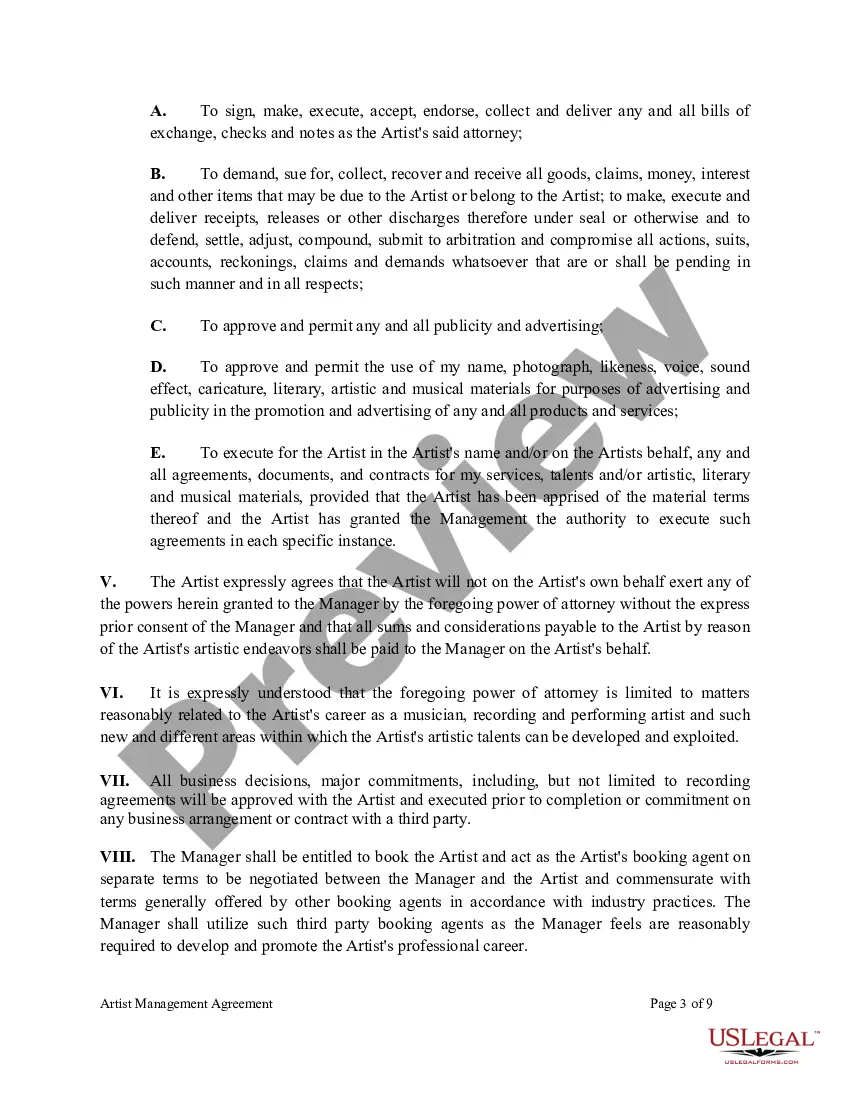
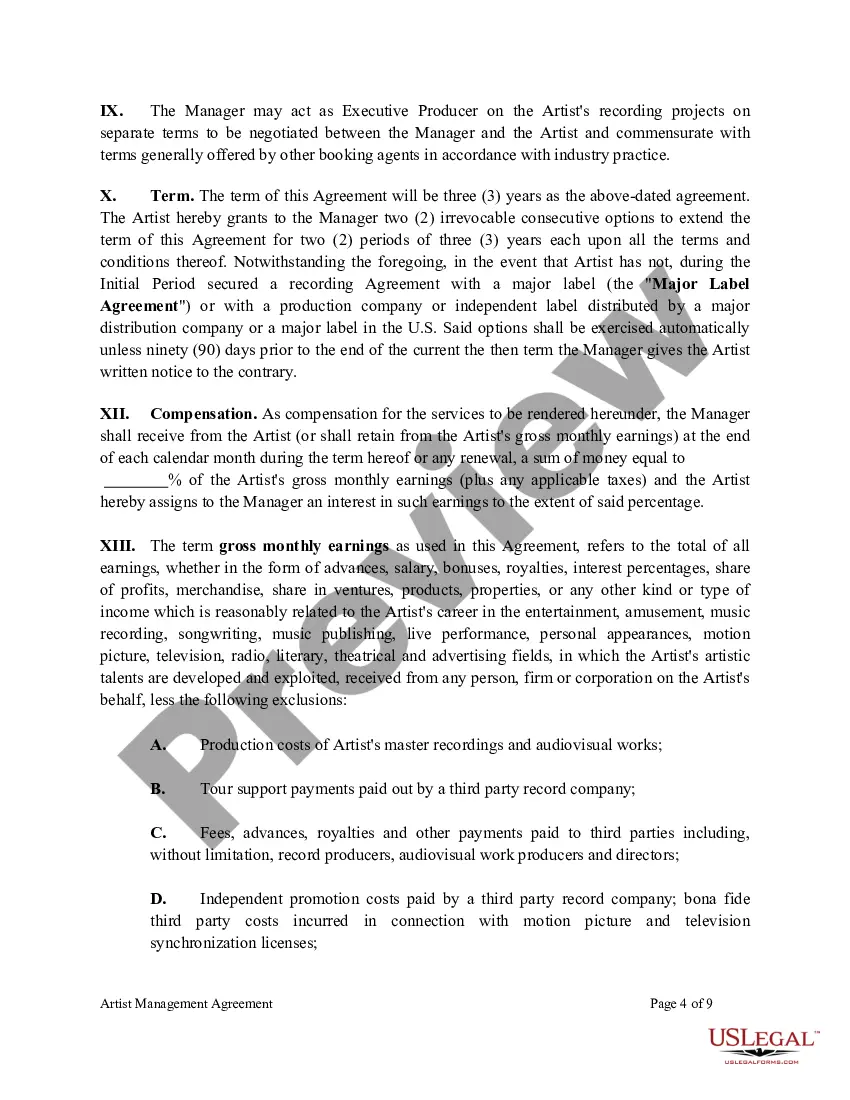
Common Sections in Artist Management Agreements ARTIST MANAGEMENT AGREEMENT. BACKGROUND. Services Of The Manager. Rights And Authority Of The Manager. Term. Compensation. Accounting. Expenses.
5 Must-Have Clauses in Artist Management Contracts Commission Rates. Term Length in Management Agreements. Decision-Making Authority. Sunset Clause (place after Term) ... Exclusivity.
