Sample Management Contract With Force Majeure In Georgia
Description











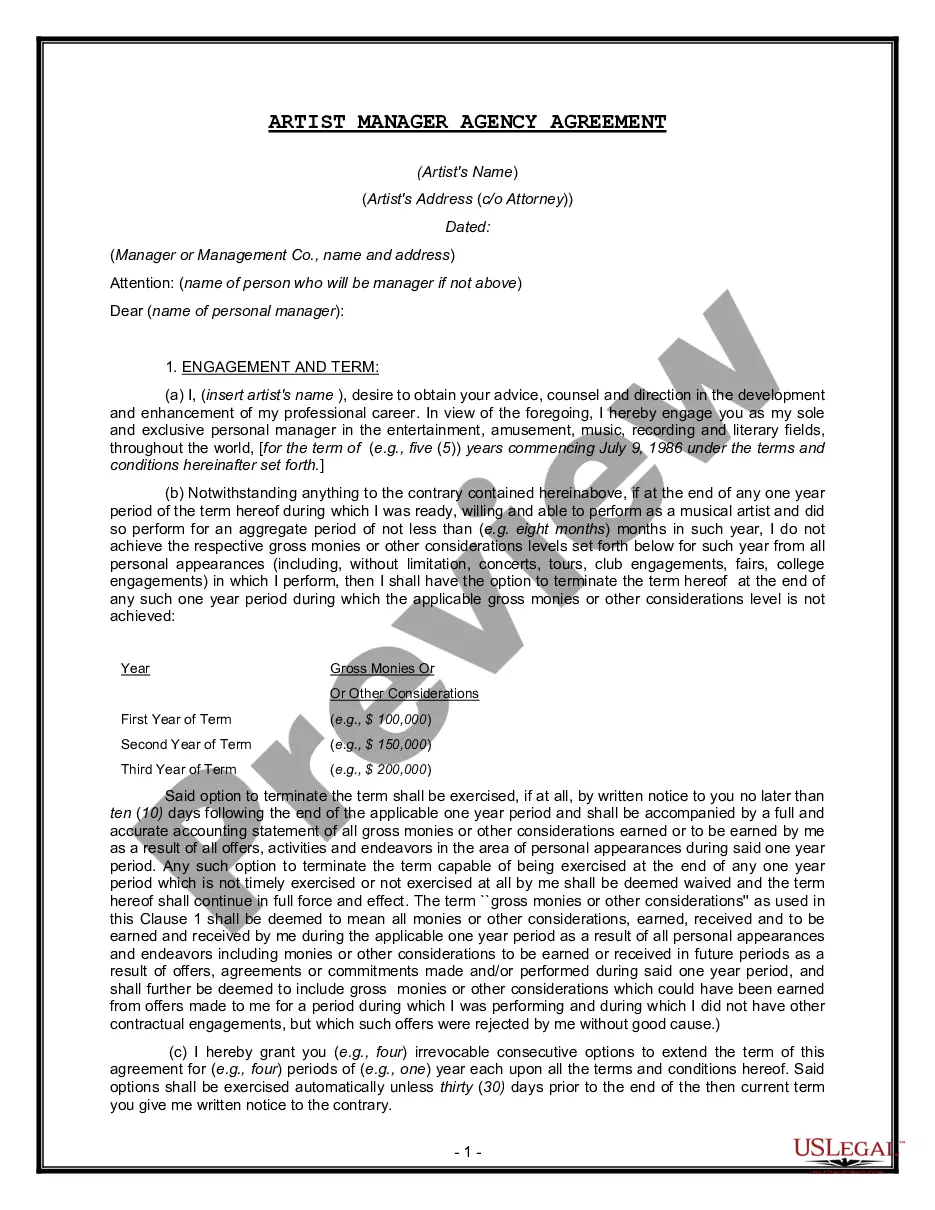
Get your form ready online
Our built-in tools help you complete, sign, share, and store your documents in one place.
Make edits, fill in missing information, and update formatting in US Legal Forms—just like you would in MS Word.
Download a copy, print it, send it by email, or mail it via USPS—whatever works best for your next step.
Sign and collect signatures with our SignNow integration. Send to multiple recipients, set reminders, and more. Go Premium to unlock E-Sign.
If this form requires notarization, complete it online through a secure video call—no need to meet a notary in person or wait for an appointment.
We protect your documents and personal data by following strict security and privacy standards.

Make edits, fill in missing information, and update formatting in US Legal Forms—just like you would in MS Word.

Download a copy, print it, send it by email, or mail it via USPS—whatever works best for your next step.

Sign and collect signatures with our SignNow integration. Send to multiple recipients, set reminders, and more. Go Premium to unlock E-Sign.

If this form requires notarization, complete it online through a secure video call—no need to meet a notary in person or wait for an appointment.

We protect your documents and personal data by following strict security and privacy standards.
Looking for another form?



Form popularity
FAQ
What Are Examples of Force Majeure? Events that could trigger a force majeure clause include war, terrorist attacks, a pandemic, or natural disasters that fall under the “act of God” category, such as a flood, earthquake, or hurricane.
For events to constitute the use of force majeure, they must be unforeseeable, external to contract parties, and unavoidable. Force majeure means “greater force” and is related to an act of God, an event for which no party can be held accountable.
Clause 19.1 defines a force majeure event as one: which is beyond a Party's control, which such Party could not reasonably have provided against before entering into the Contract, which, having arisen, such Party could not reasonably have avoided or overcome, and.
Contractual Force Majeure Provision—“act of God” An “act of God” provision, frequently included in a force majeure clause, sets forth conditions that, if triggered, permit parties to take actions under a contract, which may include suspending performance or even terminating the contract.
In contract law, force majeure (/ˌfɔːrs məˈʒɜːr/ FORSS mə-ZHUR; French: fɔʁs maʒœʁ) is a common clause in contracts which essentially frees both parties from liability or obligation when an extraordinary event or circumstance beyond the control of the parties, such as a war, strike, riot, crime, epidemic, or sudden ...
A typical force majeure clause includes a statement that the occurrence of certain events or circumstances will excuse performance; a listing of the events or circumstances; and a listing of obligations imposed on the party claiming to be excused that typically relate to keeping the other party informed about the force ...
Force majeure clause samples 10.2 The Party affected by Force Majeure shall not assume any liability under this Agreement. Section 15.12 Force Majeure. 6.4 If the agreement cannot be performed due to force majeure, the responsibility shall be exempted in part or in whole ing to the influence of force majeure.
Force majeure events are usually defined as certain acts, events or circumstances beyond the control of the parties, for example, natural disasters or the outbreak of hostilities.
Either Party shall be excused from performance and shall not be in default in respect of any obligation hereunder to the extent that the failure to perform such obligation is due to a Natural Force Majeure Event.
Examples of events that might trigger a force majeure clause into effect include a declaration of war, a disease epidemic, or a hurricane, earthquake, or other natural disaster events that fall under the legal term, “act of God.”
