Artist Agreement Form Statement With Art In Dallas
Description

Get your form ready online
Our built-in tools help you complete, sign, share, and store your documents in one place.
Make edits, fill in missing information, and update formatting in US Legal Forms—just like you would in MS Word.
Download a copy, print it, send it by email, or mail it via USPS—whatever works best for your next step.
Sign and collect signatures with our SignNow integration. Send to multiple recipients, set reminders, and more. Go Premium to unlock E-Sign.
If this form requires notarization, complete it online through a secure video call—no need to meet a notary in person or wait for an appointment.
We protect your documents and personal data by following strict security and privacy standards.

Make edits, fill in missing information, and update formatting in US Legal Forms—just like you would in MS Word.

Download a copy, print it, send it by email, or mail it via USPS—whatever works best for your next step.

Sign and collect signatures with our SignNow integration. Send to multiple recipients, set reminders, and more. Go Premium to unlock E-Sign.

If this form requires notarization, complete it online through a secure video call—no need to meet a notary in person or wait for an appointment.

We protect your documents and personal data by following strict security and privacy standards.
Looking for another form?






Form popularity
FAQ
How to write a contract agreement in 7 steps. Determine the type of contract required. Confirm the necessary parties. Choose someone to draft the contract. Write the contract with the proper formatting. Review the written contract with a lawyer. Send the contract agreement for review or revisions.
Consider the following advice when writing your artist statement: Brainstorm. The first hurdle is to figure out what to write about. Freewrite. Rewrite what stands out. In general, be specific. Be clear and concise. Proofread. Use your own voice.
Write the contract in six steps Start with a contract template. Open with the basic information. Describe in detail what you have agreed to. Include a description of how the contract will be ended. Write into the contract which laws apply and how disputes will be resolved. Include space for signatures.
A contract is mandatory for any commission. Write down every detail in the contract, such as the size and media of the artwork, your compensation, due dates for payments, who is responsible for framing, installation, delivery of the artwork, etc. If your client balks at signing a contract, WALK AWAY.
It is illegal. Once any piece of work is created, it is automatically copyrighted. This includes art, photography, music, etc. You have to have the creator's written permission before you use it anyway at all. If you want more information, you can search for copyright infringement.
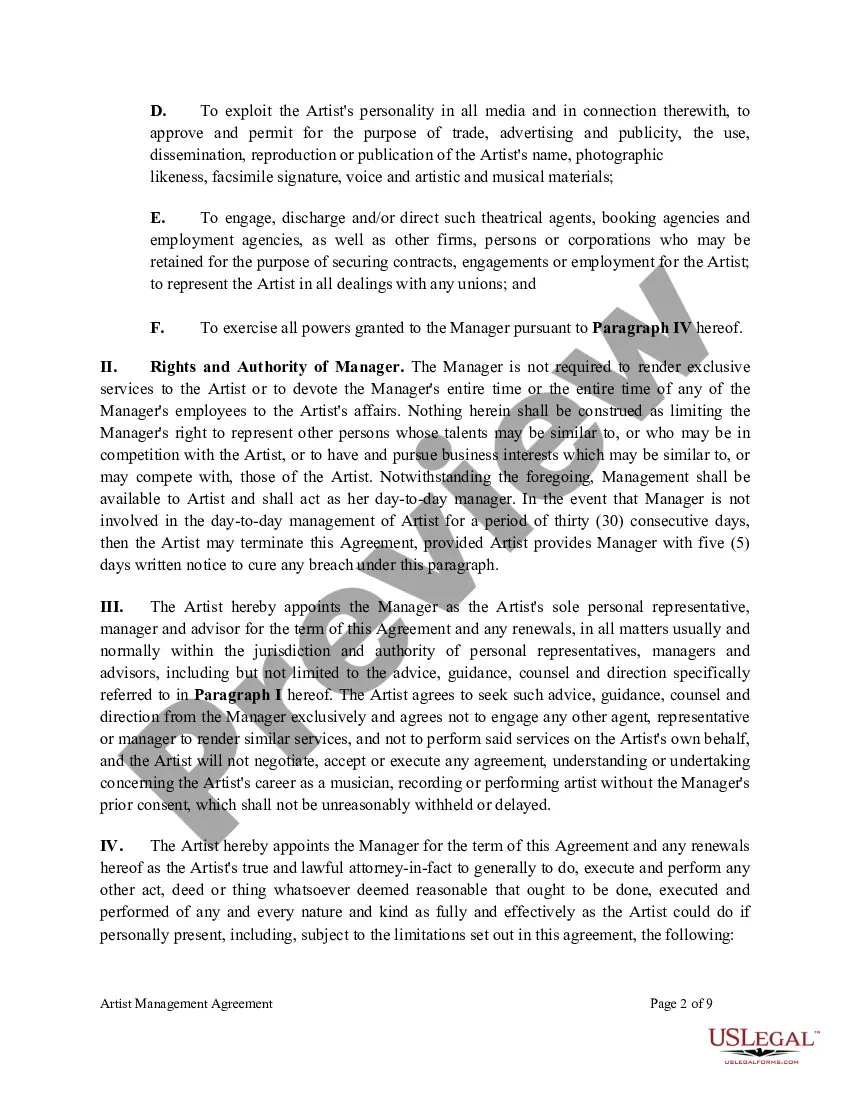
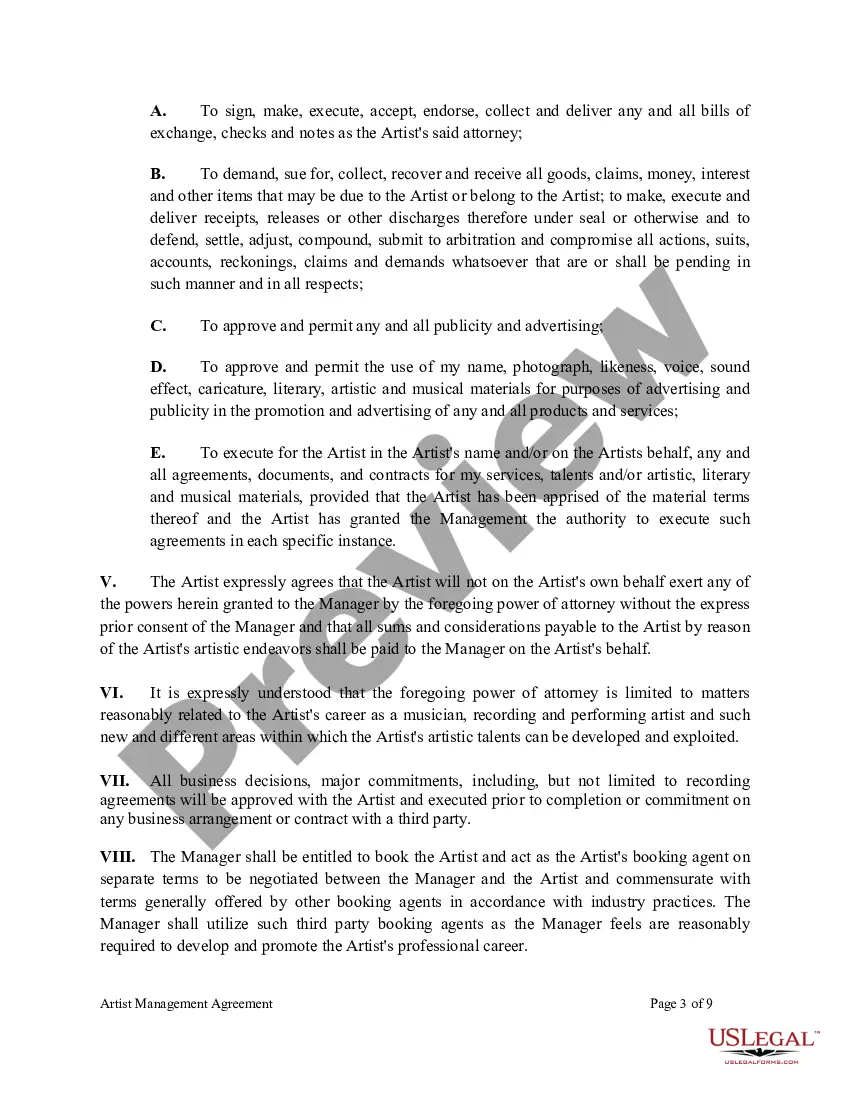
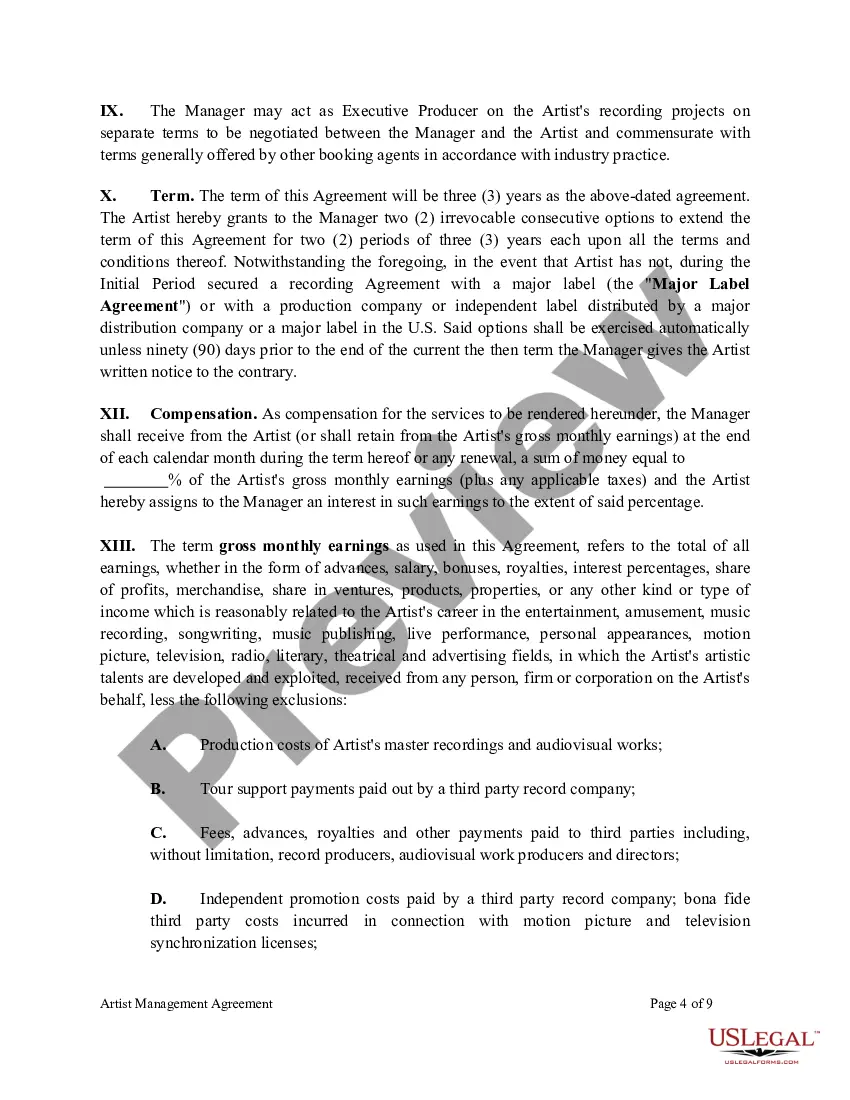
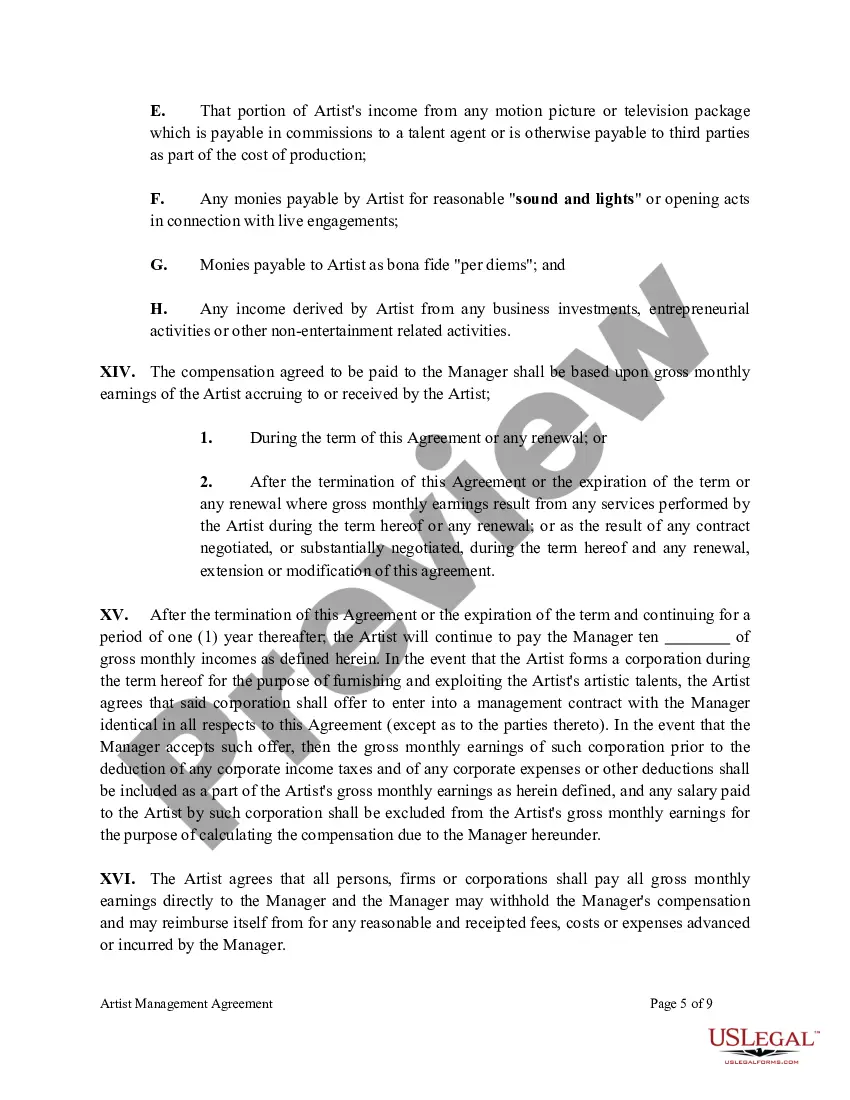
The artist agreement is between two parties who agree to work on specific projects and it governs their relations inter se. It is necessary to have a written agreement with definitive terms to avoid any disputes in the future between the parties.
Begin with a short introduction, basically explaining who you are, what you do, and where you do it. Finish off with a quick explanation of your work.
Here's an example: “Art has always been my muse, guiding my life's path towards creative expression. From the moment I held a paintbrush, I knew that art was more than just colors on a canvas; it was a form of storytelling, a means to connect with the world and express the deepest facets of my being.”
Writing an Artist's Statement? Start with These Questions What does your work look like? What are its physical properties? How does it exist in space? Where do we see it? Is your work temporal? How are you making this work? Why do you make this work? How do viewers experience your work?
What information does an artist's statement need to include? There are three elements to consider: the “how,” the “what,” and the “why.” There should be enough information in your artist statement that someone can begin to imagine the art that you make without having it in front of them.
