Manager Contract For Music Artist For Concert In Clark
Description




Form popularity
FAQ
Some examples of Contract Management activities are: Phone calls with suppliers; Meetings with suppliers; Score carding of suppliers; Site visits; Analysing performance information; Problem solving; Benchmarking against other similar contracts/suppliers; Analysing management information.
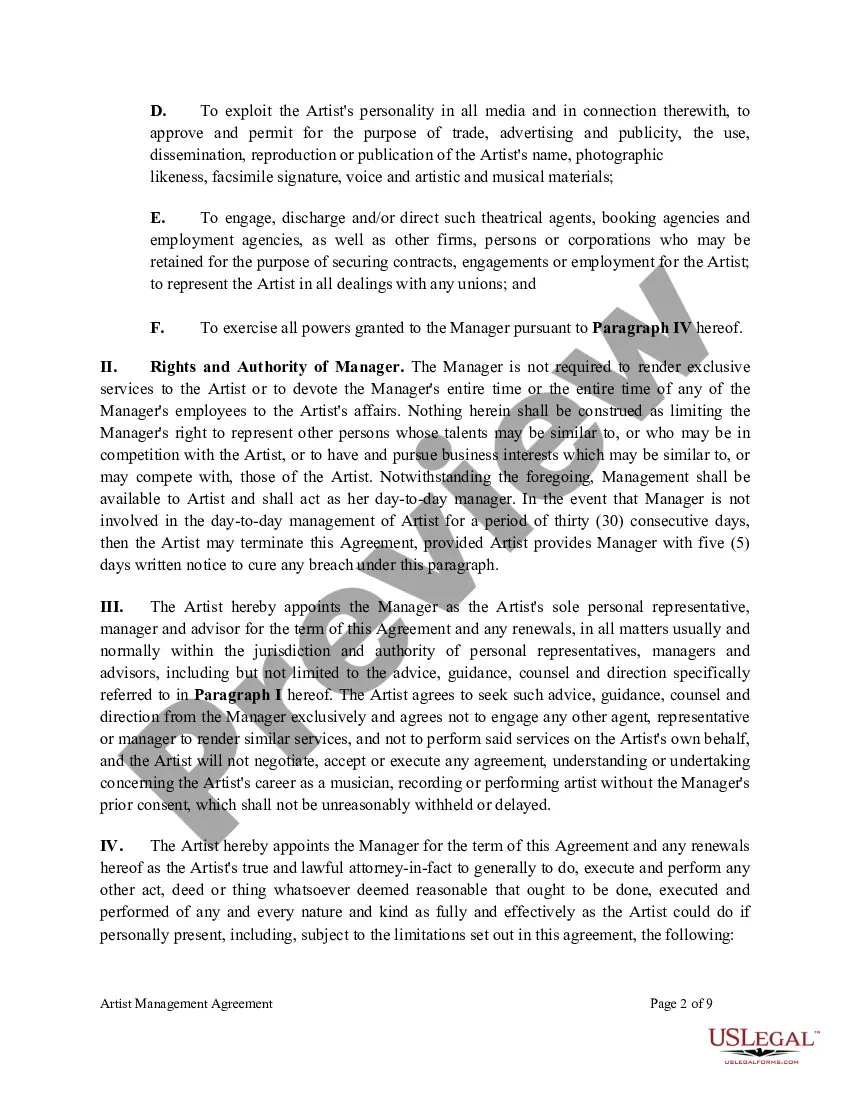
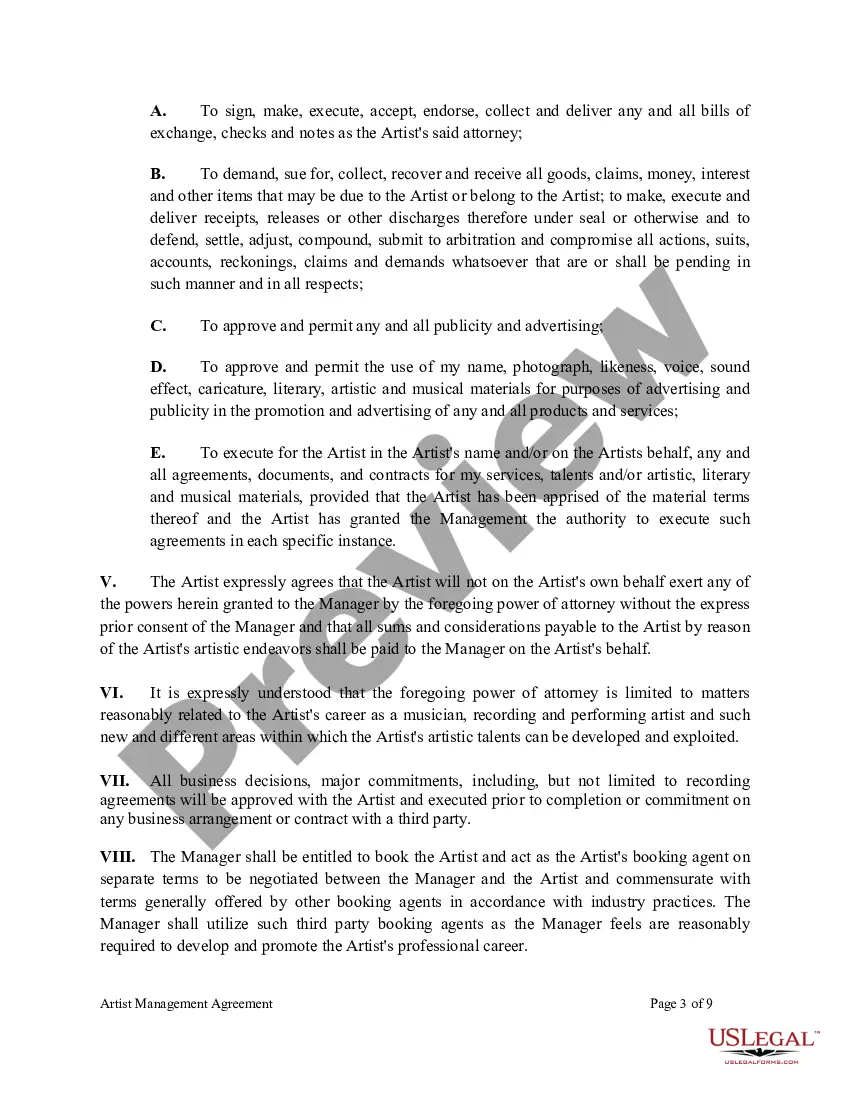
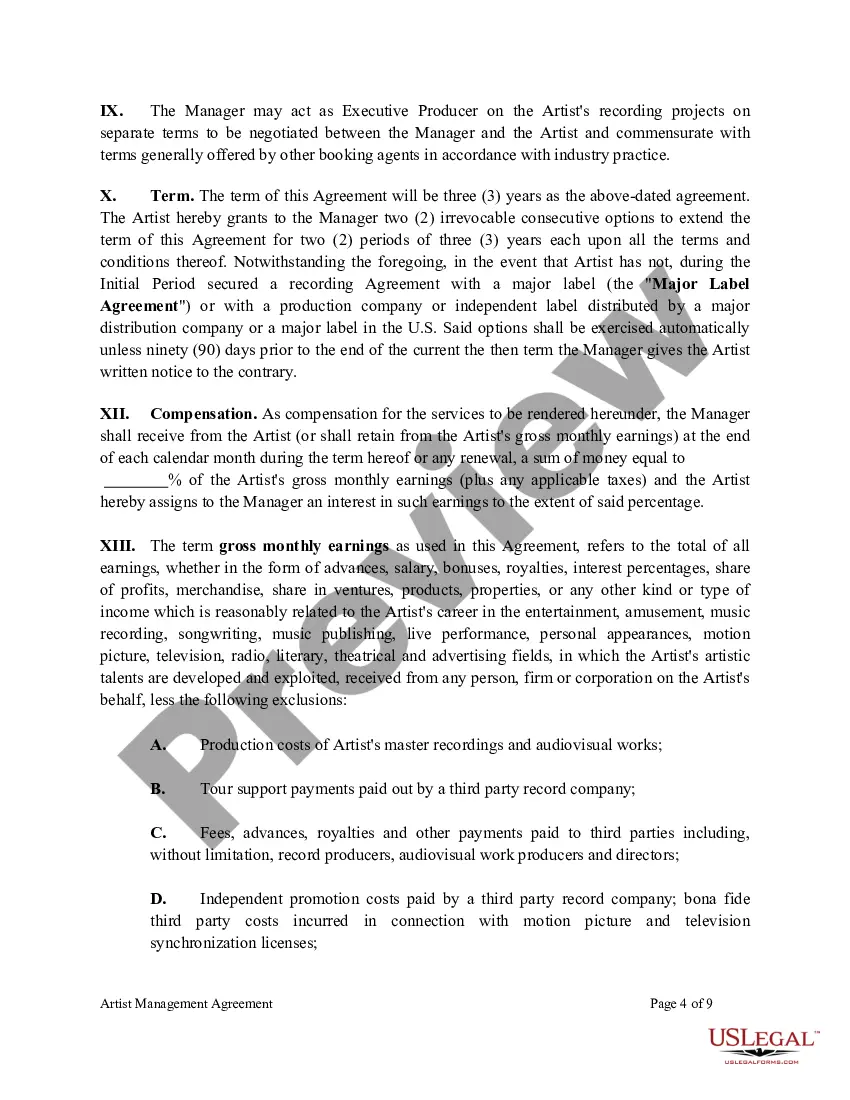
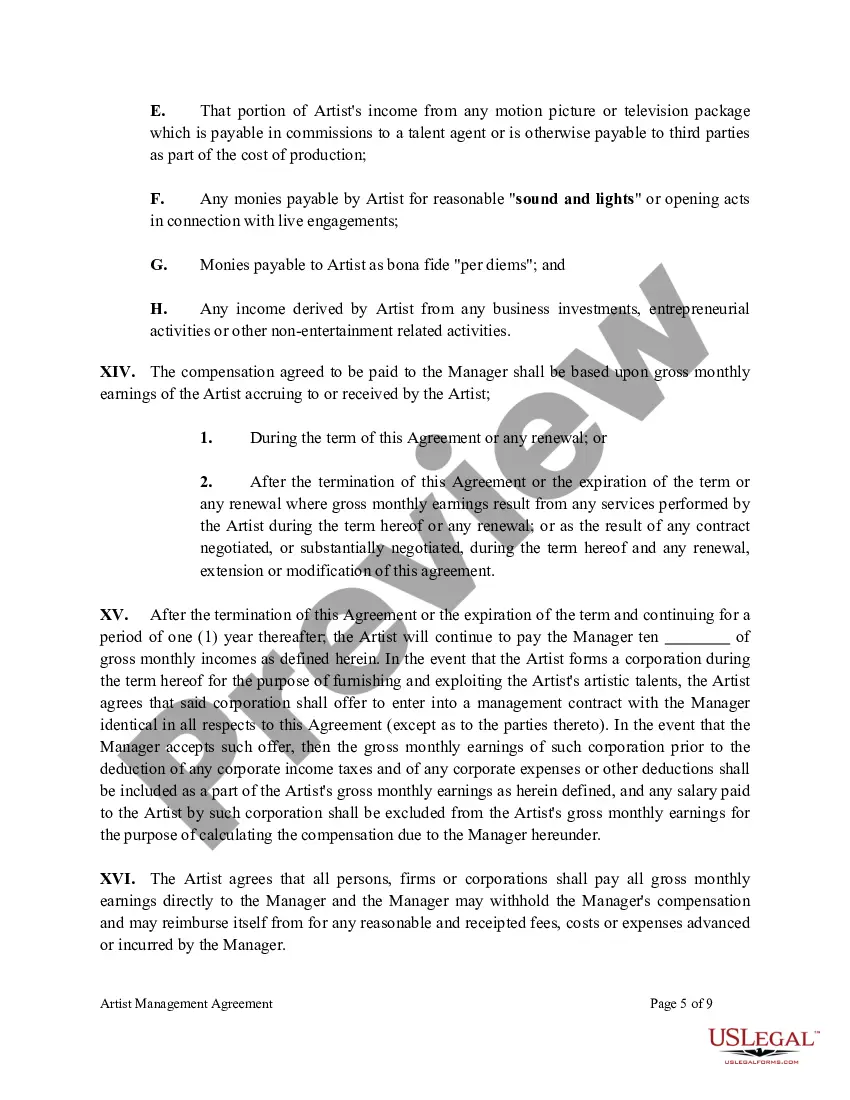
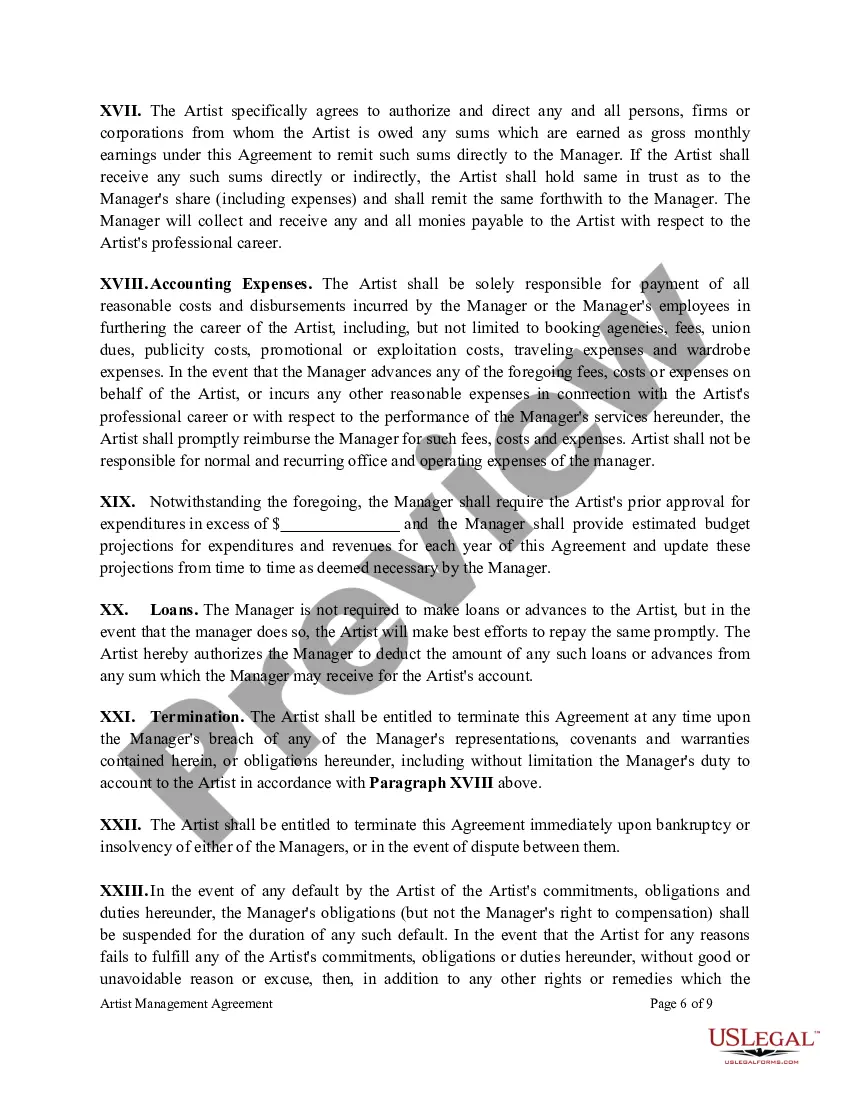
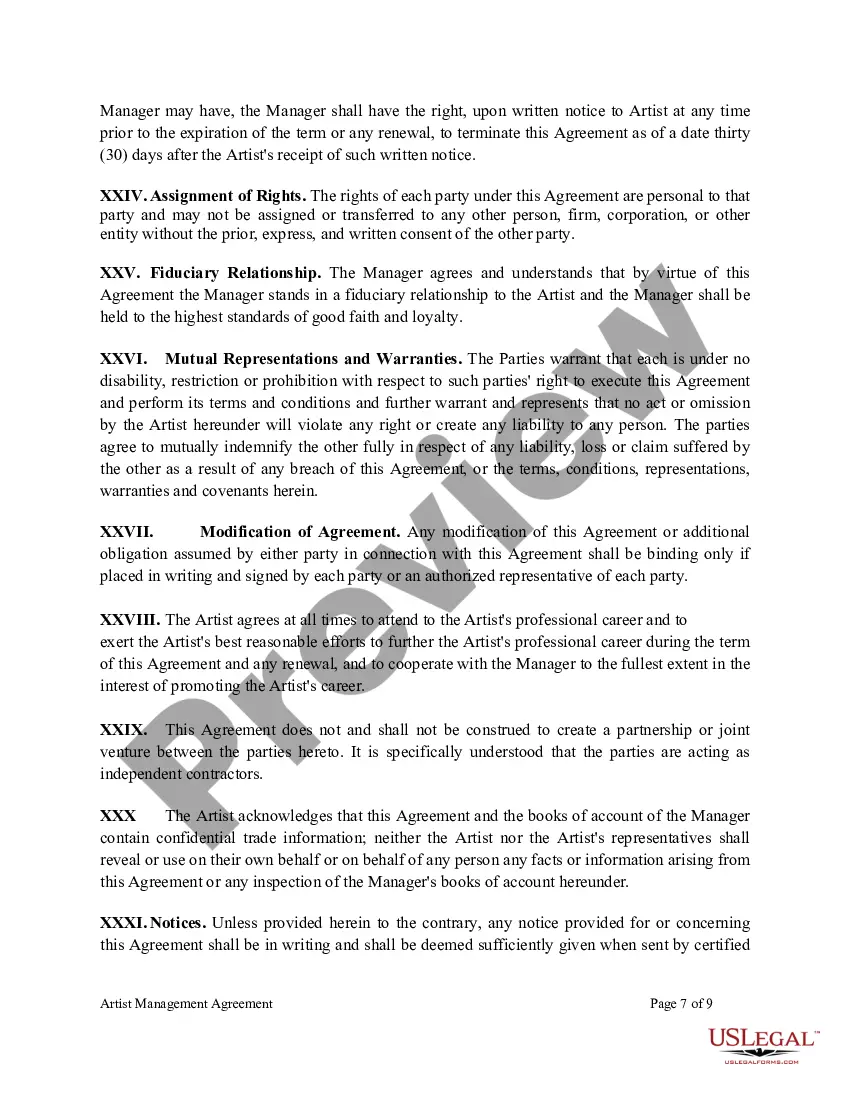
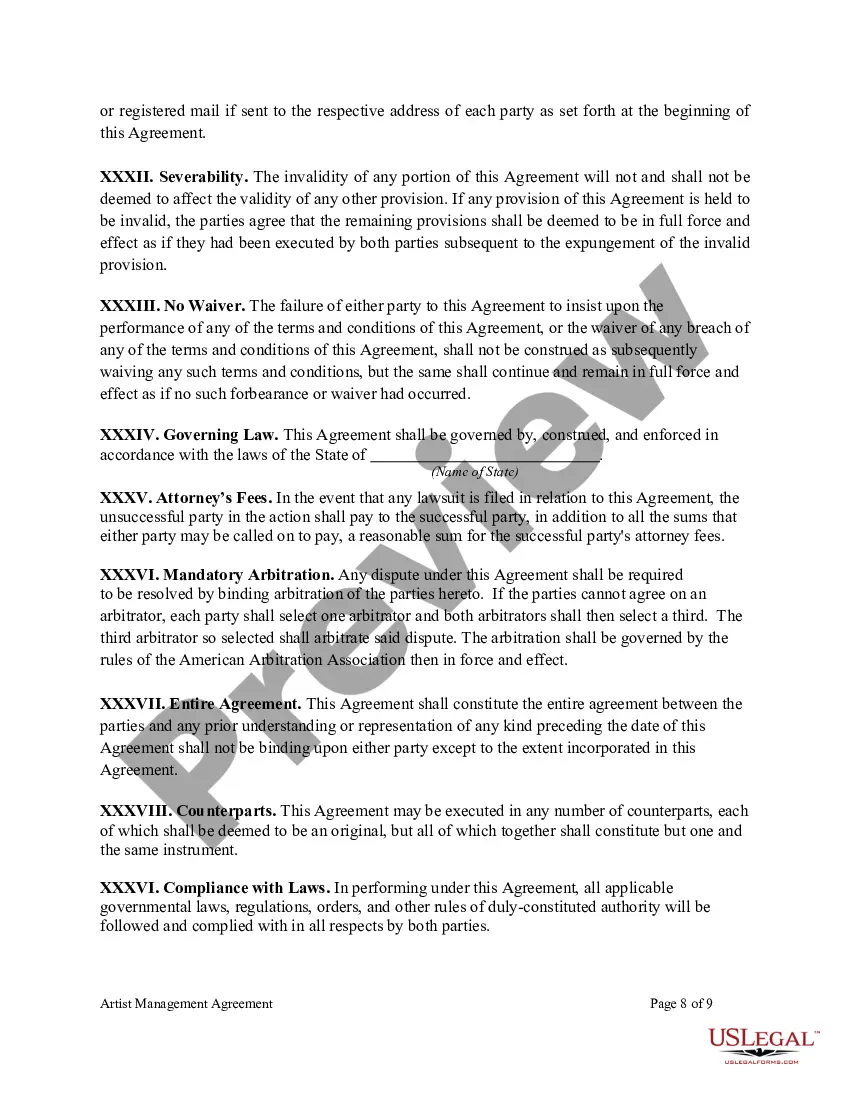
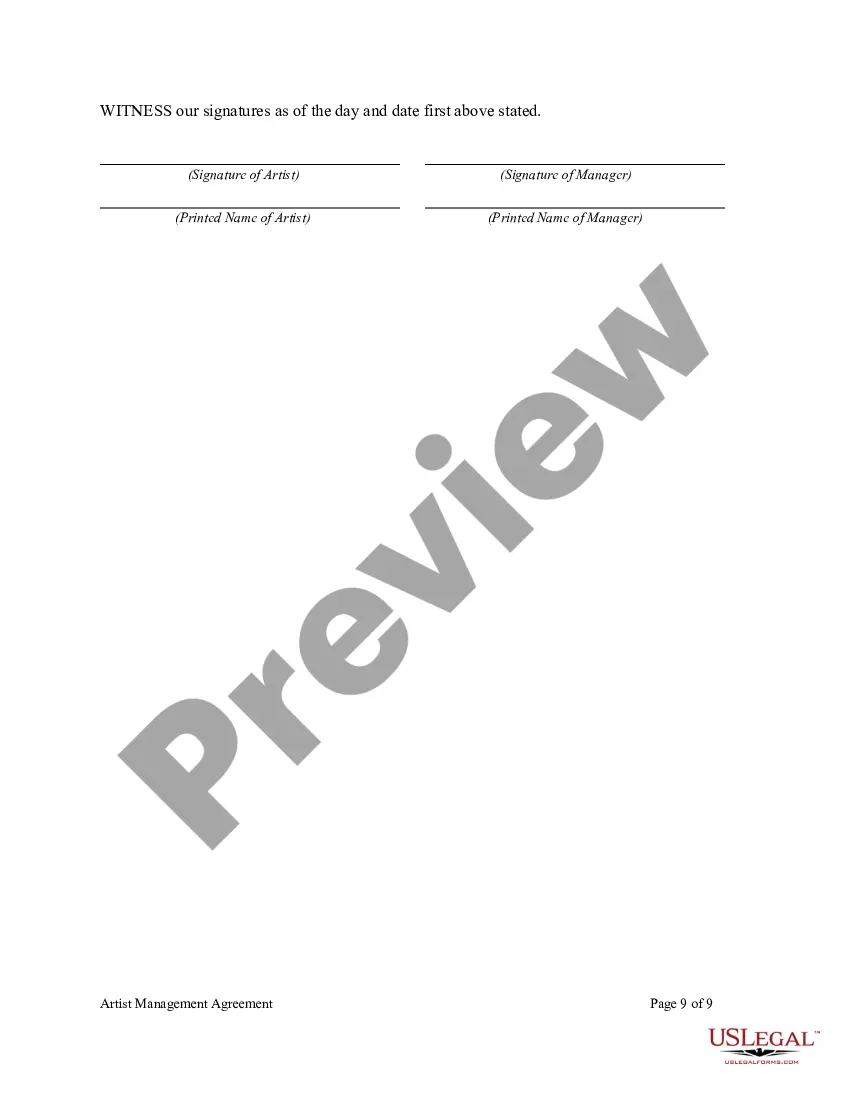
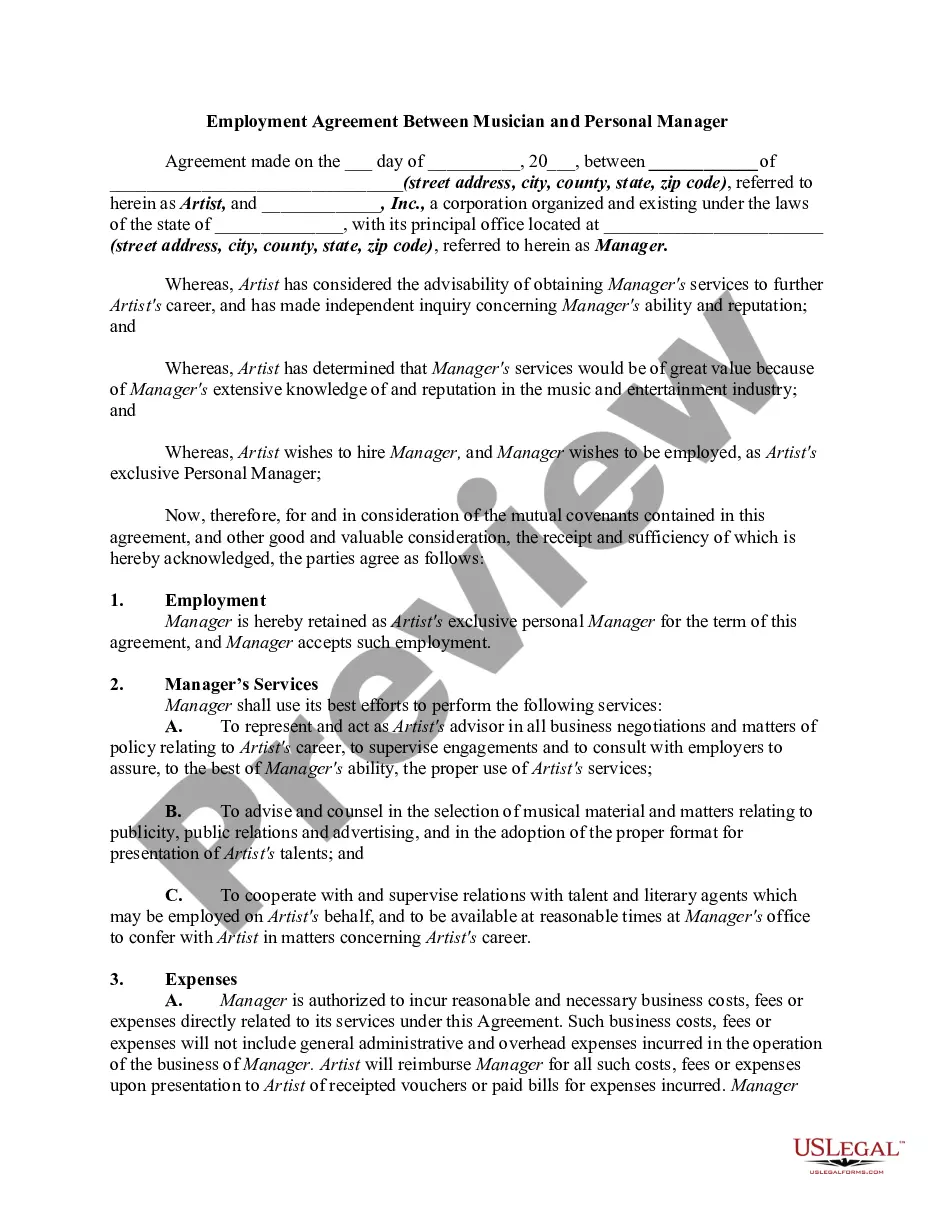
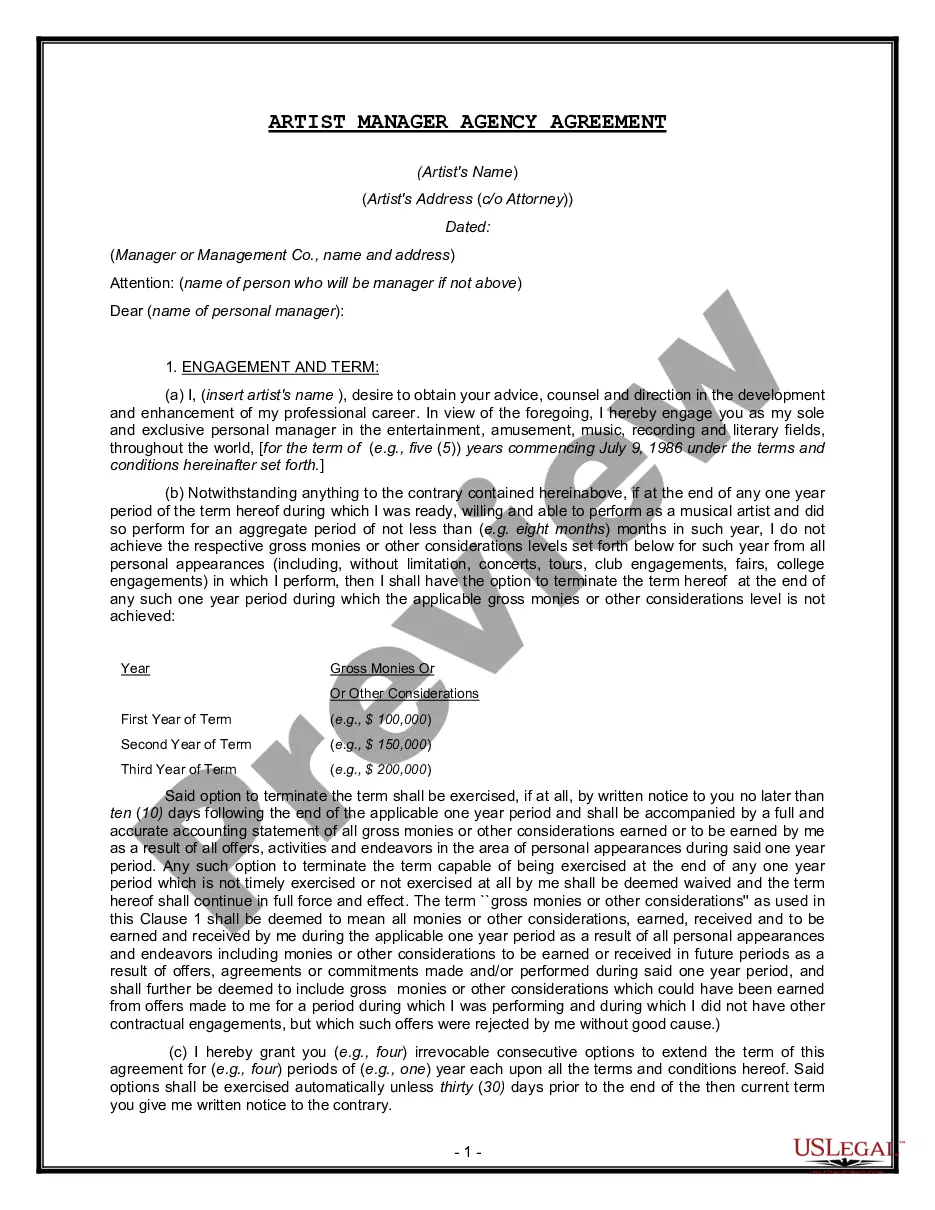
Common Sections in Artist Management Agreements ARTIST MANAGEMENT AGREEMENT. BACKGROUND. Services Of The Manager. Rights And Authority Of The Manager. Term. Compensation. Accounting. Expenses.
Management Contracts Involving Hotels The contract is between the hotel owner and the management company, which takes over operation management. Sometimes, the contract is for only one of the outlets of the hotel, whereas in other instances, the contract may be for the entire hotel chain.
Managers' commissions are typically between 15 to 20% of an artist's gross income. Whether it's 15% or 20% really depends on the level of the band and the bargaining power of each party. I've seen some net deals, but they are extremely rare. That being said, I always push for a net commission on merchandise.
Your Music Recording Contract should cover details like: Compensation and royalties. Where and when the album will be recorded. The album's release date. Who has creative control over specific elements of the album. The termination clause. The exclusive agreement clause. Dispute resolution. Promotional appearances.
A business management agreement formalizes the working relationship between a business and its manager. The contract will include information such as budgeting, the percentage of business revenue owed to the manager, and confidentiality requirements.
What Percentage Do They Make? The most common, or easiest gauging point for management percentage, at least in North America, is 15 to 20% of gross artist revenue. I personally don't know of anyone who charges 15% of gross but I have heard through the industry that some people do. I personally hear of 20% more often.
Your Music Recording Contract should cover details like: Compensation and royalties. Where and when the album will be recorded. The album's release date. Who has creative control over specific elements of the album. The termination clause. The exclusive agreement clause. Dispute resolution. Promotional appearances.
