Artist Agreement Form Document For Sale In Bronx
Description

Get your form ready online
Our built-in tools help you complete, sign, share, and store your documents in one place.
Make edits, fill in missing information, and update formatting in US Legal Forms—just like you would in MS Word.
Download a copy, print it, send it by email, or mail it via USPS—whatever works best for your next step.
Sign and collect signatures with our SignNow integration. Send to multiple recipients, set reminders, and more. Go Premium to unlock E-Sign.
If this form requires notarization, complete it online through a secure video call—no need to meet a notary in person or wait for an appointment.
We protect your documents and personal data by following strict security and privacy standards.

Make edits, fill in missing information, and update formatting in US Legal Forms—just like you would in MS Word.

Download a copy, print it, send it by email, or mail it via USPS—whatever works best for your next step.

Sign and collect signatures with our SignNow integration. Send to multiple recipients, set reminders, and more. Go Premium to unlock E-Sign.

If this form requires notarization, complete it online through a secure video call—no need to meet a notary in person or wait for an appointment.

We protect your documents and personal data by following strict security and privacy standards.
Looking for another form?
Form popularity
FAQ
Yes, you can write your own contract. However, including all necessary elements is crucial to make it legally binding.
An agreement is made when two parties agree to something. So, for example, a mother might make an agreement with her son not to kiss him in public because, after kindergarten, well, that's just not cool. If people's opinions are in , or match one another, then they are in agreement.
Creating a Self-Contract Stick to just one goal. Write down the steps you need to take to achieve the goal. Set a deadline for the contract to one day, or a week at most. Keep it short and focused, but formal. Focus on the upsides of the contract. Change the contract if you feel that you've accomplished it already.
An exclusive agreement in music licensing means that the artist grants all the rights to a particular piece of music to one party (such as a publisher or a record label) exclusively. This means no other party can use the music without permission from the licensee.
Like its name suggests, an exclusive contract is one that restricts a party from providing the same goods/services to others for a specified period of time. This can also be applied in the context where a company obtains exclusive rights and agrees to do business exclusively with another company.
A copyright exclusive license is one in which ownership in one or more of the copyright owner's rights is transferred by the copyright owner to a third party. A copyright nonexclusive license occurs when the owner retains ownership of the copyright and retains the right to license the same right to others.
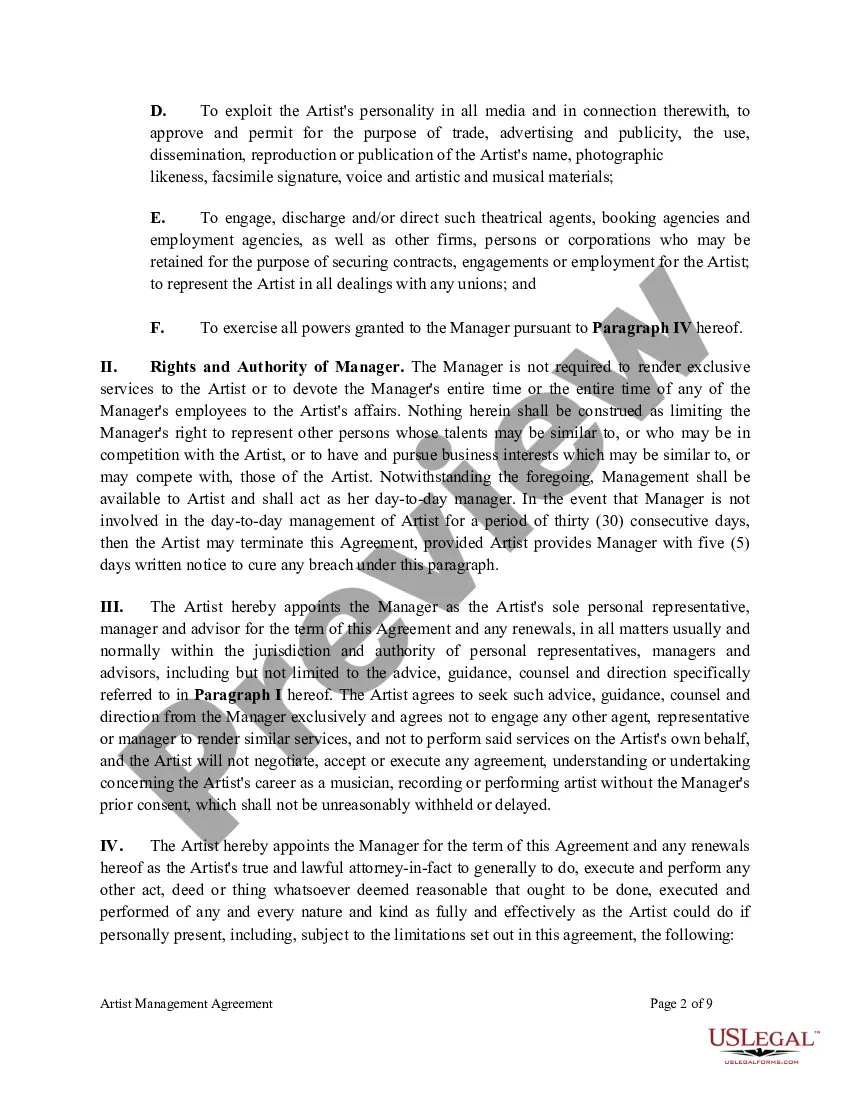
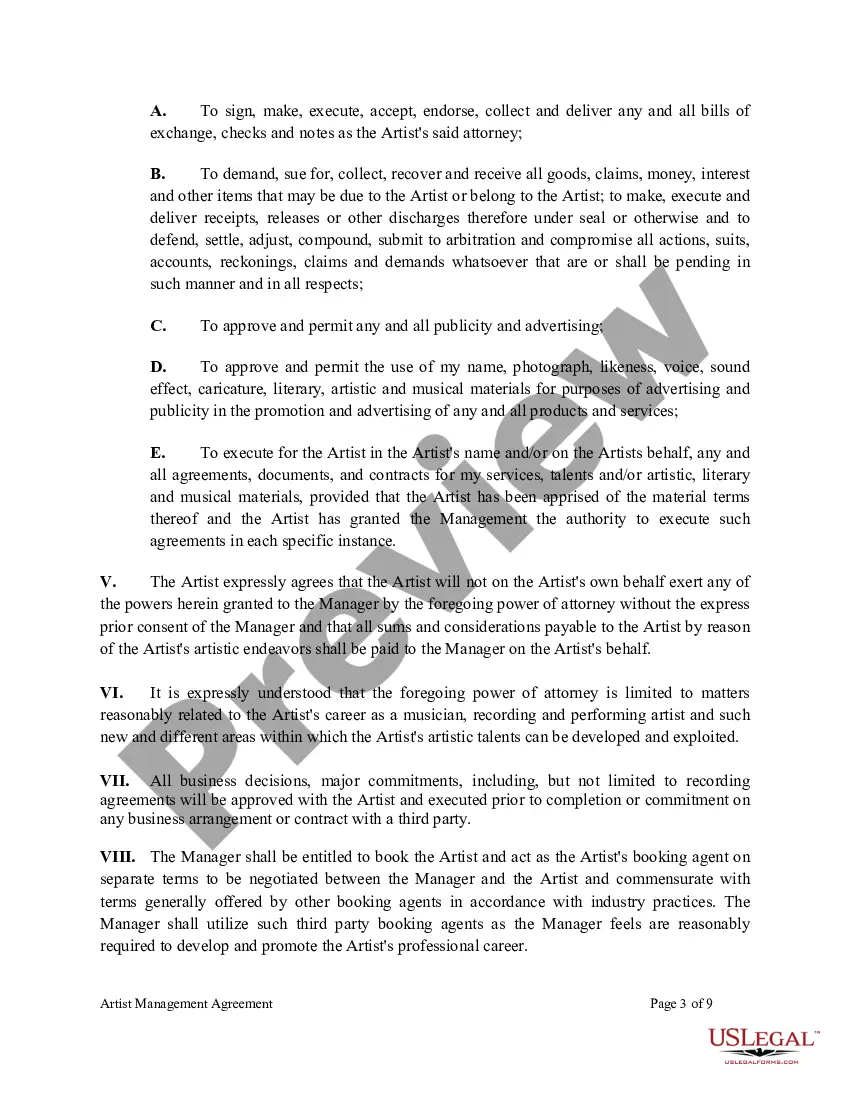
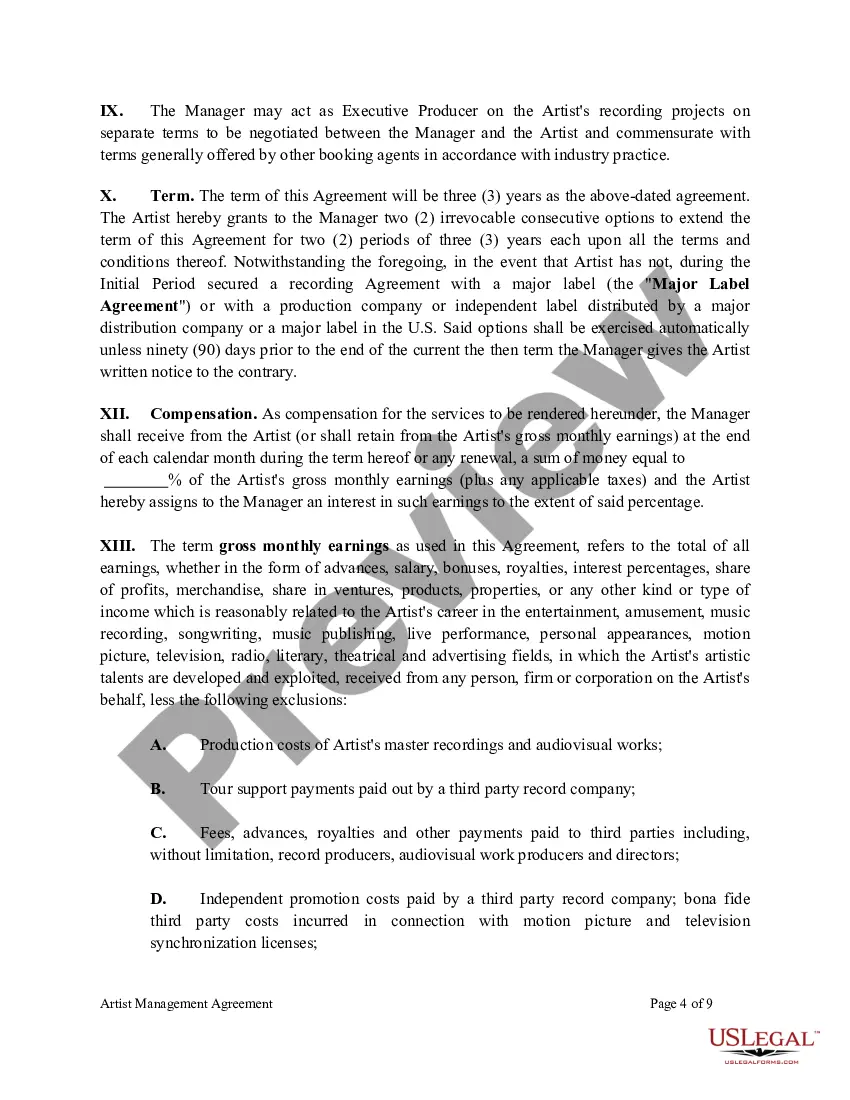
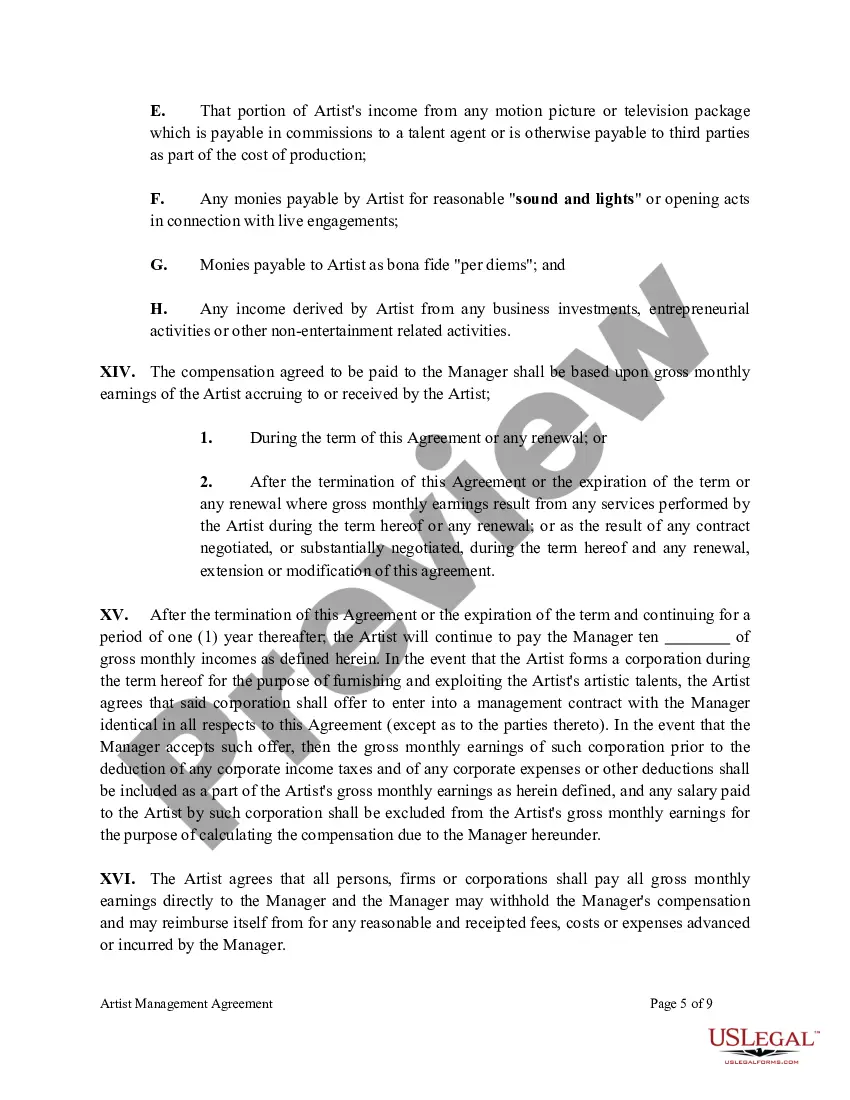
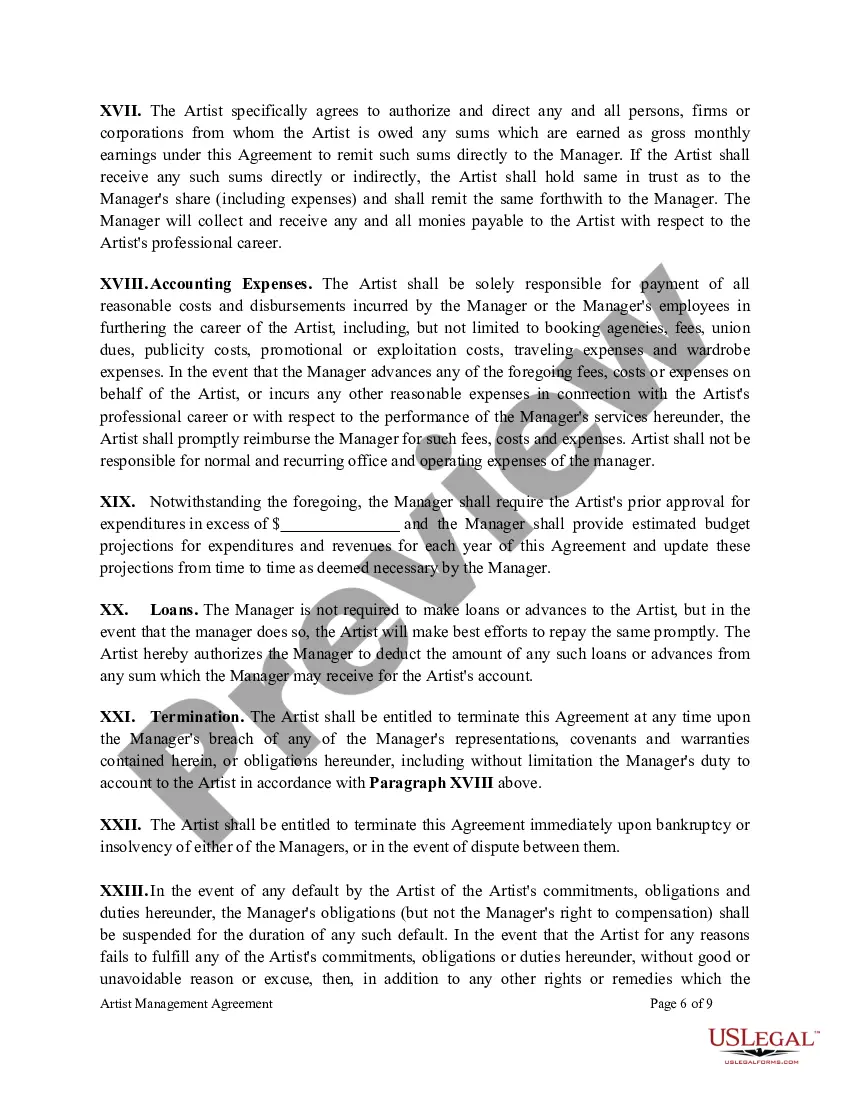
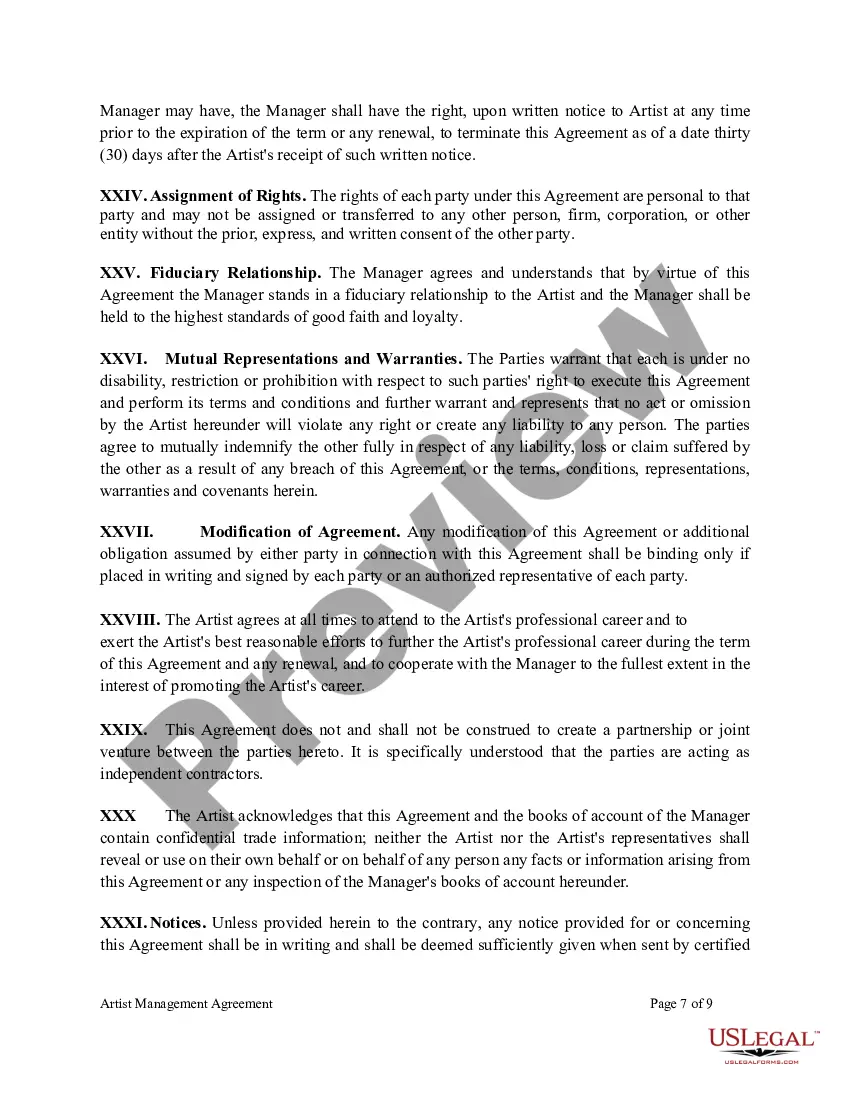
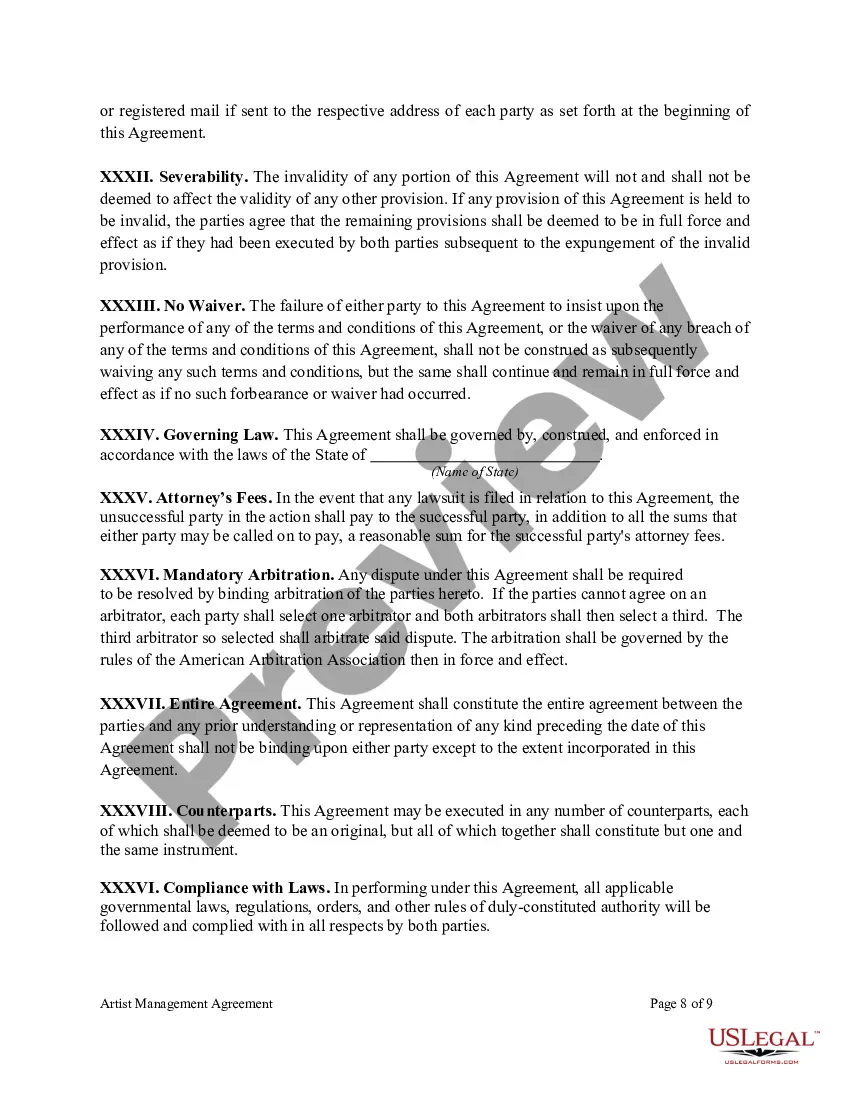
An artist contract outlines the rights of the artist regarding their creations — this includes licensing, use, and distribution. This safeguards intellectual property rights and binds both parties to adhere to the contract terms regarding ownership.
Generally, to be legally valid, most contracts must contain two elements: All parties must agree about an offer made by one party and accepted by the other. Something of value must be exchanged for something else of value.
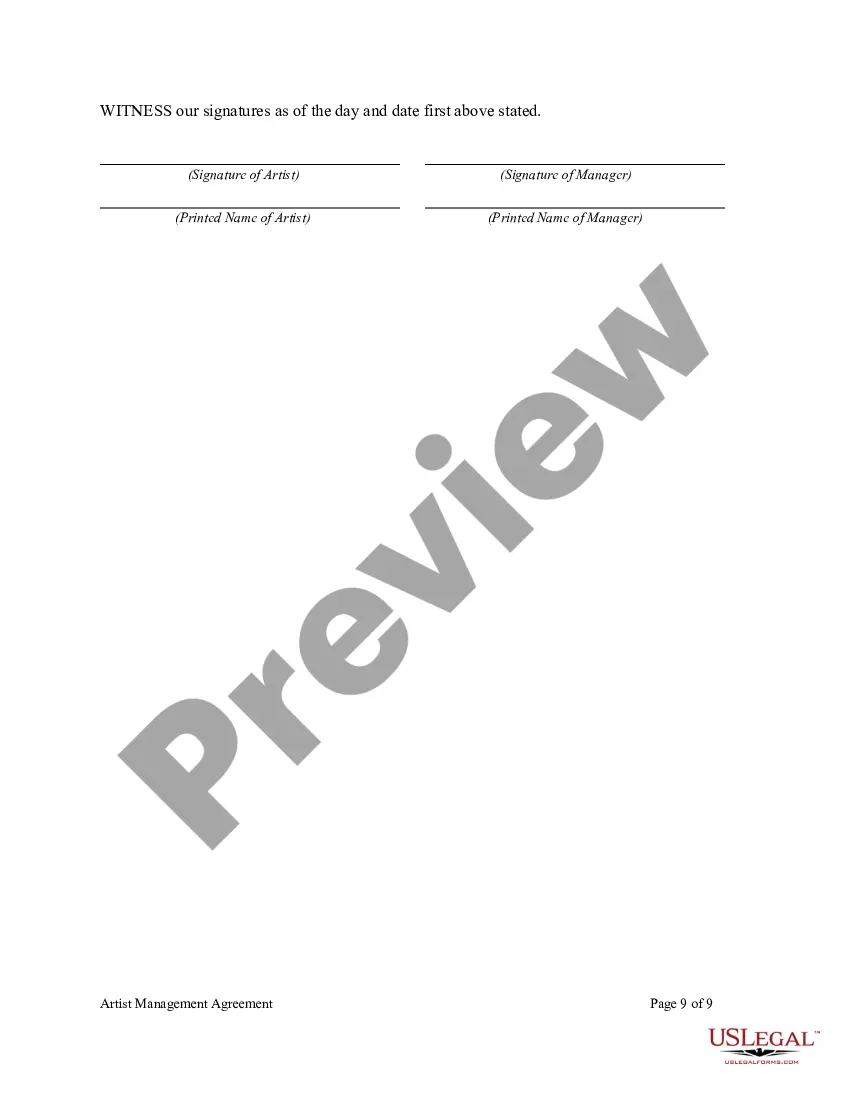
Contracts like an artist agreement help avoid miscommunications and confusion over the rights and responsibilities of both parties involved. Artist agreements typically include availability expectations, performance markers, and licensing or ownership rights of the works created during the partnership.
