Talent Management Contract For Actors In Allegheny
Description

Get your form ready online
Our built-in tools help you complete, sign, share, and store your documents in one place.
Make edits, fill in missing information, and update formatting in US Legal Forms—just like you would in MS Word.
Download a copy, print it, send it by email, or mail it via USPS—whatever works best for your next step.
Sign and collect signatures with our SignNow integration. Send to multiple recipients, set reminders, and more. Go Premium to unlock E-Sign.
If this form requires notarization, complete it online through a secure video call—no need to meet a notary in person or wait for an appointment.
We protect your documents and personal data by following strict security and privacy standards.

Make edits, fill in missing information, and update formatting in US Legal Forms—just like you would in MS Word.

Download a copy, print it, send it by email, or mail it via USPS—whatever works best for your next step.

Sign and collect signatures with our SignNow integration. Send to multiple recipients, set reminders, and more. Go Premium to unlock E-Sign.

If this form requires notarization, complete it online through a secure video call—no need to meet a notary in person or wait for an appointment.

We protect your documents and personal data by following strict security and privacy standards.
Looking for another form?










Form popularity
FAQ
Typically, the term of a Talent Agency Agreement will range anywhere between six months to three years. For Talent engaging their first Agency, it is advisable for Talent to try to negotiate a relatively short initial term (e.g., a one-year initial term).
How long is a normal artist manager contract? The standard length of the management contract is three years but it can vary from 2 to 5 years on a case by case basis. Most contracts also include a "Sunset" clause.
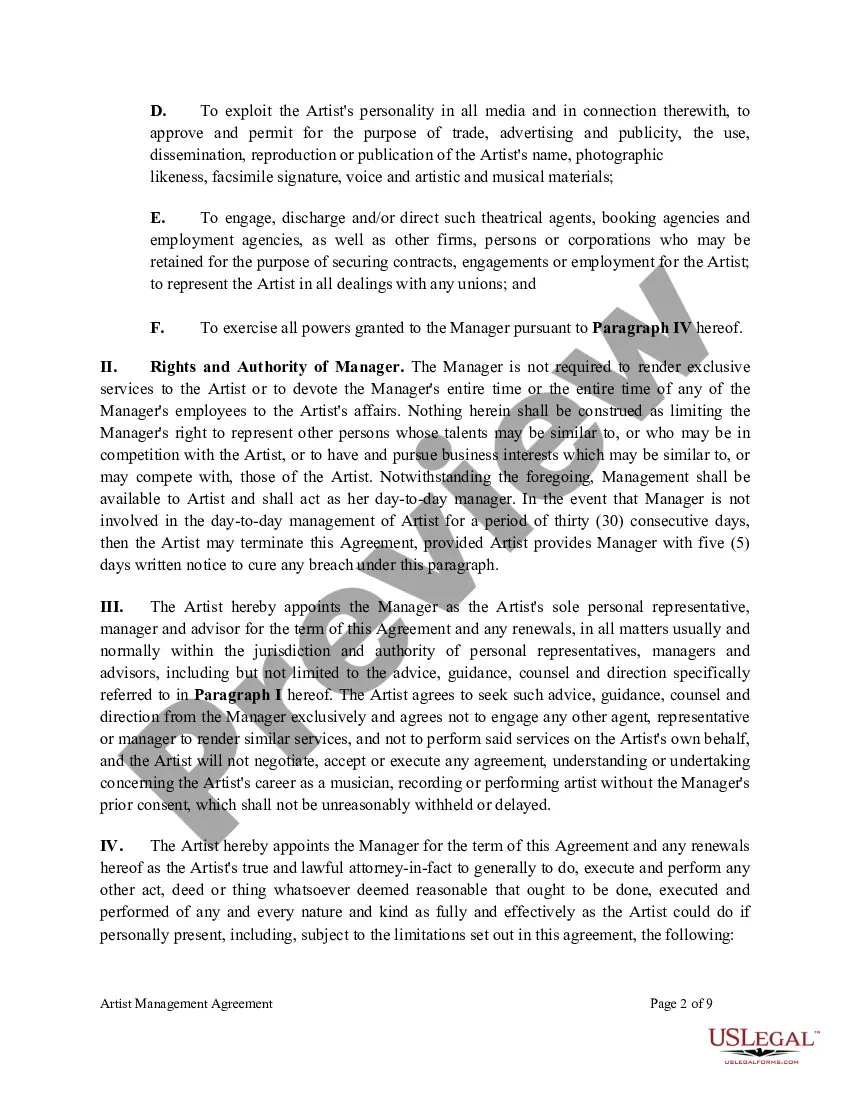
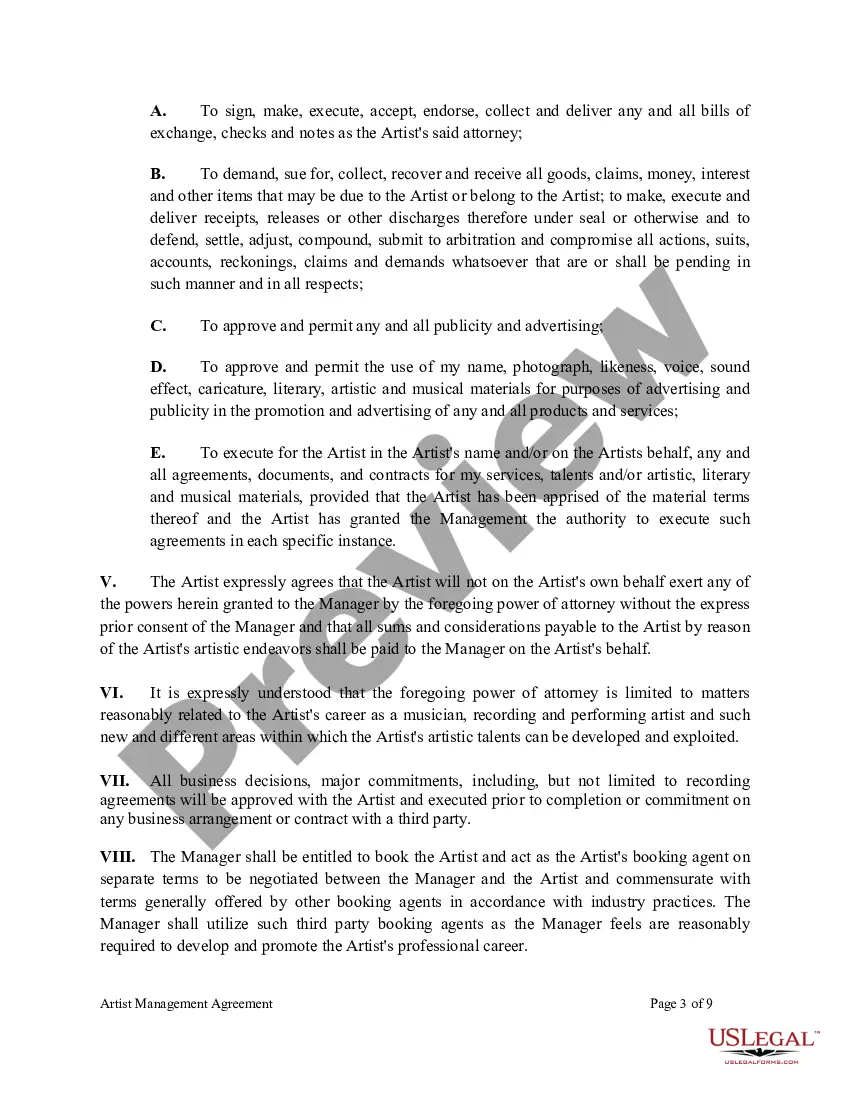
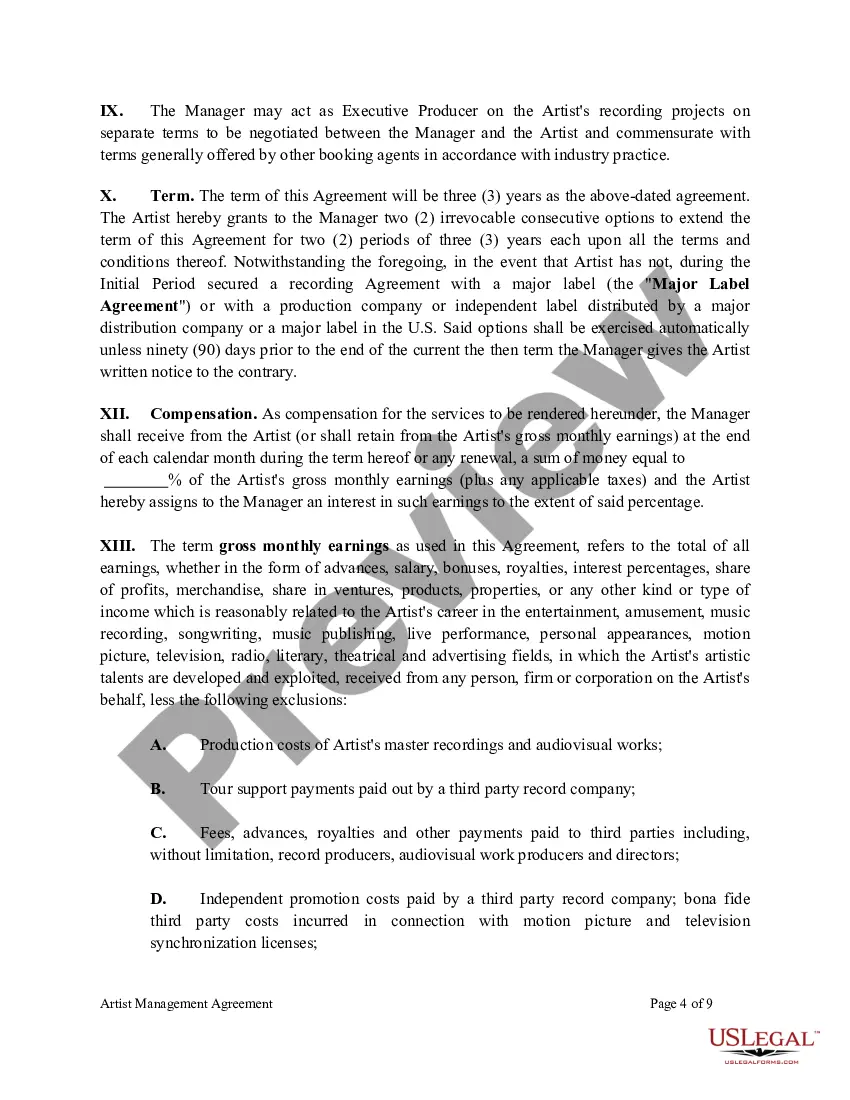
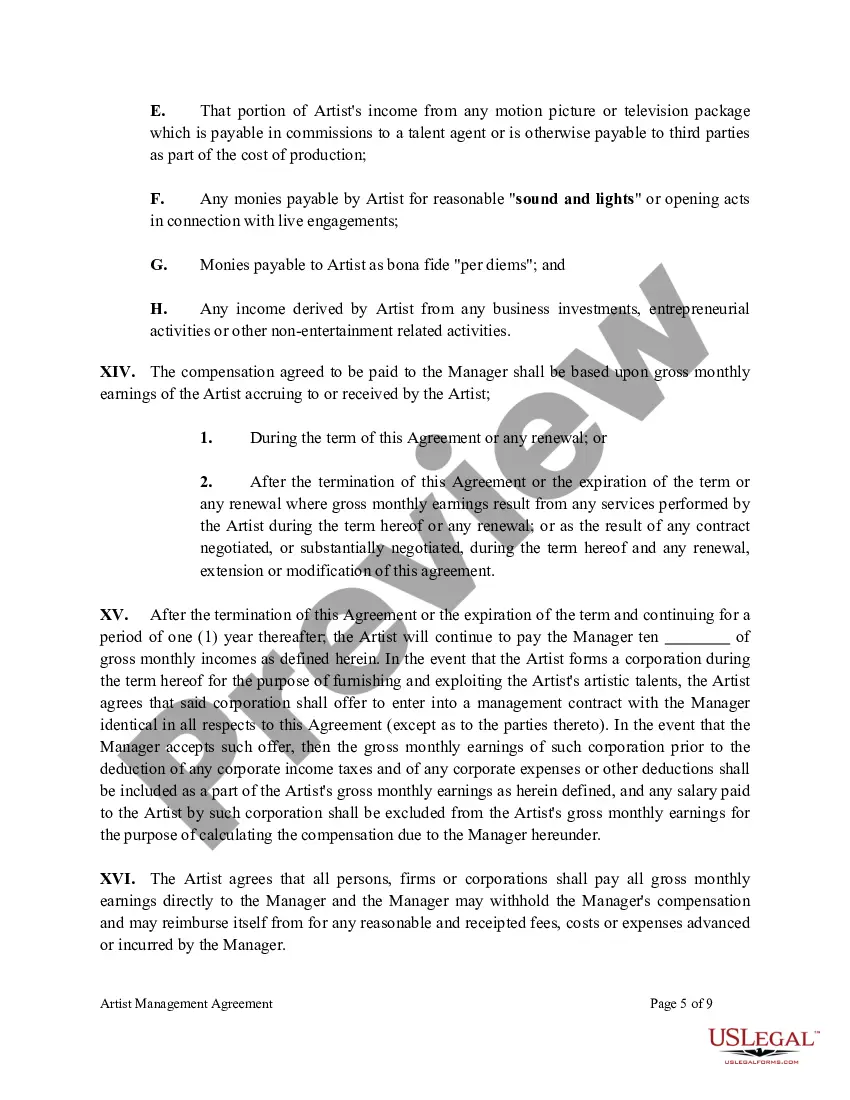
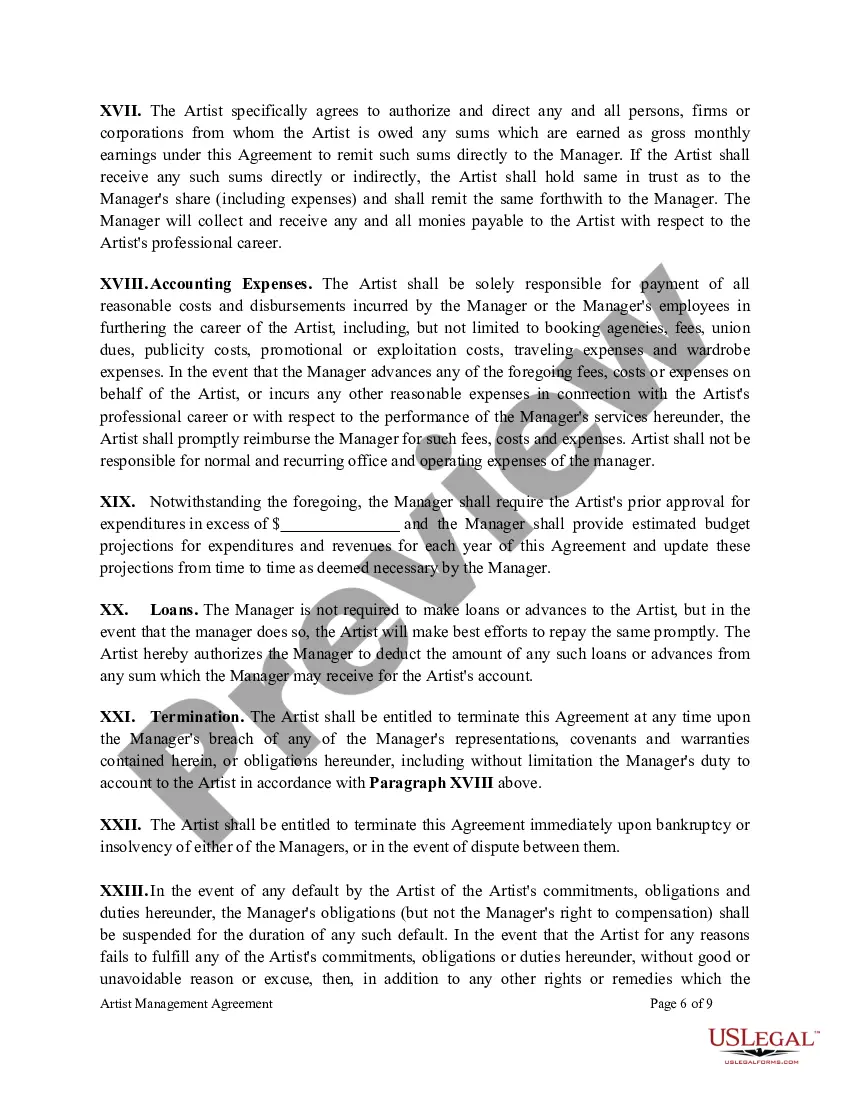
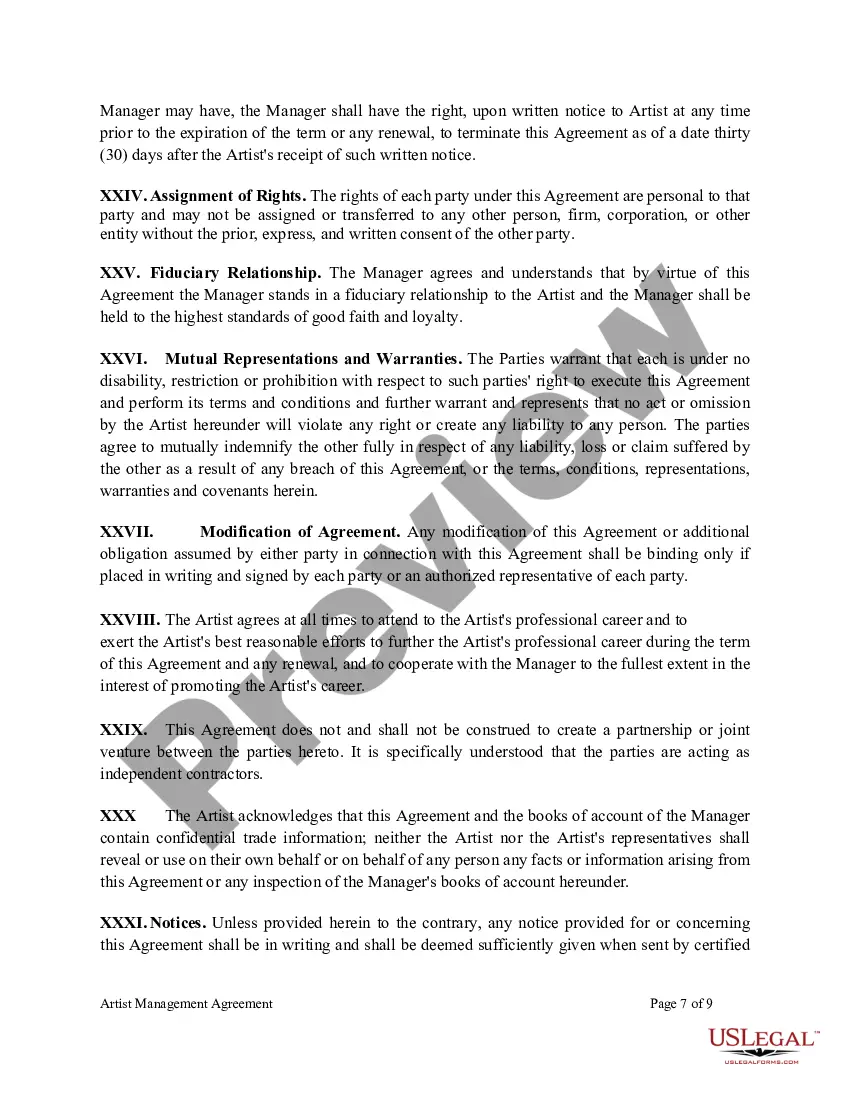
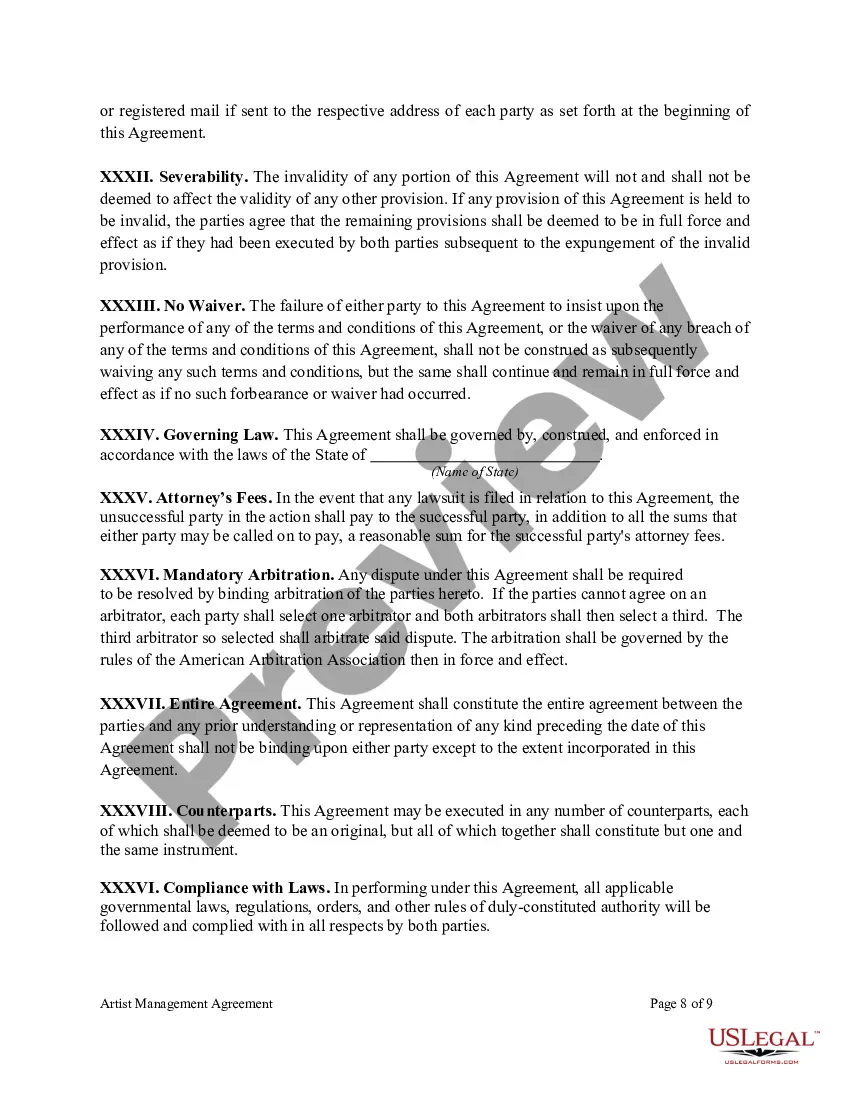
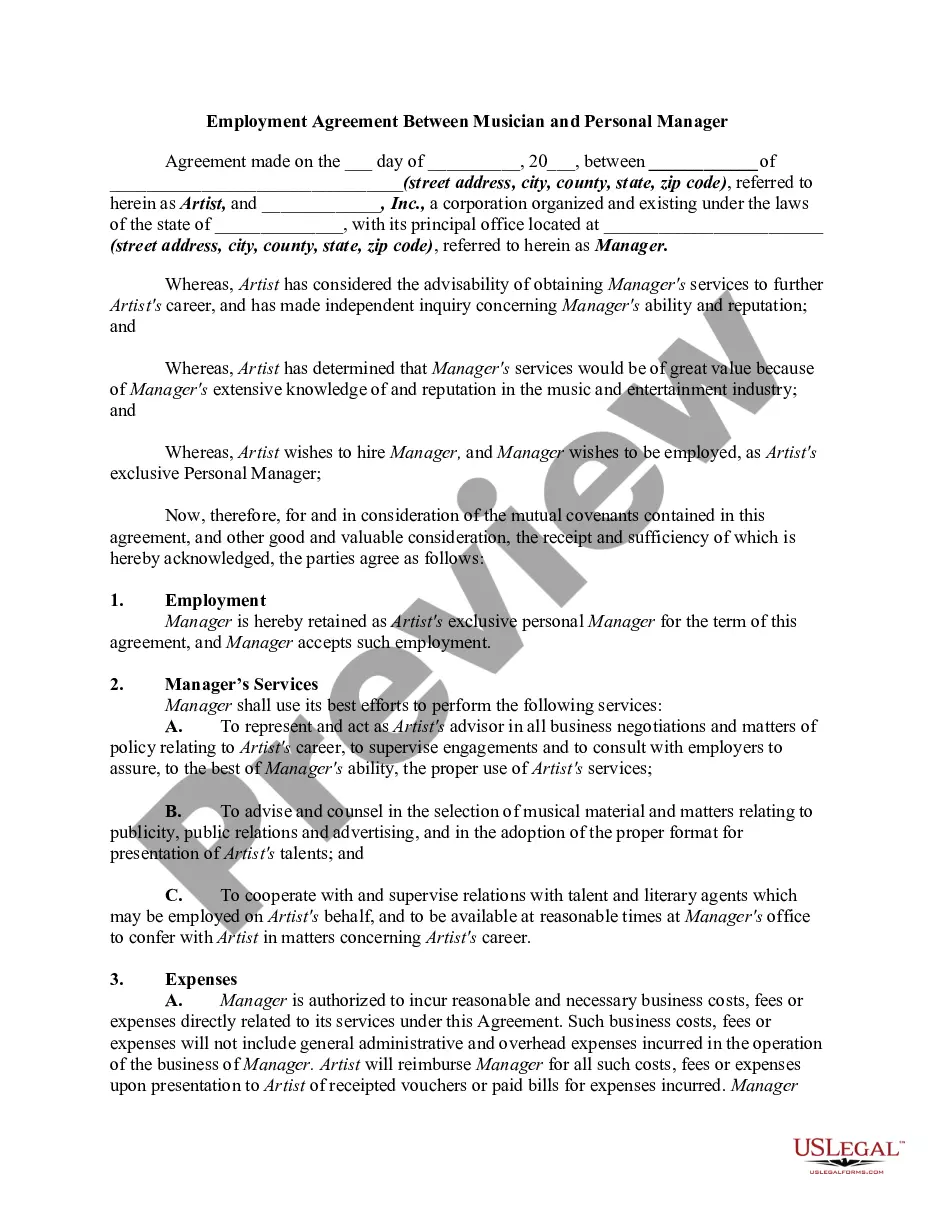
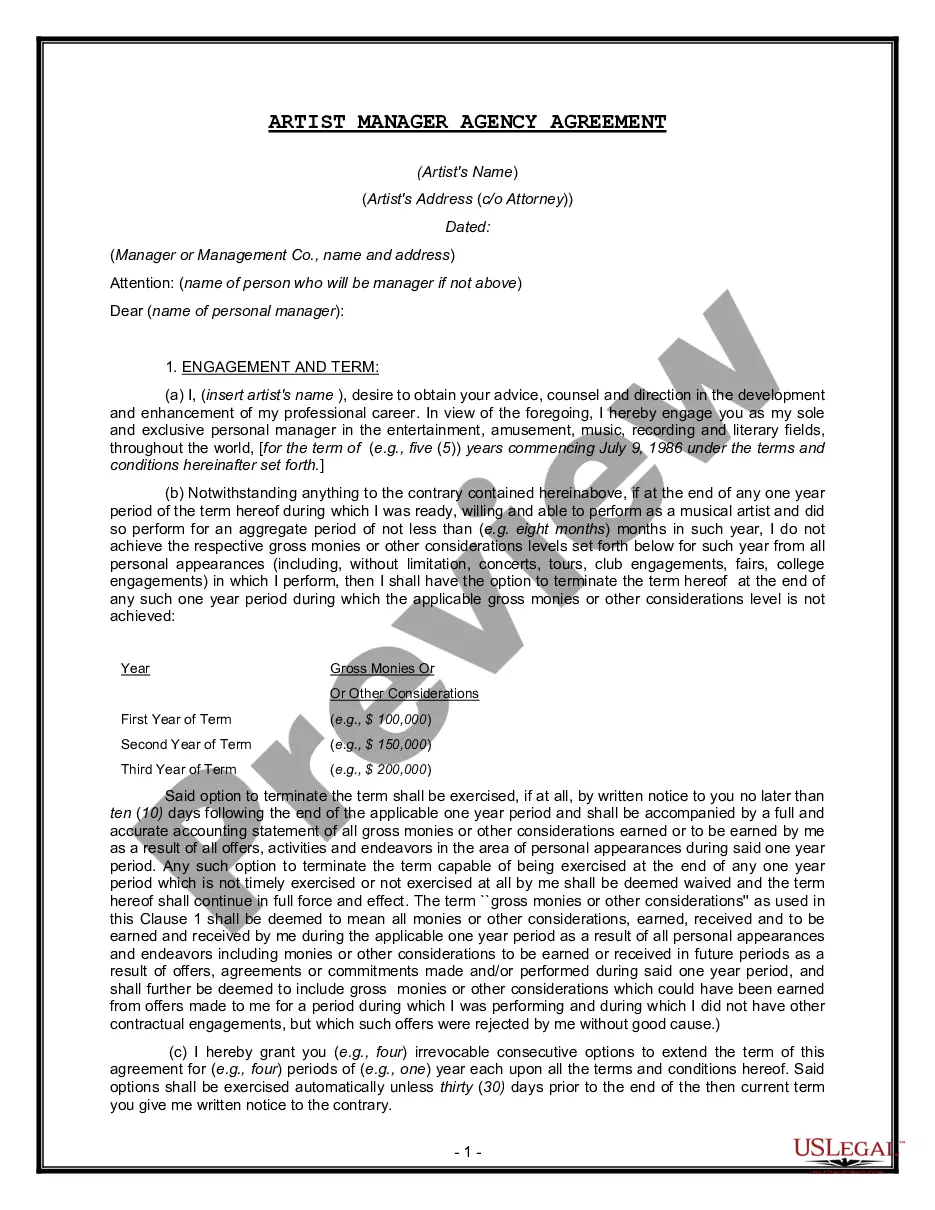
This exclusive contract outlines the professional agreement between an artist and a talent agency. It includes terms for negotiation, compensation, and employment conditions. Ideal for artists seeking representation in entertainment fields.
Managers typically receive 15% to 20% of the artist's gross earnings (before any expenses are deducted), but this figure can vary from contract to contract. For example, a manager might start at 20% and decrease his or her cut to 15% after a period of time or once the artist achieves a certain level in their career.
Talent agreement means any Contract between a Company Entity or Company Subsidiary, on the one hand, and an individual actor, producer, director, host, judge, performer, athlete, writer or other talent or client, on the other hand.
Most actors or other entertainment talents retain an agent or manager to represent them. This usually involves signing a talent representation agreement that defines the services provided by the agent and the compensation received in return.
A talent agency contract is a legal agreement between a talent agency and a talent, such as an actor, musician, or model. This contract outlines the terms and conditions under which the talent agency will represent the talent and seek out opportunities for them to work in their industry.
These might include projects that are already underway or work in a different field. An actor signing an agreement for representation in TV projects, for example, might want to exclude theater work. Most talent representation agreements last for a term between one and five years.
Contract recruiting, also referred to as temporary staffing, is the act of recruiting talent under a fixed-term contract. This arrangement means that the worker isn't hired as a direct employee but instead engaged as an independent contractor who isn't tied to you as their single employer.
