Board Directors Resolution Without Meeting In San Bernardino
Description




Get your form ready online
Our built-in tools help you complete, sign, share, and store your documents in one place.
Make edits, fill in missing information, and update formatting in US Legal Forms—just like you would in MS Word.
Download a copy, print it, send it by email, or mail it via USPS—whatever works best for your next step.
Sign and collect signatures with our SignNow integration. Send to multiple recipients, set reminders, and more. Go Premium to unlock E-Sign.
If this form requires notarization, complete it online through a secure video call—no need to meet a notary in person or wait for an appointment.
We protect your documents and personal data by following strict security and privacy standards.

Make edits, fill in missing information, and update formatting in US Legal Forms—just like you would in MS Word.

Download a copy, print it, send it by email, or mail it via USPS—whatever works best for your next step.

Sign and collect signatures with our SignNow integration. Send to multiple recipients, set reminders, and more. Go Premium to unlock E-Sign.

If this form requires notarization, complete it online through a secure video call—no need to meet a notary in person or wait for an appointment.

We protect your documents and personal data by following strict security and privacy standards.
Looking for another form?






Form popularity
FAQ
How to fill out a resolution of the board of directors? Date, time, and location of the meeting. Title that describes the board's decision to be made. Statement of majority or unanimous decision. Resolution of the decision, including any necessary actions. Officers responsible for carrying out the resolution.
It is possible for members to pass a resolution without holding a general meeting. To do this, all the members entitled to vote on a resolution must sign a document stating that they are in favour of the resolution set out in the document.
Three forms of resolutions are available: ordinary resolution, special resolution and unanimous resolution. There is no concept of special resolution in board meetings and very few unanimous resolutions are also required. However, all three are covered in the case of general meetings.
A Directors' Consent in Lieu of Meeting is a written consent for a corporation's specific action without having to arrange a board meeting. If they have previously agreed on passing a particular resolution, then using a written consent is a simple shortcut serving this purpose.
In lieu of is a preposition that means instead of or in place of. It is often used to describe a substitution or replacement for something else. For example, if someone is unable to attend an event, they might send a gift in lieu of their attendance.
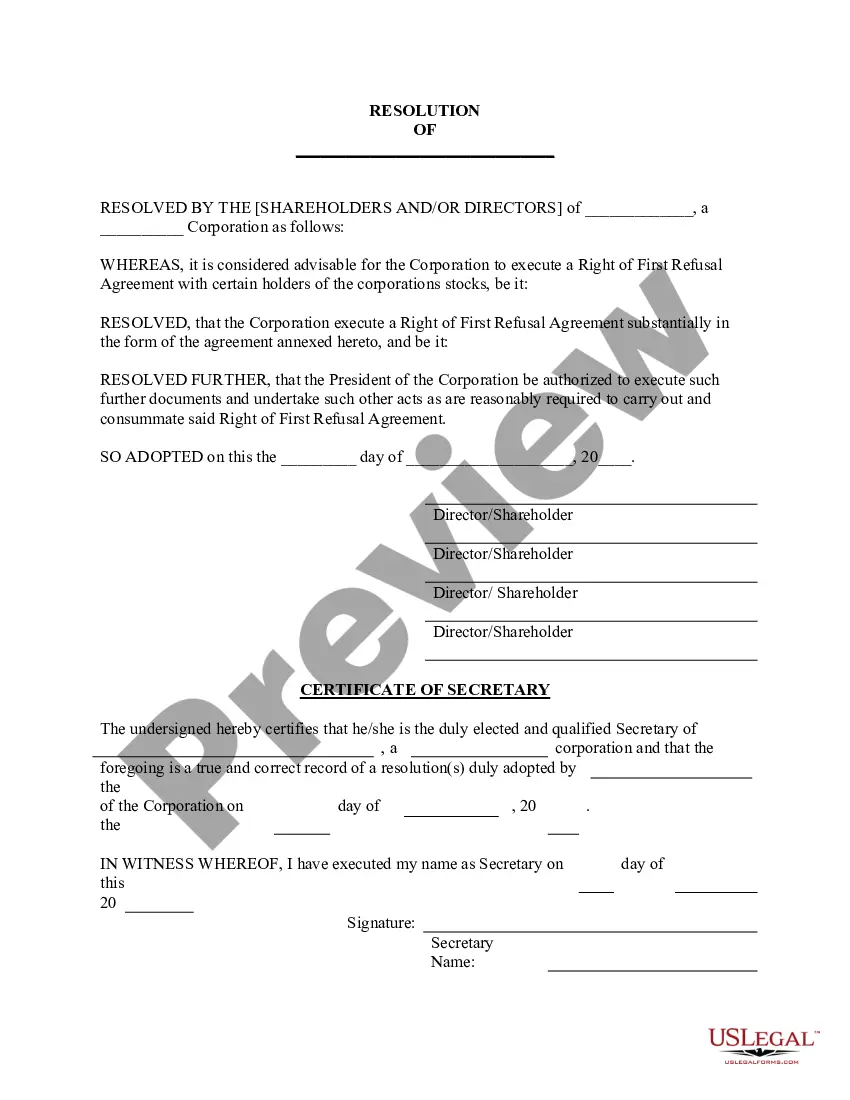
Written resolutions give the directors greater flexibility in making decisions, as the directors don't have to be present at a board meeting. Directors' decisions made by written resolution must be unanimous. This means that all eligible directors, i.e. those entitled to vote, must vote for the same view on a matter.
A resolution in lieu of a meeting is a written resolution (signed by all shareholders who are entitled to vote at the meeting) that deals with all matters that need to be addressed at a shareholders' meeting. This resolution is just as valid as it would be if passed at a meeting of shareholders.
Meeting minutes describe actions taken during a meeting, while a resolution describes actions that a corporation's board of directors have authorized.
An ordinary resolution generally requires a simple majority, whereas a special resolution necessitates the consent of no less than 75% of the members.To initiate the written resolution procedure, the directors must circulate the proposed resolution to eligible members.
Anything that may be done by a resolution passed at a general meeting of a company may be done, without a meeting and without any previous notice being required, by a written resolution of the members of the company.

