Consumer Reporting Agency In A Sentence In San Jose
Description
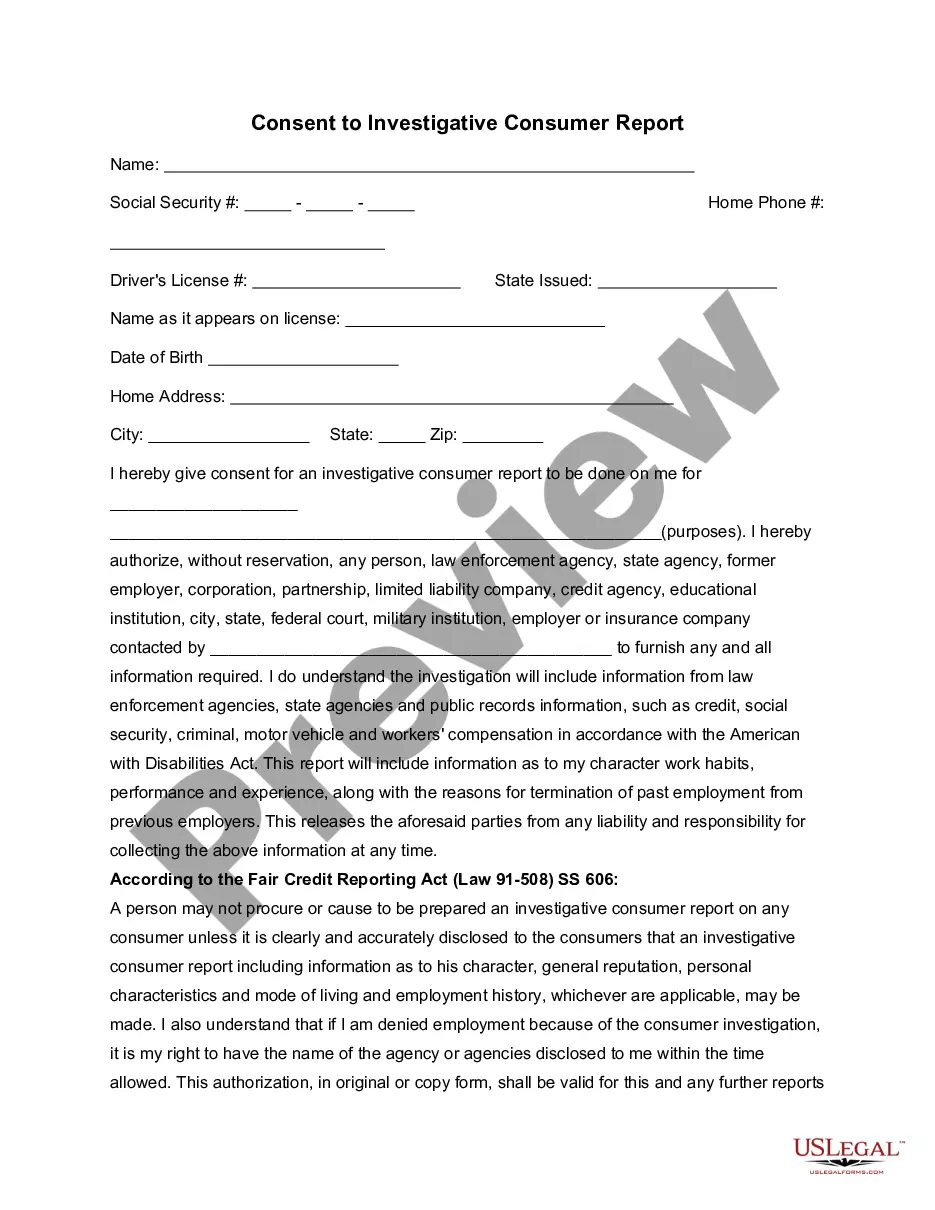

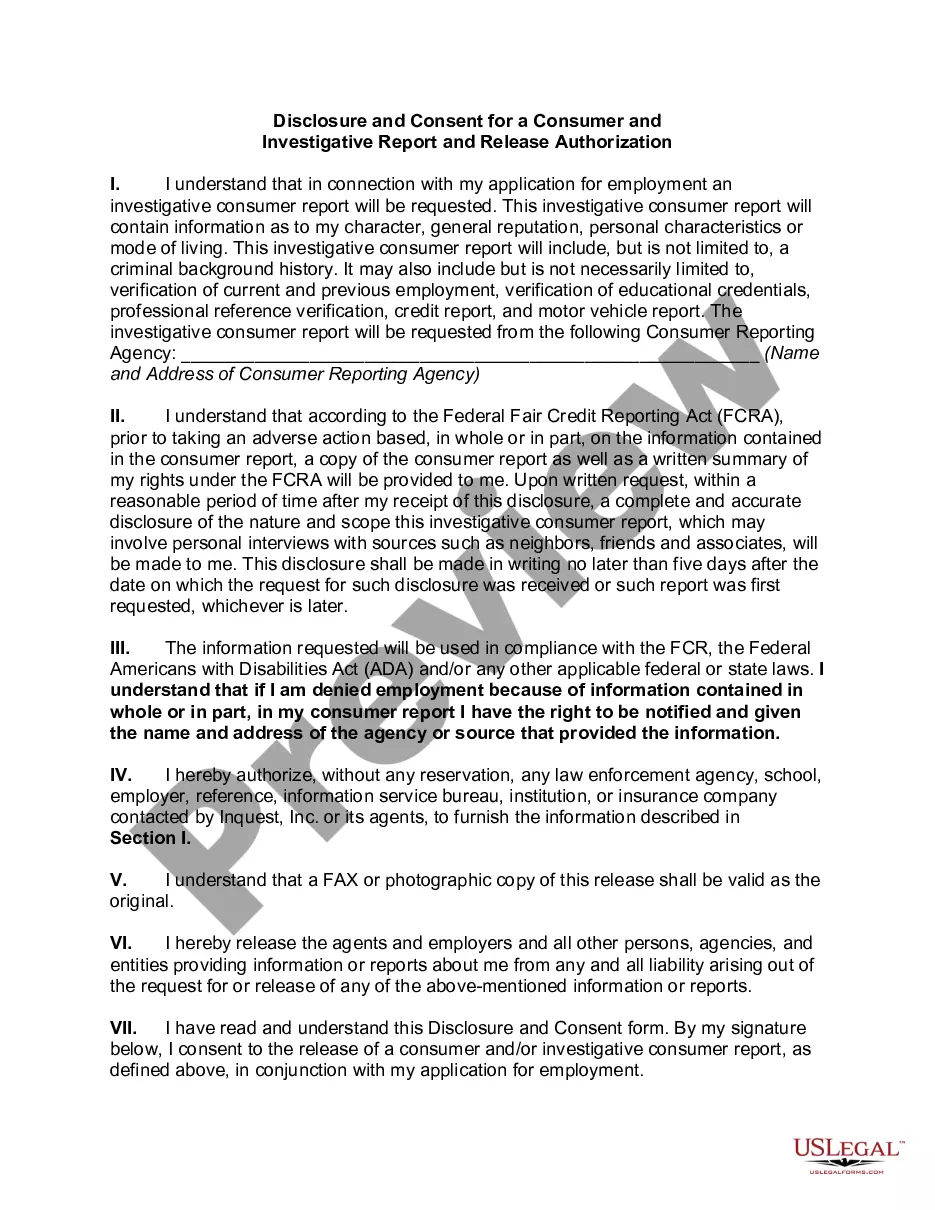
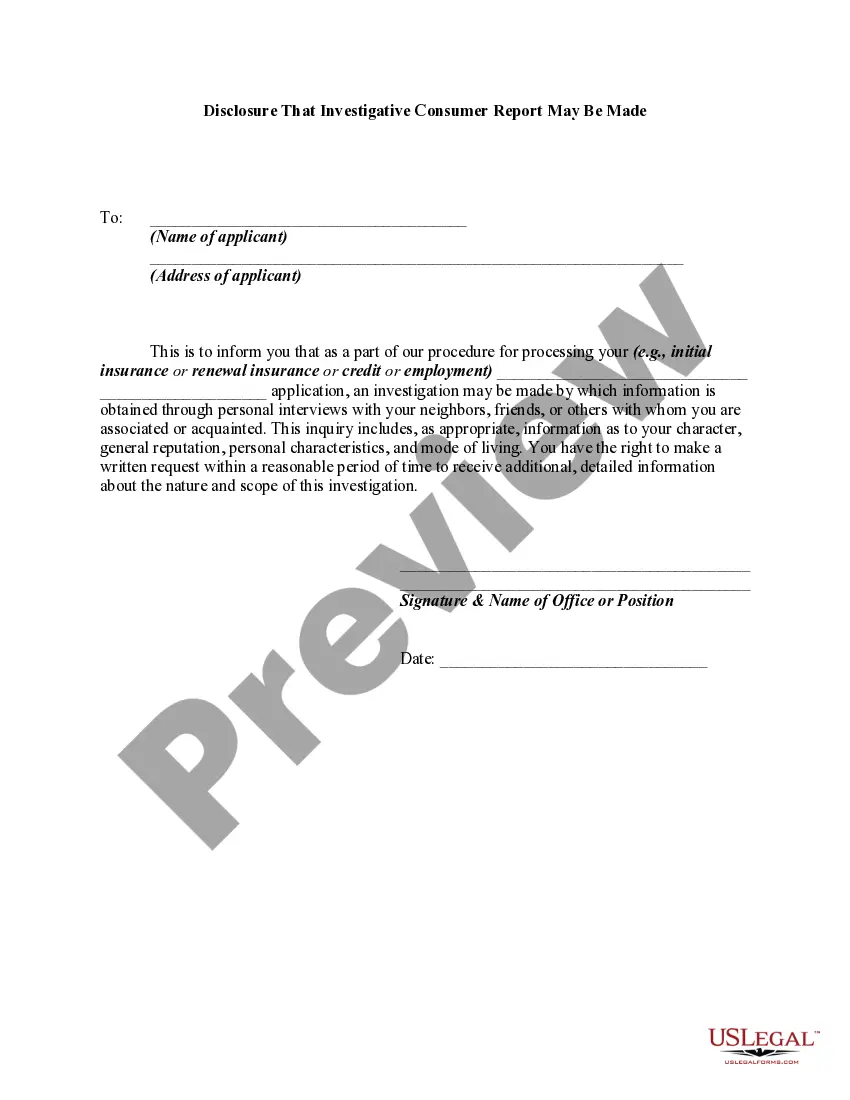
Get your form ready online
Our built-in tools help you complete, sign, share, and store your documents in one place.
Make edits, fill in missing information, and update formatting in US Legal Forms—just like you would in MS Word.
Download a copy, print it, send it by email, or mail it via USPS—whatever works best for your next step.
Sign and collect signatures with our SignNow integration. Send to multiple recipients, set reminders, and more. Go Premium to unlock E-Sign.
If this form requires notarization, complete it online through a secure video call—no need to meet a notary in person or wait for an appointment.
We protect your documents and personal data by following strict security and privacy standards.

Make edits, fill in missing information, and update formatting in US Legal Forms—just like you would in MS Word.

Download a copy, print it, send it by email, or mail it via USPS—whatever works best for your next step.

Sign and collect signatures with our SignNow integration. Send to multiple recipients, set reminders, and more. Go Premium to unlock E-Sign.

If this form requires notarization, complete it online through a secure video call—no need to meet a notary in person or wait for an appointment.

We protect your documents and personal data by following strict security and privacy standards.
Looking for another form?






Form popularity
FAQ
What is a credit reporting agency? Credit reporting agencies (also known as credit bureaus or consumer reporting agencies) that collect information relevant to your credit and financial history. There are three credit agencies: TransUnion, Equifax, and Experian.
Consumer reporting companies collect information and provide reports to other companies about you. These companies use these reports to inform decisions about providing you with credit, employment, residential rental housing, insurance, and in other decision-making situations.
Nationwide consumer reporting companies There are three big nationwide providers of consumer reports: Equifax, TransUnion, and Experian.
What are the three credit bureaus? Equifax, Experian and TransUnion are the three nationwide credit bureaus. ing to the Consumer Financial Protection Bureau (CFPB), credit bureaus are companies that compile and sell credit reports.
Consumer Reports is an independent, nonprofit member organization that works side by side with consumers for truth, transparency, and fairness in the marketplace. Consumer Reports works to create a fair and just marketplace for all.
The California Consumer Credit Reporting Agencies Act (CCCRA) was passed in 1975 as the state's version of the U.S. federal Fair Credit Reporting Act. The act regulates consumer credit reporting agencies as well as any users of credit reports.
Reports including personal knowledge or firsthand interaction, reports made among persons under common control, and reports other than credit (including skip tracing, law enforcement, dating, and laboratory reports) are not consumer reports.
They can include information from a variety of sources, including credit reports and criminal records. When you use consumer reports to make employment decisions, including hiring, retention, promotion or reassignment, you must comply with the Fair Credit Reporting Act (FCRA).
Examples of consumer reports include criminal background checks and credit reports. To request a consumer report about someone, the requester must follow the procedures in the Fair Credit Reporting Act.
