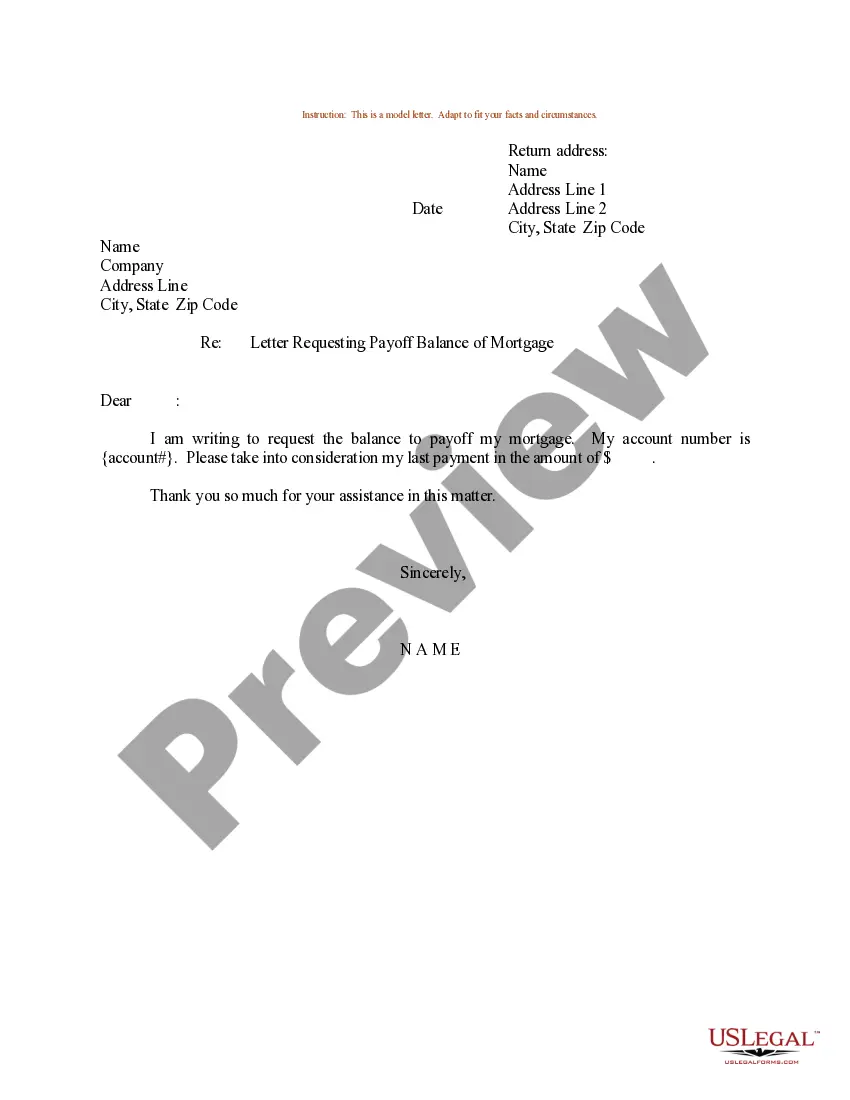
Lien Payoff Letter Template With Car In Wayne
Description
Get your form ready online
Our built-in tools help you complete, sign, share, and store your documents in one place.
Make edits, fill in missing information, and update formatting in US Legal Forms—just like you would in MS Word.
Download a copy, print it, send it by email, or mail it via USPS—whatever works best for your next step.
Sign and collect signatures with our SignNow integration. Send to multiple recipients, set reminders, and more. Go Premium to unlock E-Sign.
If this form requires notarization, complete it online through a secure video call—no need to meet a notary in person or wait for an appointment.
We protect your documents and personal data by following strict security and privacy standards.

Make edits, fill in missing information, and update formatting in US Legal Forms—just like you would in MS Word.

Download a copy, print it, send it by email, or mail it via USPS—whatever works best for your next step.

Sign and collect signatures with our SignNow integration. Send to multiple recipients, set reminders, and more. Go Premium to unlock E-Sign.

If this form requires notarization, complete it online through a secure video call—no need to meet a notary in person or wait for an appointment.

We protect your documents and personal data by following strict security and privacy standards.
Looking for another form?







Form popularity
FAQ
A payoff request allows a third party to receive the current balance due to release a lien or facilitate a business transfer (bulk sale transfer or liquor license). To release a lien or facilitate a bulk sale transfer, businesses must be in good standing to receive a payoff request.
If you don't have a title in hand you'll have to process the lien release before you can sell it.
Involuntary Lien: An involuntary lien is placed on your vehicle without your consent, usually due to unpaid obligations such as taxes, mechanic's service charges, or other debts.
While mechanic's liens can be placed against a financed or owned vehicle, the lien works differently with a financed car. When a motor vehicle is financed, the lender will also have a lien on the car.
Pretty simple really, you don't. The Title will need to be signed by the seller, owner, regardless of whether the vehicle has a Lien. If there is a Lien, then the seller, owner, will need to satisfy the Lien. He or she will then receive the Title with the Lien satisfied by the lender.
When there's a lien on your car, the lienholder maintains legal control. While you have the right to register the car in your name and legally drive it, you do not have the right to sell that car to another person. Yet there's no need to panic, as it's not impossible to sell a car with a lien on it.

