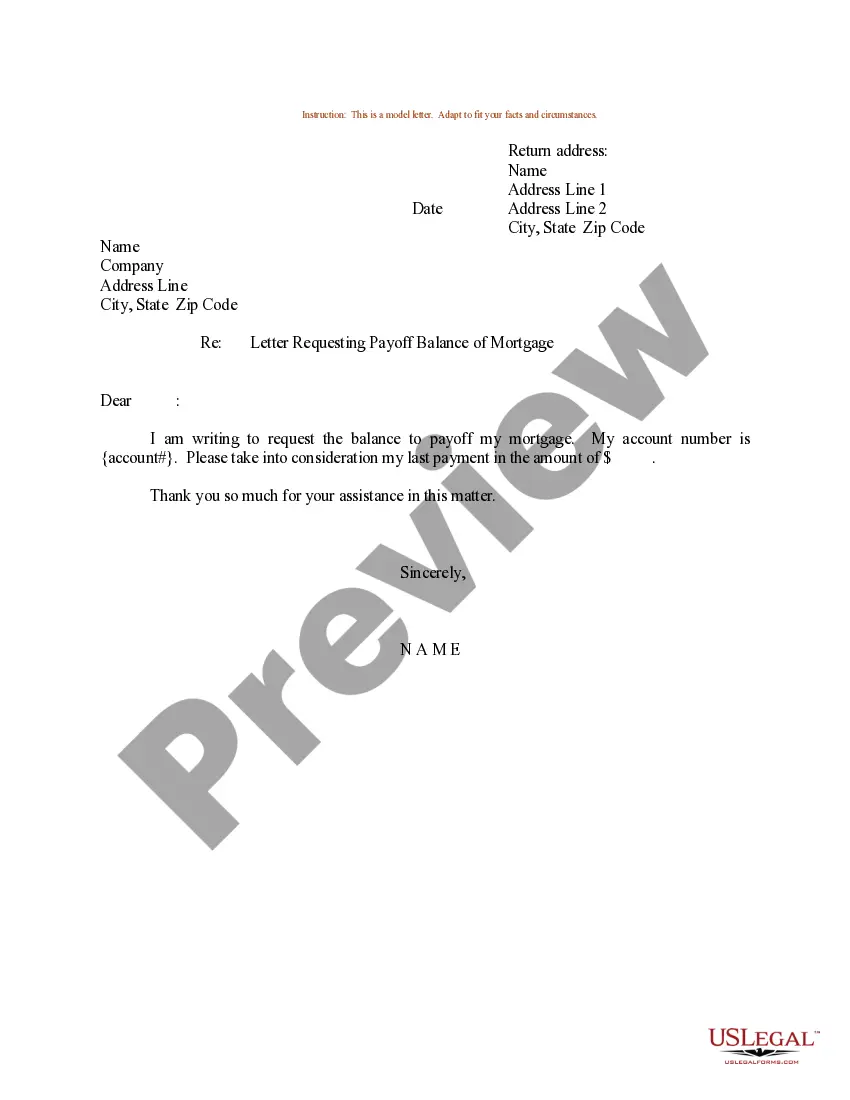
Sample Letter Payoff Mortgage File For Bankruptcies In Santa Clara
Description
Get your form ready online
Our built-in tools help you complete, sign, share, and store your documents in one place.
Make edits, fill in missing information, and update formatting in US Legal Forms—just like you would in MS Word.
Download a copy, print it, send it by email, or mail it via USPS—whatever works best for your next step.
Sign and collect signatures with our SignNow integration. Send to multiple recipients, set reminders, and more. Go Premium to unlock E-Sign.
If this form requires notarization, complete it online through a secure video call—no need to meet a notary in person or wait for an appointment.
We protect your documents and personal data by following strict security and privacy standards.

Make edits, fill in missing information, and update formatting in US Legal Forms—just like you would in MS Word.

Download a copy, print it, send it by email, or mail it via USPS—whatever works best for your next step.

Sign and collect signatures with our SignNow integration. Send to multiple recipients, set reminders, and more. Go Premium to unlock E-Sign.

If this form requires notarization, complete it online through a secure video call—no need to meet a notary in person or wait for an appointment.

We protect your documents and personal data by following strict security and privacy standards.
Looking for another form?








Form popularity
FAQ
One of its most notable features is that bankruptcy halts most lawsuits, wage garnishments, and other collection actions, while also eliminating various types of debt, including credit card balances, medical bills, personal loans, and more. However, it doesn't stop all creditors or eliminate all obligations.
Not all debts are discharged. The debts discharged vary under each chapter of the Bankruptcy Code. Section 523(a) of the Code specifically excepts various categories of debts from the discharge granted to individual debtors. Therefore, the debtor must still repay those debts after bankruptcy.
As a result, concealing assets, making fraudulent transfers within one year of filing, destroying financial records or lying on bankruptcy forms will typically disqualify your case and could potentially result in criminal charges.
If you file a Chapter 7, the automatic stay prevents your car from being repossessed. However, this temporary measure lasts only as long as the case remains open. If you're behind on your payments, the lender can seek court permission to repossess the vehicle before your case ends.
In California, you can keep your home in Chapter 7 bankruptcy under certain circumstances, depending on the amount of equity you have in your principal residence. This is called the “homestead exemption.” The amount of the exemption varies, depending on age, marital status and physical/mental condition.
Again, there's no minimum or maximum amount of unsecured debt required to file Chapter 7 bankruptcy. In fact, your amount of debt doesn't affect your eligibility at all. You can file as long as you pass the means test.
If you file a Chapter 7, the automatic stay prevents your car from being repossessed. However, this temporary measure lasts only as long as the case remains open. If you're behind on your payments, the lender can seek court permission to repossess the vehicle before your case ends.
The homestead exemption — the amount of home equity that can be shielded from creditors in a Chapter 7 or Chapter 13 — is typically a minimum of $300,000 and a maximum of $699,426 as of January 1, 2024.

