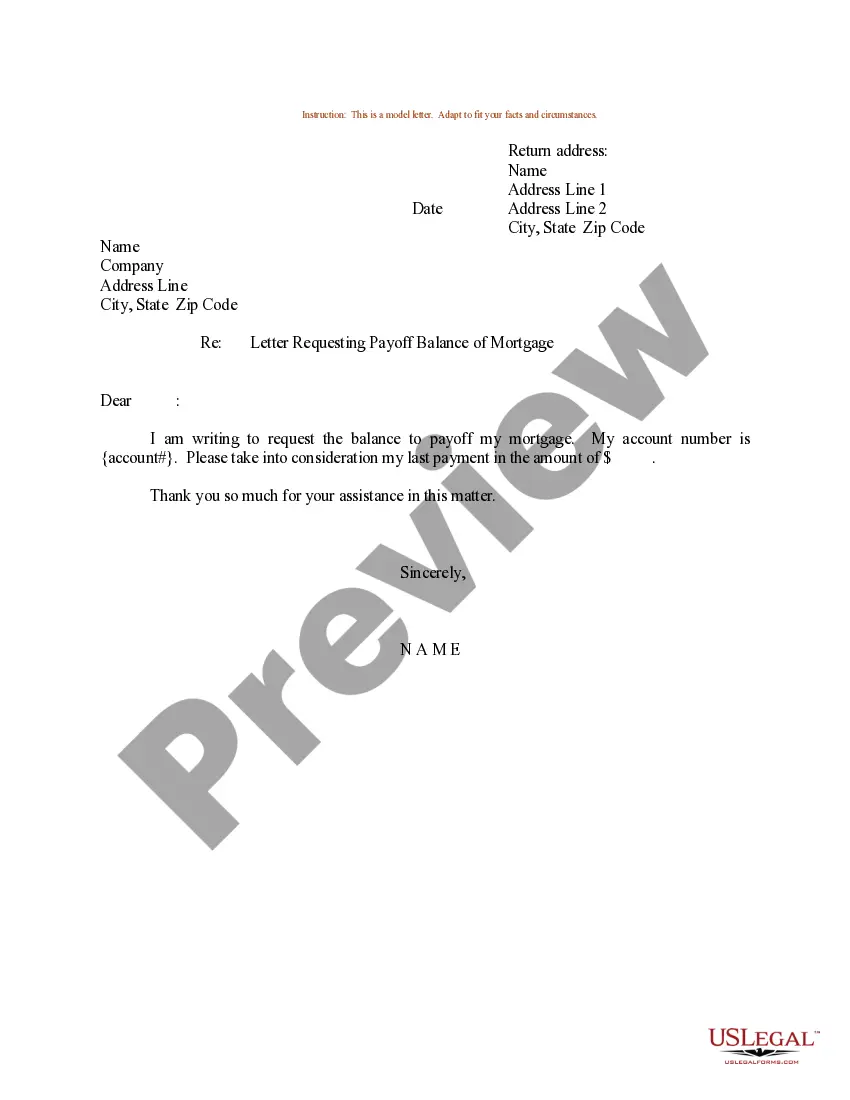
Loan Payoff Letter Form With Decimals In Pennsylvania
Description
Get your form ready online
Our built-in tools help you complete, sign, share, and store your documents in one place.
Make edits, fill in missing information, and update formatting in US Legal Forms—just like you would in MS Word.
Download a copy, print it, send it by email, or mail it via USPS—whatever works best for your next step.
Sign and collect signatures with our SignNow integration. Send to multiple recipients, set reminders, and more. Go Premium to unlock E-Sign.
If this form requires notarization, complete it online through a secure video call—no need to meet a notary in person or wait for an appointment.
We protect your documents and personal data by following strict security and privacy standards.

Make edits, fill in missing information, and update formatting in US Legal Forms—just like you would in MS Word.

Download a copy, print it, send it by email, or mail it via USPS—whatever works best for your next step.

Sign and collect signatures with our SignNow integration. Send to multiple recipients, set reminders, and more. Go Premium to unlock E-Sign.

If this form requires notarization, complete it online through a secure video call—no need to meet a notary in person or wait for an appointment.

We protect your documents and personal data by following strict security and privacy standards.
Looking for another form?





Form popularity
FAQ
Pennsylvania realty transfer tax is imposed at a rate of 1 percent on the value of real estate (including contracted-for improvements to property) transferred by deed, instrument, long-term lease or other writing.
Retired persons and individuals that have low income and did not have PA tax withheld may have their PA tax liabilities forgiven. For example, a family of four (couple with two dependent children) can earn up to $34,250 and qualify for Tax Forgiveness.
Tax forgiveness is a credit that allows eligible taxpayers to reduce all or part of their Pennsylvania personal income tax liability.
If you are a PA resident, nonresident or a part-year PA resident, you must file a 2024 PA tax return if: You received total PA gross taxable income in excess of $33 during 2024, even if no tax is due with your PA return; and/or.
Pennsylvania law requires employers to withhold Pennsylvania personal income tax from employees' compensation in two common cases: When resident employees perform services within or outside Pennsylvania; and. When nonresident employees perform services within Pennsylvania.
Every resident, part-year resident or nonresident individual must file a Pennsylvania Income Tax Return (PA-40) when he or she realizes income generating $1 or more in tax, even if no tax is due (e.g., when an employee receives compensation where tax is withheld).
The typical PA works full-time, 40 hours per week. This role may oftentimes require additional hours. Their shifts vary, and they may be required to work nights, weekends, or holidays. This role is also usually required to be on call occasionally.
An advanced premium tax credit (APTC) is an on-the-spot tax credit that lowers your monthly health insurance payment. When you apply for coverage through Pennie, you'll estimate your expected income for the year. If you qualify for an APTC, you can use any amount of the credit in advance to lower your monthly payments.
Pennsylvania has a flat state income tax rate of 3.07%. This is the lowest rate among the handful of states that utilize flat rates. However, many cities in the Keystone State also collect local income taxes.

