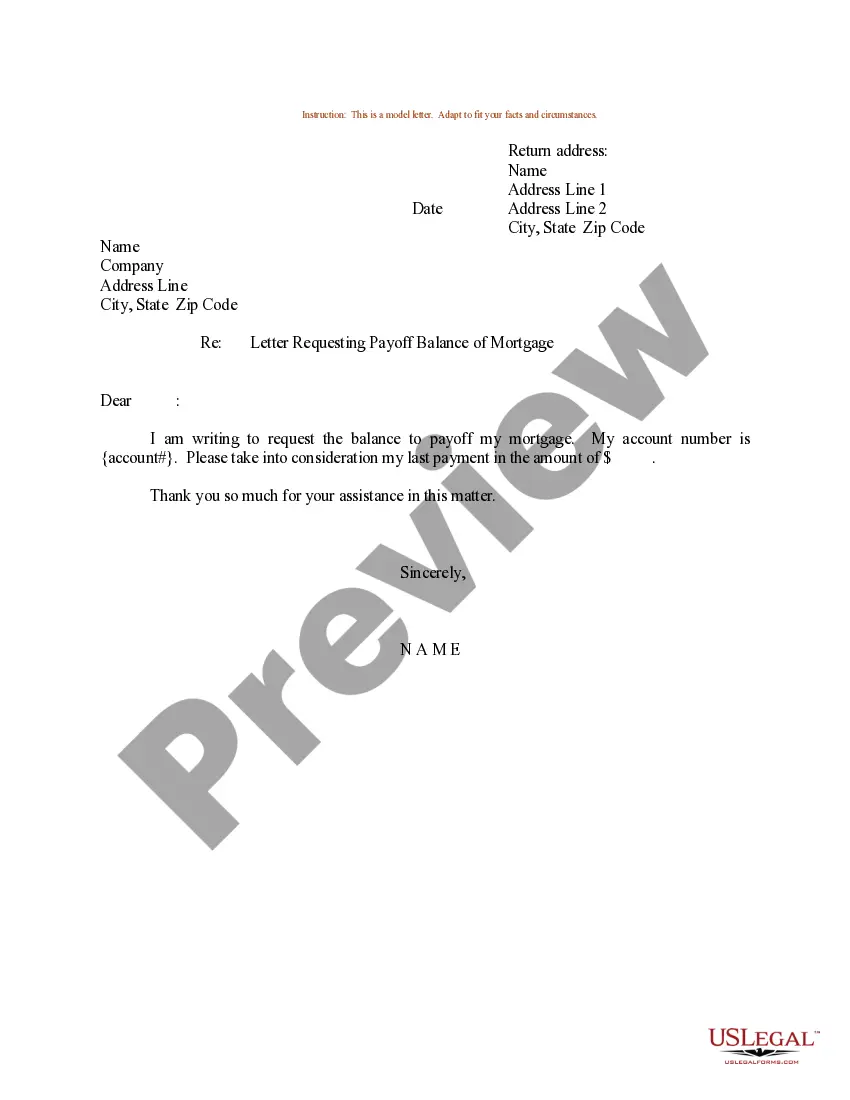
Lien Payoff Letter Template For Car Loan In Los Angeles
Description
Get your form ready online
Our built-in tools help you complete, sign, share, and store your documents in one place.
Make edits, fill in missing information, and update formatting in US Legal Forms—just like you would in MS Word.
Download a copy, print it, send it by email, or mail it via USPS—whatever works best for your next step.
Sign and collect signatures with our SignNow integration. Send to multiple recipients, set reminders, and more. Go Premium to unlock E-Sign.
If this form requires notarization, complete it online through a secure video call—no need to meet a notary in person or wait for an appointment.
We protect your documents and personal data by following strict security and privacy standards.

Make edits, fill in missing information, and update formatting in US Legal Forms—just like you would in MS Word.

Download a copy, print it, send it by email, or mail it via USPS—whatever works best for your next step.

Sign and collect signatures with our SignNow integration. Send to multiple recipients, set reminders, and more. Go Premium to unlock E-Sign.

If this form requires notarization, complete it online through a secure video call—no need to meet a notary in person or wait for an appointment.

We protect your documents and personal data by following strict security and privacy standards.
Looking for another form?

Form popularity
FAQ
How do I request a payoff letter? To get a payoff letter, ask your lender for an official payoff statement. Call or write to customer service or make the request online. While logged into your account, look for options to request or calculate a payoff amount, and provide details such as your desired payoff date.
In California, the process for enforcing a mechanical lien involves giving notice to the owner of the vehicle and any other interested parties, such as lienholders or insurance companies. The notice must include information about the lien, the amount owed, and the deadline for payment.
The following documents are required to register a vehicle purchased at a lien sale: • Application for Title or Registration (REG 343) completed and signed by the new owner • DMV Vehicle History Record or letter of Authorization to Conduct Lien Sale from DMV (REG 338) STEP 2 • Postal receipts for the notices you sent ...
In California, the process for enforcing a mechanical lien involves giving notice to the owner of the vehicle and any other interested parties, such as lienholders or insurance companies. The notice must include information about the lien, the amount owed, and the deadline for payment.
An individual performing a property lien search in California may begin by searching land records at a clerk-recorder's office in the county where a property is physically located or a debtor resides. If checking for liens on personal property, it is recommended to go through the California Secretary of State's office.
First, you'll need to contact your lender and let them know you want the information. Depending on your lender, you may have to sign in to an online account, call a helpline, or send a formal letter to start the request process.
In California, the process for enforcing a mechanical lien involves giving notice to the owner of the vehicle and any other interested parties, such as lienholders or insurance companies. The notice must include information about the lien, the amount owed, and the deadline for payment.
Change of Name—The following must be submitted: The California Certificate of Title or an Application for Replacement or Transfer of Title (REG 227) form. — The LO new name must be printed on the back of the title; however, a signature is not required. — The LO address must also be shown on the back of the title.
You can remove the lien by providing DMV with proof of possession, such as: For registered owners, a vehicle verification or proof of payment on the lienholder's letterhead.
How long does it take to get your car title from the bank? Generally, it takes two to six weeks, but it will depend on your state's processes.

