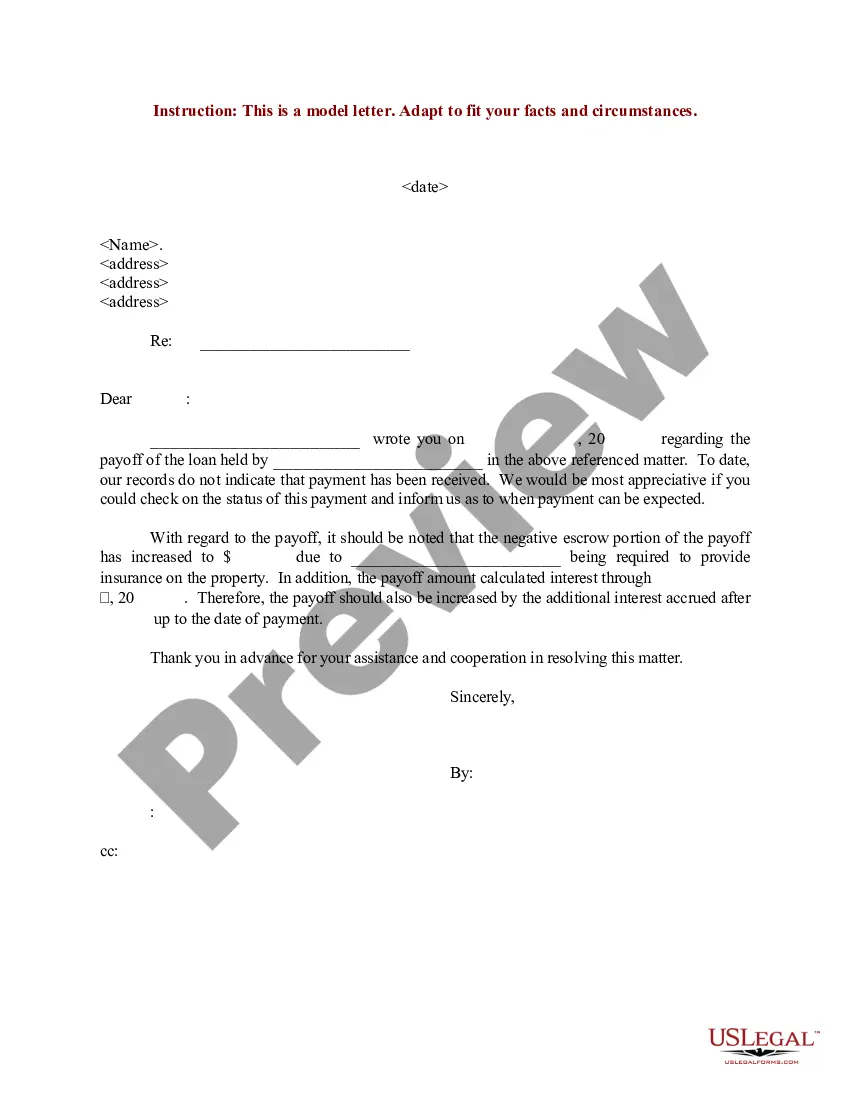
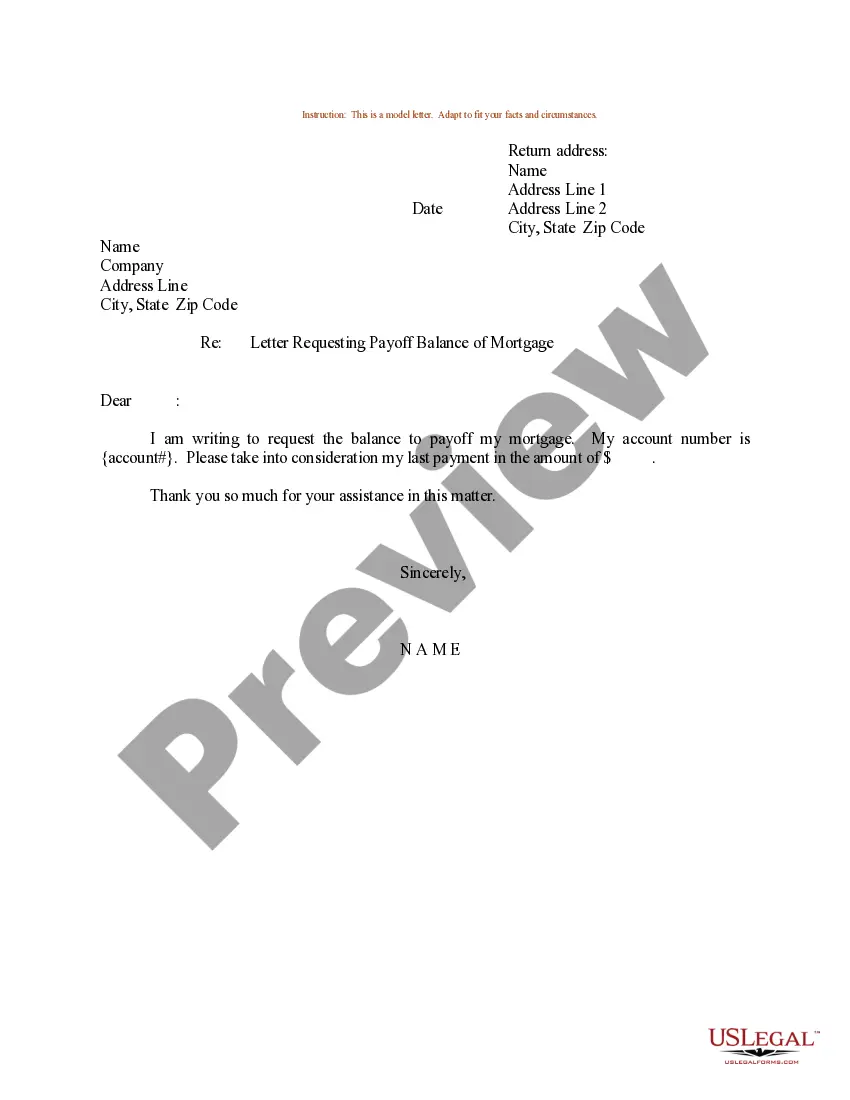
Letter Payoff Loan With Credit Union In Hennepin
Description
Get your form ready online
Our built-in tools help you complete, sign, share, and store your documents in one place.
Make edits, fill in missing information, and update formatting in US Legal Forms—just like you would in MS Word.
Download a copy, print it, send it by email, or mail it via USPS—whatever works best for your next step.
Sign and collect signatures with our SignNow integration. Send to multiple recipients, set reminders, and more. Go Premium to unlock E-Sign.
If this form requires notarization, complete it online through a secure video call—no need to meet a notary in person or wait for an appointment.
We protect your documents and personal data by following strict security and privacy standards.

Make edits, fill in missing information, and update formatting in US Legal Forms—just like you would in MS Word.

Download a copy, print it, send it by email, or mail it via USPS—whatever works best for your next step.

Sign and collect signatures with our SignNow integration. Send to multiple recipients, set reminders, and more. Go Premium to unlock E-Sign.

If this form requires notarization, complete it online through a secure video call—no need to meet a notary in person or wait for an appointment.

We protect your documents and personal data by following strict security and privacy standards.
Looking for another form?



Form popularity
FAQ
Credit unions offer in-house servicing that makes the mortgage application process and mortgage payments refreshingly uncomplicated. Commercial banks tend to sell the mortgages they originate, whereas credit unions tend to hold the loans themselves.
Neither Fannie Mae nor Freddie Mac originate home loans. Instead they acquire mortgage loans made by banks, credit unions and mortgage companies.
The pros of credit unions include better interest rates than banks, while the cons include fewer branches and ATMs.
Credit unions generally provide better customer service than banks do, though the ratings for smaller banks are nearly as good. Credit unions also offer higher interest rates on deposits and lower rates on loans. Banks often adopt new technology and tools more quickly.
The statement is provided by the mortgage servicer and can be requested at any time. Accurate payoff information is crucial for managing financial decisions related to property ownership.
Under federal law, the servicer must generally send you a payoff statement within seven business days of your request, subject to a few exceptions. (12 C.F.R. § 1026.36.)
Here are strategies and tips for getting out of debt faster. Add Up All Your Debt. Adjust Your Budget. Use a Debt Repayment Strategy. Look for Additional Income. Consider Credit Counseling. Consider Consolidating Your Debt. Don't Forget About Debt in Collections. Stay Accountable.
Banks and credit unions provide resources designed to aid in debt management, including financial education and personalized coaching. Consulting in-person with your bank or credit union's debt management expert can build a partnership, giving individuals an opportunity to regain control of their financial futures.
When it comes to credit card debt relief, it's important to dispel a common misconception: There are no government-sponsored programs specifically designed to eliminate credit card debt. So, you should be wary of any offers claiming to represent such government initiatives, as they may be misleading or fraudulent.