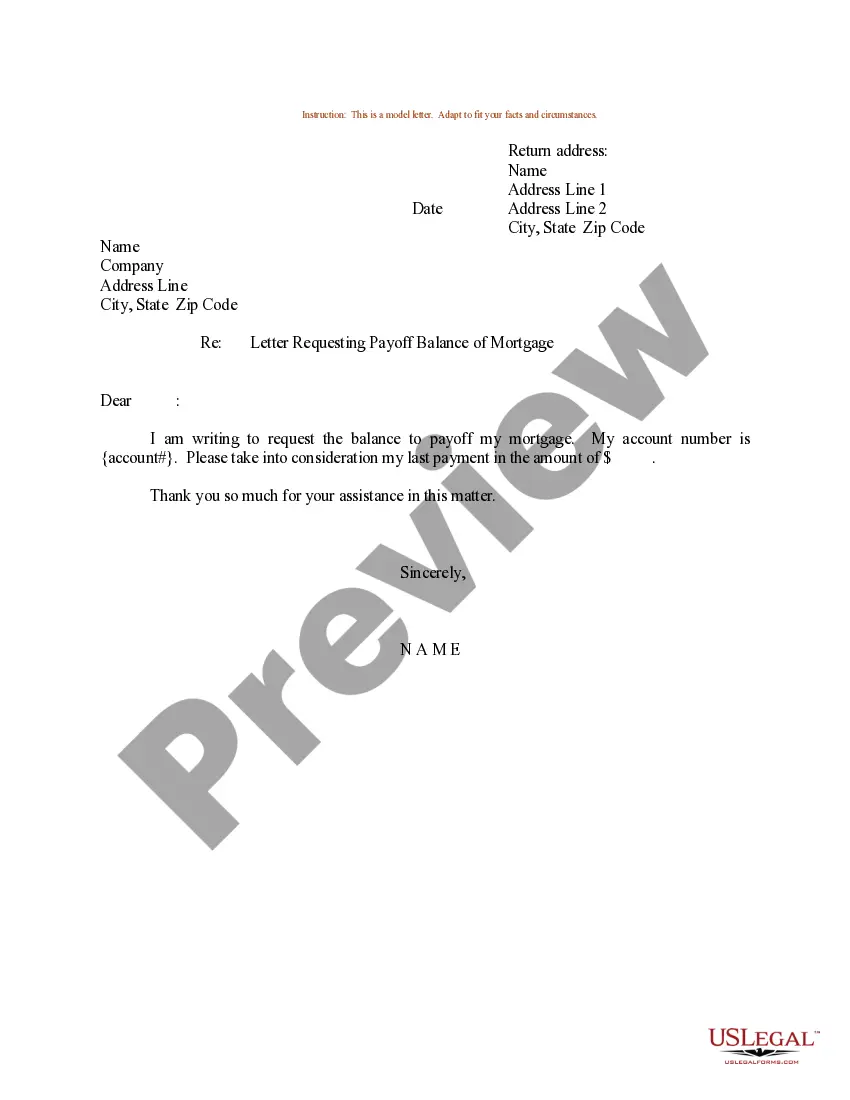
Sample Loan Payoff Letter Template Foreclosure In Cuyahoga
Description
Get your form ready online
Our built-in tools help you complete, sign, share, and store your documents in one place.
Make edits, fill in missing information, and update formatting in US Legal Forms—just like you would in MS Word.
Download a copy, print it, send it by email, or mail it via USPS—whatever works best for your next step.
Sign and collect signatures with our SignNow integration. Send to multiple recipients, set reminders, and more. Go Premium to unlock E-Sign.
If this form requires notarization, complete it online through a secure video call—no need to meet a notary in person or wait for an appointment.
We protect your documents and personal data by following strict security and privacy standards.

Make edits, fill in missing information, and update formatting in US Legal Forms—just like you would in MS Word.

Download a copy, print it, send it by email, or mail it via USPS—whatever works best for your next step.

Sign and collect signatures with our SignNow integration. Send to multiple recipients, set reminders, and more. Go Premium to unlock E-Sign.

If this form requires notarization, complete it online through a secure video call—no need to meet a notary in person or wait for an appointment.

We protect your documents and personal data by following strict security and privacy standards.
Looking for another form?








Form popularity
FAQ
How to Write a Payoff Letter: Step-by-Step Guide Step 1: Gather necessary information. Step 2: Format your letter. Step 3: Clearly state your intentions. Step 4: Detail the necessary information. Step 5: Request written confirmation. Step 6: Offer contact information. Step 7: Proofread and submit.
First, you'll need to contact your lender and let them know you want the information. Depending on your lender, you may have to sign in to an online account, call a helpline, or send a formal letter to start the request process.
As part of the decree of foreclosure, the purchaser at the judicial sale is awarded a "writ of possession.” This allows the purchaser to evict the former owners of the home without the need to file a separate eviction case.
A mediator “facilitates” or helps parties talk, but doesn't decide for them or tell them what they must do. However, a mediator can evaluate the strengths and weaknesses of each party's case. You may want the mediator to do that to help you decide for yourself what you should do.
To date, all 88 counties in Ohio provide for mediation in foreclosure cases (see “Ohio Foreclosure Mediation Contact Information by County).
While the content of the letter will change depending on your situation, there are a few important aspects to include: Provide all details the best you can, including correct dates and dollar amounts. Explain how and when all situations were resolved. Detail why problems won't happen again.
A Notice of Intention to Foreclose is your lender telling you that they are planning to foreclose on your property because you are behind on your mortgage payments.

