Sample Letter For Mortgage Payoff In Cuyahoga
Description
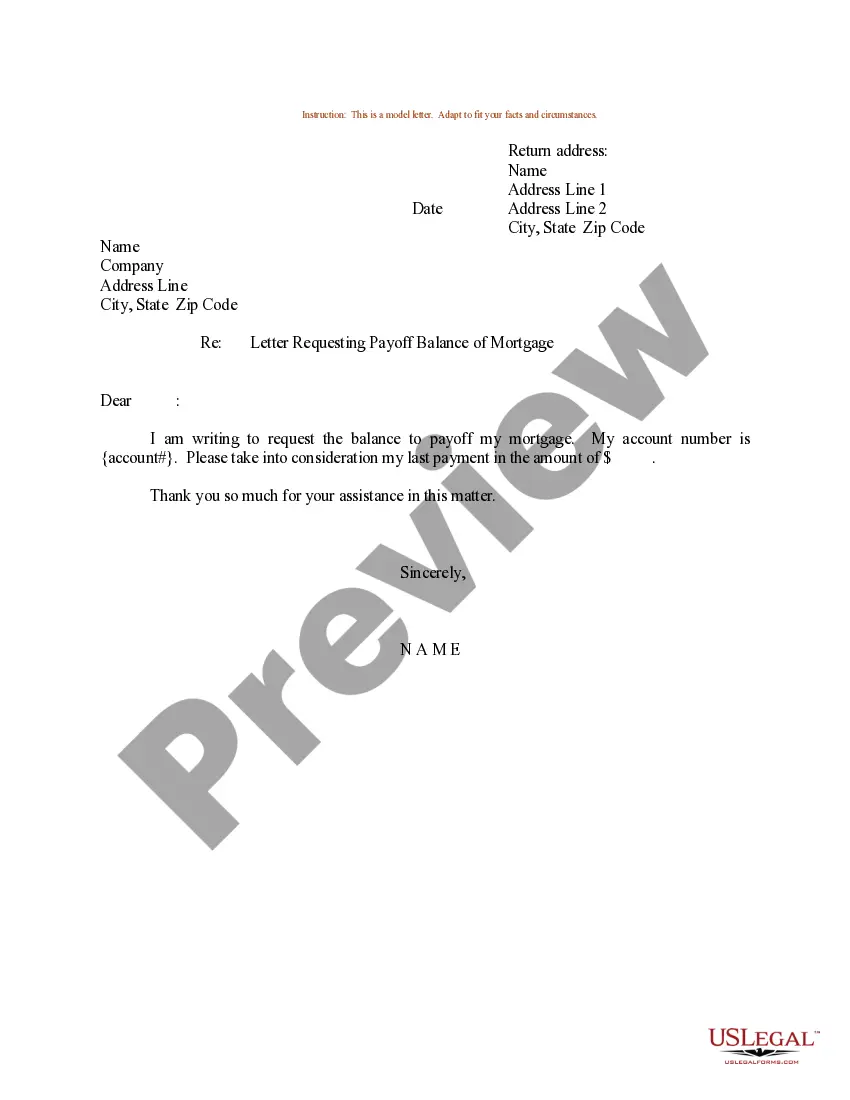
Get your form ready online
Our built-in tools help you complete, sign, share, and store your documents in one place.
Make edits, fill in missing information, and update formatting in US Legal Forms—just like you would in MS Word.
Download a copy, print it, send it by email, or mail it via USPS—whatever works best for your next step.
Sign and collect signatures with our SignNow integration. Send to multiple recipients, set reminders, and more. Go Premium to unlock E-Sign.
If this form requires notarization, complete it online through a secure video call—no need to meet a notary in person or wait for an appointment.
We protect your documents and personal data by following strict security and privacy standards.

Make edits, fill in missing information, and update formatting in US Legal Forms—just like you would in MS Word.

Download a copy, print it, send it by email, or mail it via USPS—whatever works best for your next step.

Sign and collect signatures with our SignNow integration. Send to multiple recipients, set reminders, and more. Go Premium to unlock E-Sign.

If this form requires notarization, complete it online through a secure video call—no need to meet a notary in person or wait for an appointment.

We protect your documents and personal data by following strict security and privacy standards.
Looking for another form?


Form popularity
FAQ
Under federal law, the servicer must generally send you a payoff statement within seven business days of your request, subject to a few exceptions. (12 C.F.R. § 1026.36.)
Under federal law, the servicer must generally send you a payoff statement within seven business days of your request, subject to a few exceptions. (12 C.F.R. § 1026.36.)
Answer the lender's request point by point, as specifically, and with as much detail, as possible. Be precise with dates and dollar amounts. Acknowledge the lender's concern, and and if necessary, explain how you've resolved (or are in the process of resolving) the issue to prevent a future occurrence.
There's a process to getting the mortgage payoff statement. First, you'll need to contact your lender and let them know you want the information. Depending on your lender, you may have to sign in to an online account, call a helpline, or send a formal letter to start the request process.
Tips for writing a letter of explanation Provide all details the best you can, including correct dates and dollar amounts. Explain how and when all situations were resolved. If they are not resolved, explain that as well. Detail why problems won't happen again.
How to write an explanation letter Choose a letter format. Start by deciding the format for your letter. Explain the situation. To begin writing this type of letter, you might explain the situation or circumstance and any contributing factors. Take responsibility and accountability.
The Department of Taxation does not forward information to, nor receive information from the credit bureau. However, when an assessment is forwarded to the Attorney General's Office for collection, a judgment lien is filed with the county clerk of courts. This information is public record.
State Tax Liens To release a tax lien, the debtor must contact the Ohio Attorney General's Office of Collections and Enforcement to determine the exact amount of tax owed. Payment of the original tax must be remitted to the Ohio Department of Taxation.
Tax lien: The statute of limitations for a tax lien in Ohio is 15 years from the date the tax liability was assessed. This means that the government has 15 years to collect the taxes owed before the lien expires. Judgment lien: In Ohio, a judgment lien can be valid for up to 5 years.

