Escrow Seller Does For Buyer In New York
Description

Get your form ready online
Our built-in tools help you complete, sign, share, and store your documents in one place.
Make edits, fill in missing information, and update formatting in US Legal Forms—just like you would in MS Word.
Download a copy, print it, send it by email, or mail it via USPS—whatever works best for your next step.
Sign and collect signatures with our SignNow integration. Send to multiple recipients, set reminders, and more. Go Premium to unlock E-Sign.
If this form requires notarization, complete it online through a secure video call—no need to meet a notary in person or wait for an appointment.
We protect your documents and personal data by following strict security and privacy standards.

Make edits, fill in missing information, and update formatting in US Legal Forms—just like you would in MS Word.

Download a copy, print it, send it by email, or mail it via USPS—whatever works best for your next step.

Sign and collect signatures with our SignNow integration. Send to multiple recipients, set reminders, and more. Go Premium to unlock E-Sign.

If this form requires notarization, complete it online through a secure video call—no need to meet a notary in person or wait for an appointment.

We protect your documents and personal data by following strict security and privacy standards.
Looking for another form?


Form popularity
FAQ
An escrow agent must treat information as confidential, strictly comply with escrow instructions, and remain neutral while representing the interests of all parties with an interest in the transaction.
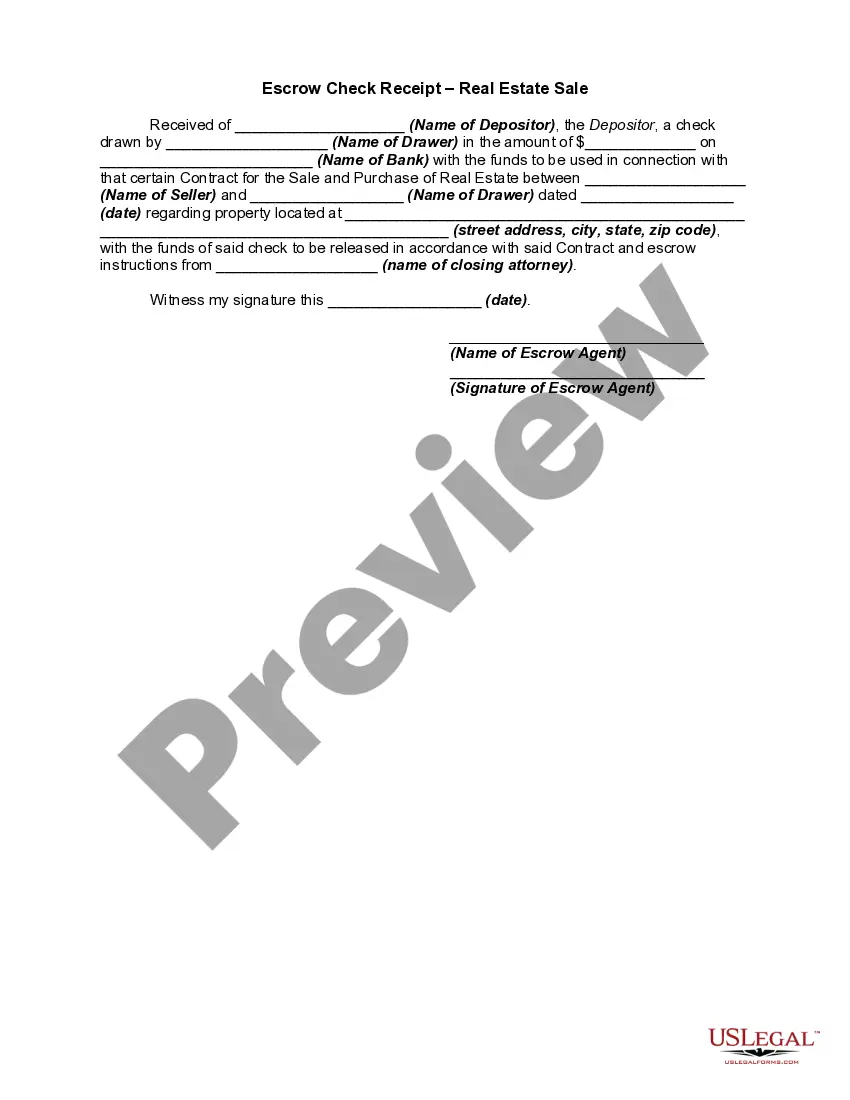
But who is responsible for hiring an escrow agent? The responsibility can lie with any party involved in the transaction. The buyer, seller or either real estate agent may choose an escrow agent during a real estate sale, but the escrow service provider that is selected must be agreed upon by all parties.
– Negotiation Between Buyer and Seller: In many cases, the buyer and seller negotiate and agree on an escrow holder. This can be influenced by prior experiences, recommendations from their real estate agents, or the reputation of the escrow company.
The buyer in the real estate sales transaction generally makes the selection of the escrow holder/agent and the title insurance company intending to issue the title insurance coverage. A real estate broker should consult the escrow holder/agent before informing the principals that escrow will close on a certain date.
Questions to ask when choosing an escrow agent Impartial and independent. Is the escrow agent a neutral third-party to all parties involved or are they linked to one of the parties? Expertise. Are escrow services the agent's core business and do they have a dedicated team? ... Knowledge and experience.
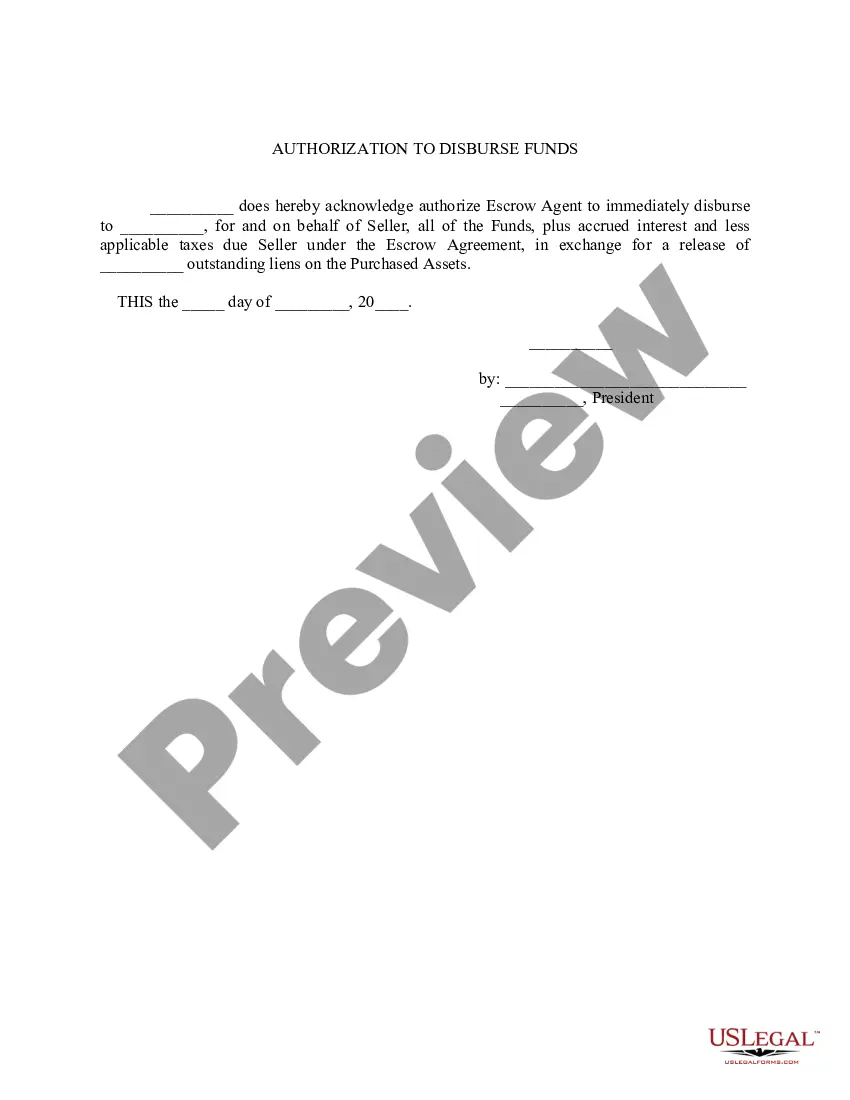
Escrow is a financial process used when two parties take part in a transaction where there is uncertainty about the fulfillment of their obligations. Situations that may employ escrow include internet transactions, banking, intellectual property, real estate, mergers and acquisitions, law, and more.
Ninety-nine percent of the time, attorneys are present on both sides of a real estate transaction in New York state: the seller's side and the buyer's side. That's because in NYS, all real estate contracts of sale need to drawn up by the principle or their attorney.
Steps in the escrow process Opening an escrow account. The first step is to open an escrow account, which is usually done by the seller, but can also be done by the buyer. Appraisal and home inspection. Your mortgage lender will order an appraisal of the home. Obtaining insurance coverage. Final walkthrough. Closing.
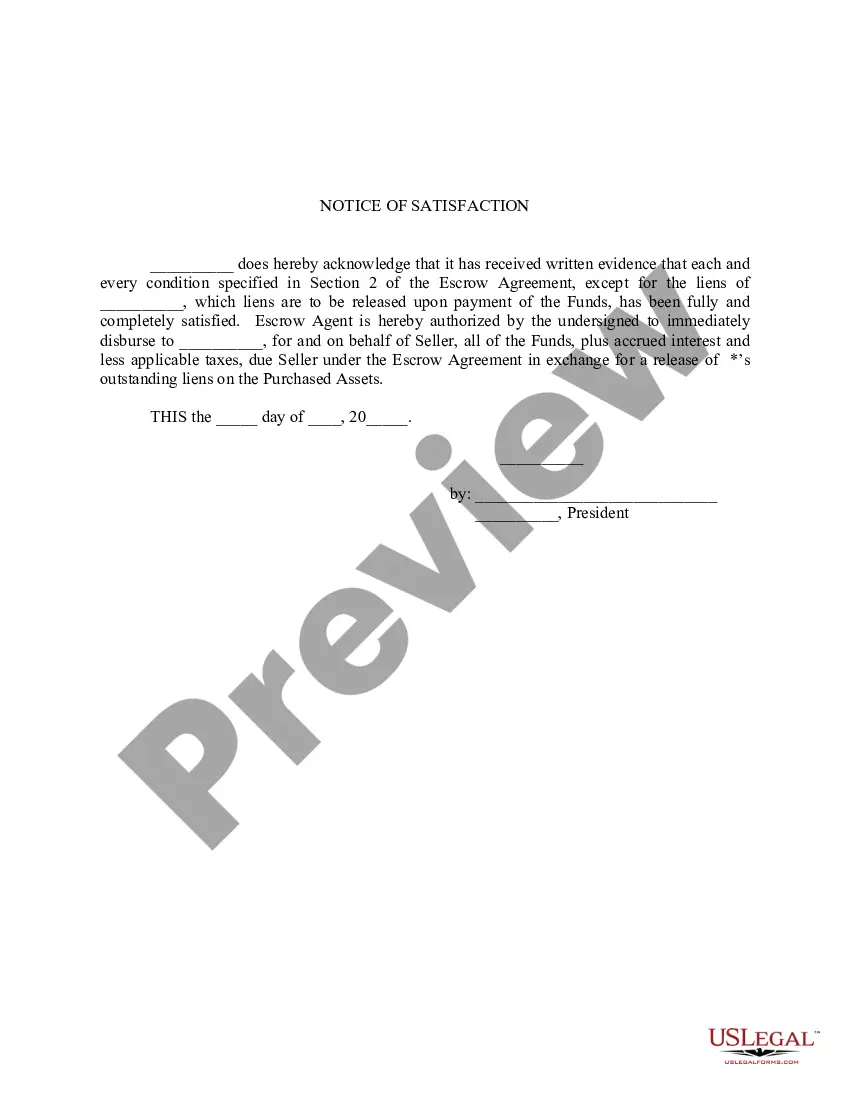
Unlike traditional closings where parties meet face-to-face, New York's escrow-style closing involves a neutral third party who holds all necessary documents and funds until all conditions are met. This approach not only minimizes risks but also streamlines the entire process, making it a preferred choice for many.
Because of these responsibilities, escrow agents in New York are often professionals like attorneys or title companies who understand the law and the real estate process.
