Directors Appointment And Removal In Chicago
Description

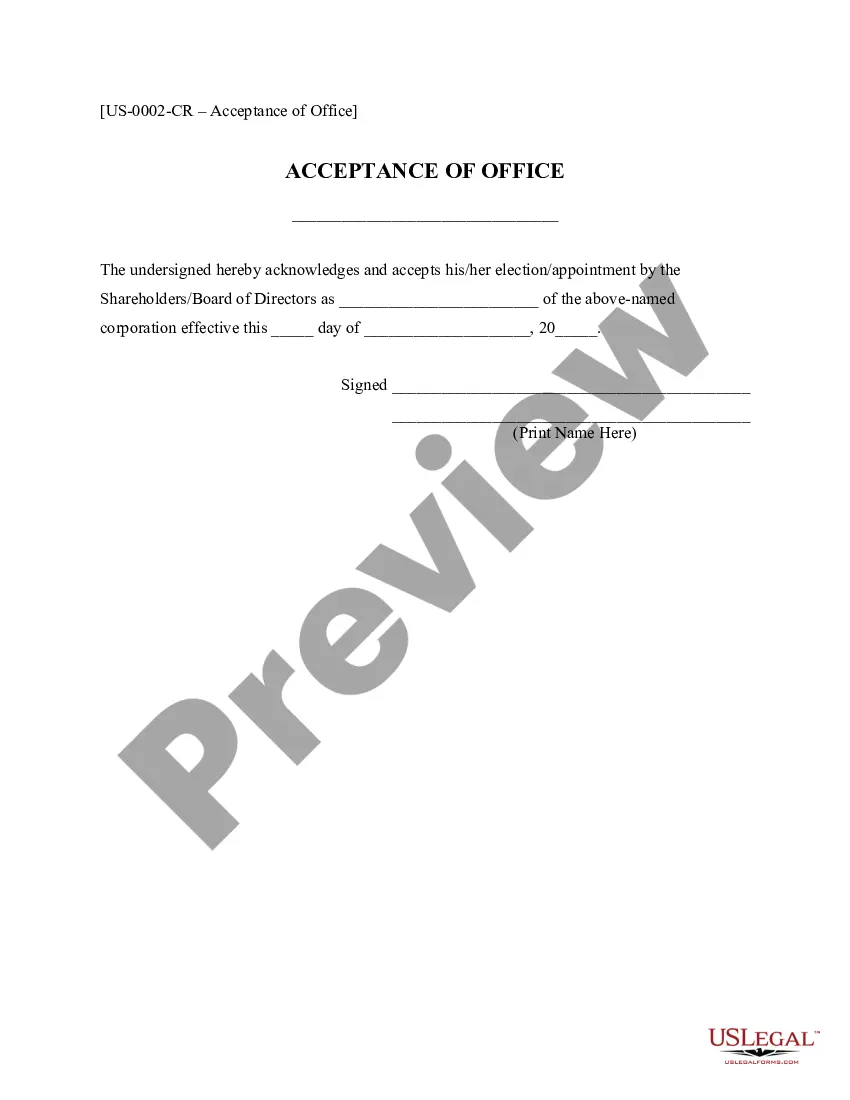

Get your form ready online
Our built-in tools help you complete, sign, share, and store your documents in one place.
Make edits, fill in missing information, and update formatting in US Legal Forms—just like you would in MS Word.
Download a copy, print it, send it by email, or mail it via USPS—whatever works best for your next step.
Sign and collect signatures with our SignNow integration. Send to multiple recipients, set reminders, and more. Go Premium to unlock E-Sign.
If this form requires notarization, complete it online through a secure video call—no need to meet a notary in person or wait for an appointment.
We protect your documents and personal data by following strict security and privacy standards.

Make edits, fill in missing information, and update formatting in US Legal Forms—just like you would in MS Word.

Download a copy, print it, send it by email, or mail it via USPS—whatever works best for your next step.

Sign and collect signatures with our SignNow integration. Send to multiple recipients, set reminders, and more. Go Premium to unlock E-Sign.

If this form requires notarization, complete it online through a secure video call—no need to meet a notary in person or wait for an appointment.

We protect your documents and personal data by following strict security and privacy standards.
Looking for another form?
Form popularity
FAQ
In this article, we will outline the key provisions and proper steps to follow when removing a Director from office. Review the Company's Constitution. Provide Special Notice of Removal. Director's Right to Protest. Convene a General Meeting. Notify the Registrar of Companies. Post-Removal Obligations and Rights of Directors.
The following are legitimate grounds for the removal of a board member: Breaching fiduciary responsibilities. Having a conflict of interest. Failing to comply with bylaws. Engaging in illegal and unethical activities. Missing qualifications. Term limits. Passing of ordinary resolution. Retirement of directors by rotation.
A resolution for removing a director must be passed in the general meeting of shareholders after giving the director an opportunity of being heard. After passing the resolution, form DIR-12 must be filed with the ROC. After filing the form, the director's name would be struck off from the MCA website.
The statutory process to remove a director At least 14 days before the shareholders' meeting, the directors must give notice to all shareholders of the meeting. The director being removed is entitled to make representations to the company and speak at the meeting about his/her removal.
Form DIR 12 is required to be filed within 30 days of cessation with an attachment of resolution passed for cessation and resignation of the director. The company has the authority to remove a director provided the director was not appointed by the Tribunal or the Central Government.
Yes, a director can be removed without notice if the company's articles of association permit it or if there are statutory provisions allowing for immediate removal in specific circumstances, such as gross misconduct. Shareholders may take swift action to remove a director in such cases without prior notice.
Corporate officers can normally be removed by the board of directors without cause.
Review Corporate Bylaws and Contracts For instance, a company might have in its bylaws that an officer can be removed if two-thirds of the board of directors votes in favor of the removal. Alternatively, the officer's contract might stipulate specific circumstances under which they can be terminated.
(1) Unless otherwise provided in the articles or bylaws at the time of designation, any director so designated may be removed without cause by the designator of that director. (2) Any director so designated may only be removed under subdivision (a) with the written consent of the designator of that director.

