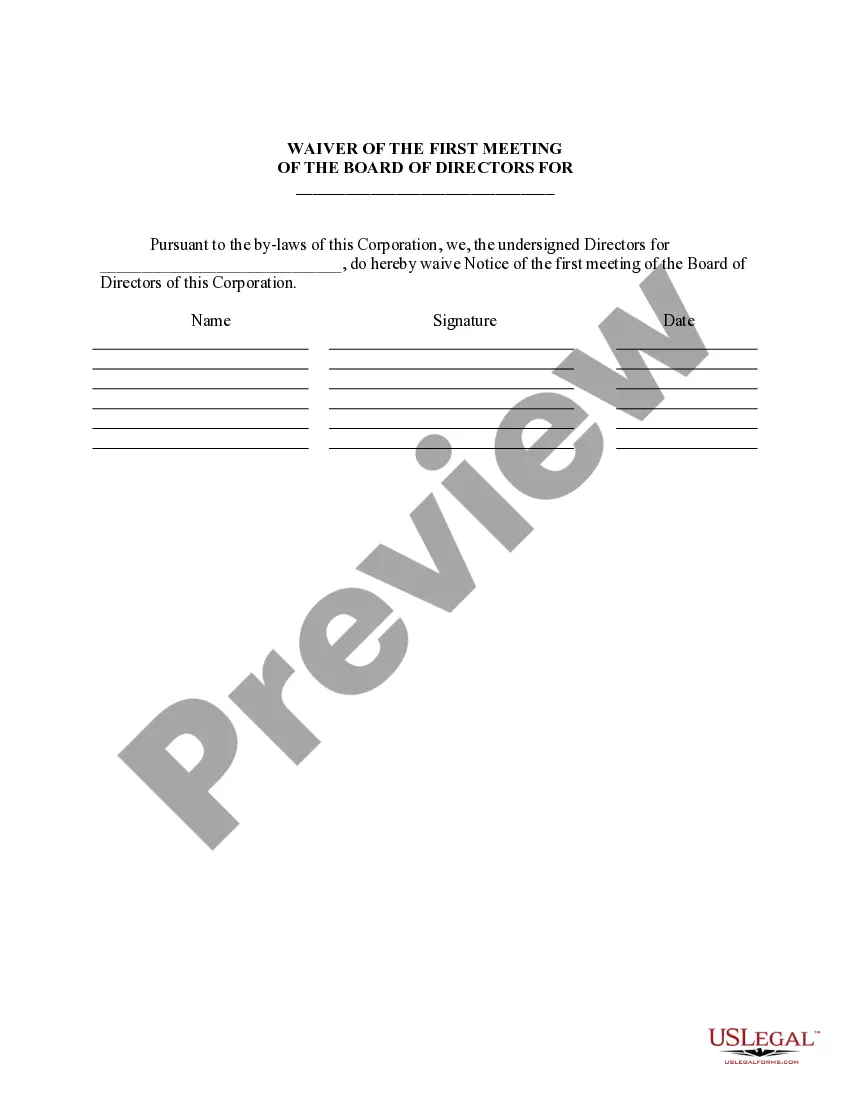
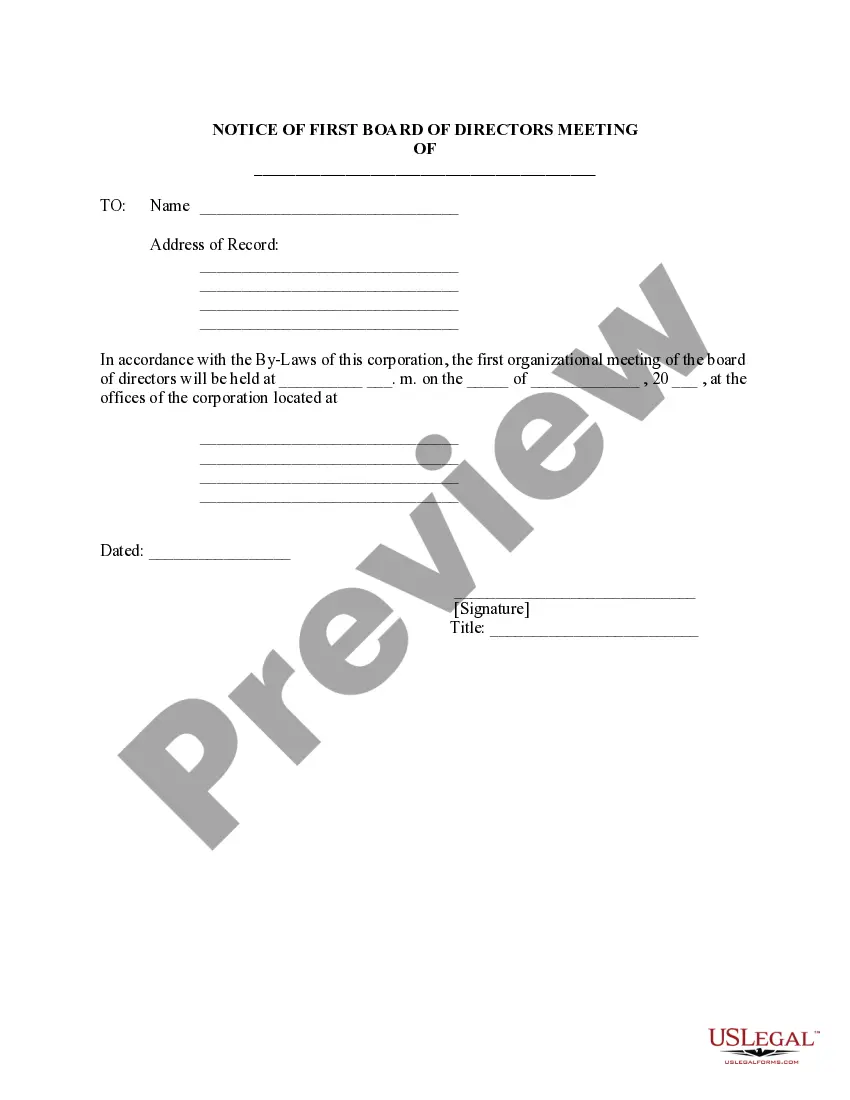
Board Directors Corporate With The Task Of Creating In Wayne
Description


Get your form ready online
Our built-in tools help you complete, sign, share, and store your documents in one place.
Make edits, fill in missing information, and update formatting in US Legal Forms—just like you would in MS Word.
Download a copy, print it, send it by email, or mail it via USPS—whatever works best for your next step.
Sign and collect signatures with our SignNow integration. Send to multiple recipients, set reminders, and more. Go Premium to unlock E-Sign.
If this form requires notarization, complete it online through a secure video call—no need to meet a notary in person or wait for an appointment.
We protect your documents and personal data by following strict security and privacy standards.

Make edits, fill in missing information, and update formatting in US Legal Forms—just like you would in MS Word.

Download a copy, print it, send it by email, or mail it via USPS—whatever works best for your next step.

Sign and collect signatures with our SignNow integration. Send to multiple recipients, set reminders, and more. Go Premium to unlock E-Sign.

If this form requires notarization, complete it online through a secure video call—no need to meet a notary in person or wait for an appointment.

We protect your documents and personal data by following strict security and privacy standards.
Looking for another form?






Form popularity
FAQ
Becoming a member of a board of directors requires a combination of relevant experience, a nomination and election process, and adherence to the organization's governance policies. Networking and demonstrating expertise in relevant areas can also enhance one's chances of being considered for a board position.
Federal and state-level laws, as well as a company's incorporation documents, require public and private corporations in the U.S. to have boards of directors (BoDs). Although private LLCs do not have the same requirements, some choose to elect a board of directors after incorporating.
In the case of corporations, the structure and powers of a board are established by the company's articles of incorporation and its corporate bylaws. Bylaws can set the number of board members, how the board is elected (e.g., by a shareholder vote at an annual meeting), and how often the board meets.
In most legal systems, the appointment and removal of directors is voted upon by the shareholders in general meeting or through a proxy statement. For publicly traded companies in the U.S., the directors which are available to vote on are largely selected by either the board as a whole or a nominating committee.
A public company's board of directors is chosen by shareholders, and its primary job is to look out for shareholders' interests. In fact, directors are legally required to put shareholders' interests ahead of their own.
How to form a board of directors Register articles of incorporation. You must file articles of incorporation in your state to gain legal status as a corporation. Create bylaws. Set up a board of directors agreement. Select your board of directors. Have an initial shareholder meeting.
There are several common actions to take to organize your board of directors, though, including these five steps: Register articles of incorporation. Create bylaws. Set up a board of directors agreement. Select your board of directors. Have an initial shareholder meeting.
In general, the role of the board is to provide high-level oversight of corporate activities and performance, while some individual board members may take on more involved or activist roles. Directors' actions can have a critical impact on a company's profitability.
But when you break it down, there are three main areas where a board does there work: governance, strategic direction, and accountability.
Recruiting, supervising, retaining, evaluating and compensating the CEO or general manager are probably the most important functions of the board of directors. Value-added business boards need to aggressively search for the best possible candidate for this position.