Board Directors Corporate Without In Middlesex
Description
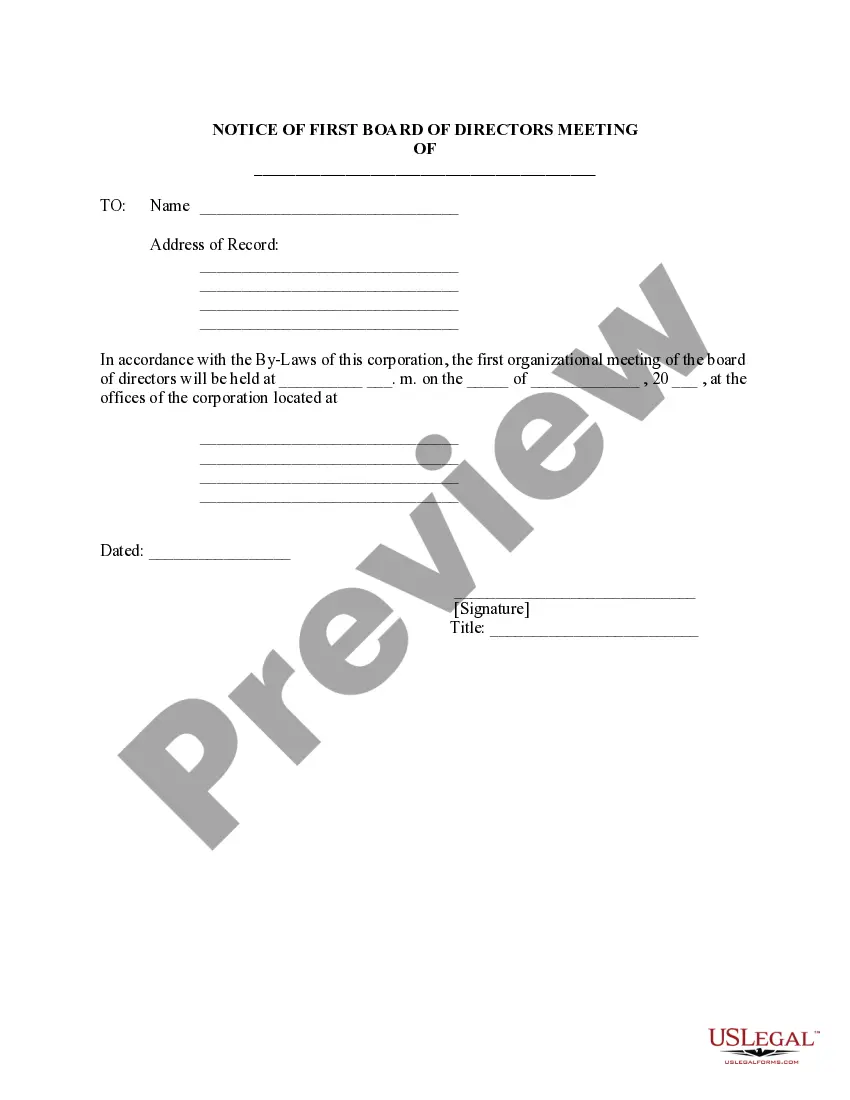


Get your form ready online
Our built-in tools help you complete, sign, share, and store your documents in one place.
Make edits, fill in missing information, and update formatting in US Legal Forms—just like you would in MS Word.
Download a copy, print it, send it by email, or mail it via USPS—whatever works best for your next step.
Sign and collect signatures with our SignNow integration. Send to multiple recipients, set reminders, and more. Go Premium to unlock E-Sign.
If this form requires notarization, complete it online through a secure video call—no need to meet a notary in person or wait for an appointment.
We protect your documents and personal data by following strict security and privacy standards.

Make edits, fill in missing information, and update formatting in US Legal Forms—just like you would in MS Word.

Download a copy, print it, send it by email, or mail it via USPS—whatever works best for your next step.

Sign and collect signatures with our SignNow integration. Send to multiple recipients, set reminders, and more. Go Premium to unlock E-Sign.

If this form requires notarization, complete it online through a secure video call—no need to meet a notary in person or wait for an appointment.

We protect your documents and personal data by following strict security and privacy standards.
Looking for another form?










Form popularity
FAQ
Federal and state-level laws, as well as a company's incorporation documents, require public and private corporations in the U.S. to have boards of directors (BoDs). Although private LLCs do not have the same requirements, some choose to elect a board of directors after incorporating.
How to Become a Board Member Build Relevant Experience. Standing board members will always find value in those who have previous experience in relevant fields. Develop a Strong Professional Network. Develop a Value Proposition. Identify Open Positions. Participate in the Selection Process.
The steps include: Build Relevant Experience. Develop a Strong Professional Network. Develop a Value Proposition. Identify Open Positions. Participate in the Selection Process.
Each year there's an election during the annual shareholders meeting, and through a proxy statement, the company puts up a slate of directors for shareholders to vote on. Typically, that's noncontroversial, but if there's an activist stockholder, they may push people off the board so they can get their members on.
The path to becoming a board member typically involves earning a bachelor's degree in a related field, gaining industry-specific experience, self-promotion, networking, researching potential companies, and creating a strong resume demonstrating relevant skills and experiences.
How to gain an appointment to a board of directors Select the type of board to serve. Search for openings. Select the right company. Familiarize yourself with the directors. Conduct in-depth research on the board and company. Network at special events. Request an appointment. Craft a high-quality resume or CV for an interview.
A public company's board of directors is chosen by shareholders, and its primary job is to look out for shareholders' interests. In fact, directors are legally required to put shareholders' interests ahead of their own.
Every nonprofit has its own board recruitment process. After learning about the organization, consider reaching out to the chief executive, chair or board governance committee chair to indicate your interest in joining their board. It's important to understand their board member expectations and commitment.
Federal and state-level laws, as well as a company's incorporation documents, require public and private corporations in the U.S. to have boards of directors (BoDs). Although private LLCs do not have the same requirements, some choose to elect a board of directors after incorporating.
A board of directors (BofD) is the governing body of a corporation or other organization, whose members are elected by shareholders (in the case of public companies) to set strategy, oversee management, and protect the interests of shareholders and stakeholders. Every public company must have a board of directors.