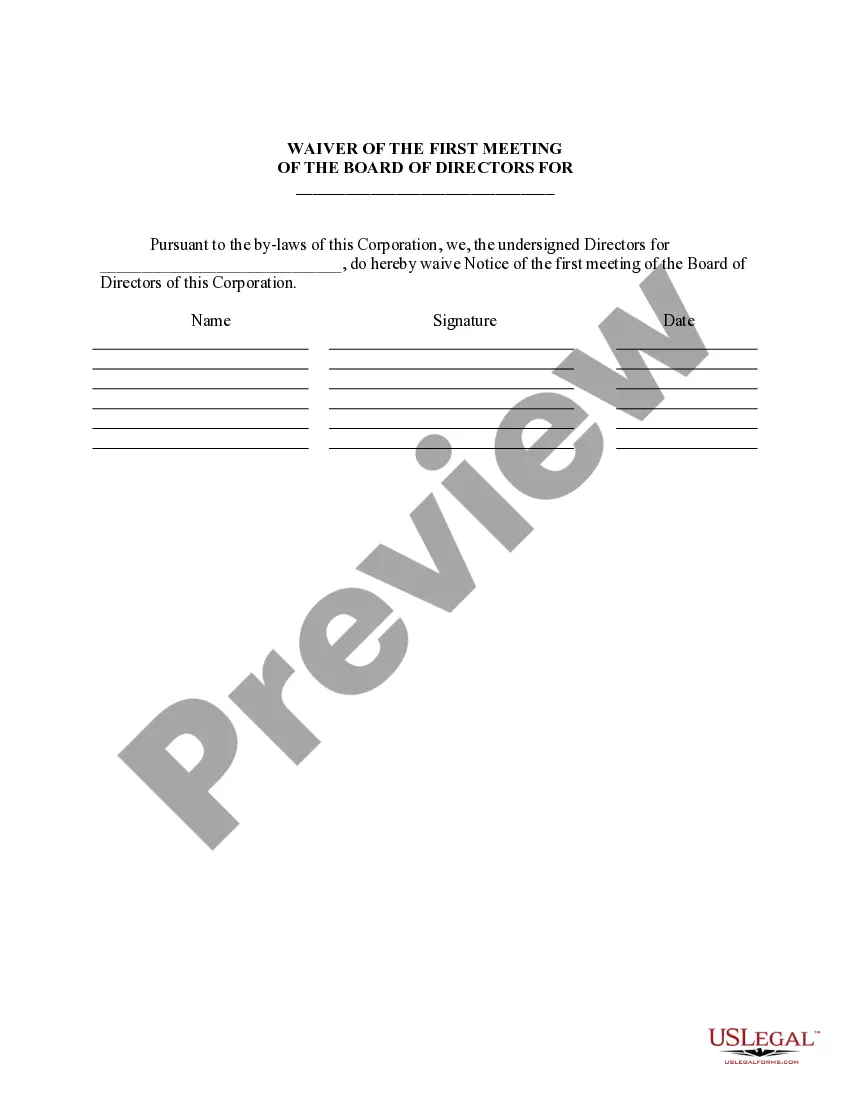
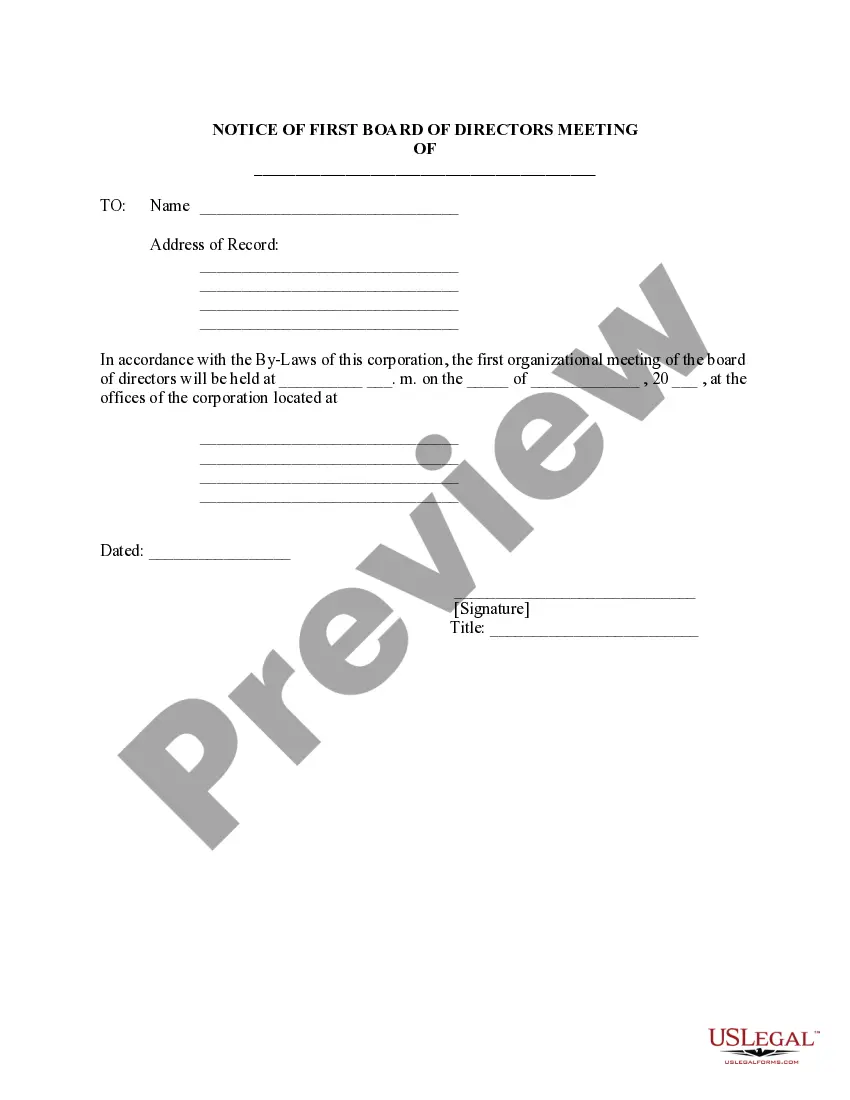
Board Directors Corporate With Shareholders In Collin
Description


Get your form ready online
Our built-in tools help you complete, sign, share, and store your documents in one place.
Make edits, fill in missing information, and update formatting in US Legal Forms—just like you would in MS Word.
Download a copy, print it, send it by email, or mail it via USPS—whatever works best for your next step.
Sign and collect signatures with our SignNow integration. Send to multiple recipients, set reminders, and more. Go Premium to unlock E-Sign.
If this form requires notarization, complete it online through a secure video call—no need to meet a notary in person or wait for an appointment.
We protect your documents and personal data by following strict security and privacy standards.

Make edits, fill in missing information, and update formatting in US Legal Forms—just like you would in MS Word.

Download a copy, print it, send it by email, or mail it via USPS—whatever works best for your next step.

Sign and collect signatures with our SignNow integration. Send to multiple recipients, set reminders, and more. Go Premium to unlock E-Sign.

If this form requires notarization, complete it online through a secure video call—no need to meet a notary in person or wait for an appointment.

We protect your documents and personal data by following strict security and privacy standards.
Looking for another form?



Form popularity
FAQ
Shareholder theory argues that shareholders are the ultimate owners of a corporate's assets and thus, the priority for managers and boards is to protect and grow these assets for the benefit of shareholders.
The Duty of Care Each publicly traded company's Board of Directors has a duty of care to its shareholders. That means that in making business decisions the Board must exercise reasonable care in the decisions that it makes for the company.
Who do I owe my general duties to? Your general duties are owed to the company which you are a director of and not any other group companies or individual shareholders.
A board of directors (BofD) is the governing body of a corporation or other organization, whose members are elected by shareholders (in the case of public companies) to set strategy, oversee management, and protect the interests of shareholders and stakeholders. Every public company must have a board of directors.
Directors are responsible for day-to-day management of the business and its operations. Being a shareholder does not automatically confer the right to have a say in how that company is run on a day-to-day basis.
In fact, directors are legally required to put shareholders' interests ahead of their own. In general, the role of the board is to provide high-level oversight of corporate activities and performance, while some individual board members may take on more involved or activist roles.
The answer to this question is both yes and no. While every board member is a shareholder, not every shareholder is automatically a board member. Shareholders who own a certain percentage of the company's shares (usually 10 percent or more) are eligible to serve on the board.
A company's Board of Directors' main role is to ensure the company's long-term, sustainable success. They need to consider the impacts and interests of all stakeholders while generating value for shareholders.
How to write a board resolution Put the date and resolution number at the top. Give the resolution a title that relates to the decision. Use formal language. Continue writing out each critical statement. Wrap up the heart of the resolution in the last statement.
For publicly traded companies, boards typically comprise executive, nonexecutive, and independent directors elected by shareholders. This is known as a one-tier board structure. The board of directors often includes the CEO and sometimes the CFO of the company.