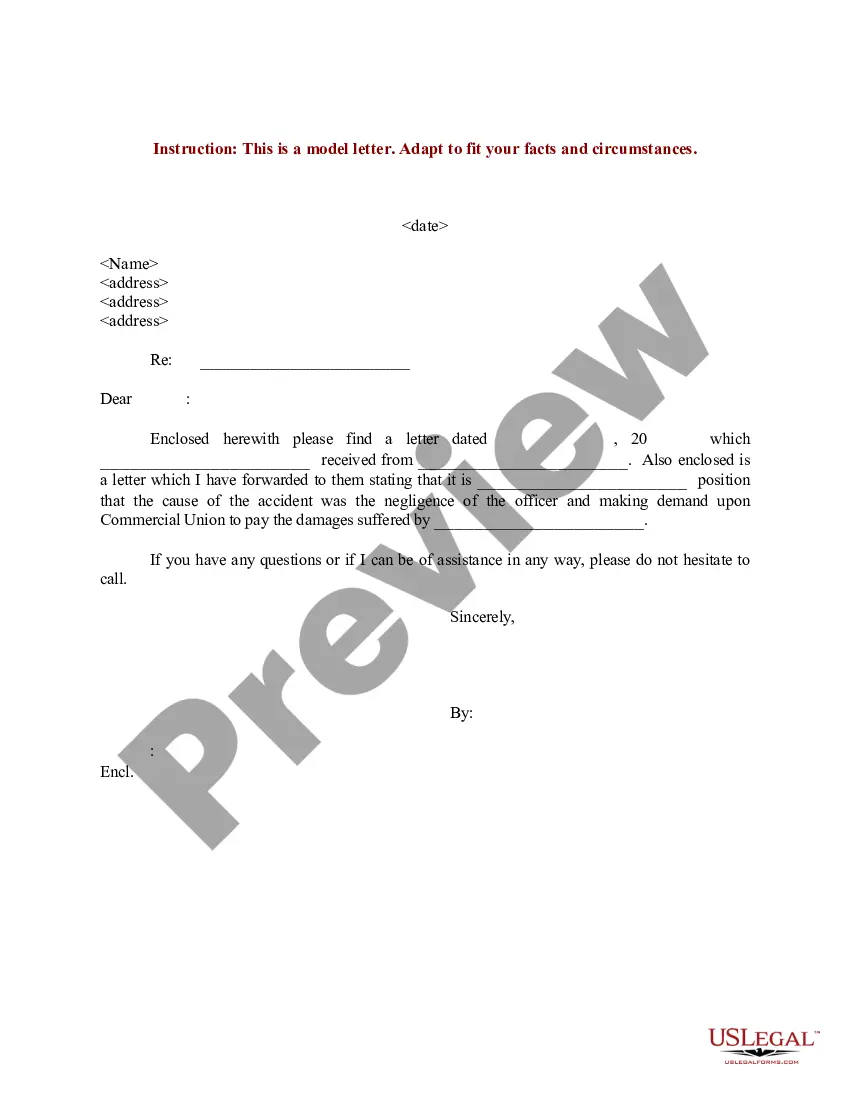
Letter Insurance Form For Claim In Arizona
Description
Get your form ready online
Our built-in tools help you complete, sign, share, and store your documents in one place.
Make edits, fill in missing information, and update formatting in US Legal Forms—just like you would in MS Word.
Download a copy, print it, send it by email, or mail it via USPS—whatever works best for your next step.
Sign and collect signatures with our SignNow integration. Send to multiple recipients, set reminders, and more. Go Premium to unlock E-Sign.
If this form requires notarization, complete it online through a secure video call—no need to meet a notary in person or wait for an appointment.
We protect your documents and personal data by following strict security and privacy standards.

Make edits, fill in missing information, and update formatting in US Legal Forms—just like you would in MS Word.

Download a copy, print it, send it by email, or mail it via USPS—whatever works best for your next step.

Sign and collect signatures with our SignNow integration. Send to multiple recipients, set reminders, and more. Go Premium to unlock E-Sign.

If this form requires notarization, complete it online through a secure video call—no need to meet a notary in person or wait for an appointment.

We protect your documents and personal data by following strict security and privacy standards.
Looking for another form?
Form popularity
FAQ
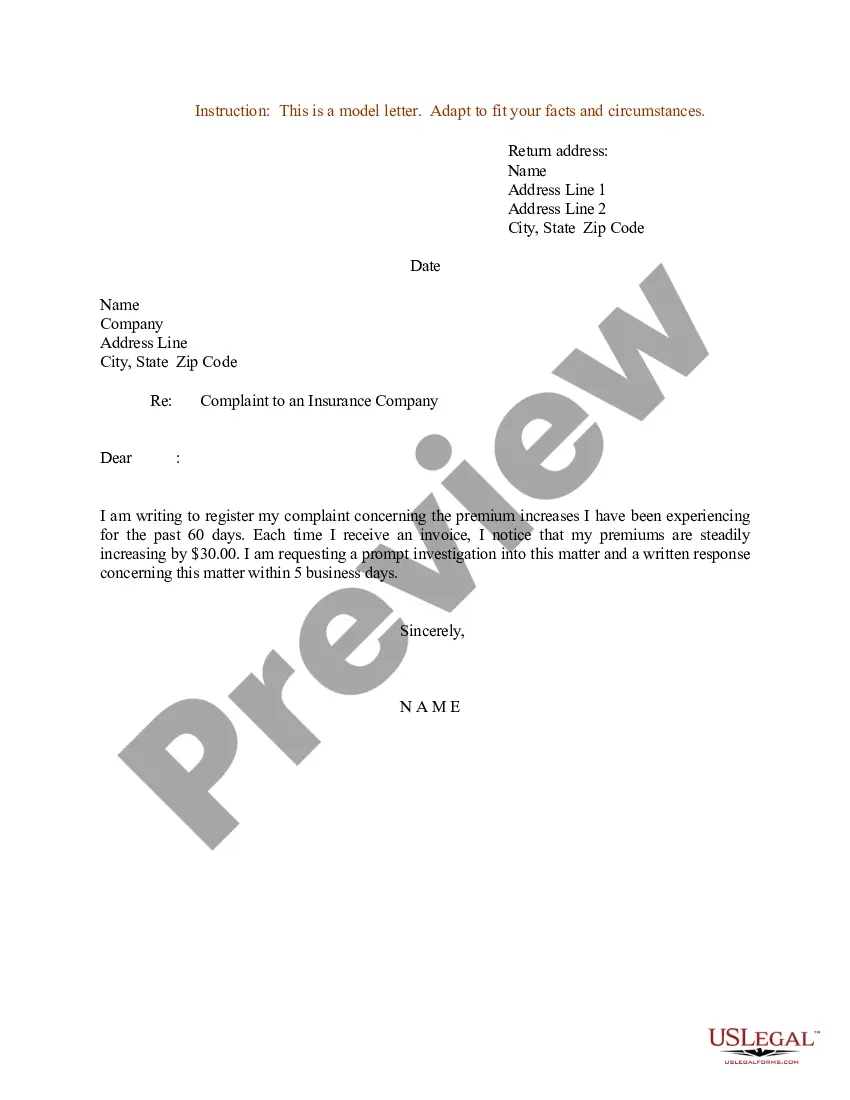
Complaint Letter Provide your contact information, and then the recipient's. Offer a salutation and give any relevant account information. Specify your transaction or experience in the first paragraph. Explain the problem or what went wrong in paragraph two. Use paragraph three to make your resolution demand.
How to Write a Letter to a Health Insurance Company for a Claim? Identify Your Basic Information. Compose a Formal Greeting. Express the Purpose of Your Letter. Brief Description of Medical Treatment. Provide Details of the Costs Involvement. Attach Required Documents. Prompt Processing Request. Closing Statement.
Step-by-step procedure to file a claim Contact your insurer. The first step of claim process is to contact your insurer and intimate about the claim. Fill your claim form and attach the relevant documents. A surveyor conducts damage evaluation. Acceptance of your claim. Get the claim amount.
When a covered accident happens, take these steps to file your claim Call your insurance professional as soon as possible — even from the scene of the accident—regardless of who is at fault. Use a mobile app to jumpstart your claim. Find out what documents are needed to support your claim.
A health insurance claim form has two sections, i.e., Part A and Part B. While Part A is to be filled out by the policyholder, Part B is for the hospital. 2. In Part A of the form, you must fill out your name, residential address, policy number, email ID, phone number, medical history, details of hospitalisation, etc.
There are two ways a Proof of Claim may be filed with the court: by mailing or delivering a paper copy of the Proof of Claim form to the Clerk's Office in Phoenix, Tucson or Yuma; or by using our online Electronic Proof of Claim (ePOC) application.
How to Write a Letter to a Health Insurance Company for a Claim? Identify Your Basic Information. Compose a Formal Greeting. Express the Purpose of Your Letter. Brief Description of Medical Treatment. Provide Details of the Costs Involvement. Attach Required Documents. Prompt Processing Request. Closing Statement.
A Notice of Claim allows the responsible government entity to respond to your claim and settle with you, without going to court. If the government hasn't responded within 60 days, however, your claim is considered denied, and litigation will be the next step to recover compensation.
A Proof of Claim must be filed in the specific court in which the Debtor's bankruptcy case is pending, and properly reference the relevant case number.
How to Write a Letter to a Health Insurance Company for a Claim? Identify Your Basic Information. Compose a Formal Greeting. Express the Purpose of Your Letter. Brief Description of Medical Treatment. Provide Details of the Costs Involvement. Attach Required Documents. Prompt Processing Request. Closing Statement.