Non Disclosure Format In Virginia
Description

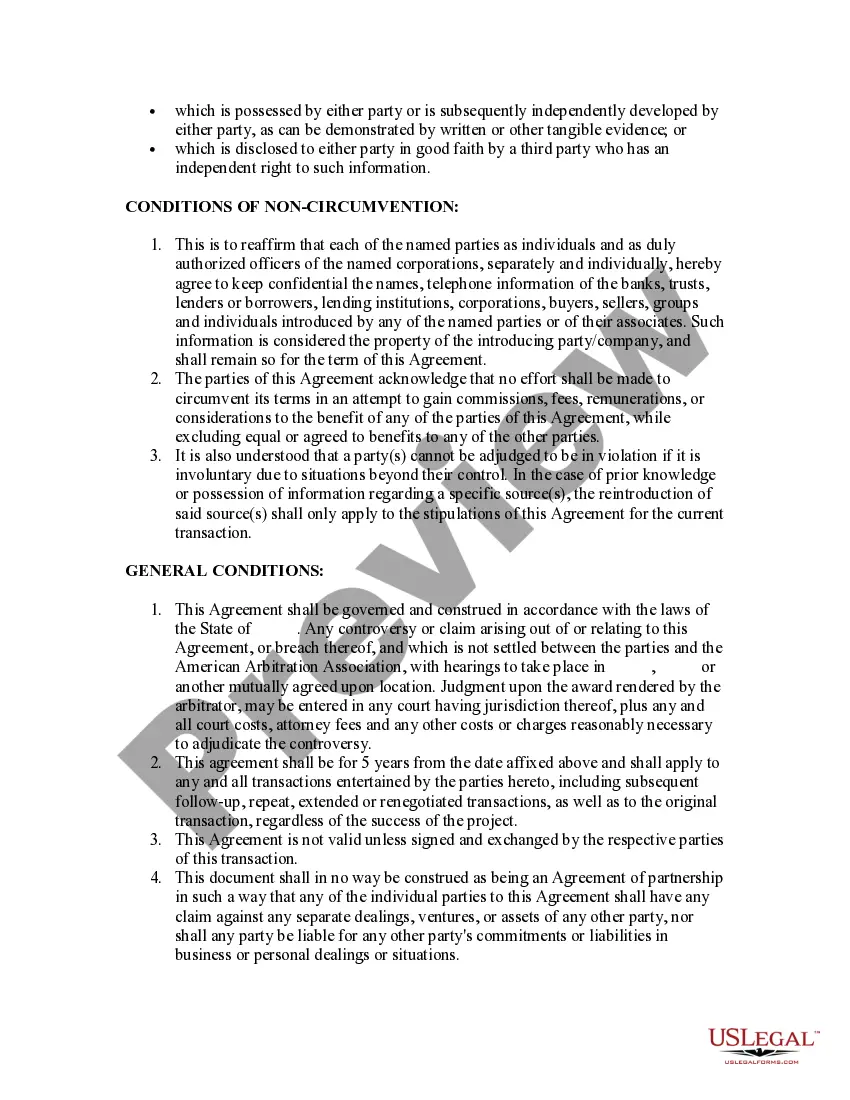
Get your form ready online
Our built-in tools help you complete, sign, share, and store your documents in one place.
Make edits, fill in missing information, and update formatting in US Legal Forms—just like you would in MS Word.
Download a copy, print it, send it by email, or mail it via USPS—whatever works best for your next step.
Sign and collect signatures with our SignNow integration. Send to multiple recipients, set reminders, and more. Go Premium to unlock E-Sign.
If this form requires notarization, complete it online through a secure video call—no need to meet a notary in person or wait for an appointment.
We protect your documents and personal data by following strict security and privacy standards.

Make edits, fill in missing information, and update formatting in US Legal Forms—just like you would in MS Word.

Download a copy, print it, send it by email, or mail it via USPS—whatever works best for your next step.

Sign and collect signatures with our SignNow integration. Send to multiple recipients, set reminders, and more. Go Premium to unlock E-Sign.

If this form requires notarization, complete it online through a secure video call—no need to meet a notary in person or wait for an appointment.

We protect your documents and personal data by following strict security and privacy standards.
Looking for another form?









Form popularity
FAQ
NDAs are enforceable when they are signed — if they are properly drafted and executed. NDAs are enforceable once signed, provided they have been drafted and executed properly. Unilateral NDAs need only the signature of the receiving party, whereas mutual non-disclosure agreements need the signatures of both parties.
Generally, NDAs will be enforced by a court, but some statutes and public policy may prevent the enforcement of an NDA. For example, many NDAs will be voided or partially so regarding criminal acts. Often NDAs may be unenforceable unless certain procedural requirements are met.
As long as the confidential data in question provides a genuine competitive advantage and the agreement's terms are deemed reasonable, Virginia courts have shown a willingness to uphold NDAs and enforce their provisions.
Nearly 20 states have passed laws restricting their use in dealing with sexual misconduct in the workplace, including Arizona, California, Colorado, Hawaii, Illinois, Louisiana, Maine, Maryland, Nevada, New Jersey, New Mexico, New York, Oregon, Tennessee, Utah, Vermont, Virginia, and Washington.
Unlike some other states, Virginia does not have any overarching statutes that explicitly address the requirements or limitations of non-disclosure agreements. However, the courts in Virginia have established certain common law principles and precedents that shape how these contracts are interpreted and applied.
Typically, a legal professional writing the NDA will complete these steps: Step 1 - Describe the scope. Which information is considered confidential? ... Step 2 - Detail party obligations. Step 3 - Note potential exclusions. Step 4 - Set the term. Step 5 - Spell out consequences.
I hereby undertake to treat as confidential all and any information that I receive while participating in the work of evaluating project proposals, to use this information solely for the purpose of evaluation of the proposals, not to disclose it to any third party and not to make it publicly available or accessible ...
To create a Non-Disclosure Agreement, include the following information: The parties' names and contact information. The length of the non-disclosure period. The scope and definition of the confidential information. The obligations of the Non-Disclosure Agreement. The ownership and return information.
To create a Non-Disclosure Agreement, include the following information: The parties' names and contact information. The length of the non-disclosure period. The scope and definition of the confidential information.
