Special Meeting Sample With Agenda In Texas
Description



Get your form ready online
Our built-in tools help you complete, sign, share, and store your documents in one place.
Make edits, fill in missing information, and update formatting in US Legal Forms—just like you would in MS Word.
Download a copy, print it, send it by email, or mail it via USPS—whatever works best for your next step.
Sign and collect signatures with our SignNow integration. Send to multiple recipients, set reminders, and more. Go Premium to unlock E-Sign.
If this form requires notarization, complete it online through a secure video call—no need to meet a notary in person or wait for an appointment.
We protect your documents and personal data by following strict security and privacy standards.

Make edits, fill in missing information, and update formatting in US Legal Forms—just like you would in MS Word.

Download a copy, print it, send it by email, or mail it via USPS—whatever works best for your next step.

Sign and collect signatures with our SignNow integration. Send to multiple recipients, set reminders, and more. Go Premium to unlock E-Sign.

If this form requires notarization, complete it online through a secure video call—no need to meet a notary in person or wait for an appointment.

We protect your documents and personal data by following strict security and privacy standards.
Looking for another form?







Form popularity
FAQ
While there may be exceptions, approving the agenda is generally considered a standard procedure in board meetings. Here's why: Focus and Prioritization: An approved agenda keeps the meeting focused on key issues. By formally agreeing on agenda items, the board prioritizes discussions and avoids irrelevant tangents.
551.043. TIME AND ACCESSIBILITY OF NOTICE; GENERAL RULE. (a) The notice of a meeting of a governmental body must be posted in a place readily accessible to the general public at all times for at least 72 hours before the scheduled time of the meeting, except as provided by Sections 551.044-551.046.
Notices must be posted and accessible to the public for at least 72 hours prior to the meeting. The Act also requires a city, county, school district, or sales tax economic development corporations publish a notice of its meetings on its Internet website.
Your council must give the public a notice of the meeting at least five clear days before it takes place. The details of the meeting must be published on your local authority's website and at its offices. Any background papers must also be published with the agenda.
Since there is no expectation of privacy in the open portion of the HOA meeting, and since Texas is a one-party consent state for recording even private conversations, it is not unlawful for a person attending a board meeting to record the meeting.
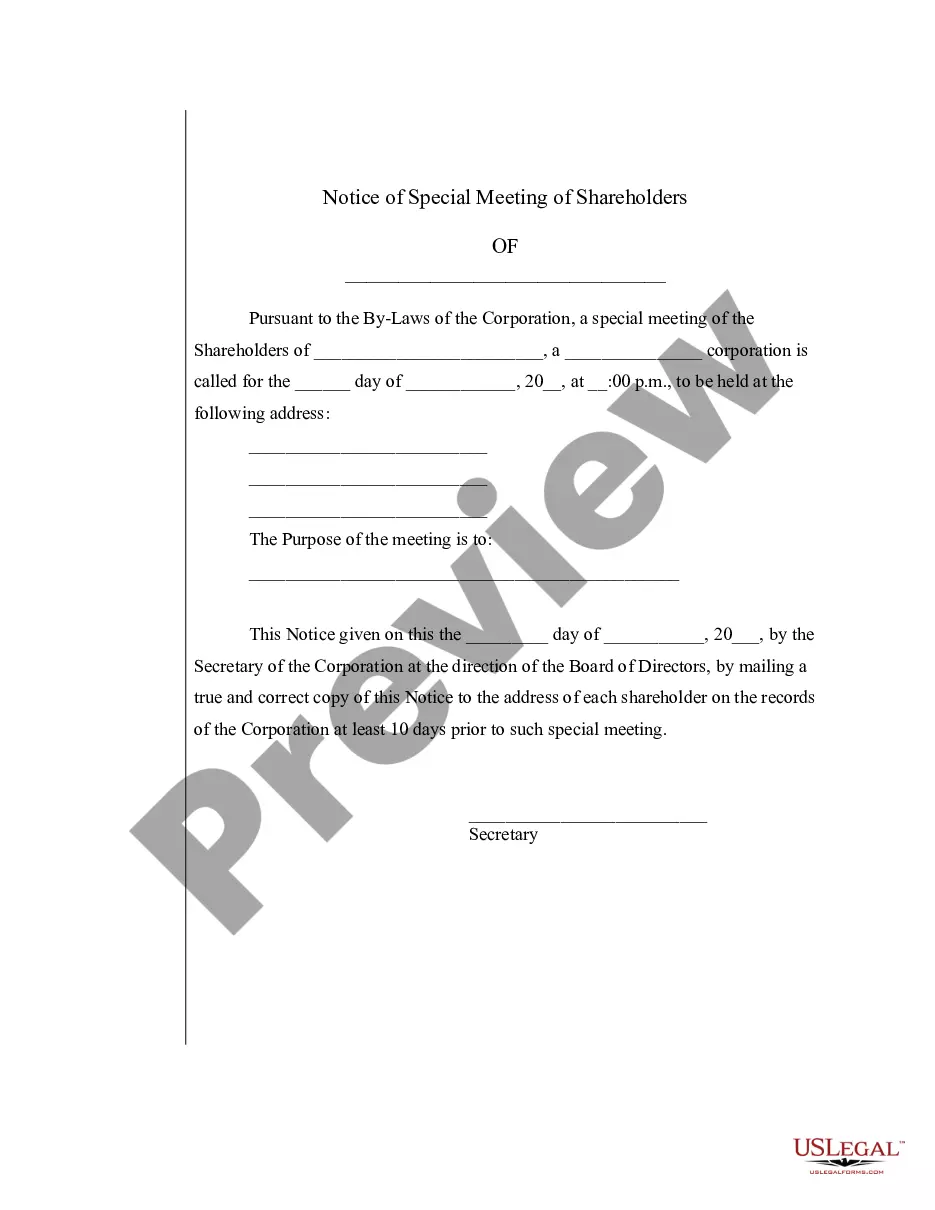
An effective meeting notice should include the meeting's date, time, location, topic, background information, expected participants, and agenda.
(e) A governmental body may not prohibit public criticism of the governmental body, including criticism of any act, omission, policy, procedure, program, or service. This subsection does not apply to public criticism that is otherwise prohibited by law.
It is different from a regular meeting, which is held on a regular schedule. For example, a company may call a special meeting to discuss a major decision, such as a merger or acquisition. A school board may call a special meeting to address a specific issue, such as a budget shortfall.
The EGM is convened at an irregular time to address a crisis. All matters transacted at an EGM are deemed special. For example, the removal of a top executive might constitute the agenda of an extraordinary general meeting.

