Special Meeting Sample For Staff In Oakland
Description



Get your form ready online
Our built-in tools help you complete, sign, share, and store your documents in one place.
Make edits, fill in missing information, and update formatting in US Legal Forms—just like you would in MS Word.
Download a copy, print it, send it by email, or mail it via USPS—whatever works best for your next step.
Sign and collect signatures with our SignNow integration. Send to multiple recipients, set reminders, and more. Go Premium to unlock E-Sign.
If this form requires notarization, complete it online through a secure video call—no need to meet a notary in person or wait for an appointment.
We protect your documents and personal data by following strict security and privacy standards.

Make edits, fill in missing information, and update formatting in US Legal Forms—just like you would in MS Word.

Download a copy, print it, send it by email, or mail it via USPS—whatever works best for your next step.

Sign and collect signatures with our SignNow integration. Send to multiple recipients, set reminders, and more. Go Premium to unlock E-Sign.

If this form requires notarization, complete it online through a secure video call—no need to meet a notary in person or wait for an appointment.

We protect your documents and personal data by following strict security and privacy standards.
Looking for another form?







Form popularity
FAQ
You can view the meetings online by the meeting calendar at by clicking “In Progress”. There are two ways to join meetings via Zoom; by video (computer/smart device) or phone. See the agenda for details.
For ordinary resolutions to pass, they need more than half of the votes cast, which is called a simple majority. Special resolutions require a higher majority, at least 75% of votes cast. The voting process for ordinary resolutions is simple. The voting process for special resolutions is more thorough and stringent.
A special meeting is a gathering of people that is called for a specific purpose or reason. It is different from a regular meeting because it is not scheduled in advance and is only held when necessary.
An Extraordinary General Meeting (EGM) is an exceptional assembly convened by a company to deliberate and decide on matters of urgency that cannot await the routine schedule of an Annual General Meeting (AGM). AGMs, which follow regular intervals, serve as forums for routine corporate activities.
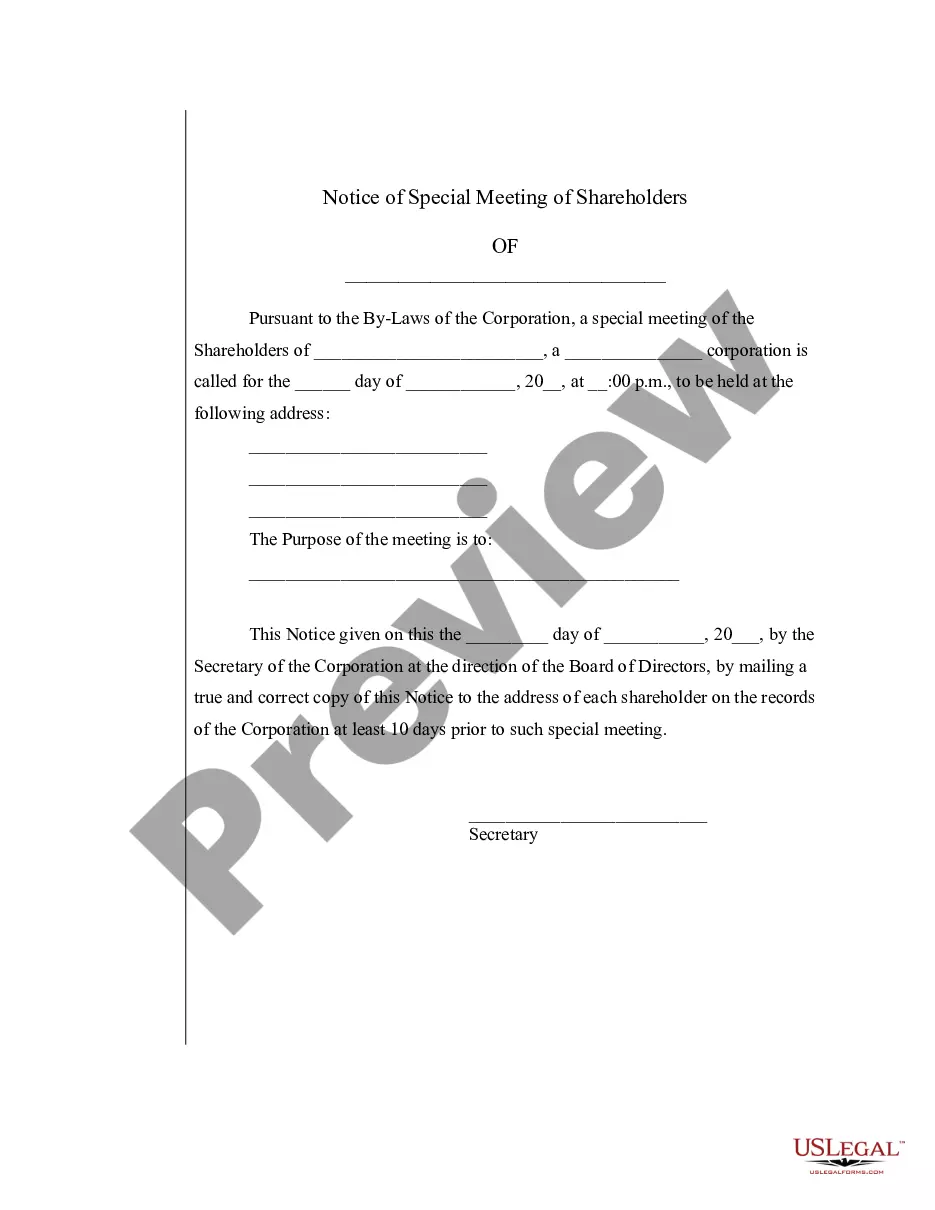
In addition to specifying the date, time and location of the meeting, special meeting notices should make note of all agenda items. Unless the bylaws indicate something different, board members should only be discussing the business that was stated in the notice for the special meeting.
Any meeting that is not a regular meeting of the governing body (i.e., that falls outside the time established for regular meetings and is not an adjournment or continuation of a regular meeting) is considered a “special meeting.” See RCW 42.30.
In contrast, a special board meeting is a meeting that is not scheduled well in advance and is called by someone – authorized either under the law or the organization's bylaws – for a special purpose.
Special Committee Meetings – Urgent meetings of the committee are called Special Committee Meetings and are usually called to deal with a dispute or grievance or other matters of urgency. Minutes from the committee meeting are not available to the members. General Meetings - General meetings are for all members.
Special meetings are typically called for matters of some urgency—topics that can't wait until an annual or other regularly scheduled meeting. For instance, a special meeting might be called if the LLC received an offer to merge with another company or if members disagreed on the interpretation of a key policy.