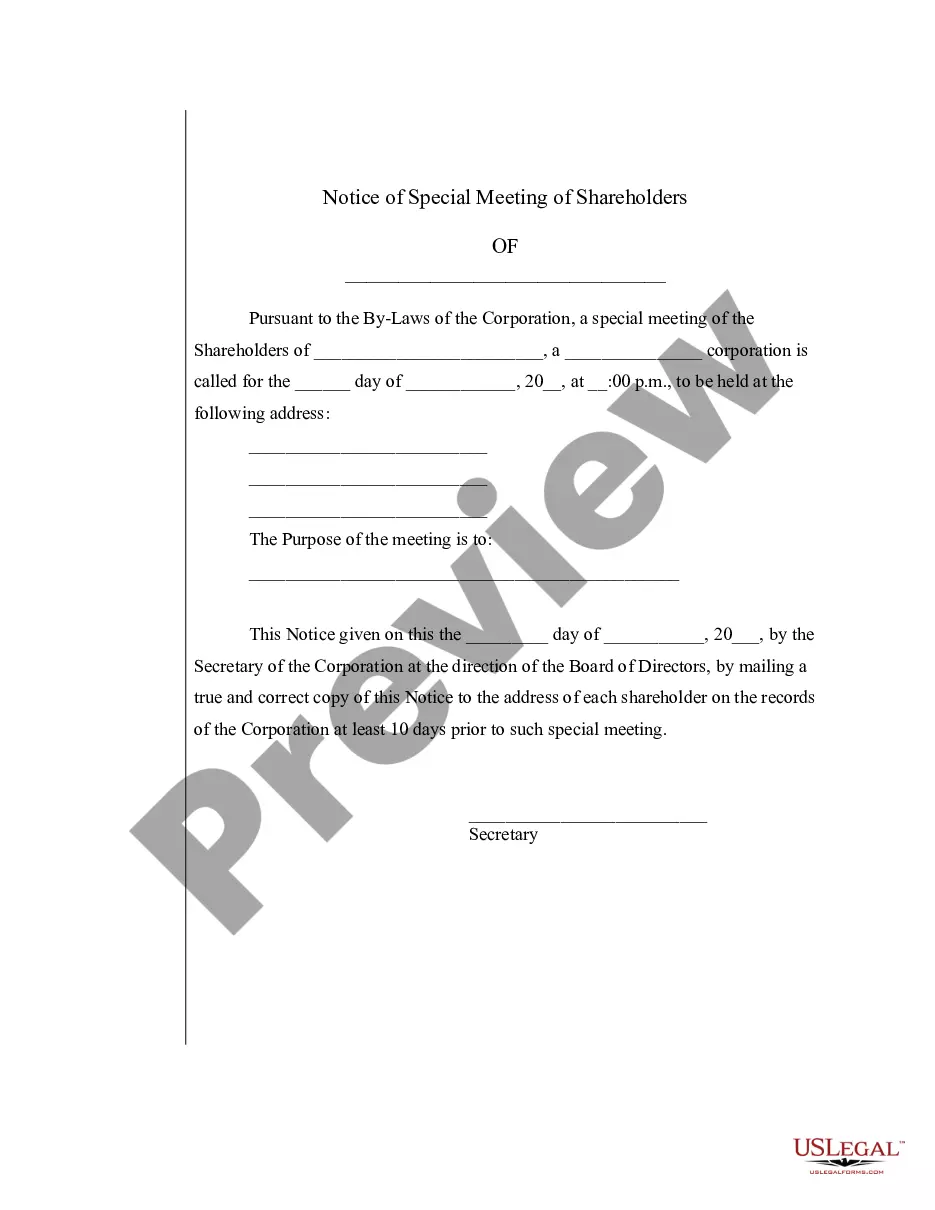
Special Meeting Sample For Hoa In Cuyahoga
Description



Get your form ready online
Our built-in tools help you complete, sign, share, and store your documents in one place.
Make edits, fill in missing information, and update formatting in US Legal Forms—just like you would in MS Word.
Download a copy, print it, send it by email, or mail it via USPS—whatever works best for your next step.
Sign and collect signatures with our SignNow integration. Send to multiple recipients, set reminders, and more. Go Premium to unlock E-Sign.
If this form requires notarization, complete it online through a secure video call—no need to meet a notary in person or wait for an appointment.
We protect your documents and personal data by following strict security and privacy standards.

Make edits, fill in missing information, and update formatting in US Legal Forms—just like you would in MS Word.

Download a copy, print it, send it by email, or mail it via USPS—whatever works best for your next step.

Sign and collect signatures with our SignNow integration. Send to multiple recipients, set reminders, and more. Go Premium to unlock E-Sign.

If this form requires notarization, complete it online through a secure video call—no need to meet a notary in person or wait for an appointment.

We protect your documents and personal data by following strict security and privacy standards.
Looking for another form?
Form popularity
FAQ
Your meeting minutes should include: Motions: who made them, who seconded them and if they were approved or not. Voting: who voted in favor, dissented and abstained. Old business and if it was resolved. New business and when it will be addressed in the future. Actions that were taken during the meeting.
Homeowners can typically access their association's rules and regulations through a request to the HOA board. All governing documents, including bylaws and covenants, should be made available to members. Documentation might also be obtained via the Ohio Secretary of State.
In Ohio, the procedure for dissolving an HOA may be outlined in the association's governing documents. If it is not, the board will need to obtain a majority vote from the members. A certificate must be submitted to the Ohio Secretary of State whenever a resolution of dissolution is enacted.
Section 5311.20 | Unit owners association may sue or be sued. In any action relating to the common elements or to any right, duty, or obligation possessed or imposed upon the unit owners association by statute or otherwise, the unit owners association may sue or be sued as a separate legal entity.
HOAs in Ohio are granted powers to enforce community rules, collect dues, and maintain common areas. They can also impose fines for non-compliance and set regulations for property use. For a detailed breakdown, refer to the Ohio Planned Community Law.
A homeowners association cannot evict a homeowner the same way that a landlord can evict a tenant. A landlord typically has a lease that allows the landlord to give the tenant a certain amount of time to correct a problem, move out, or face eviction.
Special Committee Meetings – Urgent meetings of the committee are called Special Committee Meetings and are usually called to deal with a dispute or grievance or other matters of urgency. Minutes from the committee meeting are not available to the members. General Meetings - General meetings are for all members.
An extraordinary general meeting (EGM) is a company shareholder meeting that's not its scheduled annual general meeting (AGM). An EGM is also called a special general meeting or emergency general meeting.
a special meeting may be called at any time by the presiding officer of the governing body of a public agency or by a majority of the members of the governing body emphasis added…
Occasionally, special meetings need to be called because of an urgent or special matter. ing to Robert's Rules of Order, special meetings always require previous notice. Here are a few valid reasons for calling a special meeting: An urgent matter needs to be dealt with before the next regular meeting.

