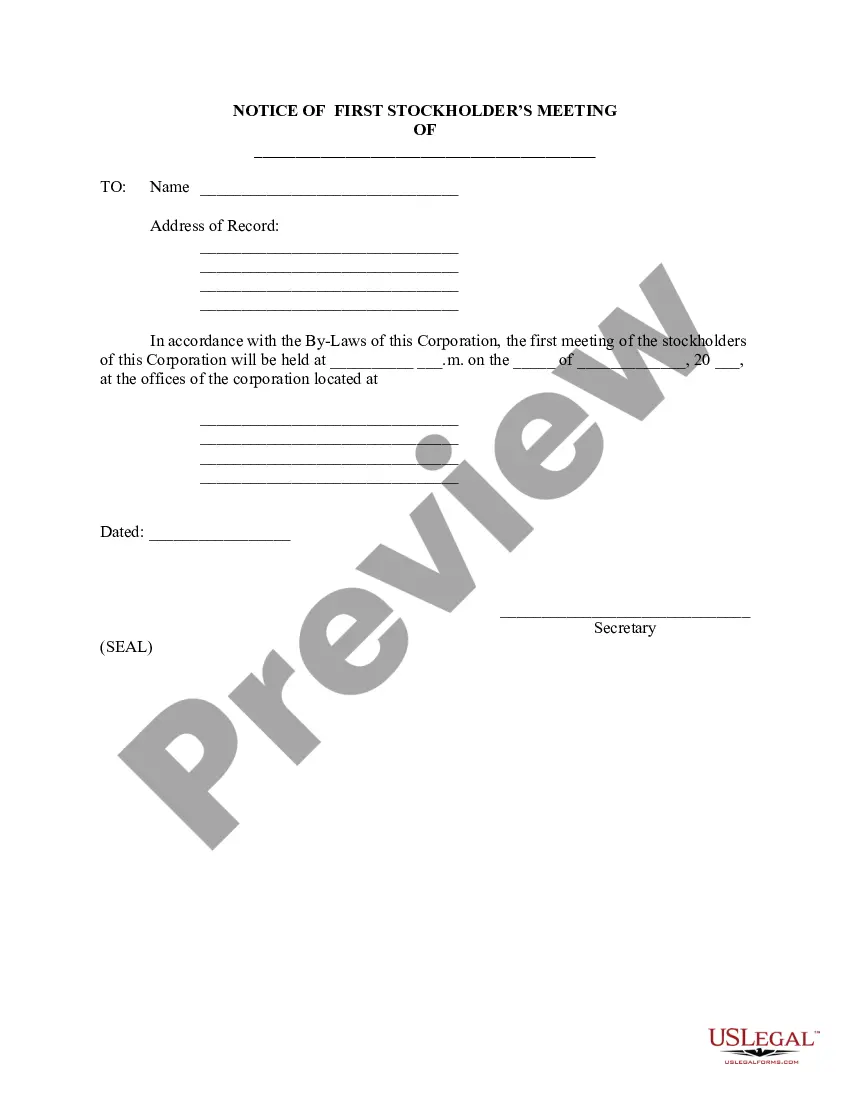
Corporation First Meeting For Love In Ohio
Description

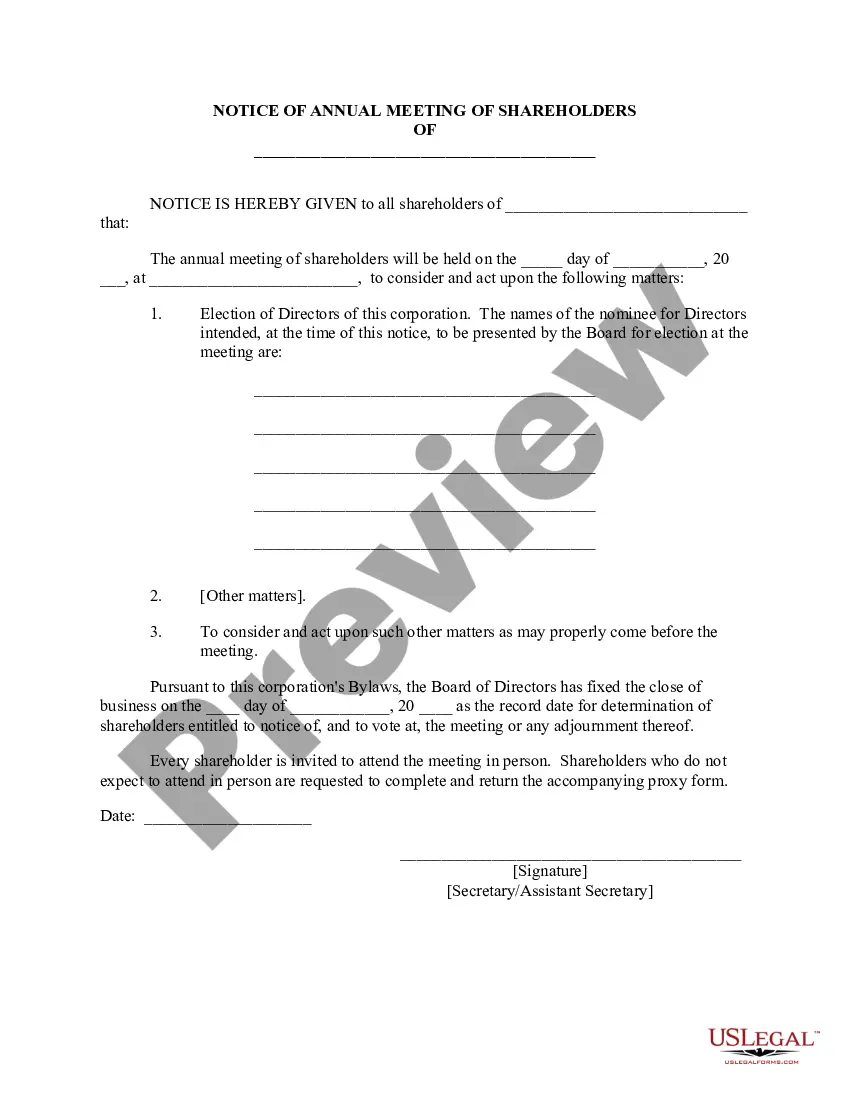

Get your form ready online
Our built-in tools help you complete, sign, share, and store your documents in one place.
Make edits, fill in missing information, and update formatting in US Legal Forms—just like you would in MS Word.
Download a copy, print it, send it by email, or mail it via USPS—whatever works best for your next step.
Sign and collect signatures with our SignNow integration. Send to multiple recipients, set reminders, and more. Go Premium to unlock E-Sign.
If this form requires notarization, complete it online through a secure video call—no need to meet a notary in person or wait for an appointment.
We protect your documents and personal data by following strict security and privacy standards.

Make edits, fill in missing information, and update formatting in US Legal Forms—just like you would in MS Word.

Download a copy, print it, send it by email, or mail it via USPS—whatever works best for your next step.
Sign and collect signatures with our SignNow integration. Send to multiple recipients, set reminders, and more. Go Premium to unlock E-Sign.

If this form requires notarization, complete it online through a secure video call—no need to meet a notary in person or wait for an appointment.

We protect your documents and personal data by following strict security and privacy standards.
Looking for another form?

Form popularity
FAQ
How to Form a C-Corp in Ohio Choose a Registered Agent. The law mandates that every C-Corp in Ohio must have a registered agent. File Articles of Corporation. With a registered agent and at least one director in place, it's time to register your C-Corp in Ohio. Fulfill Additional Requirements. Maintain Ongoing Compliance.
Step 1: Choose a Name for Your Corporation. Step 2: File Articles of Incorporation. Step 3: Appoint Corporate Directors. Step 4: Draft the Bylaws. Step 5: Hold a First Meeting of the Board of Directors. Step 6: Issue Corporate Stock. Step 7: Obtain Licenses and Permits.
What is the correct order of events for the formation of a corporation? A. Novations are executed; Articles of incorporation are filed; Incorporators select a name for the corporation; Business selects a state of incorporation.
Steps to forming a corporation Select a state of incorporation. Choose a business name. File incorporation paperwork. Appoint a registered agent. Prepare corporate bylaws. Draft a shareholders' agreement. Hold the first board meeting. Get an EIN.
Here are eight key things to include when writing bylaws. Basic corporate information. The bylaws should include your corporation's formal name and the address of its main place of business. Board of directors. Officers. Shareholders. Committees. Meetings. Conflicts of interest. Amendment.
Although actual requirements can vary depending on the state, they typically involve the following: Select a state of incorporation. Choose a business name. File incorporation paperwork. Appoint a registered agent. Prepare corporate bylaws. Draft a shareholders' agreement. Hold the first board meeting. Get an EIN.
The origin of the corporate form is commonly associated with the chartering of the Dutch East India Company, the Vereenigde Oost-Indische Compagnie (VOC), in 1602 in Amsterdam. England had chartered a similarly named East India Company (EIC) two years earlier, in 1600.
1. First, register with the Ohio Secretary of State.
How do you start a corporation? Select a business name. Ensure the corporate name you plan to register is not already in use. Designate a board of directors. File articles of incorporation. Draft corporate bylaws. Obtain an Employer Identification Number (EIN). Issue stock.
In summary, LLCs offer more flexibility in management and taxation, while corporations have a more standardized structure that may be better suited for businesses seeking outside investment.