First Stockholders Paper For The Future
Description
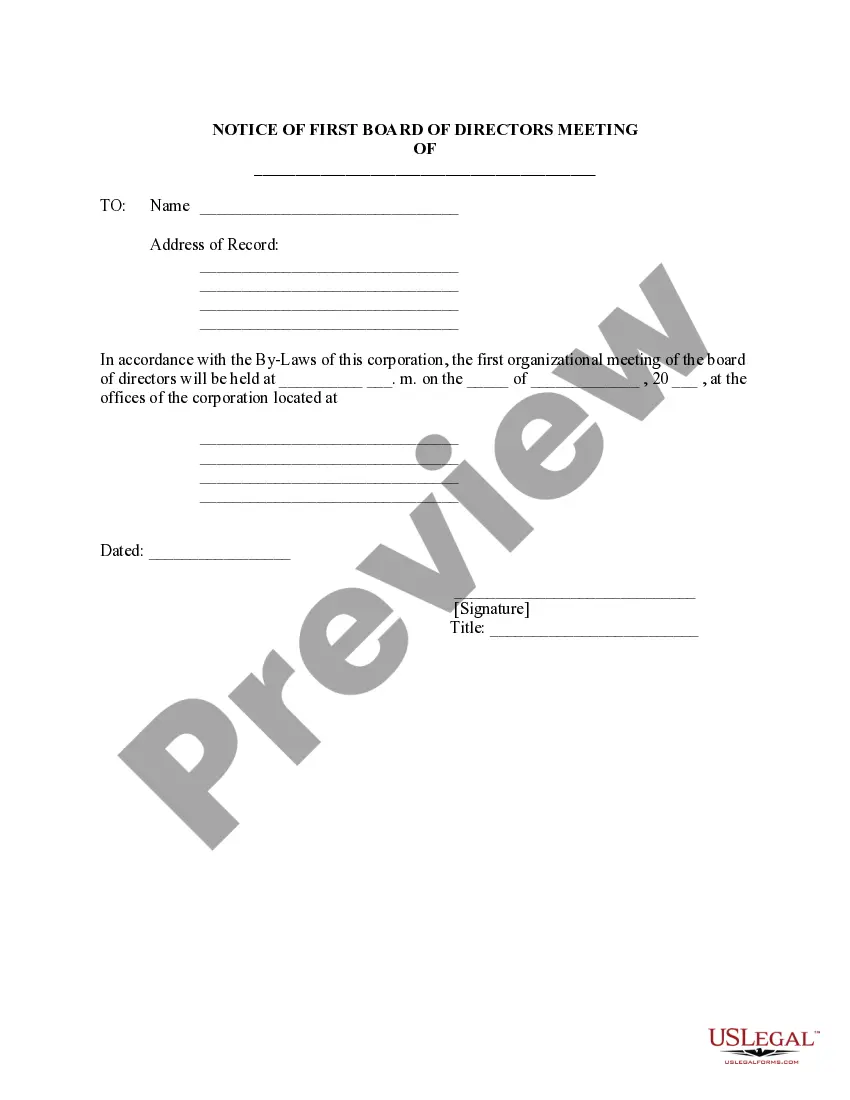



How to fill out Notice Of First Stockholders Meeting - Corporate Resolutions?
- Begin by checking the form preview and description. Make sure it meets your specific needs and aligns with local legal requirements.
- If necessary, use the Search feature to find an alternative template that fits better. Always ensure the selected form addresses your requirements.
- Proceed to purchase the document by clicking on the Buy Now button and selecting your preferred subscription plan.
- Complete your registration to gain access to the comprehensive library of legal forms.
- Finalize your purchase by entering your payment details or utilizing PayPal for a smooth transaction.
- Download your completed form and save it to your device. You can easily access it anytime from the My Forms section in your account.
By utilizing US Legal Forms, you are not only ensuring you have access to one of the most extensive collections of legal templates available, but you also gain support from premium experts for accurate document completion.
Start your legal journey today by visiting US Legal Forms and discover how easy it is to secure your First Stockholders Paper for the Future.
Form popularity
FAQ
The first shareholders of a company are typically its founders, early investors, or those who acquire shares during initial public offerings. They play a crucial role in providing the initial capital needed for growth. Understanding the dynamics of these early stakeholders is essential when considering the guidelines established in the First stockholders paper for the future.
Friedman’s shareholder primacy concept advocates that the primary responsibility of a company is to increase its profits for shareholders. Milton Friedman argued that social responsibilities of business should be aligned with generating wealth for owners. This principle remains influential and continues to shape discussions surrounding the First stockholders paper for the future.
The shareholder primacy theory of agency posits that company executives act as agents of the shareholders. This means that the management's primary duty is to protect and enhance shareholder interests. In light of this theory, companies must navigate the balance between various stakeholder interests while adhering to shareholder expectations as outlined in the First stockholders paper for the future.
Shareholder primacy suggests that a corporation's purpose is to serve its shareholders above all else. This principle can shape corporate strategy, focusing on financial performance to benefit shareholders. Understanding this relationship is essential when considering the implications found in the First stockholders paper for the future and how corporate actions affect stakeholders.
Shareholder primacy theory argues that a company’s main responsibility is to its shareholders. This theory emphasizes that the interests of shareholders should come first in corporate decision-making. It often influences the governance structure and strategic goals of companies, making it a key consideration in discussions about the First stockholders paper for the future.
known example of shareholder theory is the idea that a company's primary obligation is to maximize shareholder value. This can involve making decisions that favor profit growth, often prioritizing financial returns over other stakeholders' interests. This perspective plays a significant role in financial discussions about the First stockholders paper for the future.
Shareholders have existed since the formation of companies in the late Middle Ages, particularly with the rise of trading companies. They initially emerged as a way for investors to pool resources for large ventures. Over time, the concept evolved, and now holding shares represents ownership in a company. Understanding this history is crucial in shaping the First stockholders paper for the future.
The deadline for sending out 1099 forms is January 31st of the year following the taxable year. This ensures recipients receive timely information to prepare their taxes. Accurate and prompt reporting is crucial to avoid penalties. Utilizing tools like the first stockholders' paper for the future can assist you in this efficient reporting.
Yes, you must report every stock trade on your tax return, as each transaction may result in capital gains or losses. The IRS requires thorough reporting to ensure proper taxation on your investment activities. By keeping comprehensive records and using your first stockholders' paper for the future, you can manage this process efficiently.
You should file both form 8949 and Schedule D as they serve different purposes. Start with form 8949 to detail your specific transactions, then use that information to complete Schedule D. This method ensures accuracy and compliance with IRS regulations. Relying on your first stockholders' paper for the future can help in drafting both forms correctly.
