Annual Shareholder Meeting Form In Wayne
Description



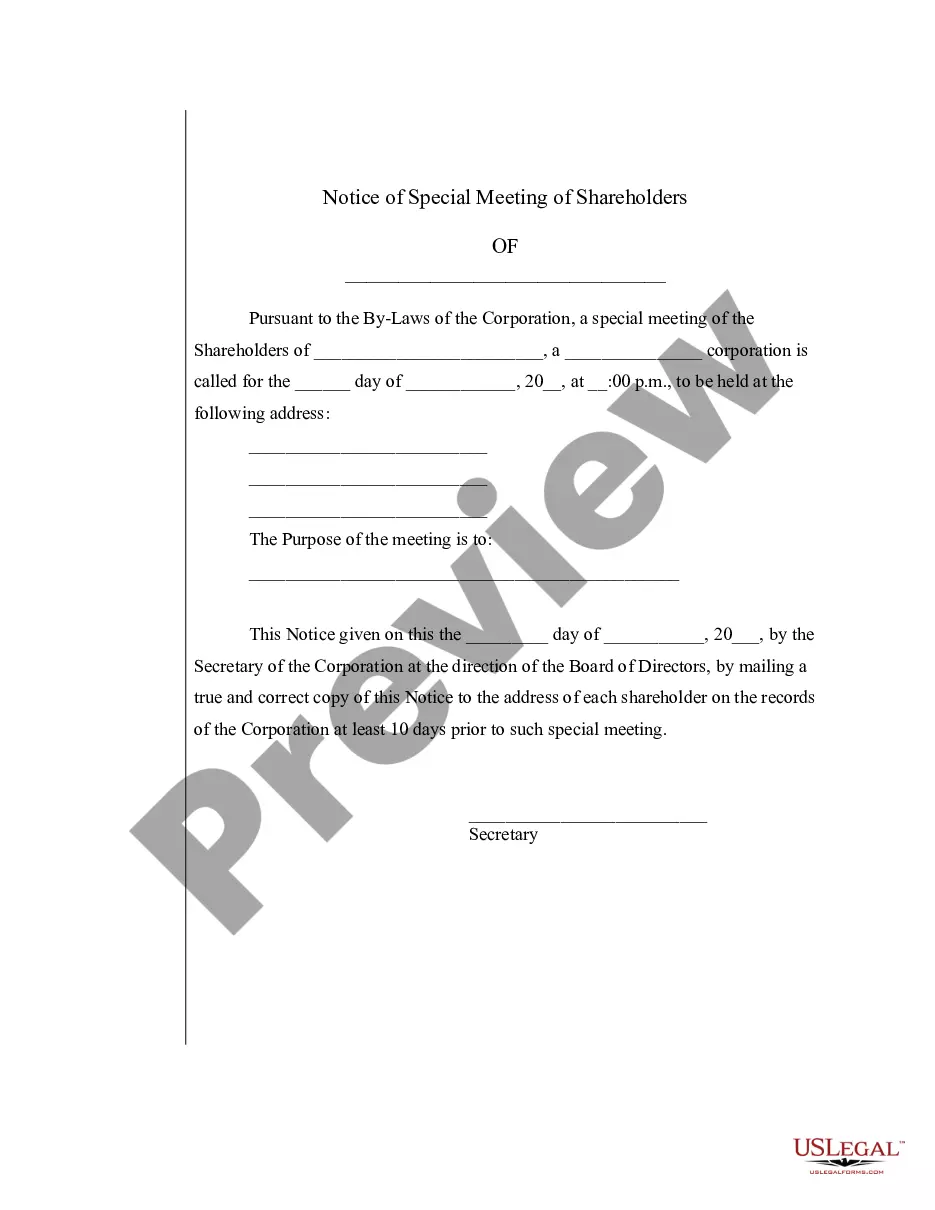
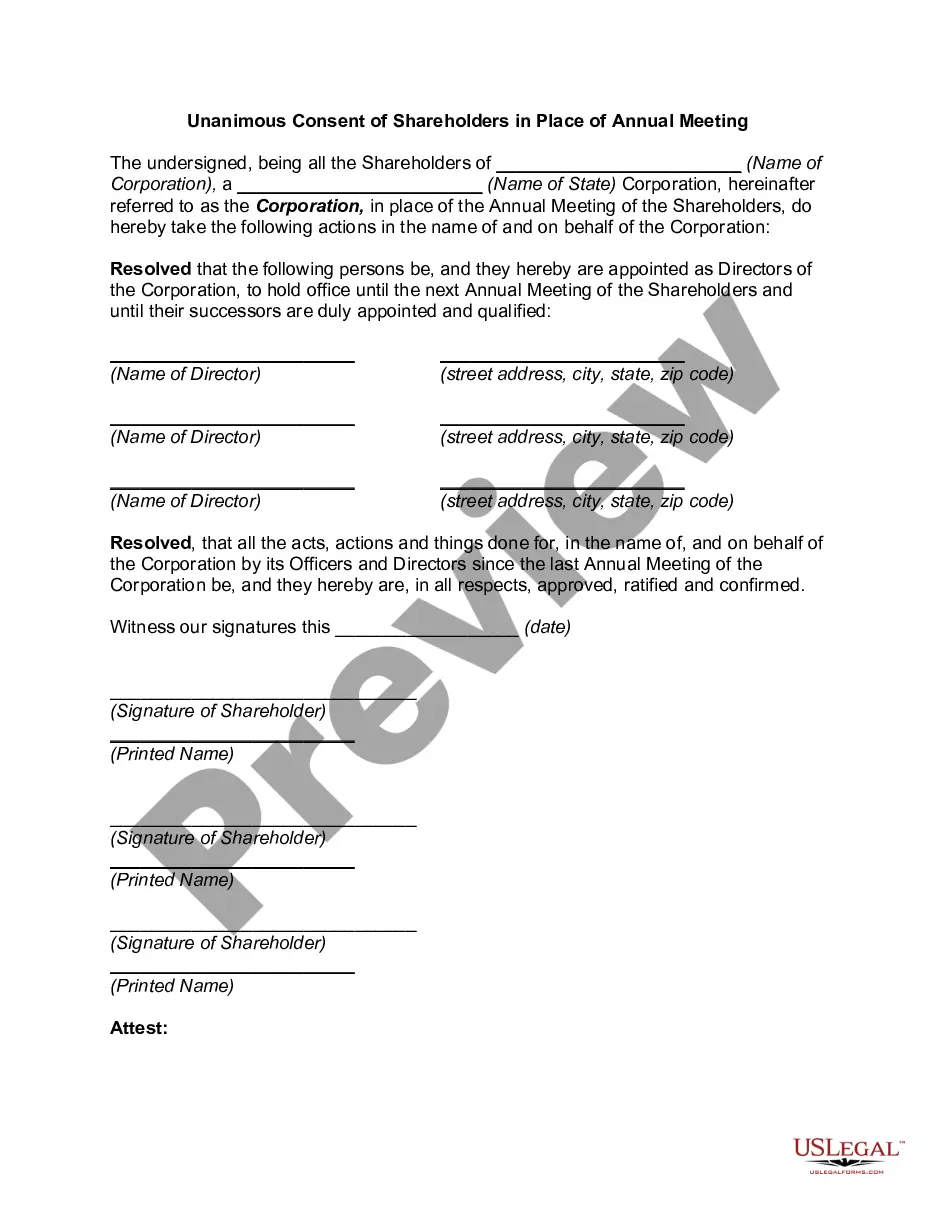
Get your form ready online
Our built-in tools help you complete, sign, share, and store your documents in one place.
Make edits, fill in missing information, and update formatting in US Legal Forms—just like you would in MS Word.
Download a copy, print it, send it by email, or mail it via USPS—whatever works best for your next step.
Sign and collect signatures with our SignNow integration. Send to multiple recipients, set reminders, and more. Go Premium to unlock E-Sign.
If this form requires notarization, complete it online through a secure video call—no need to meet a notary in person or wait for an appointment.
We protect your documents and personal data by following strict security and privacy standards.

Make edits, fill in missing information, and update formatting in US Legal Forms—just like you would in MS Word.

Download a copy, print it, send it by email, or mail it via USPS—whatever works best for your next step.

Sign and collect signatures with our SignNow integration. Send to multiple recipients, set reminders, and more. Go Premium to unlock E-Sign.

If this form requires notarization, complete it online through a secure video call—no need to meet a notary in person or wait for an appointment.

We protect your documents and personal data by following strict security and privacy standards.
Looking for another form?








Form popularity
FAQ
For over 135 years Wayne Bank has been a dependable locally owned and operated bank in the Wayne County, IN area. Our dedication to serving the community and providing our clients with unparalleled customer service has never wavered in our many years of business.
John McCaffery - Wayne Bank | LinkedIn.
Norwood Financial Corp. Wayne Bank / Parent organization
Wayne Bank was founded in Honesdale, Pennsylvania on November 4, 1871, with the modest capital of $25,000, and was known as the Wayne County Savings Bank. It was named after Major General Anthony Wayne, who was a prominent solider, officer, and statesman in American history.
Norwood Financial Corp is the parent company of Wayne Bank, which operates from fourteen offices throughout Northeastern Pennsylvania and sixteen offices in Delaware, Sullivan, Ontario, Otsego and Yates Counties, New York.
Not complying with regulations regarding annual shareholder meetings can put your company, and its owners, at personal risk for liability.
A shareholder is any person, company, or institution that owns shares in a company's stock. A company shareholder can hold as little as one share. Shareholders will make capital gains (or losses) when selling shares, and may receive dividends if the company pays them.
Prepare copies of the meeting agenda and any relevant reports (financial statements, proxy statements, etc.) for attendees, either in physical form or through a secure online portal. Determine the voting method (electronic voting platform, paper ballots, etc.) and ensure everyone understands the process.
To attend a shareholder meeting, you'll need to own one or more shares of the company's Class A or Class B shares.

