Annual Meeting Shareholders Without Account In Alameda
Description



Get your form ready online
Our built-in tools help you complete, sign, share, and store your documents in one place.
Make edits, fill in missing information, and update formatting in US Legal Forms—just like you would in MS Word.
Download a copy, print it, send it by email, or mail it via USPS—whatever works best for your next step.
Sign and collect signatures with our SignNow integration. Send to multiple recipients, set reminders, and more. Go Premium to unlock E-Sign.
If this form requires notarization, complete it online through a secure video call—no need to meet a notary in person or wait for an appointment.
We protect your documents and personal data by following strict security and privacy standards.

Make edits, fill in missing information, and update formatting in US Legal Forms—just like you would in MS Word.

Download a copy, print it, send it by email, or mail it via USPS—whatever works best for your next step.

Sign and collect signatures with our SignNow integration. Send to multiple recipients, set reminders, and more. Go Premium to unlock E-Sign.

If this form requires notarization, complete it online through a secure video call—no need to meet a notary in person or wait for an appointment.

We protect your documents and personal data by following strict security and privacy standards.
Looking for another form?








Form popularity
FAQ
AGMs are mandatory for both public and private companies. All shareholders are legally obligated to receive an invitation to these meetings. The board of directors should also be represented. An auditor may also be present if the organization is subject to an audit requirement.
Both California Corporations and California S-Corps are required to hold an annual meeting for shareholders. These meetings are pivotal for fostering transparency, discussing business strategy, and making essential corporate decisions.
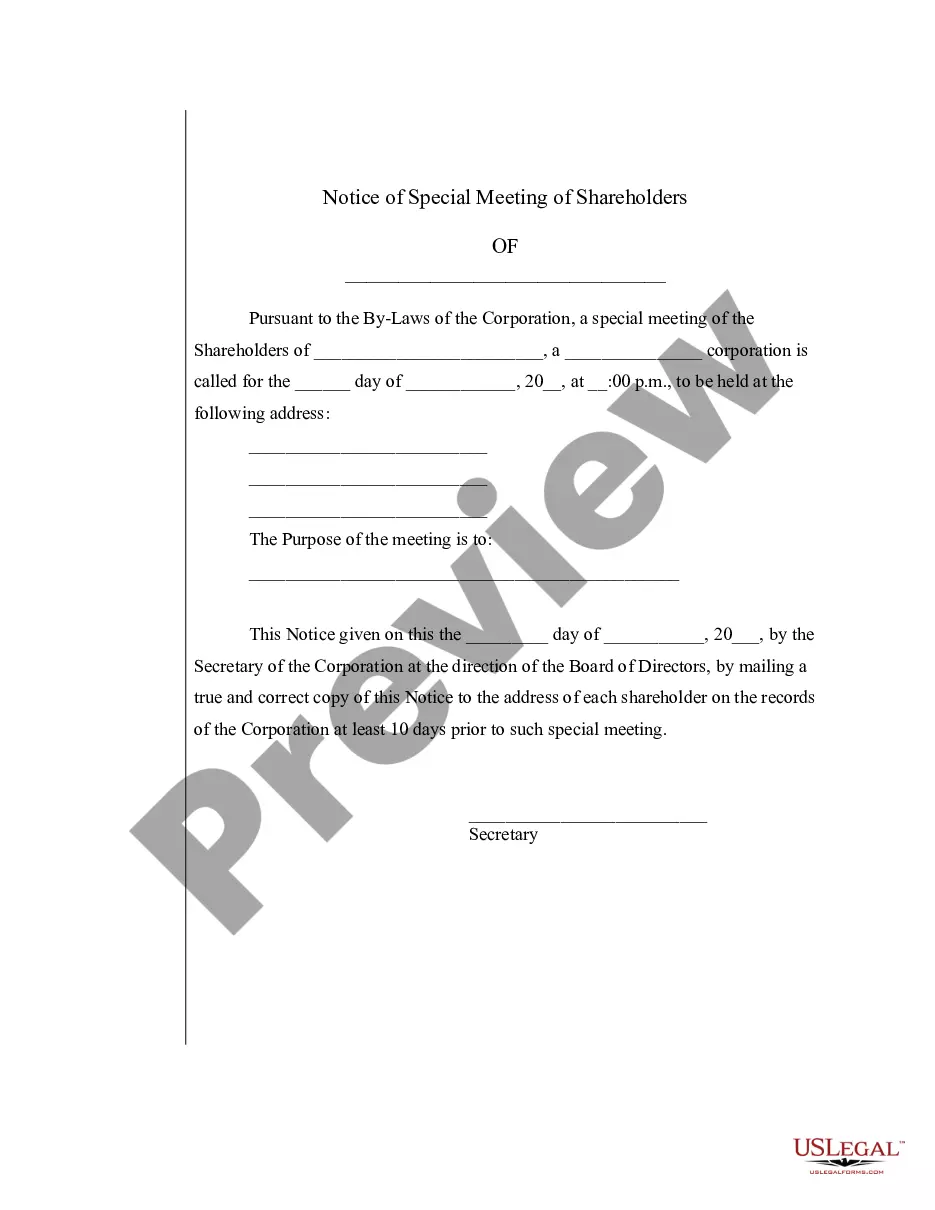
The annual meeting should be held on the date and time designated in the bylaws. All shareholders who are entitled to vote are entitled to written notice of the annual meeting as well as any special meeting. Notice must include the date, time and place of the meeting and how shareholders may attend.
A general meeting is a members' meeting, but certain non-members may also be entitled to attend. It's important to check the articles of association and any shareholders' agreement to determine the rules and restrictions for attending general meetings.
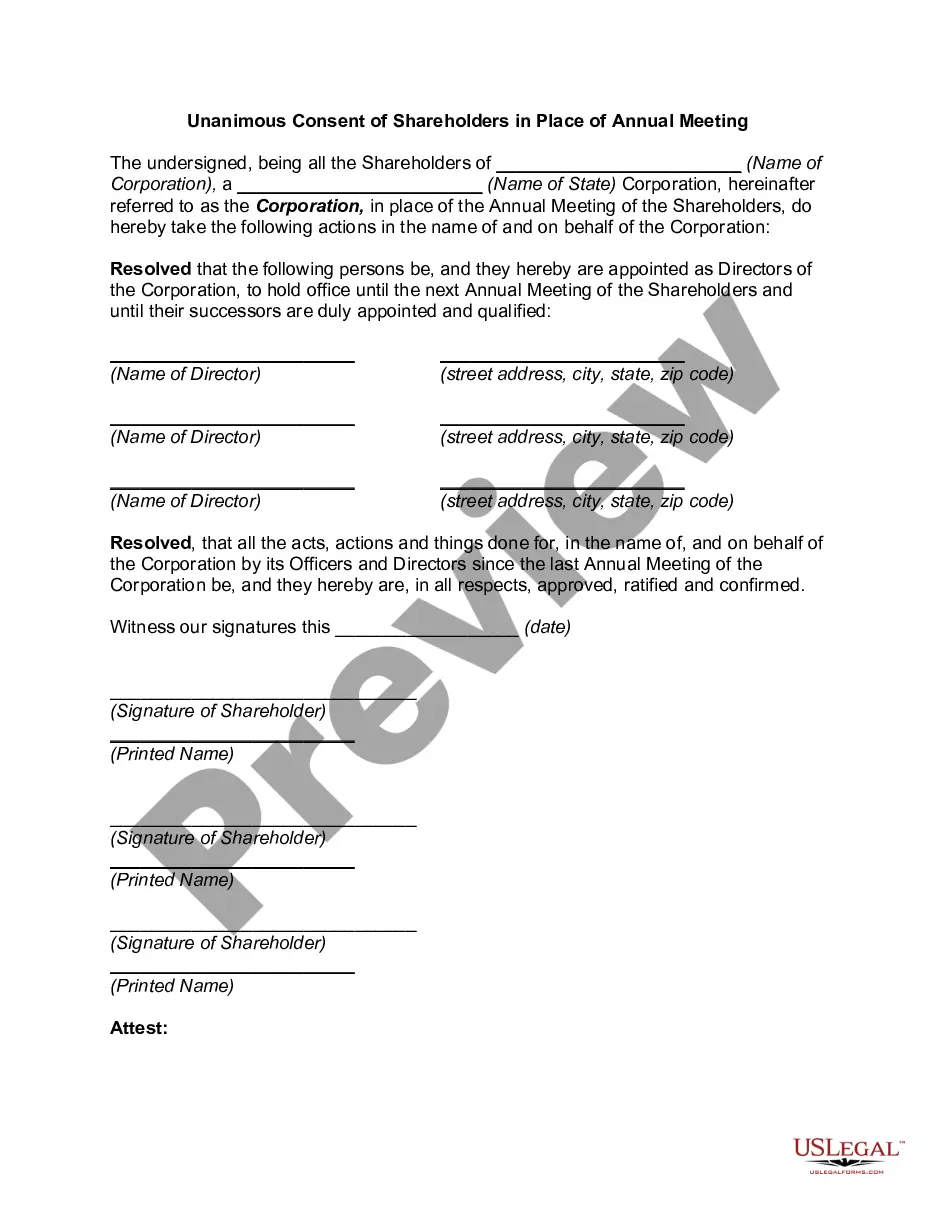
Annual Shareholder Meeting and Annual Board of Director Meeting. California law requires ALL California corporations, even those owned by a single shareholder, to hold an annual meeting of the shareholder(s) for the purpose of electing the board of directors.
A General Meeting is simply a meeting of shareholders and 21 days' notice must be given to shareholders, but this can be reduced to 14 days, or increased to 28 days, in certain situations.
The minutes must include the name of the attendees at the meeting, the time and day of the meeting, as well as the focus and decisions made at the meeting. The minutes must record what happened at the meeting, even if nothing of importance occurred.
Both California Corporations and California S-Corps are required to hold an annual meeting for shareholders. These meetings are pivotal for fostering transparency, discussing business strategy, and making essential corporate decisions.
