Letter Invitation For Guest Speaker In Maryland
Description
Get your form ready online
Our built-in tools help you complete, sign, share, and store your documents in one place.
Make edits, fill in missing information, and update formatting in US Legal Forms—just like you would in MS Word.
Download a copy, print it, send it by email, or mail it via USPS—whatever works best for your next step.
Sign and collect signatures with our SignNow integration. Send to multiple recipients, set reminders, and more. Go Premium to unlock E-Sign.
If this form requires notarization, complete it online through a secure video call—no need to meet a notary in person or wait for an appointment.
We protect your documents and personal data by following strict security and privacy standards.

Make edits, fill in missing information, and update formatting in US Legal Forms—just like you would in MS Word.

Download a copy, print it, send it by email, or mail it via USPS—whatever works best for your next step.

Sign and collect signatures with our SignNow integration. Send to multiple recipients, set reminders, and more. Go Premium to unlock E-Sign.

If this form requires notarization, complete it online through a secure video call—no need to meet a notary in person or wait for an appointment.

We protect your documents and personal data by following strict security and privacy standards.
Looking for another form?




Form popularity
FAQ
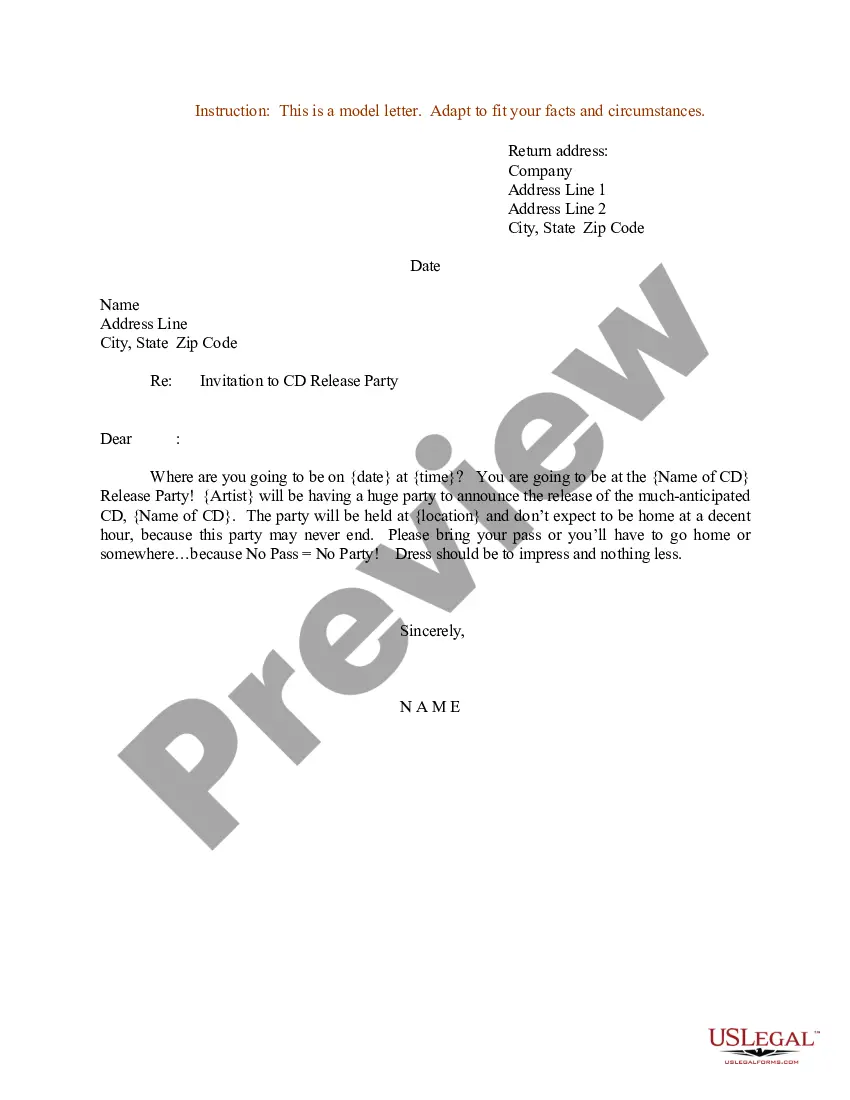
Dear Recipient's Name, I hope this email finds you well. We are pleased to invite you to attend the upcoming Event Name meeting, scheduled to take place on Date at Time. The meeting will be held at Location/Online Platform, and we would be honored to have your presence and participation.
While writing the letter, we have to first introduce ourselves, then mention all about the event which is being organized and give the proper venue for the event. Moving forward, we would appreciate the presence of such special guests. End the letter by expecting a positive reply from their side.
Example: Dear Recipient's Name, I am pleased to invite you to Event Name, which will take place on Event Date at Event Time at Event Venue. The purpose of this event is to briefly describe the purpose or agenda of the event.
Here is a step-by-step guide to writing an invitation letter, with examples for each section: Sender's information. Begin the letter with your name (or your organization's name), address, and contact information. Date. Write the date below the sender's information. Recipient's information. Salutation. Body. Closing.
Your discussion on topic will be a great addition to our event. We believe your voice would be a critical addition to the XYZ stage. Please let us know by date whether or not you would be interested in speaking. Thank you in advance for your consideration, and we very much look forward to hearing from you.
You should address your speaker by name, introduce yourself and your organization, and explain why you are interested in their participation. You should also provide some details about your event, such as the date, time, location, format, audience, theme, and agenda.
The key elements of an effective event invitation email include: A clear and attention-grabbing subject line. Brief description of the event. Benefits of attending the event. Relevant event details (Date, time, location, agenda, and more) Social proofs. Clear call to action. Contact details. Mobile friendly layout.
To invite a chief guest, we have to write a formal letter of invitation to them. The letter should be very polite and respectful and should include the reason why you want this particular person as your chief guest. The chief guest attends the event only on special invitation.
If you are inviting someone to speak at a conference, your invitation should include the following information: Name of the conference and the sponsoring organization; Date, time, place of the conference and speech; Type of audience; The type of speech, topic, and how long the speech should be;
The letter should include the following key elements: a polite salutation, introduction of yourself and your organization, details about the event, and a call to action inviting the guest speaker. Start by addressing the guest with a well-crafted salutation that sets the tone for the rest of the letter.
