Notice Meeting Format In Utah
Description
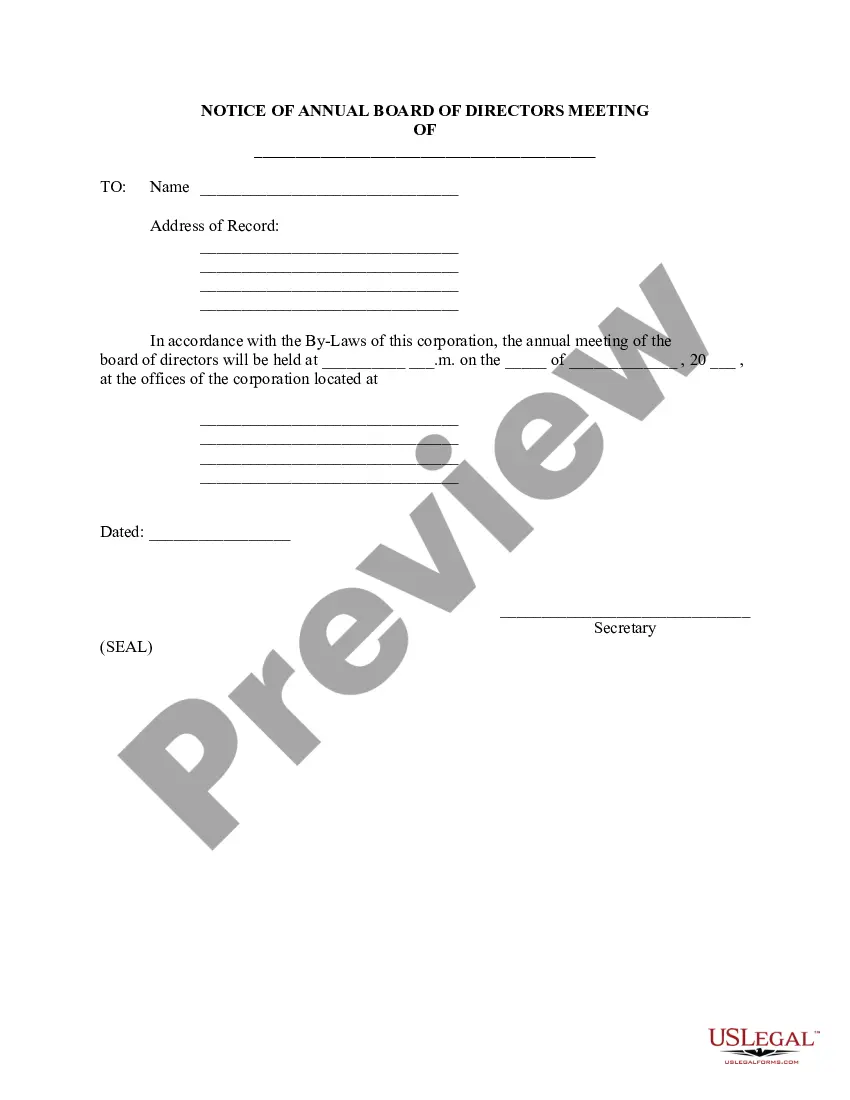


Get your form ready online
Our built-in tools help you complete, sign, share, and store your documents in one place.
Make edits, fill in missing information, and update formatting in US Legal Forms—just like you would in MS Word.
Download a copy, print it, send it by email, or mail it via USPS—whatever works best for your next step.
Sign and collect signatures with our SignNow integration. Send to multiple recipients, set reminders, and more. Go Premium to unlock E-Sign.
If this form requires notarization, complete it online through a secure video call—no need to meet a notary in person or wait for an appointment.
We protect your documents and personal data by following strict security and privacy standards.

Make edits, fill in missing information, and update formatting in US Legal Forms—just like you would in MS Word.

Download a copy, print it, send it by email, or mail it via USPS—whatever works best for your next step.

Sign and collect signatures with our SignNow integration. Send to multiple recipients, set reminders, and more. Go Premium to unlock E-Sign.

If this form requires notarization, complete it online through a secure video call—no need to meet a notary in person or wait for an appointment.

We protect your documents and personal data by following strict security and privacy standards.
Looking for another form?








Form popularity
FAQ
Notice requirements still apply. The public must have a means to attend or participate. resolution, rule, ordinance governing the use of electronic meetings. A public body must give not less than 24 hours public notice of each meeting.
A public body may not hold an electronic meeting unless the public body has adopted a resolution, rule, or ordinance governing the use of electronic meetings.
OPMA's stated goal is to ensure that the state, its agencies, and its political subdivisions deliberate and take action openly (Section 52-4-102). A public body is required to provide public notice of a meeting at least 24 hours before the meeting.
Public notice informs members of the general public of government or government-related activities which may concern their local area, municipality, county, or state. The Open and Public Meetings Act (Utah Code Title 52, Chapter 4) mandates that notice and the agendas of public meetings be available to the public.
Utah Open and Public Meetings Act Utah Code 52-4-101 et seq. “A lack of transparency results in distrust and a deep sense of insecurity.” What is the purpose of the Utah Open and Public Meetings Act? ∎ It requires government to take actions openly.
The Government Records Access and Management Act (“GRAMA”) is a Utah law that provides the public with the right to access certain “records” prepared, maintained or controlled by a government entity. The full text of GRAMA can be found in Title 63G, Chapter 2, of the Utah Code.
Open meeting laws require boards to post public notice of the meeting. The law may specify the timeframe in which the notice must be posted before the meeting. Laws may also specify where to post notices. In most cases, boards are required to hold meetings in physical locations that are easily accessible by the public.
The law states that a meeting is a gathering of a quorum of the members of a public body, either in person or through electronic methods, with the intention of discussing or deciding on public policy. The law requires that all meetings must be open to the public, unless exempted under executive sessions.

