Meeting Notice With Agenda In Florida
Description


Get your form ready online
Our built-in tools help you complete, sign, share, and store your documents in one place.
Make edits, fill in missing information, and update formatting in US Legal Forms—just like you would in MS Word.
Download a copy, print it, send it by email, or mail it via USPS—whatever works best for your next step.
Sign and collect signatures with our SignNow integration. Send to multiple recipients, set reminders, and more. Go Premium to unlock E-Sign.
If this form requires notarization, complete it online through a secure video call—no need to meet a notary in person or wait for an appointment.
We protect your documents and personal data by following strict security and privacy standards.

Make edits, fill in missing information, and update formatting in US Legal Forms—just like you would in MS Word.

Download a copy, print it, send it by email, or mail it via USPS—whatever works best for your next step.

Sign and collect signatures with our SignNow integration. Send to multiple recipients, set reminders, and more. Go Premium to unlock E-Sign.

If this form requires notarization, complete it online through a secure video call—no need to meet a notary in person or wait for an appointment.

We protect your documents and personal data by following strict security and privacy standards.
Looking for another form?
Form popularity
FAQ
Notices of all board meetings must specifically identify agenda items for the meetings and must be posted in a conspicuous place in the community at least 48 hours in advance of a meeting, except in an emergency.
The notice of Board Meeting refers to a document that is sent to all directors of the company. This document informs the members about the venue, date, time, and agenda of the meeting. All types of companies are required to give notice at least 7 days before the actual day of the meeting.
In addition to specifying the date, time and location of the meeting, special meeting notices should make note of all agenda items. Unless the bylaws indicate something different, board members should only be discussing the business that was stated in the notice for the special meeting.
A notice is like an official heads-up, informing people about an upcoming meeting—when, where, and why it's happening. Think of it as the “save the date.” On the other hand, an agenda is your detailed game plan for that meeting. It outlines the specific topics, discussions, and decisions on the table.
Standard Meeting Notice Format Template Meeting Title: Specify the Meeting Title Clearly Date: Insert Date Time: Insert Start Time - Insert End Time Specify the Time Zones Duration: Estimated Meeting Length Location: Attendees: Meeting Objectives: Briefly outline the key goals of the meeting Agenda:
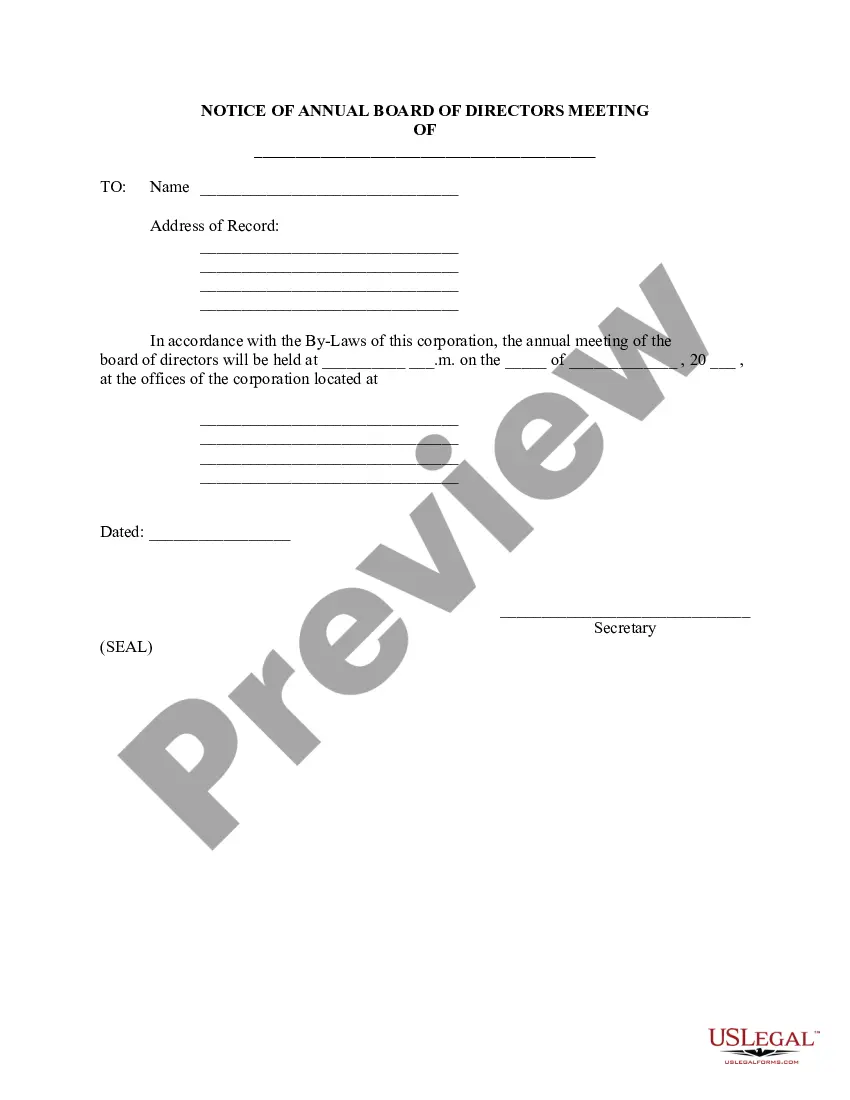
A notice of meeting is a written document that informs company members and shareholders that a meeting will take place. It is an invitation that details the time and place of the scheduled meeting and also informs stakeholders of the topics to be discussed.
How much notice must be given? The general rule is that at least 21 days' notice must be given, although constitutions may specify longer. More than 28 days' notice must be given for listed companies regardless of what the company constitution says (s 249HA).
A proper meeting notice should include: Date, Time, and Venue: Clear details on when and where the meeting will take place. Purpose of the Meeting: A brief description of the meeting's objectives. Agenda: An outline of topics to be discussed; this helps attendees prepare for the meeting.
A consent agenda (also known by Roberts Rules of Order as a “consent calendar”) groups routine meeting discussion points into a single agenda item. In so doing, the grouped items can be approved in one action, rather than through the filing of multiple motions.
