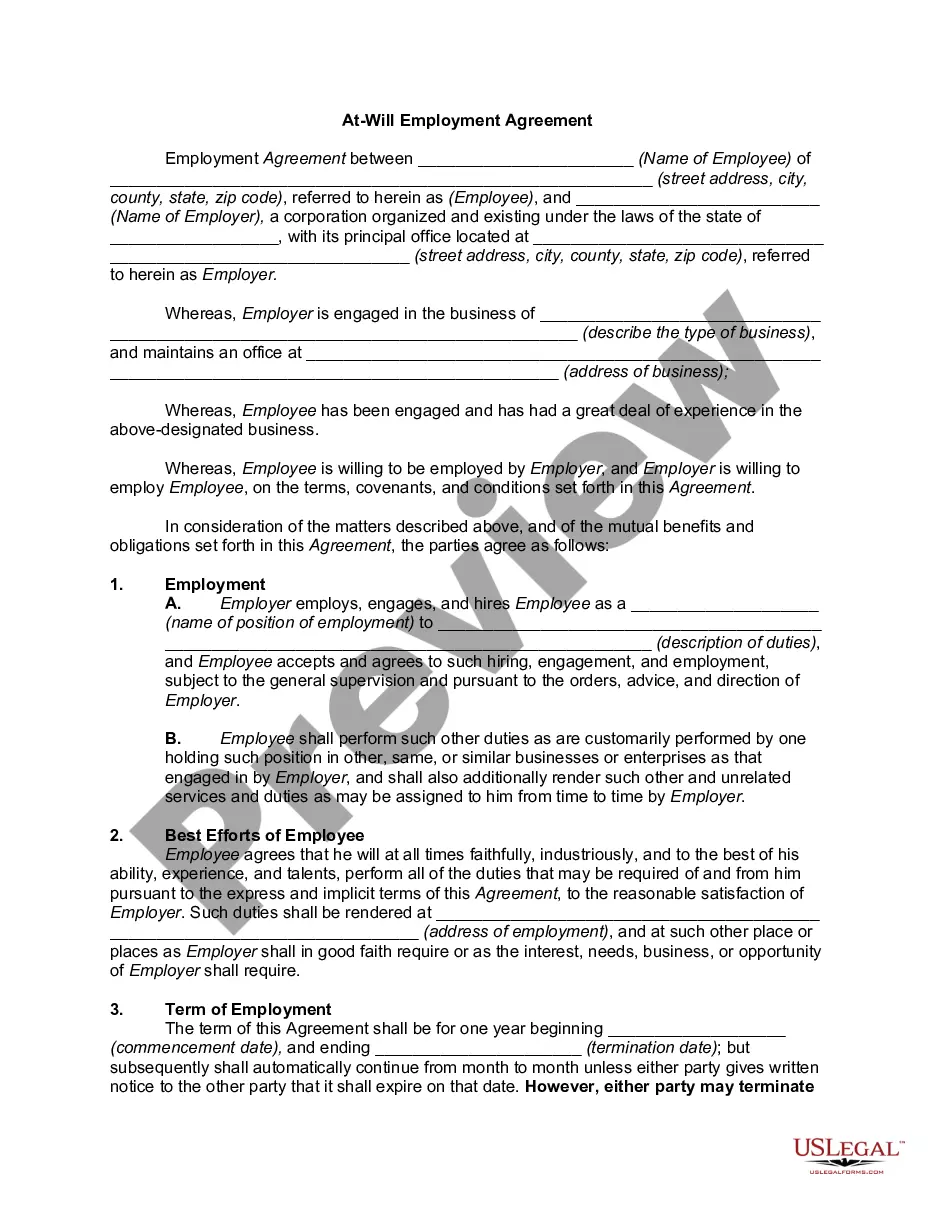
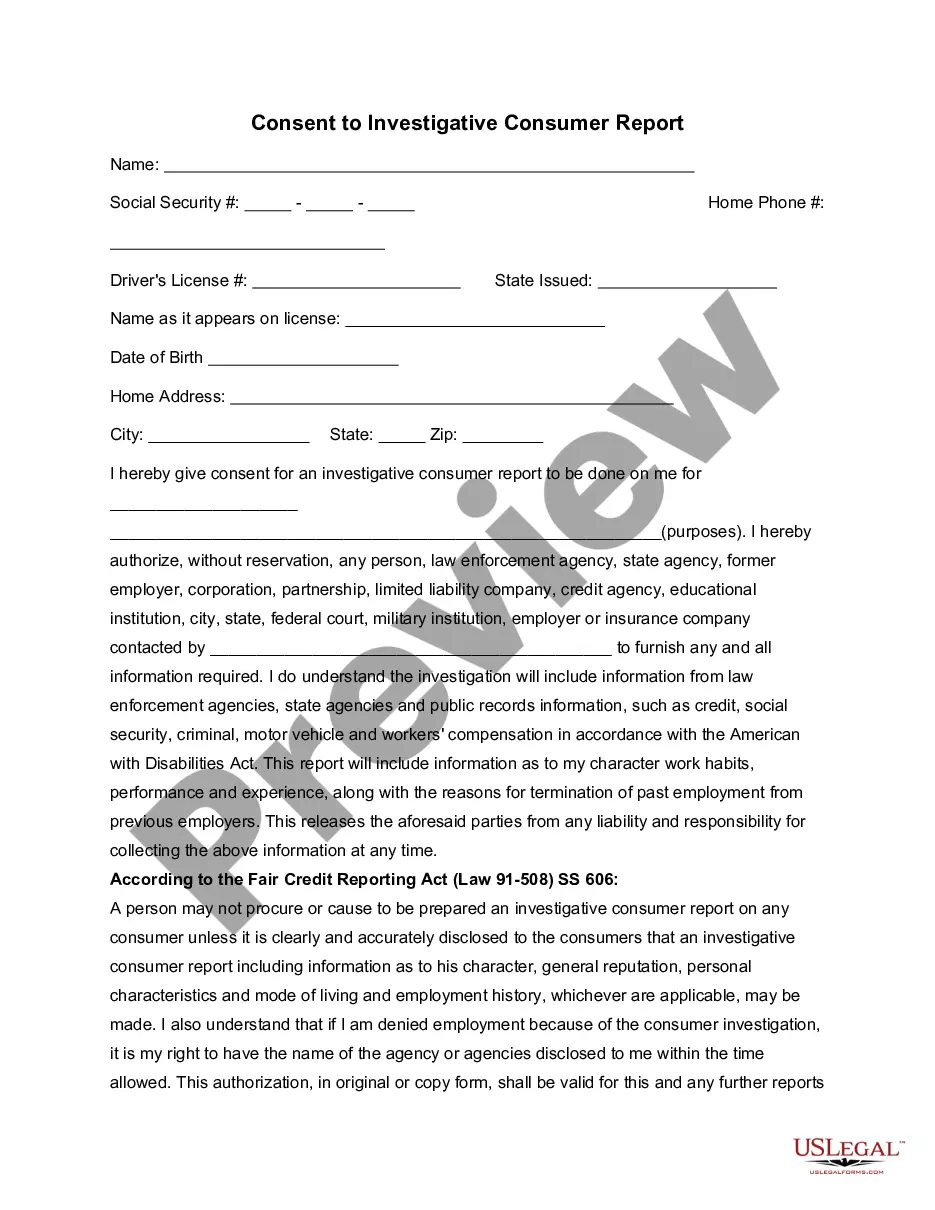
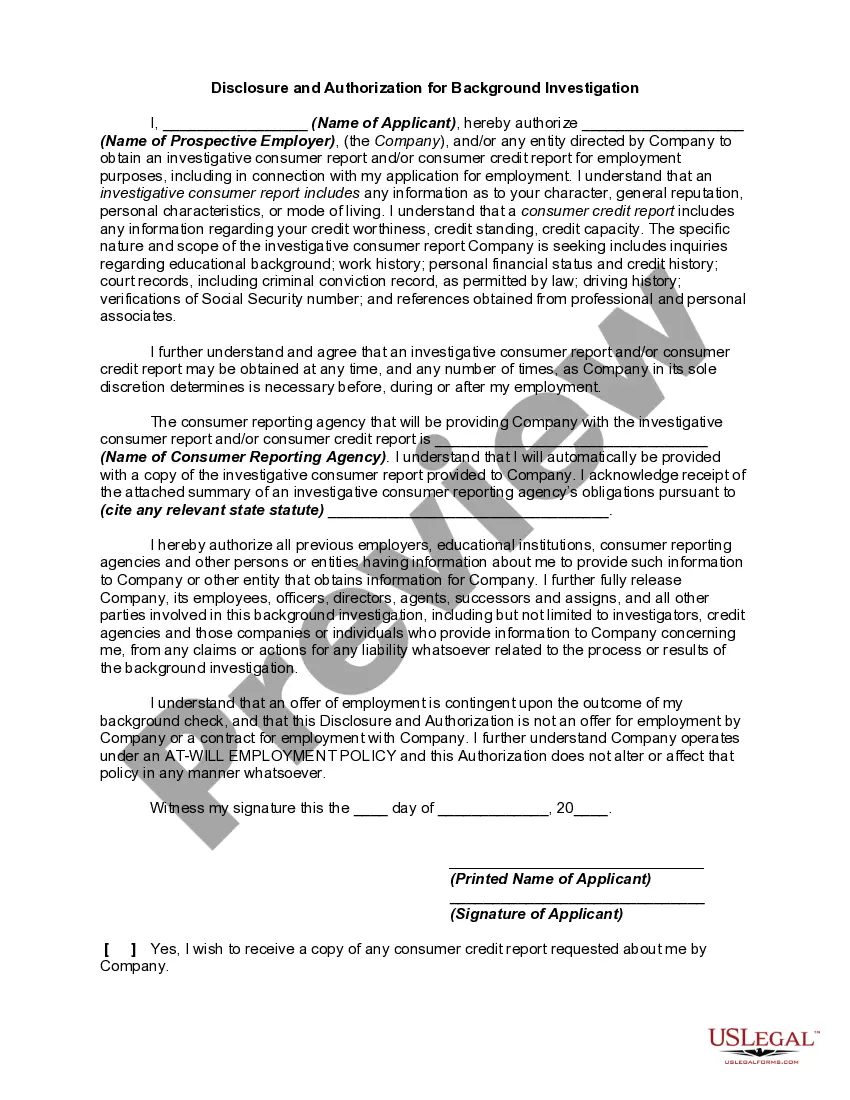
Consent Consumer Investigative For Employment In Minnesota
Description
Get your form ready online
Our built-in tools help you complete, sign, share, and store your documents in one place.
Make edits, fill in missing information, and update formatting in US Legal Forms—just like you would in MS Word.
Download a copy, print it, send it by email, or mail it via USPS—whatever works best for your next step.
Sign and collect signatures with our SignNow integration. Send to multiple recipients, set reminders, and more. Go Premium to unlock E-Sign.
If this form requires notarization, complete it online through a secure video call—no need to meet a notary in person or wait for an appointment.
We protect your documents and personal data by following strict security and privacy standards.

Make edits, fill in missing information, and update formatting in US Legal Forms—just like you would in MS Word.

Download a copy, print it, send it by email, or mail it via USPS—whatever works best for your next step.

Sign and collect signatures with our SignNow integration. Send to multiple recipients, set reminders, and more. Go Premium to unlock E-Sign.

If this form requires notarization, complete it online through a secure video call—no need to meet a notary in person or wait for an appointment.

We protect your documents and personal data by following strict security and privacy standards.
Looking for another form?








Form popularity
FAQ
Minnesota Rules 1205.1400, subpart 3, requires that individuals giving informed consent have sufficient mental capacity to understand the consequences of their decision to give consent. Minnesota Rules 1205.1400, subpart 4, requires that a valid informed consent must: Be voluntary and not coerced.
Employers who use "investigative reports" – reports based on personal interviews concerning a person's character, general reputation, personal characteristics, and lifestyle – have additional obligations under the FCRA.
An employer can give out the following information only with a Release signed by you: written employee evaluations and your response to them, written disciplinary warnings and actions in the last 5 years, and. written reasons for why you left the job.
The Employment Eligibility Verification (I-9) form is used to verify the employment eligibility of all persons hired on or after, November 7, 1986. The Department of General Services (DGS) should hire only United States citizens or aliens who are authorized to work in the United States.
Yes. Employment is not protected information. It's public information in most instances with only a few exceptions. The employer doesn't have to tell them but there's nothing really preventing him from telling either.
All employers must complete a Form I-9, Employment Eligibility Verification, to verify an employee's identity and employment authorization. Federal law also protects employees from discrimination based on national origin or citizenship status.
Employers aren't obligated to respond to calls to verify an individual's employment for a third party unless the requests are made by federal entities.
Minnesota Statutes Chapter 325F, Section 68 through 70 is also known as the Prevention of Consumer Fraud Act (“PCFA”). The PCFA is a state law that provides legal protection to consumers by regulating the use of fraudulent or deceptive practices by businesses.
You must: Tell the applicant or employee that you might use information in their consumer report for decisions related to their employment. Get written permission from the applicant or employee. Certify compliance to the company from which you are getting the applicant or employee's information.
How to conduct a background check for employment Review state laws about background check regulations. Set clear policies regarding background checks. Notify candidates you will be conducting a background check. Contact candidate references. Use a background check website to review records.