Distributorship Of Agreement In Washington
Description

Get your form ready online
Our built-in tools help you complete, sign, share, and store your documents in one place.
Make edits, fill in missing information, and update formatting in US Legal Forms—just like you would in MS Word.
Download a copy, print it, send it by email, or mail it via USPS—whatever works best for your next step.
Sign and collect signatures with our SignNow integration. Send to multiple recipients, set reminders, and more. Go Premium to unlock E-Sign.
If this form requires notarization, complete it online through a secure video call—no need to meet a notary in person or wait for an appointment.
We protect your documents and personal data by following strict security and privacy standards.

Make edits, fill in missing information, and update formatting in US Legal Forms—just like you would in MS Word.

Download a copy, print it, send it by email, or mail it via USPS—whatever works best for your next step.

Sign and collect signatures with our SignNow integration. Send to multiple recipients, set reminders, and more. Go Premium to unlock E-Sign.

If this form requires notarization, complete it online through a secure video call—no need to meet a notary in person or wait for an appointment.

We protect your documents and personal data by following strict security and privacy standards.
Looking for another form?


Form popularity
FAQ
A contract is an agreement between parties, creating mutual obligations that are enforceable by law. The basic elements required for the agreement to be a legally enforceable contract are: mutual assent, expressed by a valid offer and acceptance; adequate consideration; capacity; and legality.
A “binding contract” is any agreement that's legally enforceable. That means if you sign a binding contract and don't fulfill your end of the bargain, the other party can take you to court. You might encounter binding contracts frequently, whether you're signing a rental lease agreement or just bought a car.
A breach of contract is when one party to the contract doesn't do what they agreed. Breach of contract happens when one party to a valid contract fails to fulfill their side of the agreement. If a party doesn't do what the contract says they must do, the other party can sue.
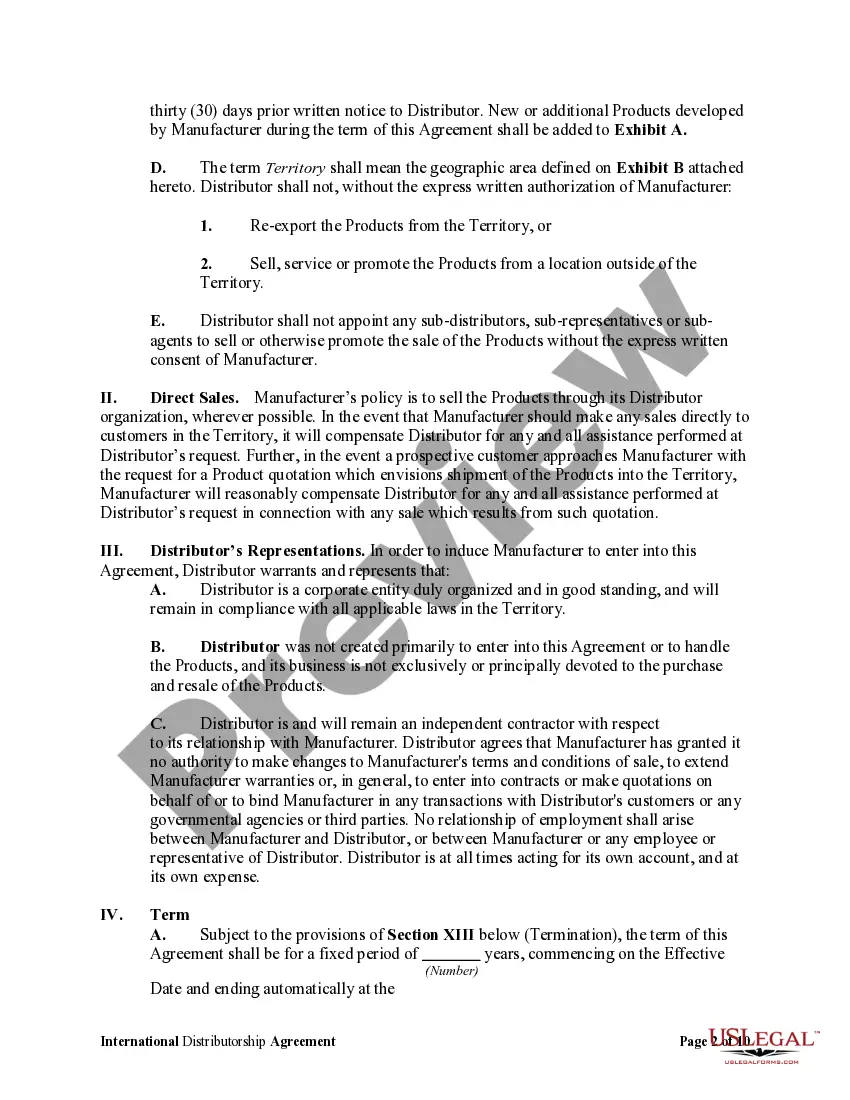
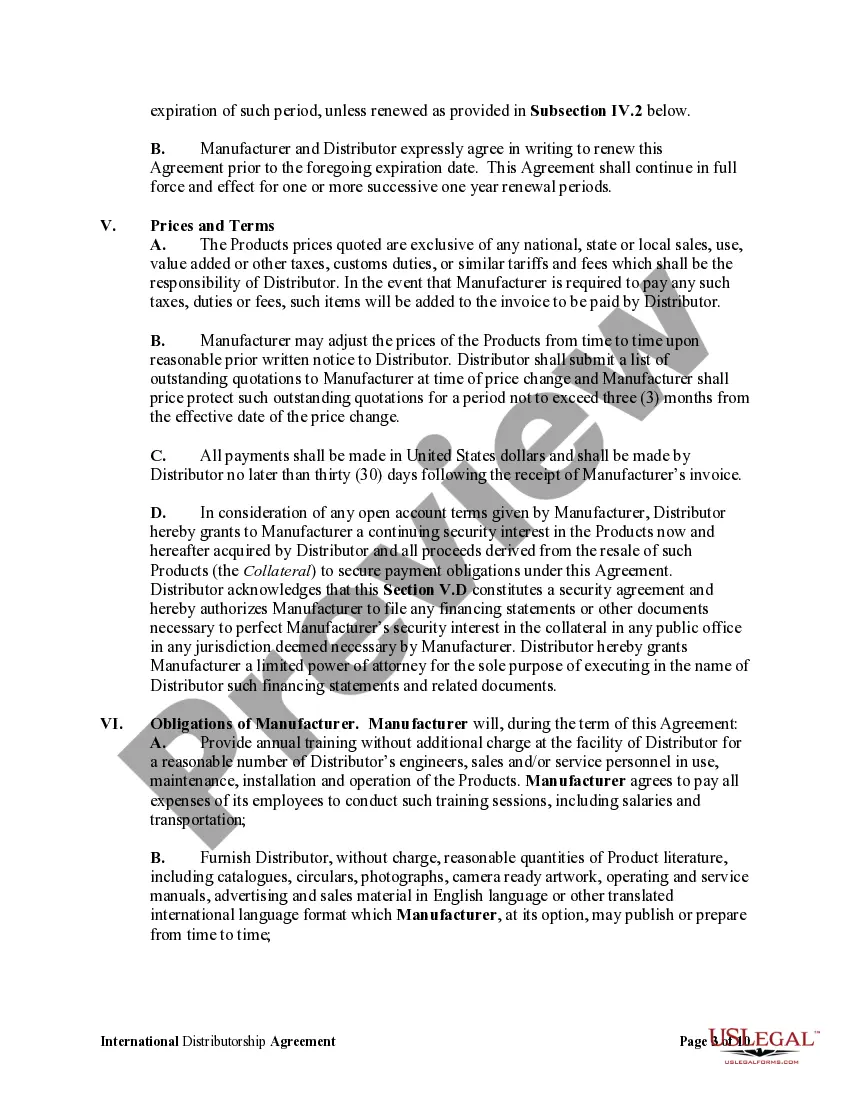
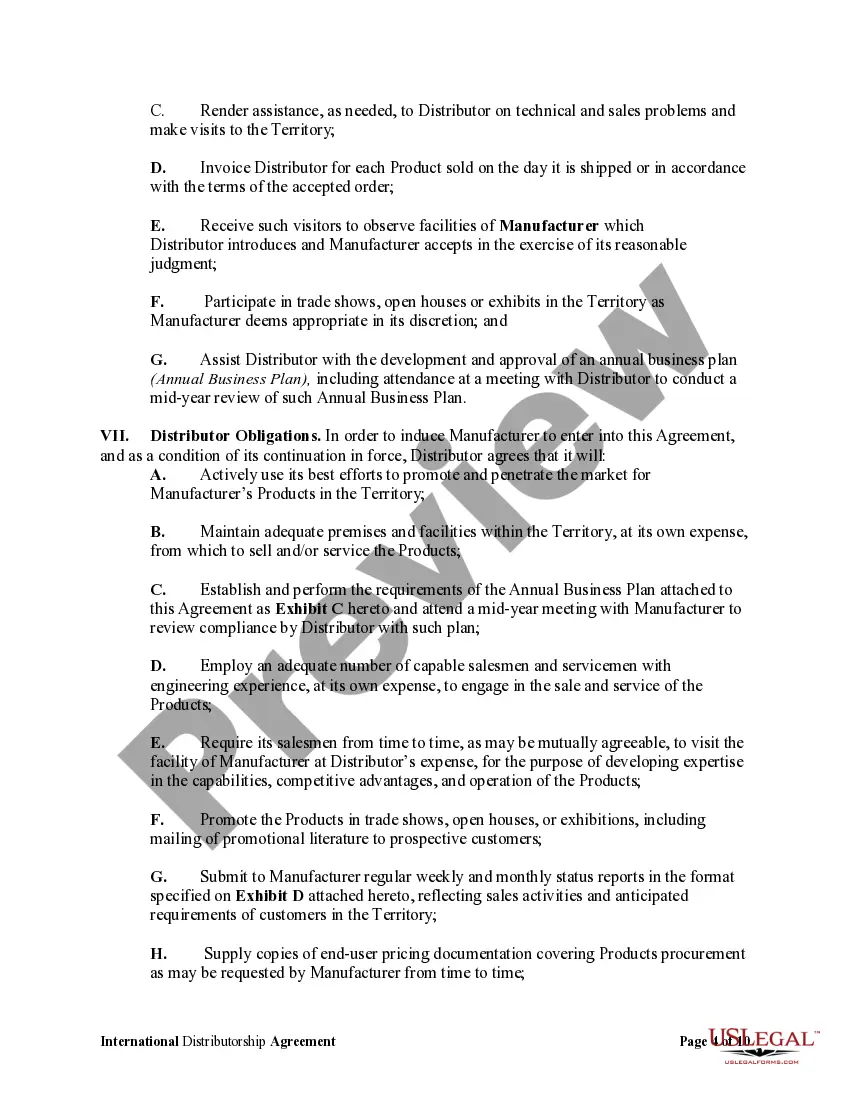
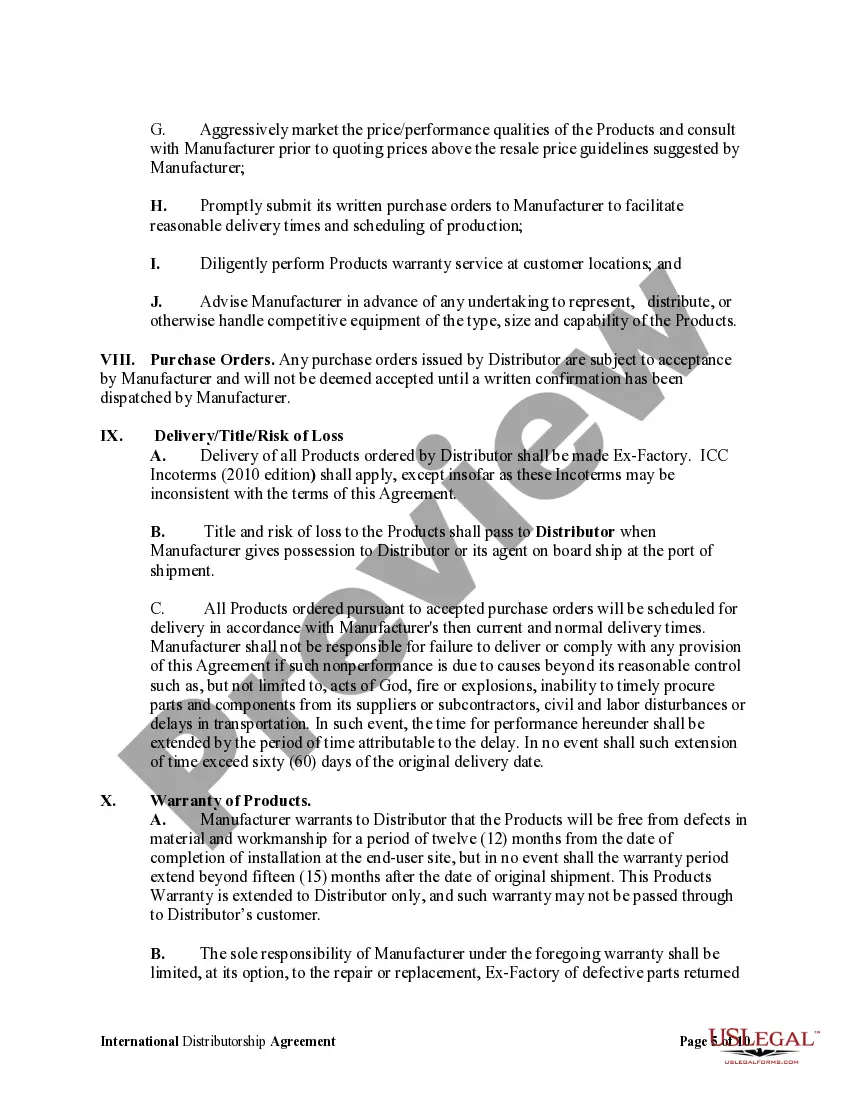
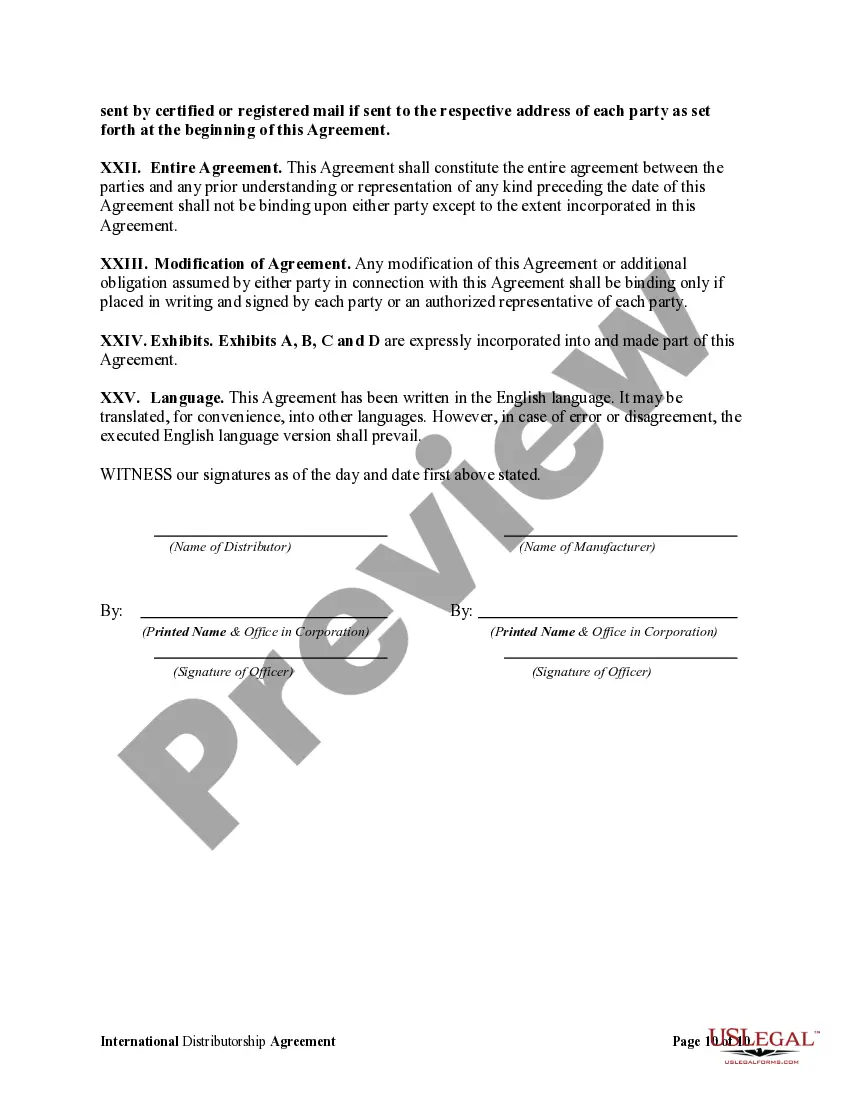
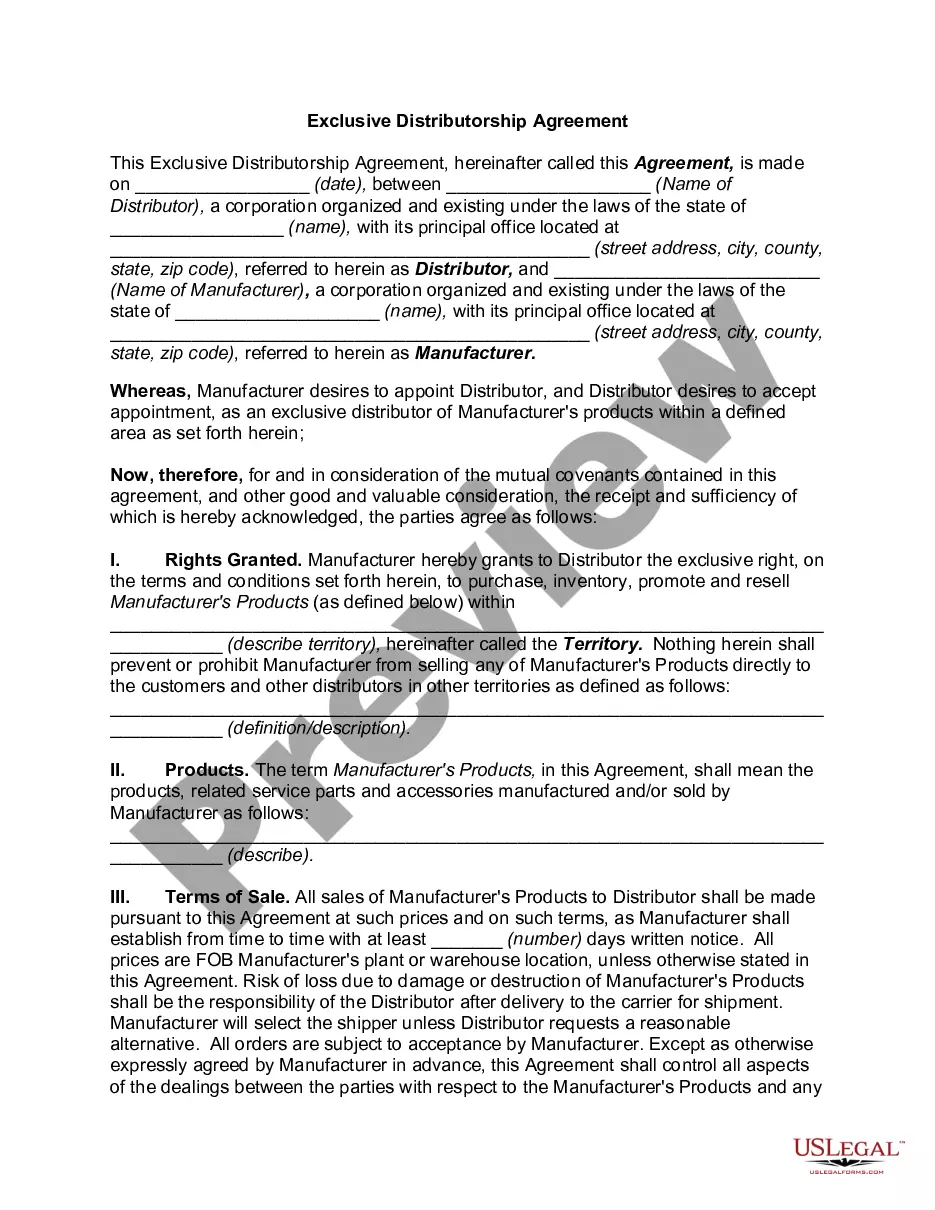
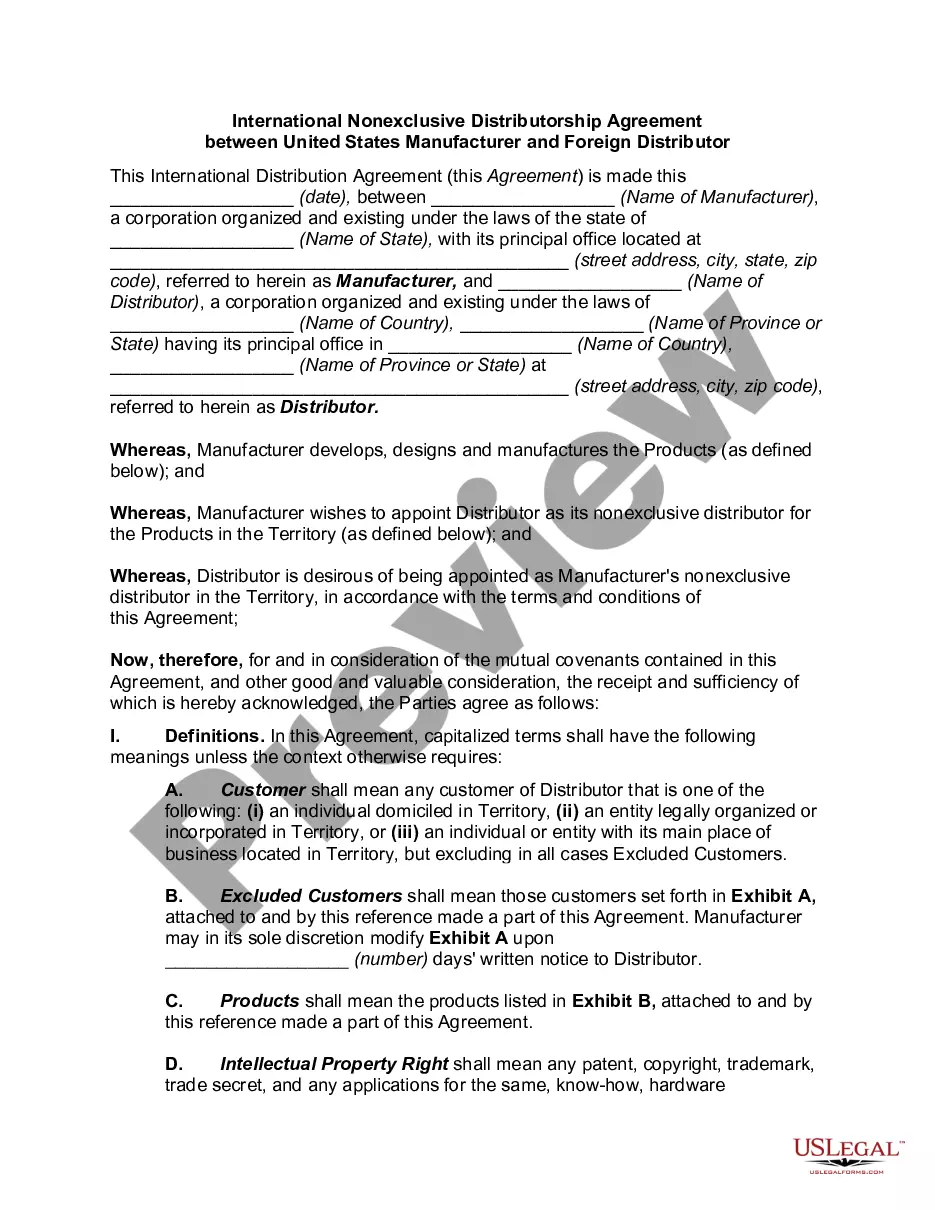
A distributor agreement, also known as a distribution agreement, is a contract between channel partners that stipulates the responsibilities of both parties.
A distribution agreement is the perfect place to establish the sales goals and expectations for both parties. The manufacturer wants to ensure that the distributor will actively promote and sell its products in the designated territory or channel and generate a certain level of revenue and profit.
Differences between agency and distribution An agent is appointed to negotiate or conclude contracts on the supplier's behalf. A distributor effectively becomes the supplier and contracts are made directly between the distributor and the customer.
Role of Parties: In a licensing agreement, both parties have a closer relationship, with the licensee relying on the licensor's IP rights. In a distribution agreement, the supplier provides the products, and the distributor acts as an intermediary between the supplier and the end customers.
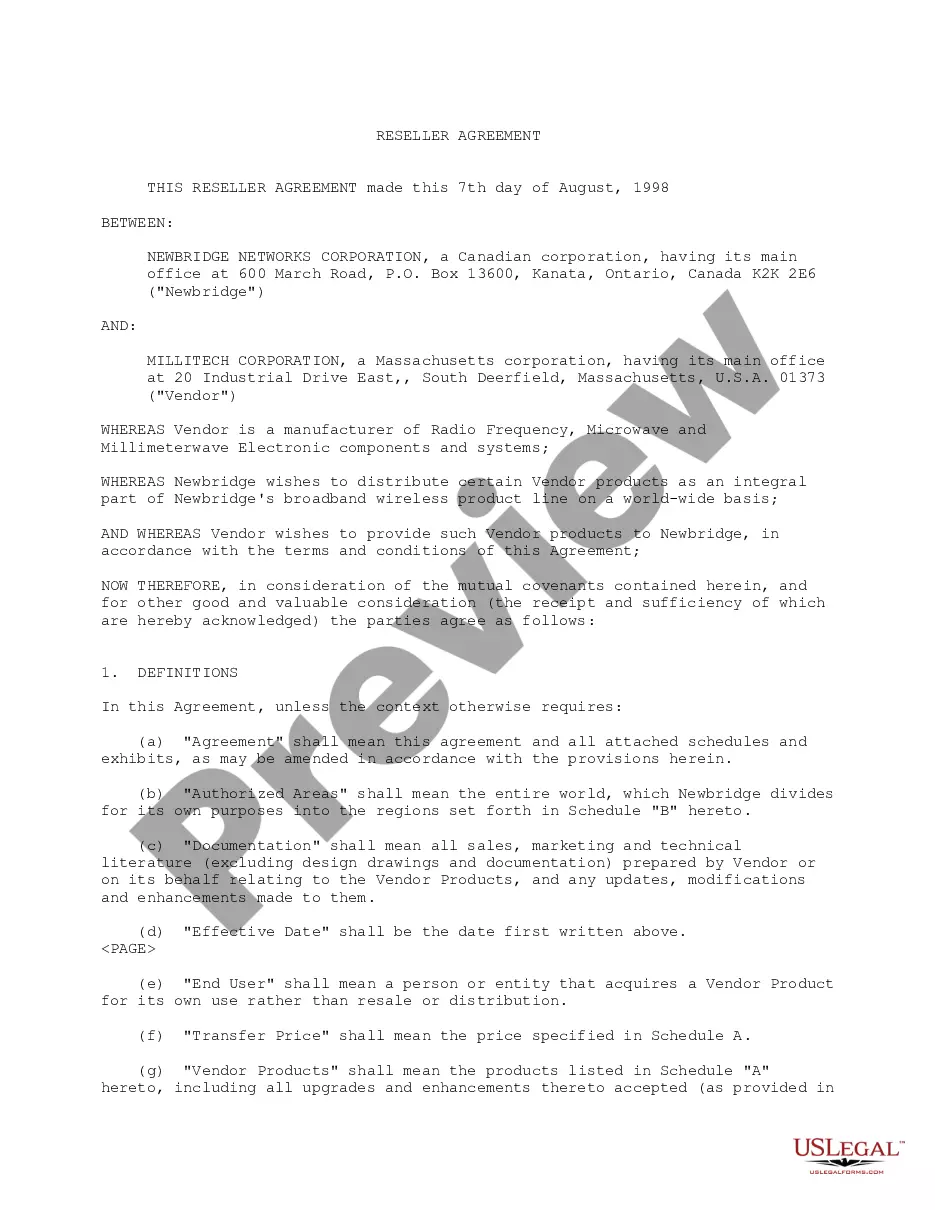
A distribution agreement, also known as a distributor agreement, is a contract between a supplying company with products to sell and another company that markets and sells the products. The distributor agrees to buy products from the supplier company and sell them to clients within certain geographical areas.
Washington State is a franchise registration state. Before offering or selling a franchise in Washington, you must register your FDD with the Securities Division of the Washington State Department of Financial Institutions.
The difference between authorized dealers and franchises is that authorized dealers have more independence when it comes to the availability of products, design, etc. Usually, authorized dealers have the right to use the logo and name of the parent company and offer the same products and services.