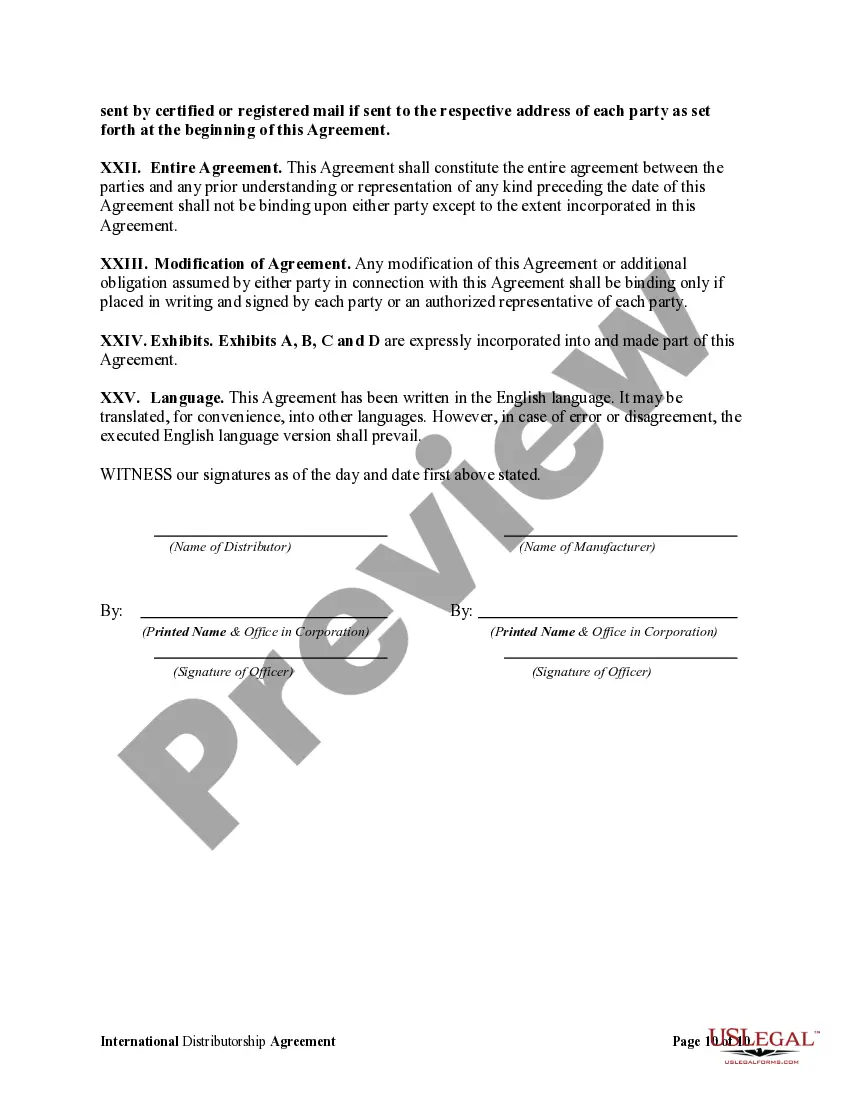
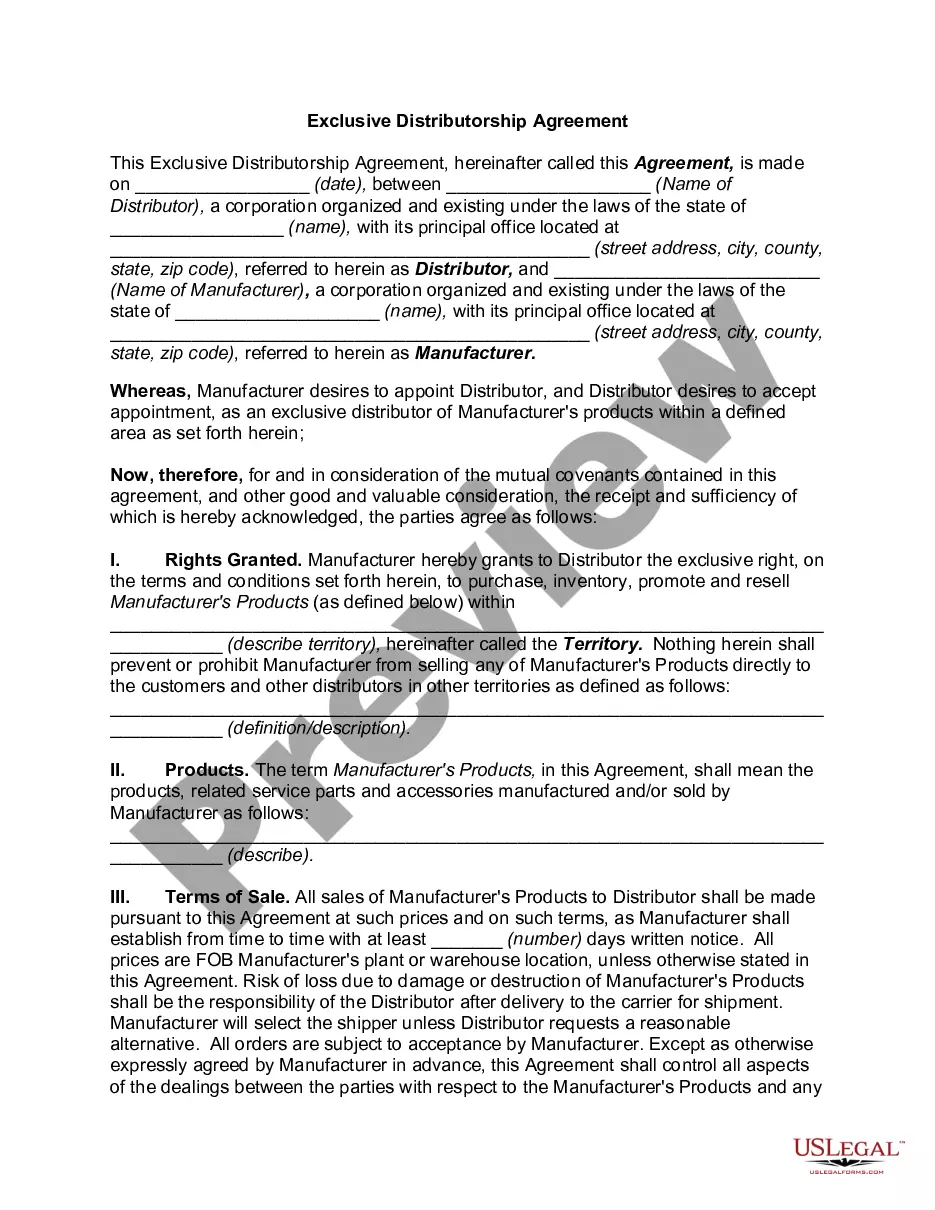
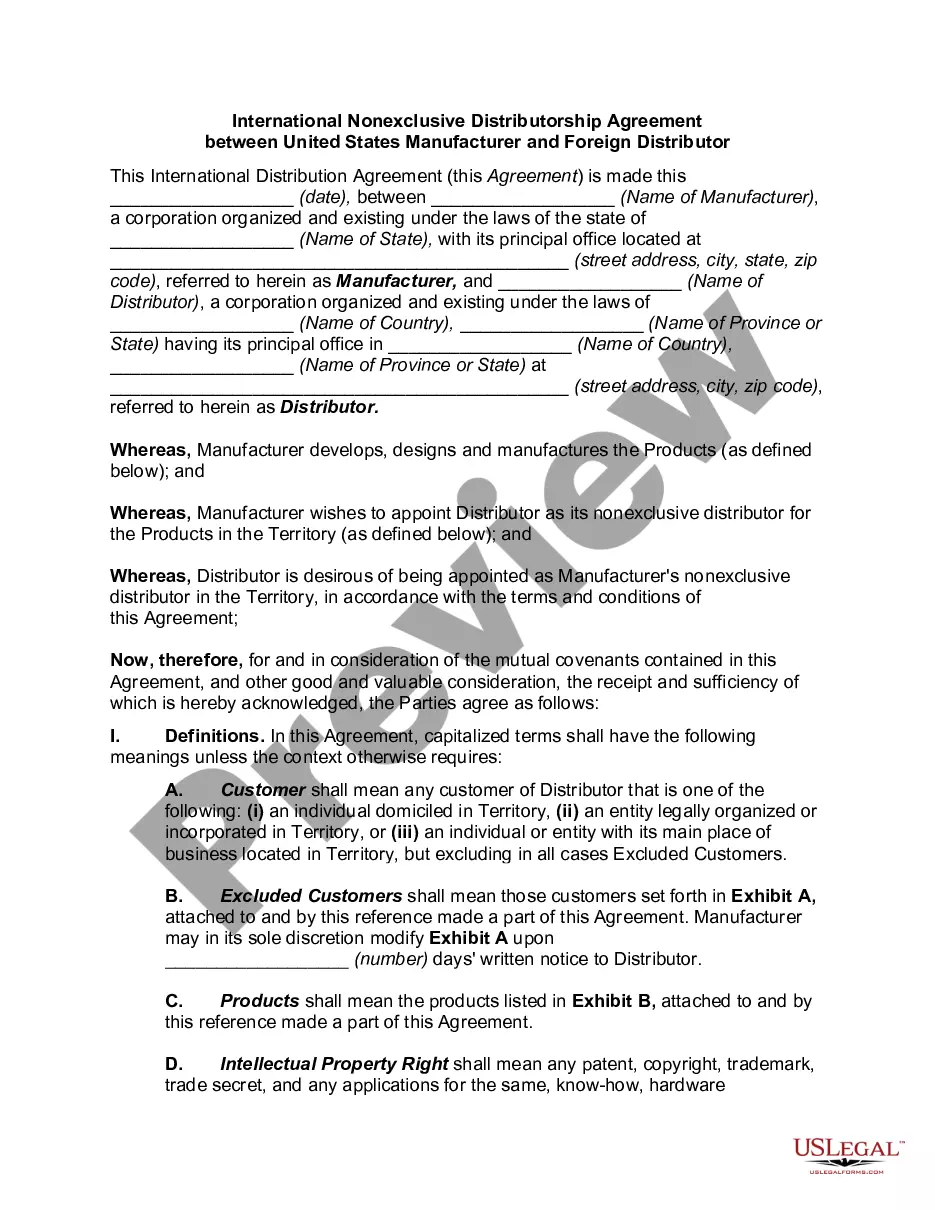
Distributorship Agreement Distributor With A In Miami-Dade
Description

Get your form ready online
Our built-in tools help you complete, sign, share, and store your documents in one place.
Make edits, fill in missing information, and update formatting in US Legal Forms—just like you would in MS Word.
Download a copy, print it, send it by email, or mail it via USPS—whatever works best for your next step.
Sign and collect signatures with our SignNow integration. Send to multiple recipients, set reminders, and more. Go Premium to unlock E-Sign.
If this form requires notarization, complete it online through a secure video call—no need to meet a notary in person or wait for an appointment.
We protect your documents and personal data by following strict security and privacy standards.

Make edits, fill in missing information, and update formatting in US Legal Forms—just like you would in MS Word.

Download a copy, print it, send it by email, or mail it via USPS—whatever works best for your next step.

Sign and collect signatures with our SignNow integration. Send to multiple recipients, set reminders, and more. Go Premium to unlock E-Sign.

If this form requires notarization, complete it online through a secure video call—no need to meet a notary in person or wait for an appointment.

We protect your documents and personal data by following strict security and privacy standards.
Looking for another form?




Form popularity
FAQ
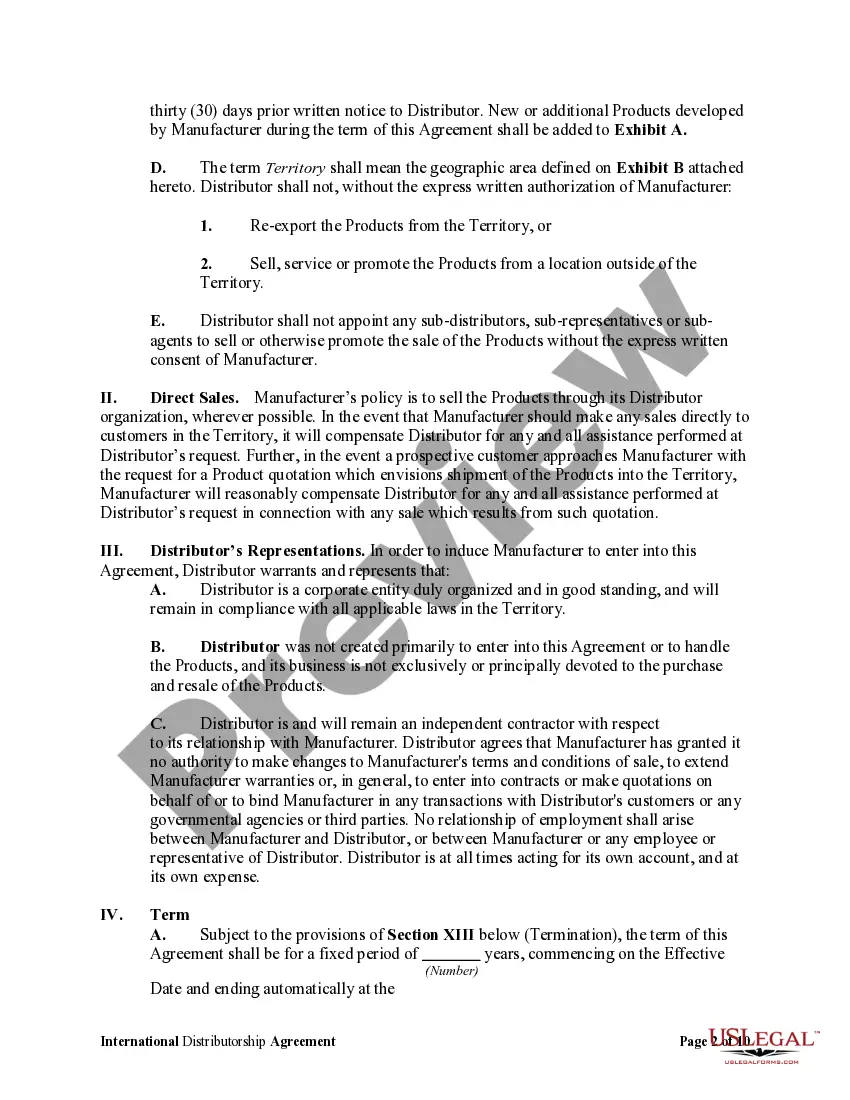
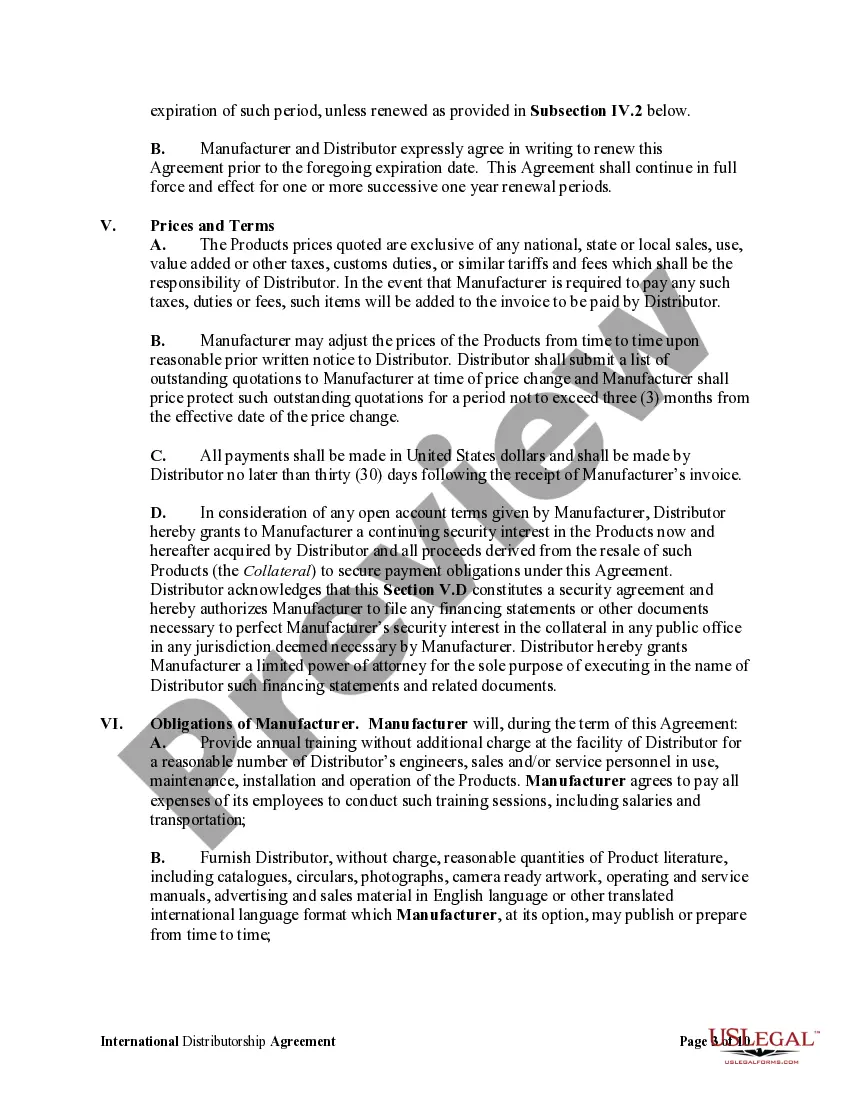
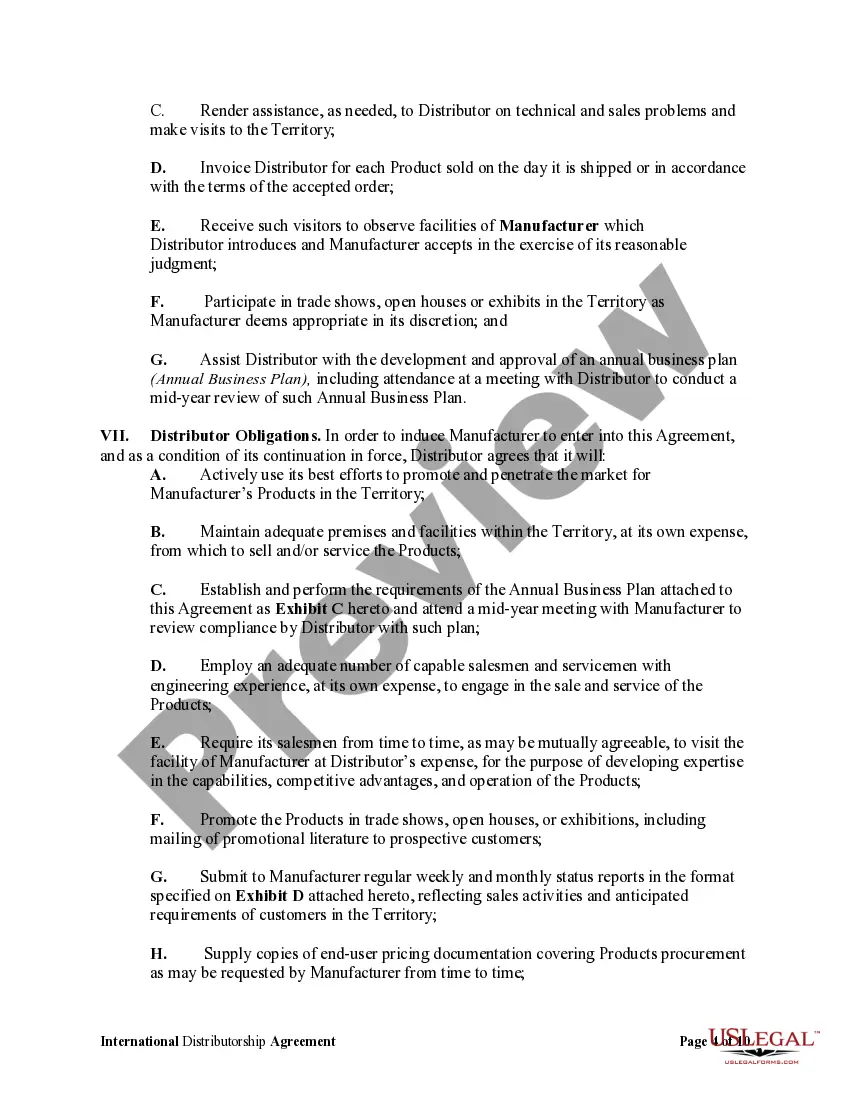
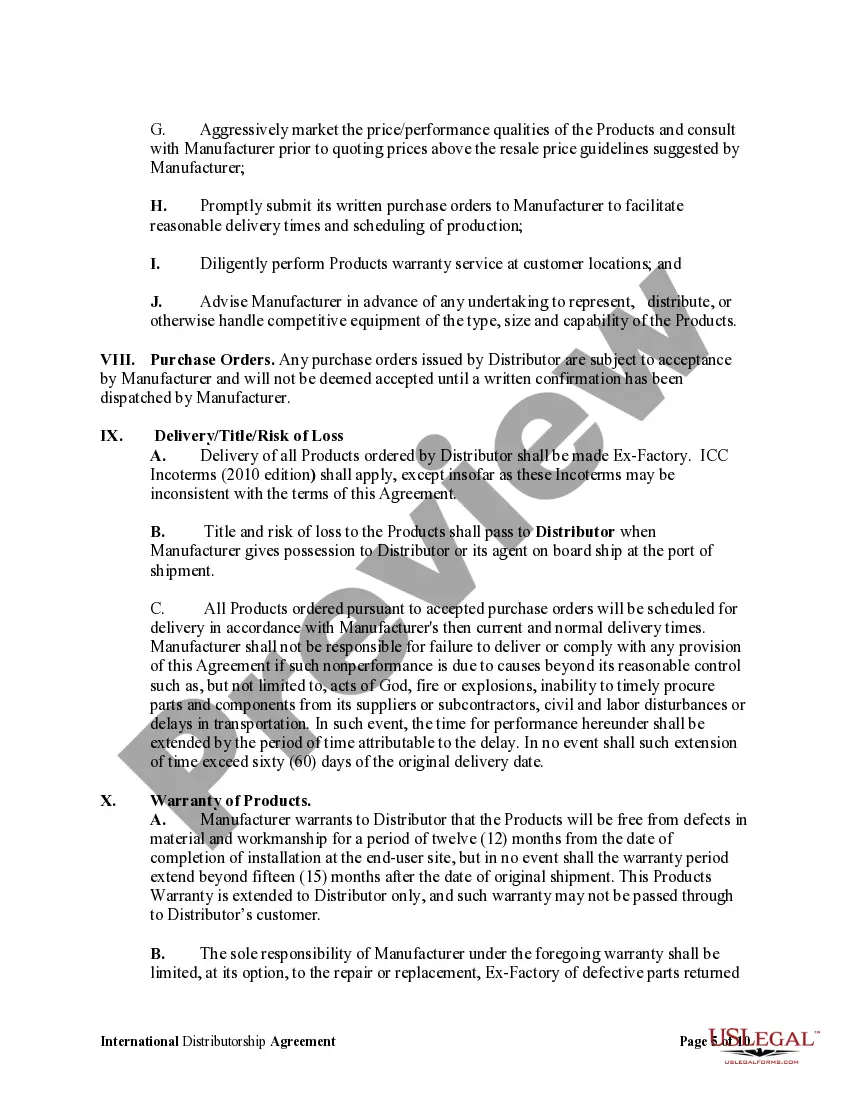
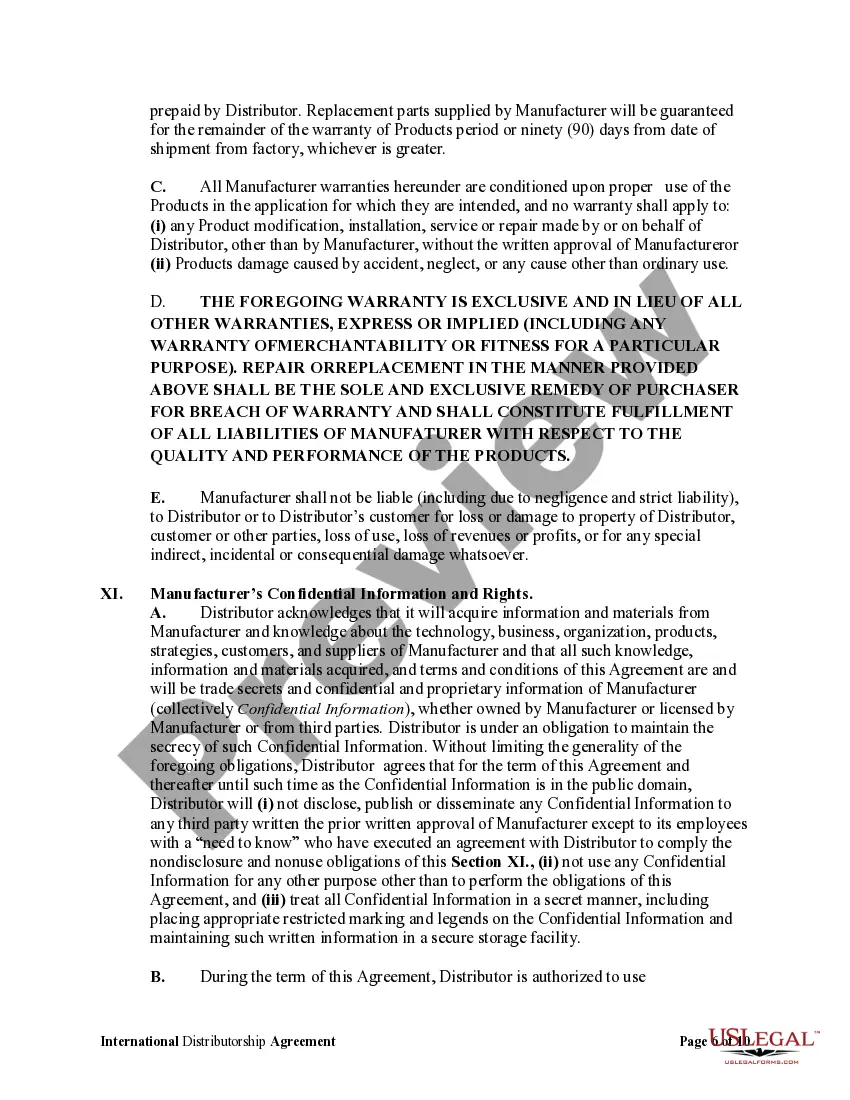
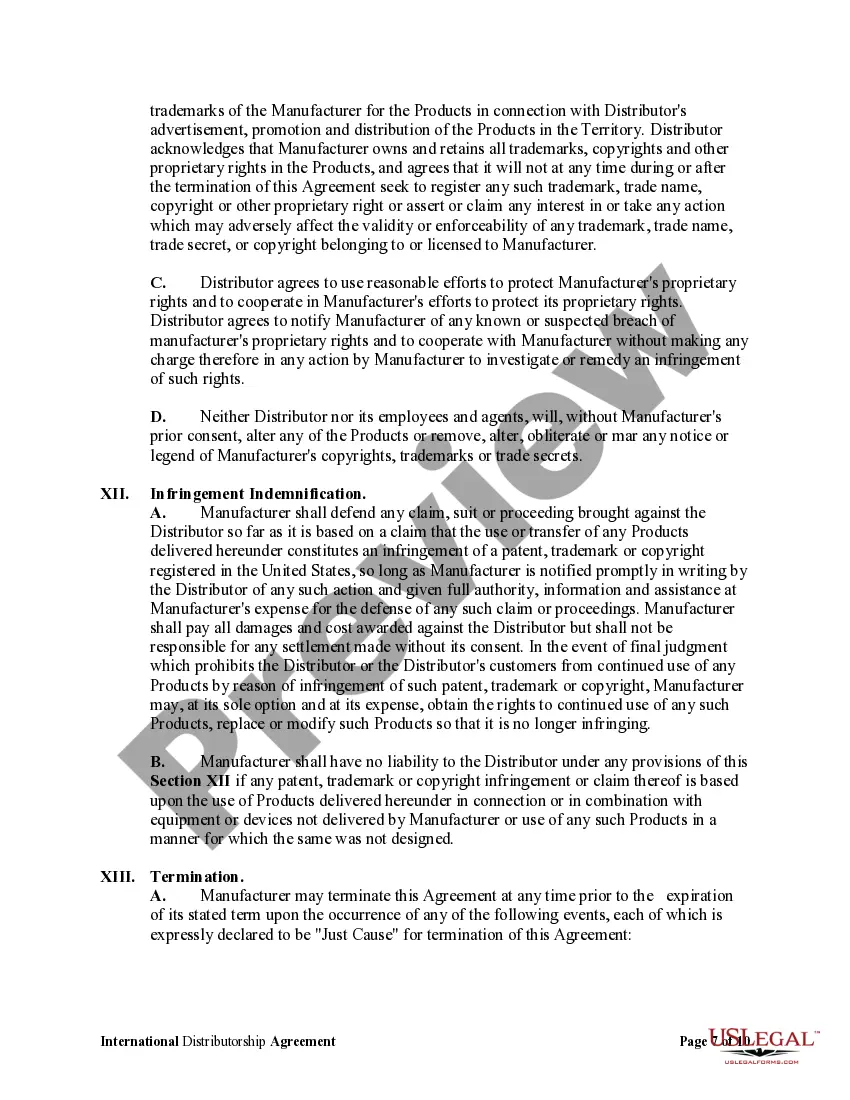
A distribution agreement is a powerful tool that defines the rules of engagement between suppliers and distributors. These agreements can not only streamline your distribution process but also shield your business from potential pitfalls.
A distributor typically works with multiple manufacturers and multiple downstream entities. For each manufacturer, the distributor serves as an agent that enters into an agreement with the manufacturer to sell its products to retailers, VARs or wholesalers.
A distribution agreement is one under which a supplier or manufacturer of goods agrees that an independent third party will market the goods. The distributor buys the goods on their own account and trades under their own name.
A distribution agreement, also known as a distributor agreement, is a contract between a supplying company with products to sell and another company that markets and sells the products. The distributor agrees to buy products from the supplier company and sell them to clients within certain geographical areas.
A distribution agreement, also known as a distributor agreement, is a contract between a supplying company with products to sell and another company that markets and sells the products. The distributor agrees to buy products from the supplier company and sell them to clients within certain geographical areas.
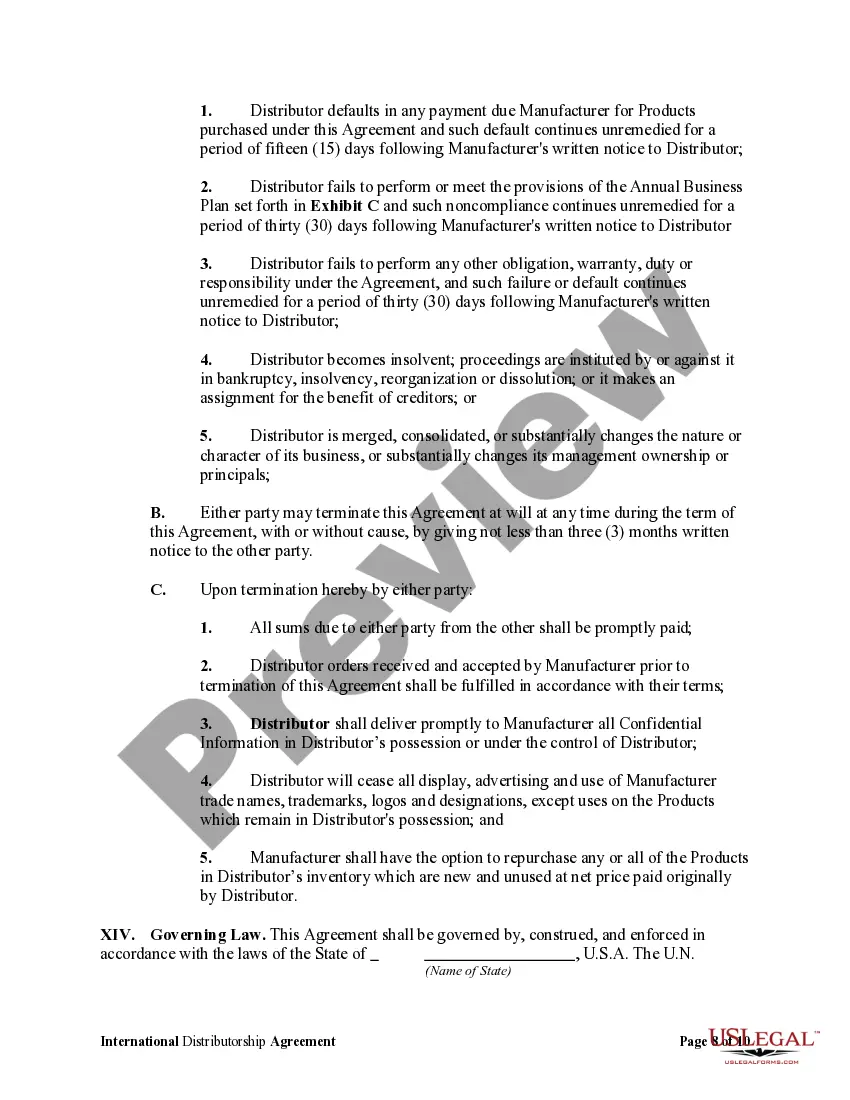
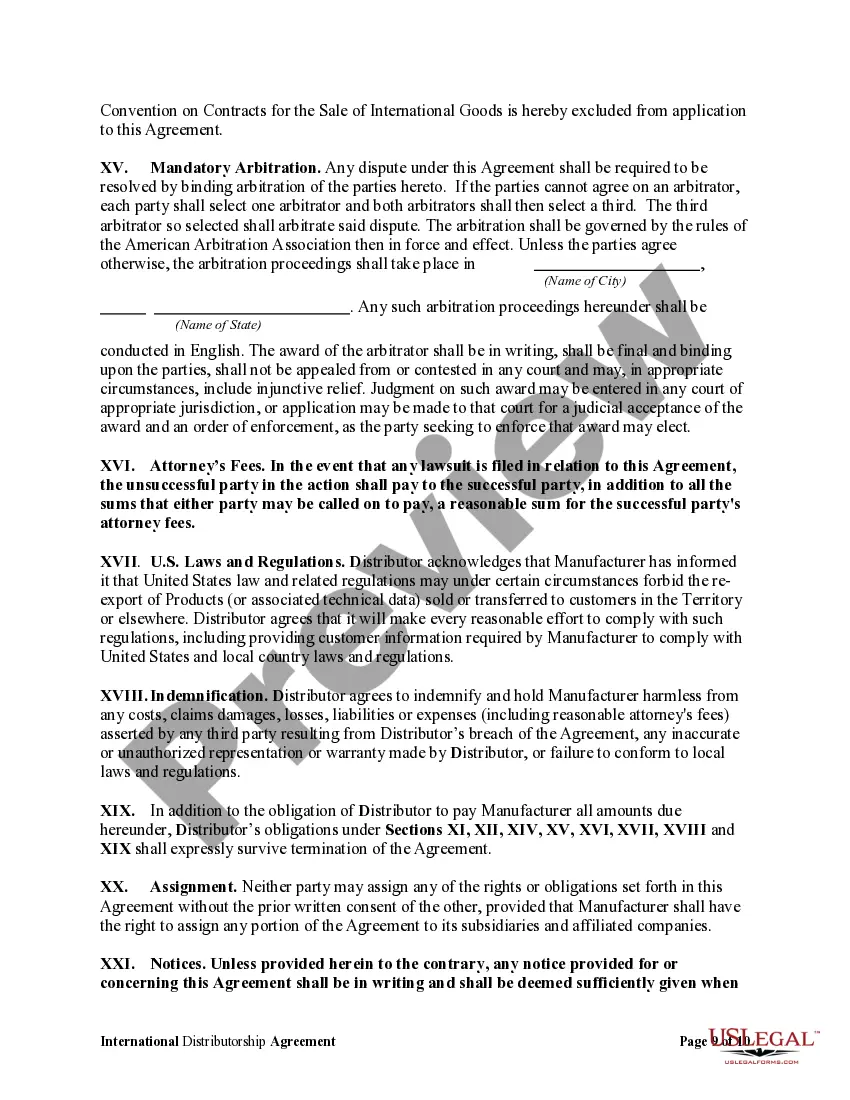
A termination clause should also state the notice period and the form of notice required to terminate the distribution agreement. The notice period should be reasonable and proportionate to the type and duration of the distribution agreement, and the nature and severity of the grounds for termination.
Write a termination contract letter A contract termination letter allows you to give written notice of your contract's cancellation. It clearly states intent and limits your liability, which arerequired if you're looking to avoid issues while terminating a contract. Writing the letter is simple.
The Distributor Agreement should clearly set forth the duties, responsibilities and expectations of each of the parties. The Distributor Agreement should also set forth provisions related to limitations and protections that each party can understand.
Here are some other things to keep in mind. Be proactive with a termination clause. Submit notice in writing (and in advance) ... Clearly explain how the terms aren't being met. Suggest a renegotiation instead of termination. Don't end the contract without the vendor's input. Why save the relationship?
Some distributors can be very stubborn to remove. Put lots of penetrating oil around the distributor the night before to help release it. Avoid the temptation to prise upwards with anything other than very gentle leverage; force can break the distributor casting where it enters the head.