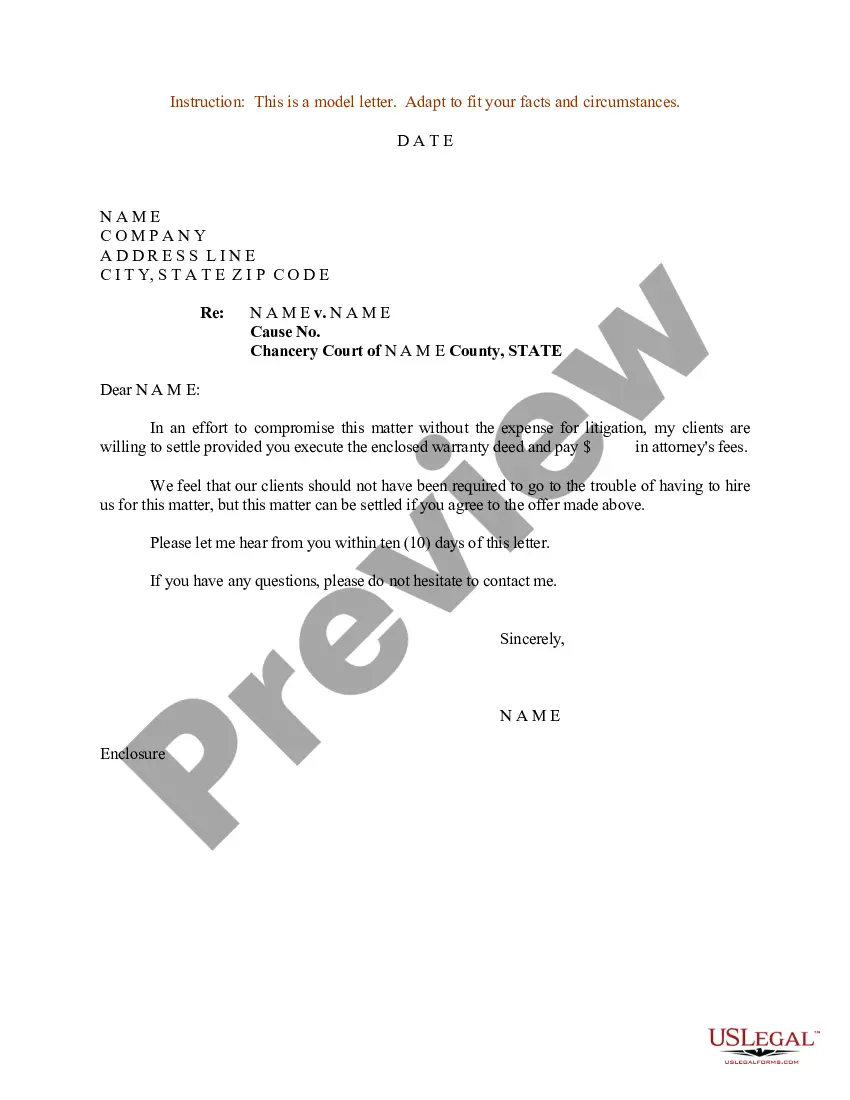
Debt Settlement Letter Sample With Bank In Harris
Description


Get your form ready online
Our built-in tools help you complete, sign, share, and store your documents in one place.
Make edits, fill in missing information, and update formatting in US Legal Forms—just like you would in MS Word.
Download a copy, print it, send it by email, or mail it via USPS—whatever works best for your next step.
Sign and collect signatures with our SignNow integration. Send to multiple recipients, set reminders, and more. Go Premium to unlock E-Sign.
If this form requires notarization, complete it online through a secure video call—no need to meet a notary in person or wait for an appointment.
We protect your documents and personal data by following strict security and privacy standards.

Make edits, fill in missing information, and update formatting in US Legal Forms—just like you would in MS Word.

Download a copy, print it, send it by email, or mail it via USPS—whatever works best for your next step.

Sign and collect signatures with our SignNow integration. Send to multiple recipients, set reminders, and more. Go Premium to unlock E-Sign.

If this form requires notarization, complete it online through a secure video call—no need to meet a notary in person or wait for an appointment.

We protect your documents and personal data by following strict security and privacy standards.
Looking for another form?








Form popularity
FAQ
During the call you should never say it's your debt, your account, that you ever had an account, and any other personal financial information. Don't lie if they ask you point-blank questions; just don't answer them by reiterating the first paragraph... several times if necessary.
Steps to Negotiate Debt Settlement Initiate contact with your bank's customer service or debt recovery department. Be polite yet firm in your request for a settlement. Explain your financial situation and your intent to settle the debt.
Some collectors want 75%–80% of what you owe. Others will take 50%, while others might settle for one-third or less. So, it makes sense to start low with your first offer and see what happens. And be aware that some collectors won't accept anything less than the total debt amount.
Harris & Harris is a legitimate debt collection agency focusing on consumer debts — specifically healthcare, government, and utility debt. If Harris & Harris contacts you, you should first validate the alleged debt. Once you verify that the debt belongs to you, you can choose how to move forward.
Harris & Harris is a legitimate debt collection agency focusing on consumer debts — specifically healthcare, government, and utility debt. If Harris & Harris contacts you, you should first validate the alleged debt. Once you verify that the debt belongs to you, you can choose how to move forward.
While agencies typically pursue the full amount owed, debt buyers may accept reduced payments. The decision to sue often depends on the debt's size (usually a minimum of $1,000), age, and original agreements. Debt collection practices for unpaid credit card balances frequently lead to court cases.
Debt collectors typically settle for 30% to 60% of the total owed, but the percentage can vary based on factors like how old the debt is, the collector's policies, and your financial situation. Older debts or those unlikely to be collected in full usually result in more favorable settlements.