Letters To Lawyers Examples In Dallas
Description


Get your form ready online
Our built-in tools help you complete, sign, share, and store your documents in one place.
Make edits, fill in missing information, and update formatting in US Legal Forms—just like you would in MS Word.
Download a copy, print it, send it by email, or mail it via USPS—whatever works best for your next step.
Sign and collect signatures with our SignNow integration. Send to multiple recipients, set reminders, and more. Go Premium to unlock E-Sign.
If this form requires notarization, complete it online through a secure video call—no need to meet a notary in person or wait for an appointment.
We protect your documents and personal data by following strict security and privacy standards.

Make edits, fill in missing information, and update formatting in US Legal Forms—just like you would in MS Word.

Download a copy, print it, send it by email, or mail it via USPS—whatever works best for your next step.

Sign and collect signatures with our SignNow integration. Send to multiple recipients, set reminders, and more. Go Premium to unlock E-Sign.

If this form requires notarization, complete it online through a secure video call—no need to meet a notary in person or wait for an appointment.

We protect your documents and personal data by following strict security and privacy standards.
Looking for another form?








Form popularity
FAQ
Explain your case briefly but provide enough detail to give a clear picture of your legal issue. Be Honest: Full disclosure is crucial. Be honest about all aspects of your case, including any actions you've taken and any communication with other parties involved.
First time speaking to a lawyer? Let's make this easy, start with “hello.” There is no such thing as a quick question. Collect your thoughts, find the time, and find the place to have the conversation. Let the lawyer lead the conversation and ask the questions. Patience.
A sample email to a lawyer requesting their legal counsel might include sentences like “I am reaching out to seek your assistance regarding…” or “I am interested in hiring you for…” Clearly state the help you need without resorting to jargon.
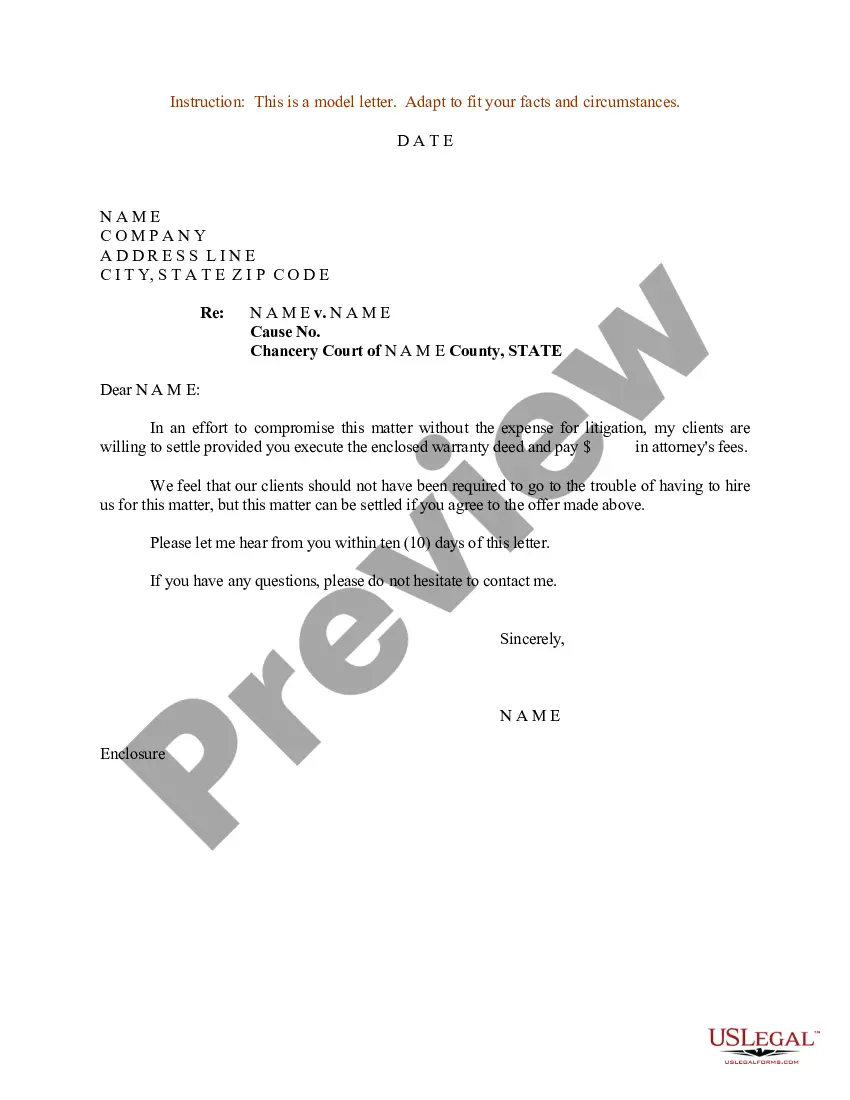
Formatting the Letter Decide whether to follow "full block" or "modified block" format. Write your address. Write the date. Insert your attorney's name and address. Reference your case number. Greet your attorney. Write out the body of the letter. Close the letter.
Asking for a Lawyer: You can indeed ask for a lawyer by clearly stating, ``I want to speak to a lawyer.'' This statement should make it clear to the officer that you are invoking your right to legal counsel. After you've asked for a lawyer, officers should cease questioning you until your lawyer is present.
Steps Understand your purpose. There are many reasons why you may wish to contact your attorney. Lead with the most important point. Fill in the middle with your reasons. Close with a paragraph that summarizes your main point. Use simple language. Keep it short.
A Legal Professional By Any Other Name ... Finally, you do not need to address an attorney by any specific honorific. You do not need to start an email with "Dear Attorney Smith," for example. It is customary to simply use Mr. or Mrs.
To file online, go to E-File Texas ( ) 11 and follow the instructions. To file in person, take your answer (and copies) to the district clerk's office in the county where the plaintiff filed the case. At the clerk's office: Turn in your answer form (and copies).
Addressing the Envelope Start with a full and legible return address. Format the delivery address. Address the envelope to your attorney by name. Choose between Esquire, Attorney at Law, and J.D. Esquire, abbreviated to Esq. is falling out of common usage. Add the business address.
Tell them your full name and a basic description of your legal issue and what you want to accomplish. For example, if you're calling an attorney about a divorce, you might write down, "My name is Sally Sunshine and my partner and I have decided to divorce.