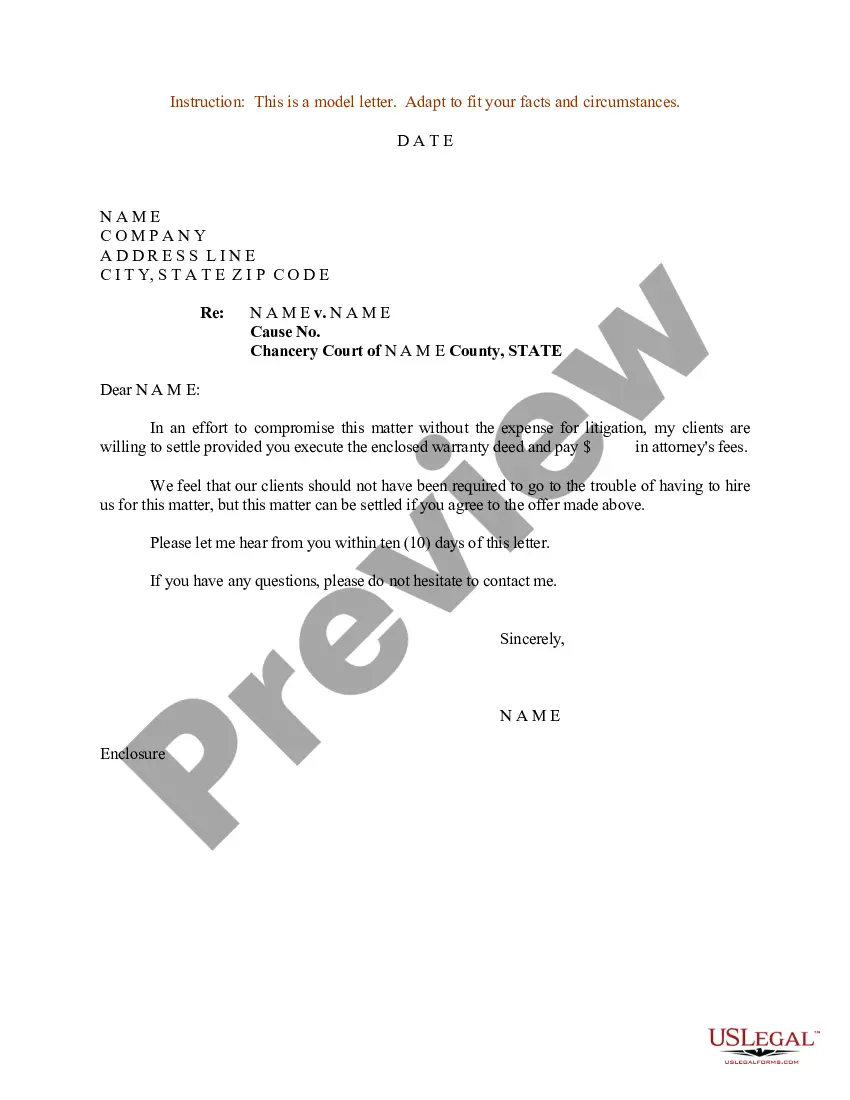
Sample Letter To Opposing Counsel With Settlement Offer In Contra Costa
Description


Get your form ready online
Our built-in tools help you complete, sign, share, and store your documents in one place.
Make edits, fill in missing information, and update formatting in US Legal Forms—just like you would in MS Word.
Download a copy, print it, send it by email, or mail it via USPS—whatever works best for your next step.
Sign and collect signatures with our SignNow integration. Send to multiple recipients, set reminders, and more. Go Premium to unlock E-Sign.
If this form requires notarization, complete it online through a secure video call—no need to meet a notary in person or wait for an appointment.
We protect your documents and personal data by following strict security and privacy standards.

Make edits, fill in missing information, and update formatting in US Legal Forms—just like you would in MS Word.

Download a copy, print it, send it by email, or mail it via USPS—whatever works best for your next step.

Sign and collect signatures with our SignNow integration. Send to multiple recipients, set reminders, and more. Go Premium to unlock E-Sign.

If this form requires notarization, complete it online through a secure video call—no need to meet a notary in person or wait for an appointment.

We protect your documents and personal data by following strict security and privacy standards.
Looking for another form?









Form popularity
FAQ
Frequently Asked Questions (FAQ) Type your letter. Concisely review the main facts. Be polite. Write with your goal in mind. Ask for exactly what you want. Set a deadline. End the letter by stating you will promptly pursue legal remedies if the other party does not meet your demand. Make and keep copies.
Generally, this is due within 30 days after you were served. If you don't, the plaintiff can ask for a default. If there's a default, the court won't let you file an Answer and can decide the case without you. What if it's been more than 30 days since I got the Complaint?
Most common way to respond is to file an Answer In an Answer, you say what you think is not true in the Complaint (make a denial) and you say what your defenses are or might be (new matters you are bringing up). If you file an Answer, the other side must prove their case and you can defend your case in court.
File the Request for Dismissal with the court Bring the originals and copies of the Request for Dismissal to the clerk at the courthouse where the case was originally filed. They will file the forms and return the copy to you. Keep the copy for your records.
Treat the following as a set of general guidelines: Gather complete information before you start writing. Describe your injuries and medical treatment. List your medical expenses, lost wages, and non-economic damages. Make a settlement demand. Include a deadline for legal action if you want to, but don't bluff.
(a) The summons and complaint shall be served upon a defendant within three years after the action is commenced against the defendant. For the purpose of this subdivision, an action is commenced at the time the complaint is filed.
Frequently Asked Questions (FAQ) Type your letter. Concisely review the main facts. Be polite. Write with your goal in mind. Ask for exactly what you want. Set a deadline. End the letter by stating you will promptly pursue legal remedies if the other party does not meet your demand. Make and keep copies.
While it's technically possible to write a demand letter yourself, there are significant advantages to seeking the guidance of a legal professional. Here's why. Professional expertise. An attorney specialized in personal injury law understands the nuances of relevant statutes, case law, and procedural requirements.