Arbitration Case Sample For Green Card In Sacramento
Description



Get your form ready online
Our built-in tools help you complete, sign, share, and store your documents in one place.
Make edits, fill in missing information, and update formatting in US Legal Forms—just like you would in MS Word.
Download a copy, print it, send it by email, or mail it via USPS—whatever works best for your next step.
Sign and collect signatures with our SignNow integration. Send to multiple recipients, set reminders, and more. Go Premium to unlock E-Sign.
If this form requires notarization, complete it online through a secure video call—no need to meet a notary in person or wait for an appointment.
We protect your documents and personal data by following strict security and privacy standards.

Make edits, fill in missing information, and update formatting in US Legal Forms—just like you would in MS Word.

Download a copy, print it, send it by email, or mail it via USPS—whatever works best for your next step.

Sign and collect signatures with our SignNow integration. Send to multiple recipients, set reminders, and more. Go Premium to unlock E-Sign.

If this form requires notarization, complete it online through a secure video call—no need to meet a notary in person or wait for an appointment.

We protect your documents and personal data by following strict security and privacy standards.
Looking for another form?










Form popularity
FAQ
Generally, disputes in rem which are regarding a thing or property can't be resolved through arbitration, while disputes in personam regarding a selected person are often.
In conclusion, an effective opening statement will tell the arbitrator in a concise, courteous fashion exactly what the factual situation in the case is, what the issues are, how the advocate wants the arbitrator to rule on the issues, and exactly what relief is being requested.
Parties typically agree to arbitrate in order to avoid the time, expense, and complexity of litigation. Arbitration clauses that require parties to submit all disputes to arbitration are widely used in domestic consumer and employment contracts.
"A dispute having arisen between the parties concerning , the parties hereby agree that the dispute shall be referred to and finally resolved by arbitration under the LCIA Rules. The number of arbitrators shall be one/three. The seat, or legal place, of arbitration shall be City and/or Country.
Auto Accidents: Arbitration is often used in auto accident cases, particularly when the dispute involves the extent of injuries, the amount of damages, or insurance coverage issues. If both parties agree, arbitration can quickly resolve the matter without a prolonged and expensive jury trial.
If your case involves factors like privacy concerns, the need for a quicker resolution, or the desire to avoid a public jury trial, arbitration might be an ideal solution. However, if you're worried about the finality of the arbitrator's decision or the potential for bias, you might prefer the traditional court route.
The arbitrator will explain the process. Each side may present an uninterrupted opening statement setting forth its position as to the facts and the law. After opening statements, the parties present their evidence and witnesses. The arbitrator swears in the witnesses and makes rulings on the admissibility of evidence.
About Judicial Arbitration. Judicial Arbitration is like a trial. But it is less formal and there is no jury. Each side presents its case to a “neutral” person, also called “arbitrator.” The arbitrator is either a lawyer or a retired judge, and does not take sides or give advice.
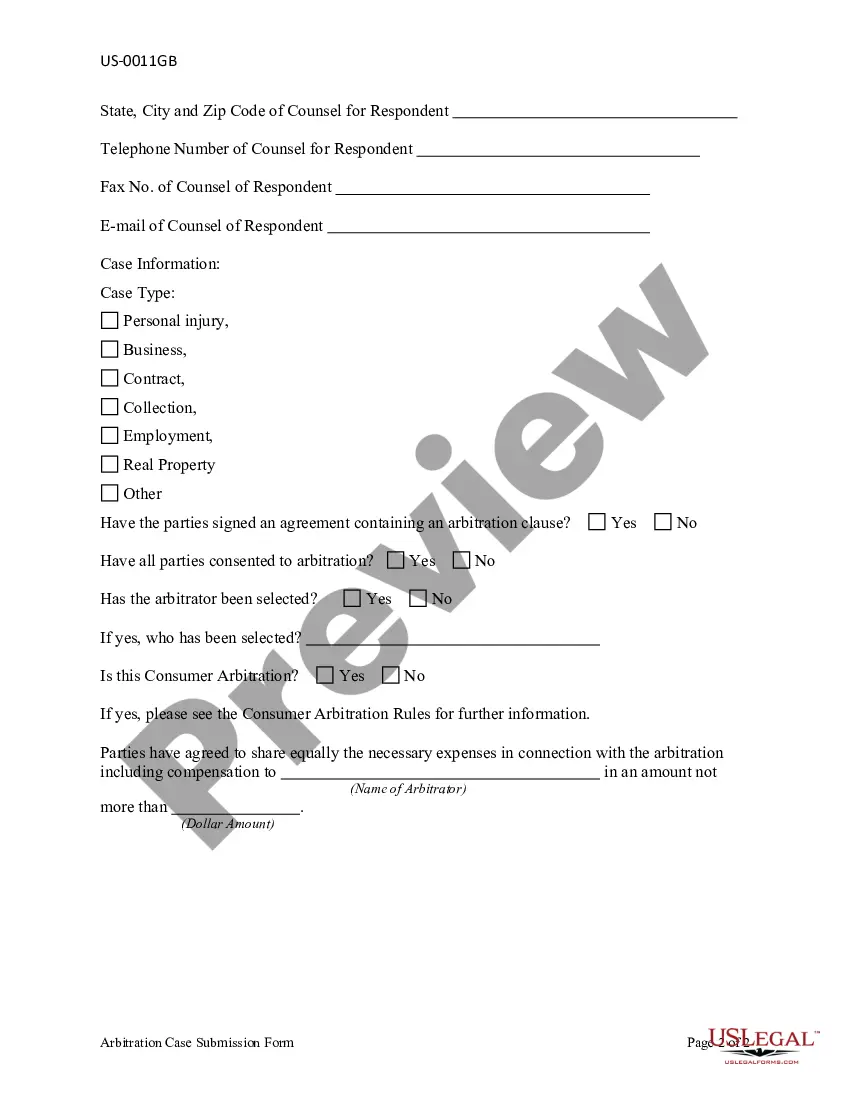
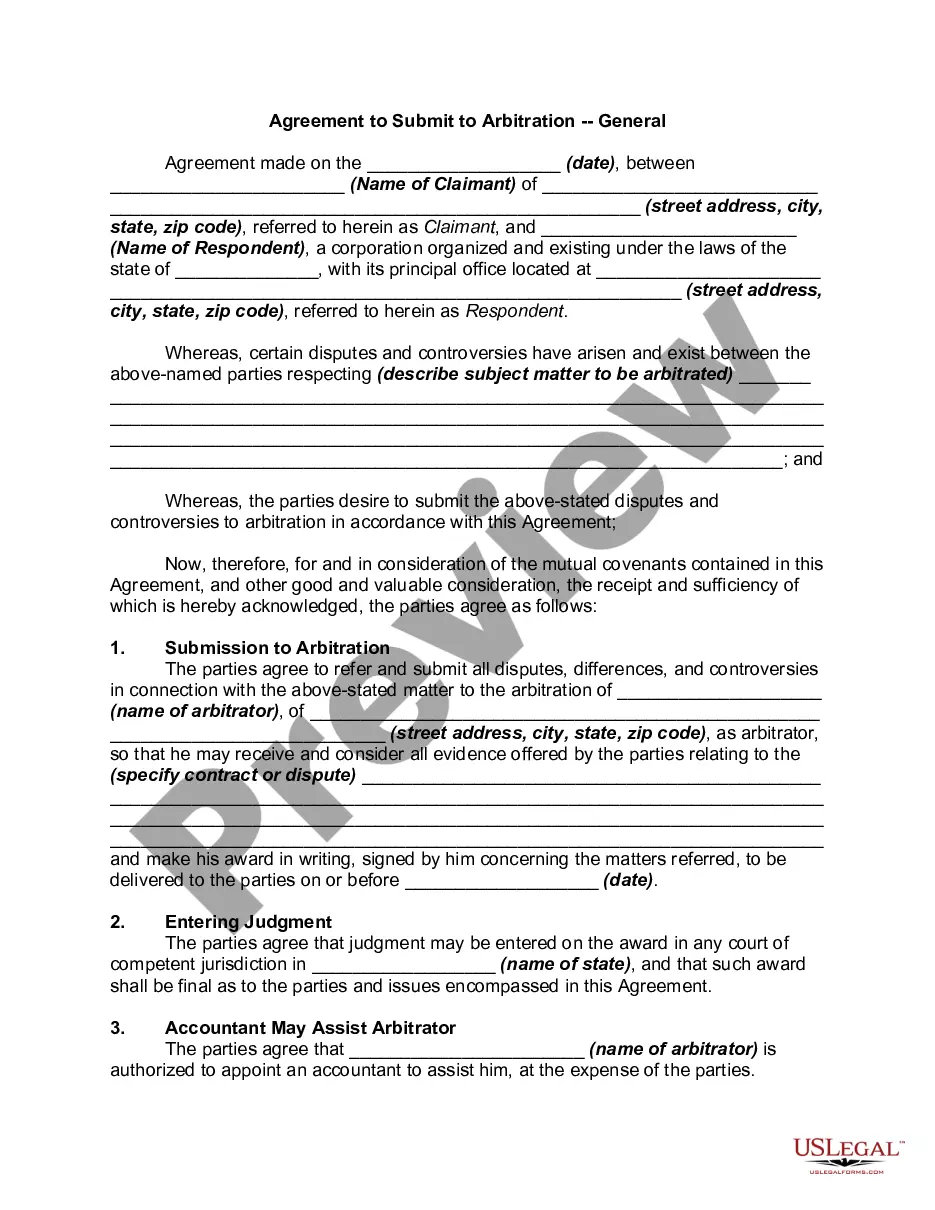
In general, a Request for Arbitration or a Notice of Arbitration must contain the names of each of the parties, the names of the parties' representatives, a description of the dispute giving rise to claims, a statement of the relief sought, a description of the agreement containing the arbitration clause, the choice of ...
A claimant will typically start arbitration by sending a document known as a “request for arbitration” or a “notice to arbitrate” to its opponent.