Arbitration Case In Malaysia In Queens
Description



Get your form ready online
Our built-in tools help you complete, sign, share, and store your documents in one place.
Make edits, fill in missing information, and update formatting in US Legal Forms—just like you would in MS Word.
Download a copy, print it, send it by email, or mail it via USPS—whatever works best for your next step.
Sign and collect signatures with our SignNow integration. Send to multiple recipients, set reminders, and more. Go Premium to unlock E-Sign.
If this form requires notarization, complete it online through a secure video call—no need to meet a notary in person or wait for an appointment.
We protect your documents and personal data by following strict security and privacy standards.

Make edits, fill in missing information, and update formatting in US Legal Forms—just like you would in MS Word.

Download a copy, print it, send it by email, or mail it via USPS—whatever works best for your next step.

Sign and collect signatures with our SignNow integration. Send to multiple recipients, set reminders, and more. Go Premium to unlock E-Sign.

If this form requires notarization, complete it online through a secure video call—no need to meet a notary in person or wait for an appointment.

We protect your documents and personal data by following strict security and privacy standards.
Looking for another form?


Form popularity
FAQ
Section 29 of the Contracts Act 1950 provides that any agreement which limits the time within which a party may enforce his rights is void. Section 6(1)(a) of the Limitation Act 1953 states that the limitation period for actions founded on a contract is 6 years from the date on which the cause of action accrued.
If your case involves factors like privacy concerns, the need for a quicker resolution, or the desire to avoid a public jury trial, arbitration might be an ideal solution. However, if you're worried about the finality of the arbitrator's decision or the potential for bias, you might prefer the traditional court route.
Arbitration is similar to going to court, but faster, cheaper and less complex than litigation. If the case settles, an arbitration will last around one year. If the case goes to hearing, an arbitration typically takes 16 months.
No. In many cases, if your contract states that all claims must be pursued through arbitration, then you can't sue in court. You must use arbitration. If your contract does not specify arbitration, you can go to court, but not after you've gone through binding arbitration.
How long does it take. You can usually expect to hear the arbitrator's decision within 45 days of the arbitrator closing the proceedings. However, this timescale is usually set by agreement between you, the other party and the arbitrator.
(1) The award shall be made within a period of twelve months from the date the arbitral tribunal enters upon the reference.
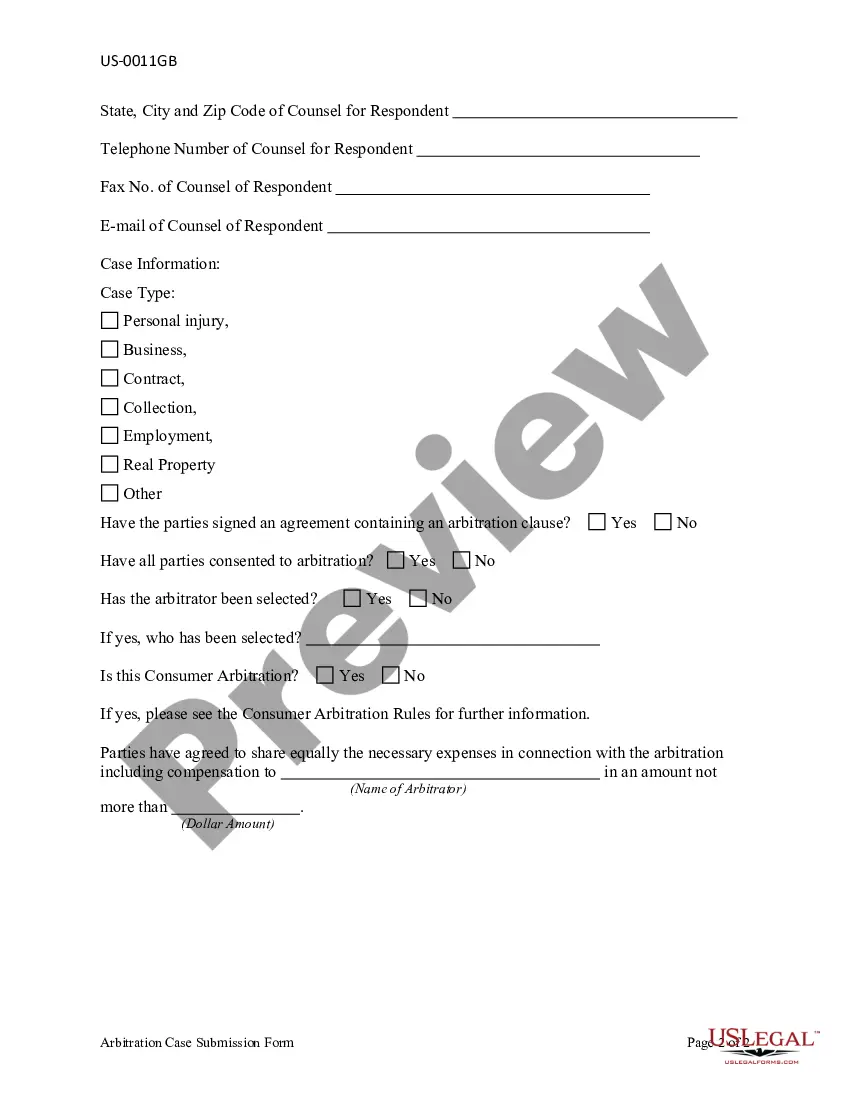
There are several reputable arbitral institutions in Malaysia, the Asian International Arbitration Centre (AIAC). The party initiating the arbitration must send a written notice of arbitration to the other party or parties, stating the nature of the dispute and the relief sought.
A claimant will typically start arbitration by sending a document known as a “request for arbitration” or a “notice to arbitrate” to its opponent.
The Request must: be written in English, French or Spanish (the official languages of the Centre) include the name and contact details of all parties (including e-mail, street address and telephone number) be signed and dated by the requesting party or its representative.
A claimant will typically start arbitration by sending a document known as a “request for arbitration” or a “notice to arbitrate” to its opponent.