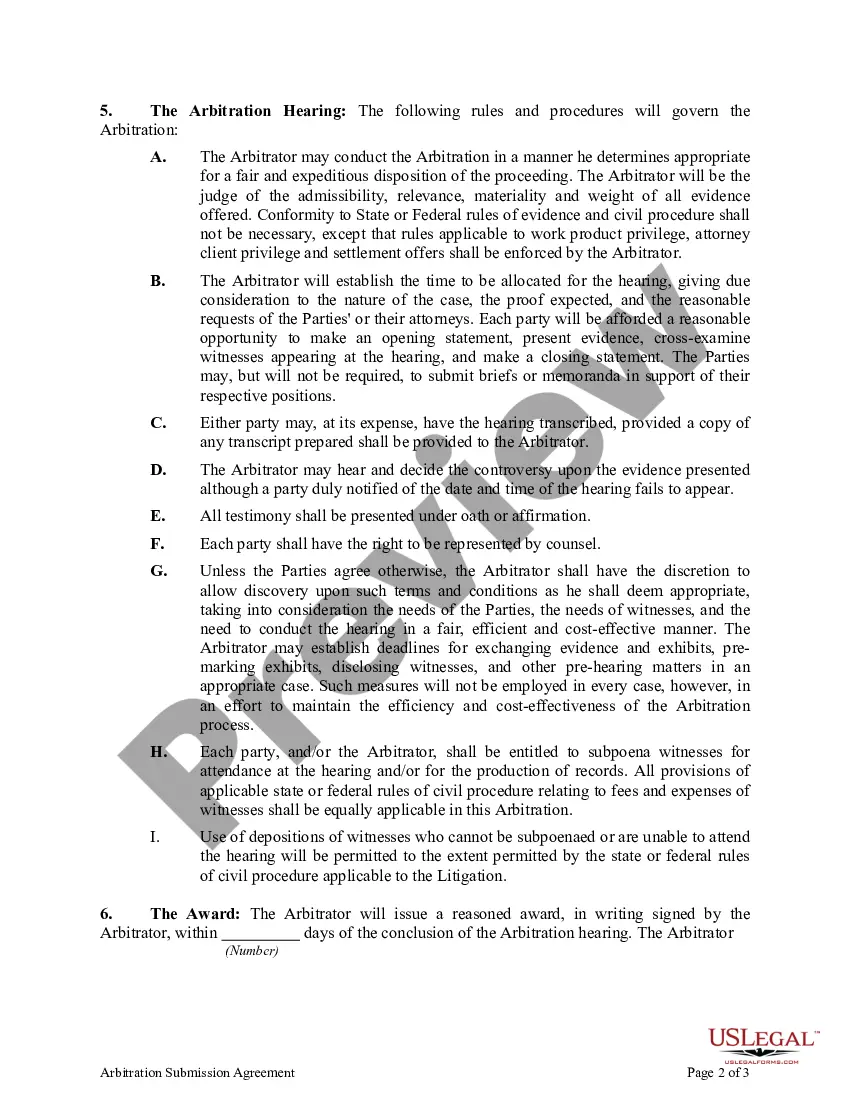
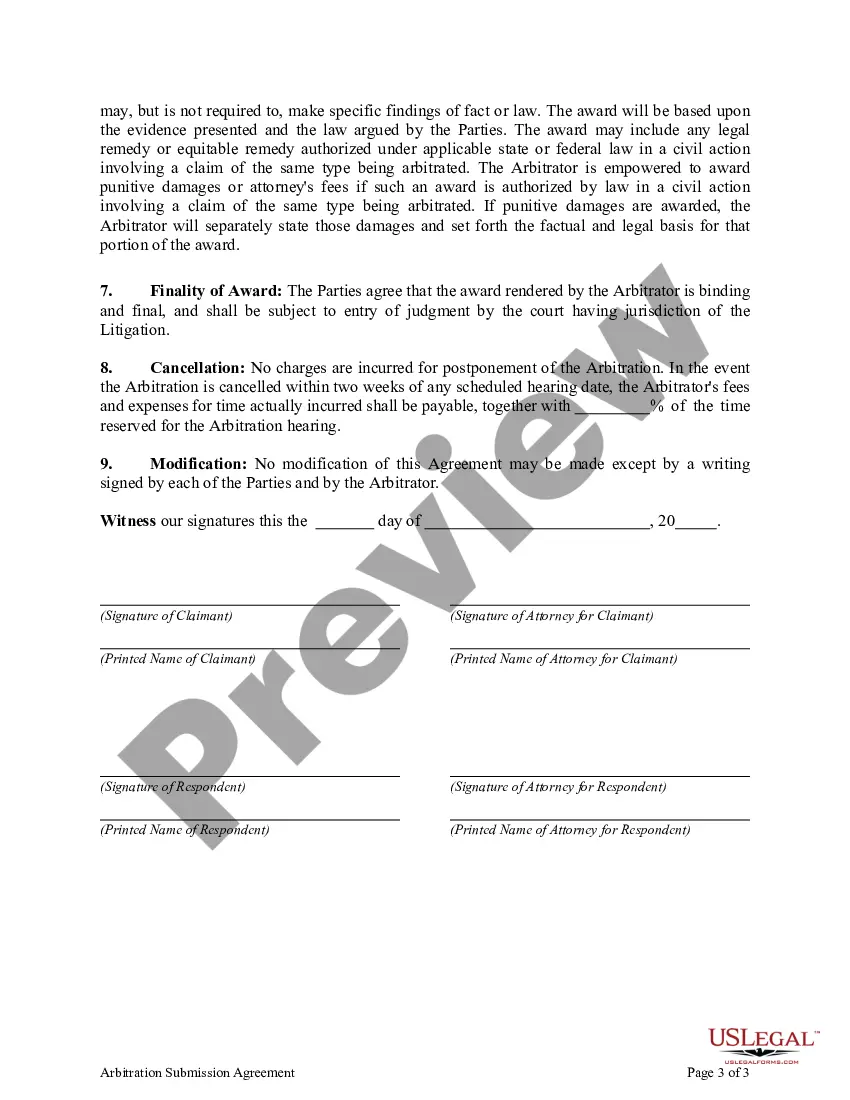
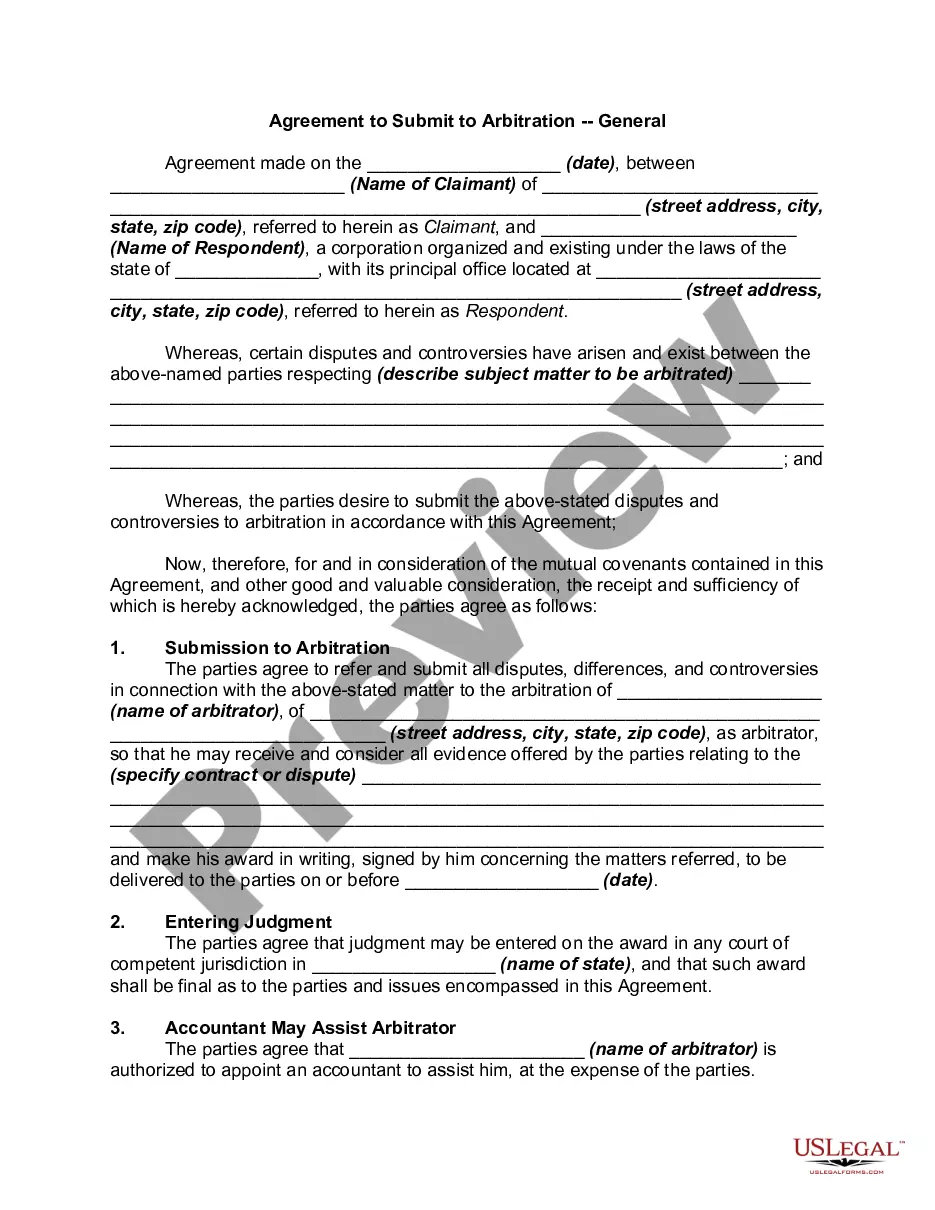
Submission Agreement Sample With Whereas Clauses In Georgia
Description



Get your form ready online
Our built-in tools help you complete, sign, share, and store your documents in one place.
Make edits, fill in missing information, and update formatting in US Legal Forms—just like you would in MS Word.
Download a copy, print it, send it by email, or mail it via USPS—whatever works best for your next step.
Sign and collect signatures with our SignNow integration. Send to multiple recipients, set reminders, and more. Go Premium to unlock E-Sign.
If this form requires notarization, complete it online through a secure video call—no need to meet a notary in person or wait for an appointment.
We protect your documents and personal data by following strict security and privacy standards.

Make edits, fill in missing information, and update formatting in US Legal Forms—just like you would in MS Word.

Download a copy, print it, send it by email, or mail it via USPS—whatever works best for your next step.

Sign and collect signatures with our SignNow integration. Send to multiple recipients, set reminders, and more. Go Premium to unlock E-Sign.

If this form requires notarization, complete it online through a secure video call—no need to meet a notary in person or wait for an appointment.

We protect your documents and personal data by following strict security and privacy standards.
Looking for another form?







Form popularity
FAQ
The preamble of a contract is the introductory paragraph that identifies the parties to the agreement. It is typically followed by paragraphs known as recitals (also called the background section). Sometimes, these recital paragraphs are labeled “Whereas”.
“Whereas” clauses should be used to explain why the resolution is necessary, and should also provide some background on the issue that the resolution takes a stand on.
We noted that arbitration clauses are made before any dispute arises. Submission agreements, however, are agreements to arbitrate made after the dispute has arisen.
The contract might start with a Whereas clause like this: 'Whereas, the parties wish to collaborate in the development of new technology...'. This Whereas clause is setting out the purpose of the contract: to set up a partnership for developing technology.
A whereas clause is a statement that is used in legal documents, such as contracts or agreements, to provide background information or context for the document. It typically begins with the word "whereas" and is followed by a description of the situation or circumstances that led to the creation of the document.
For instance: "In the event of any dispute arising out of or in connection with this Agreement, the parties shall first attempt to resolve the dispute through amicable negotiations within X days of written notice. If no resolution is reached through negotiations, the parties shall proceed to mediation..."
The seat and venue of arbitration should be specifically mentioned. Language of Arbitration: The clause should specify the language in which the arbitration will be conducted if parties speak different languages. This is crucial for ensuring that all parties can effectively participate in the process.
Rule 1.110(303.3) 'Whereas' clause of contract is prefatory, not binding.
Subordinating conjunctions aren't the only way to add a dependent clause to a sentence. Dependent clauses can also start with relative pronouns or relative adverbs. Relative pronouns include that, whose, whom, who, and which.
The clauses you include in your terms of use agreement depend on what type of business you conduct, however, most terms of use policies have some or all of the following clauses: Introduction. Prohibited or acceptable uses. Account Termination and Suspension.
