Principles Law Of Armed Conflict In Kings
Description
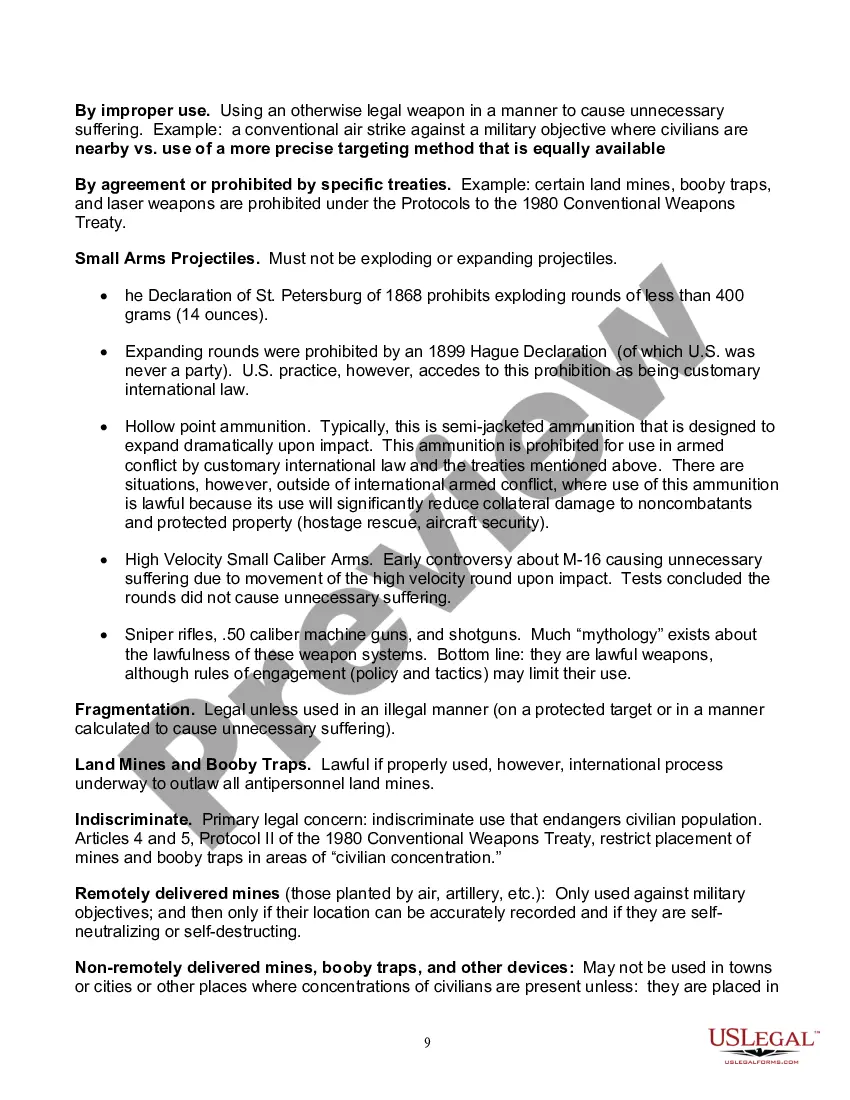

Get your form ready online
Our built-in tools help you complete, sign, share, and store your documents in one place.
Make edits, fill in missing information, and update formatting in US Legal Forms—just like you would in MS Word.
Download a copy, print it, send it by email, or mail it via USPS—whatever works best for your next step.
Sign and collect signatures with our SignNow integration. Send to multiple recipients, set reminders, and more. Go Premium to unlock E-Sign.
If this form requires notarization, complete it online through a secure video call—no need to meet a notary in person or wait for an appointment.
We protect your documents and personal data by following strict security and privacy standards.

Make edits, fill in missing information, and update formatting in US Legal Forms—just like you would in MS Word.

Download a copy, print it, send it by email, or mail it via USPS—whatever works best for your next step.

Sign and collect signatures with our SignNow integration. Send to multiple recipients, set reminders, and more. Go Premium to unlock E-Sign.

If this form requires notarization, complete it online through a secure video call—no need to meet a notary in person or wait for an appointment.

We protect your documents and personal data by following strict security and privacy standards.
Looking for another form?
Form popularity
FAQ
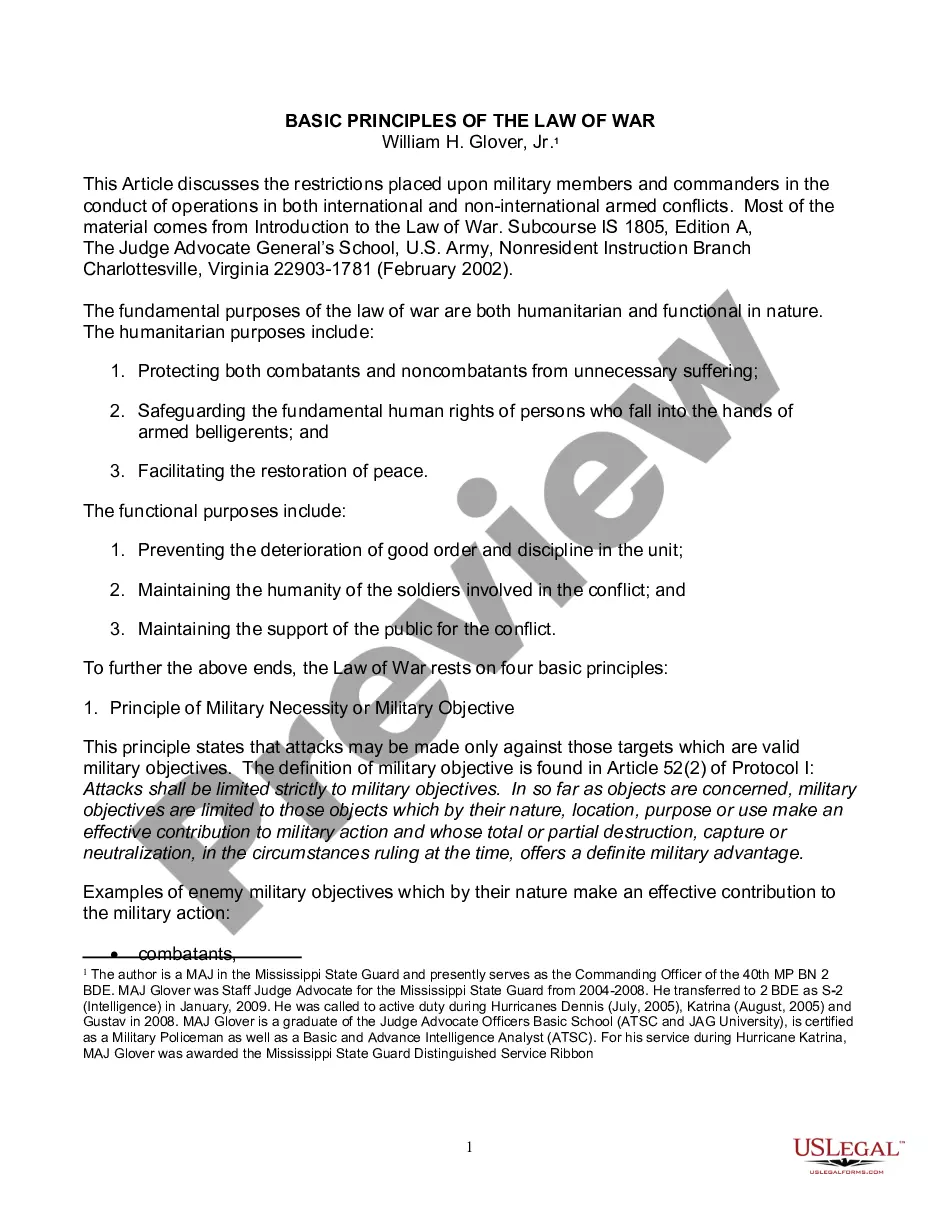
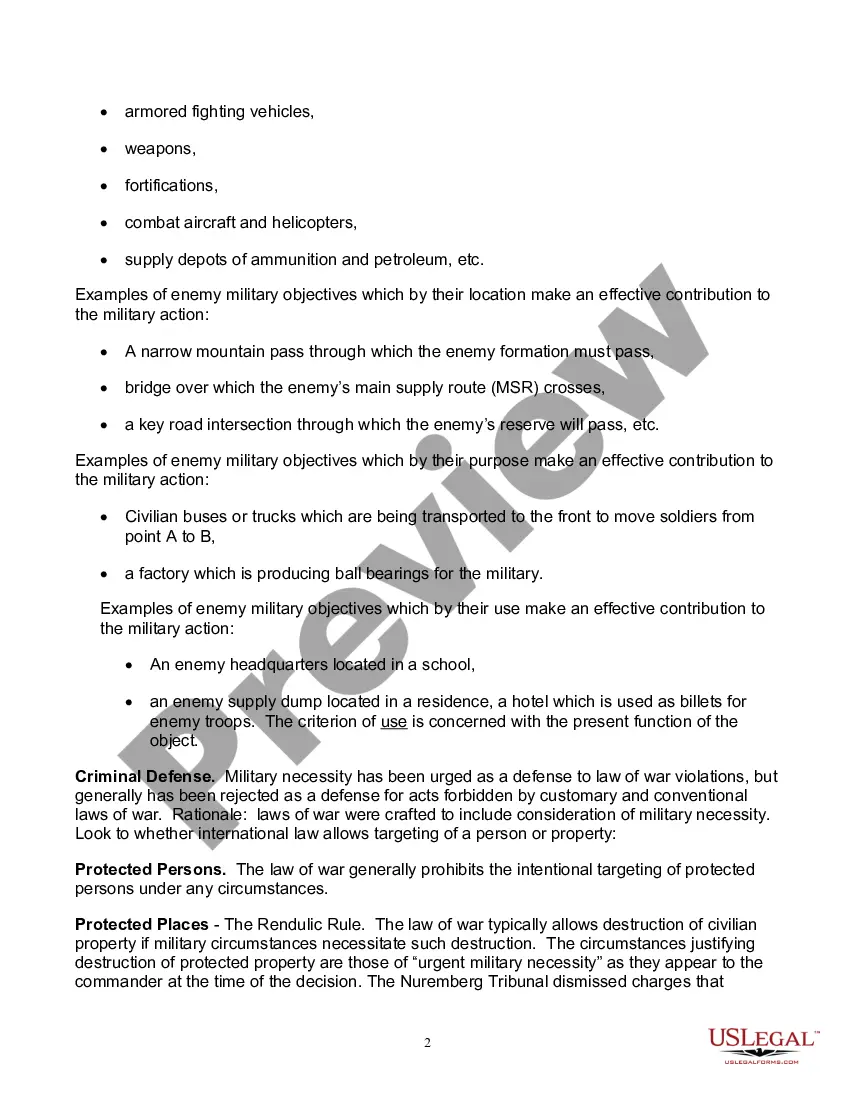
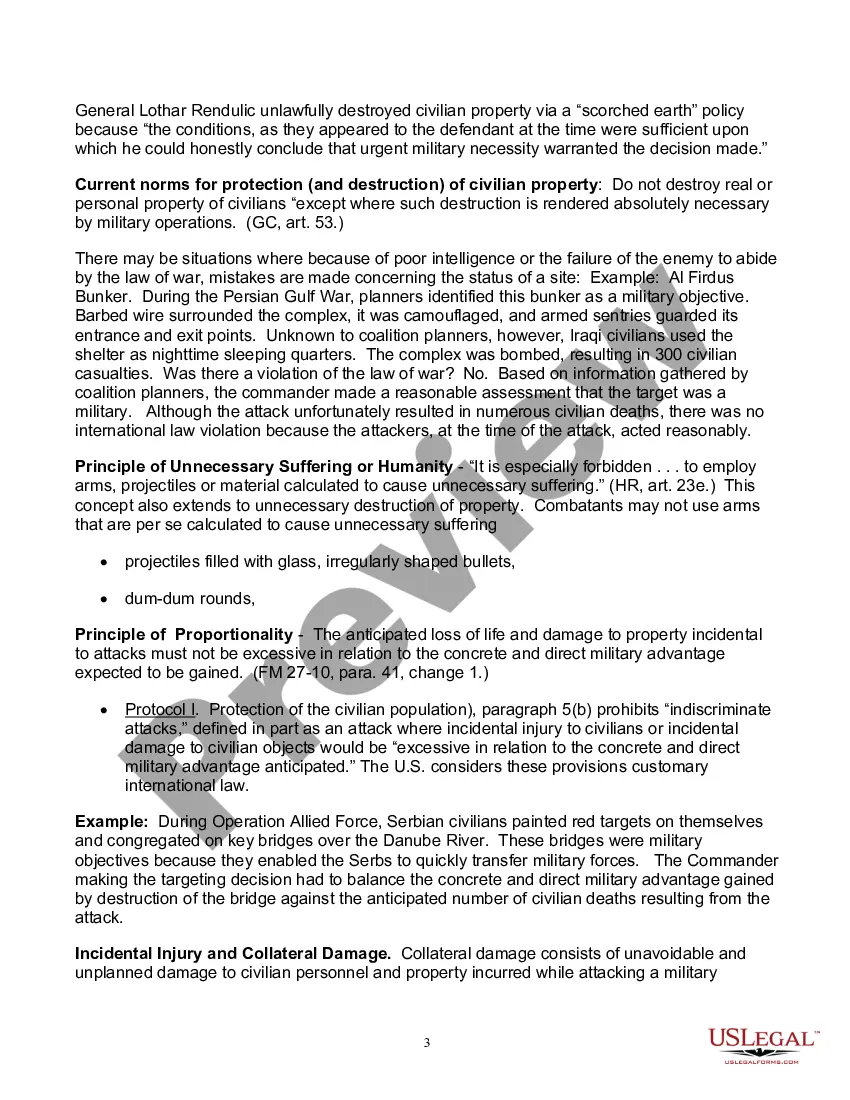
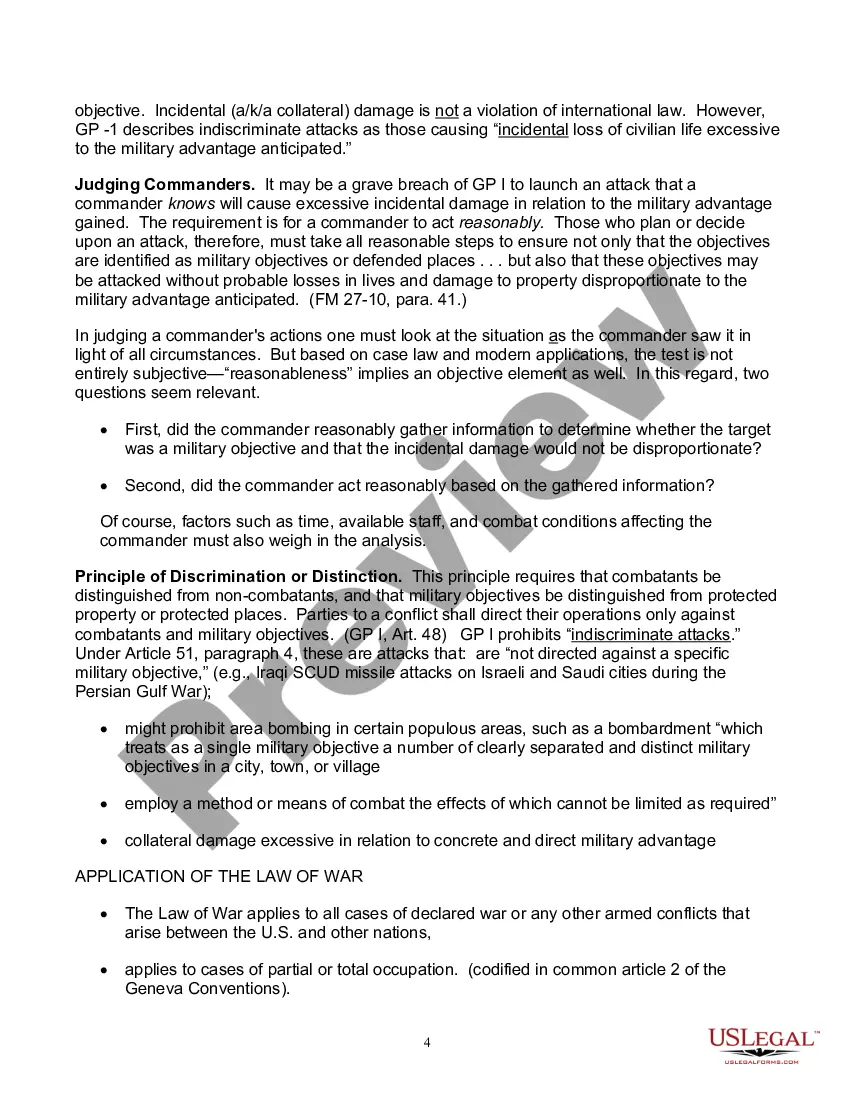
Paragraphs 1-23 through 1-48 explain the principles of military necessity, humanity, honor, distinction, and proportionality. See table 1-1. required to defeat the enemy as quickly and efficiently as possible that are not prohibited by the law of armed conflict.
An armed conflict exists whenever there is a use of armed force or belligerent occupation between States (IAC), or when protracted armed violence takes place between States and organised armed groups or between such groups (NIAC).
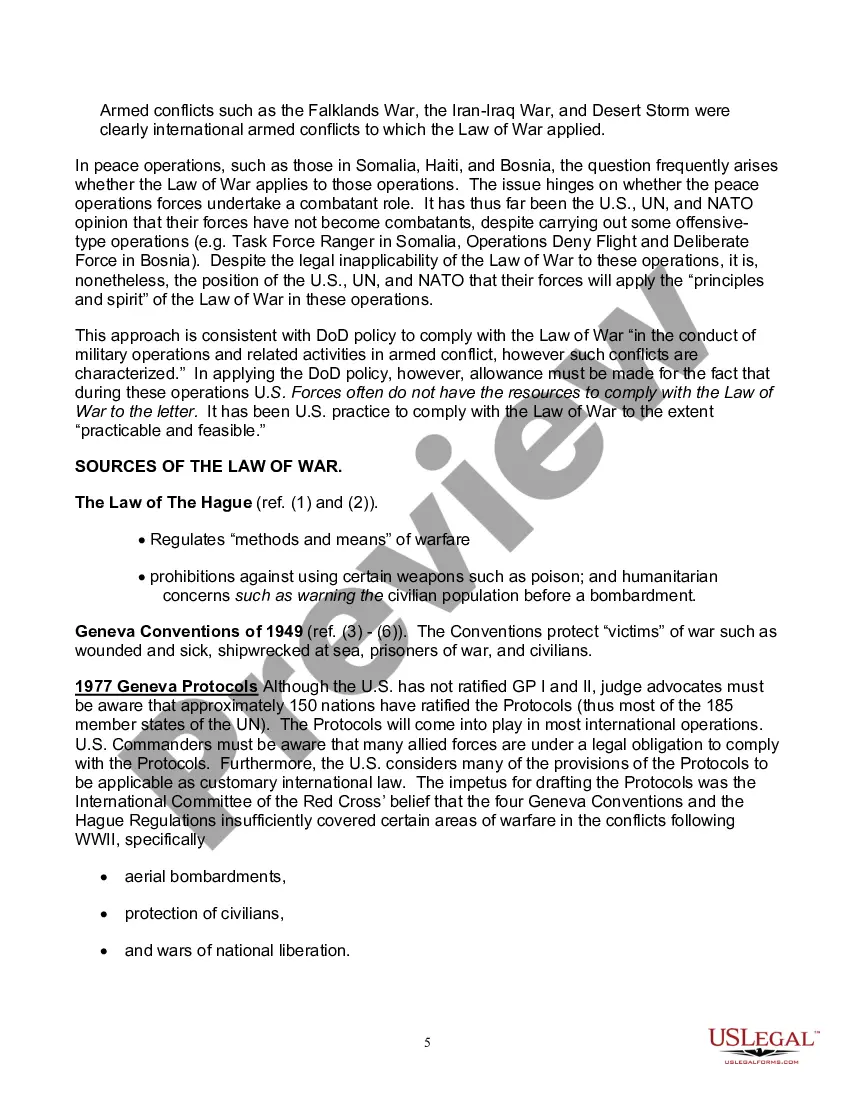
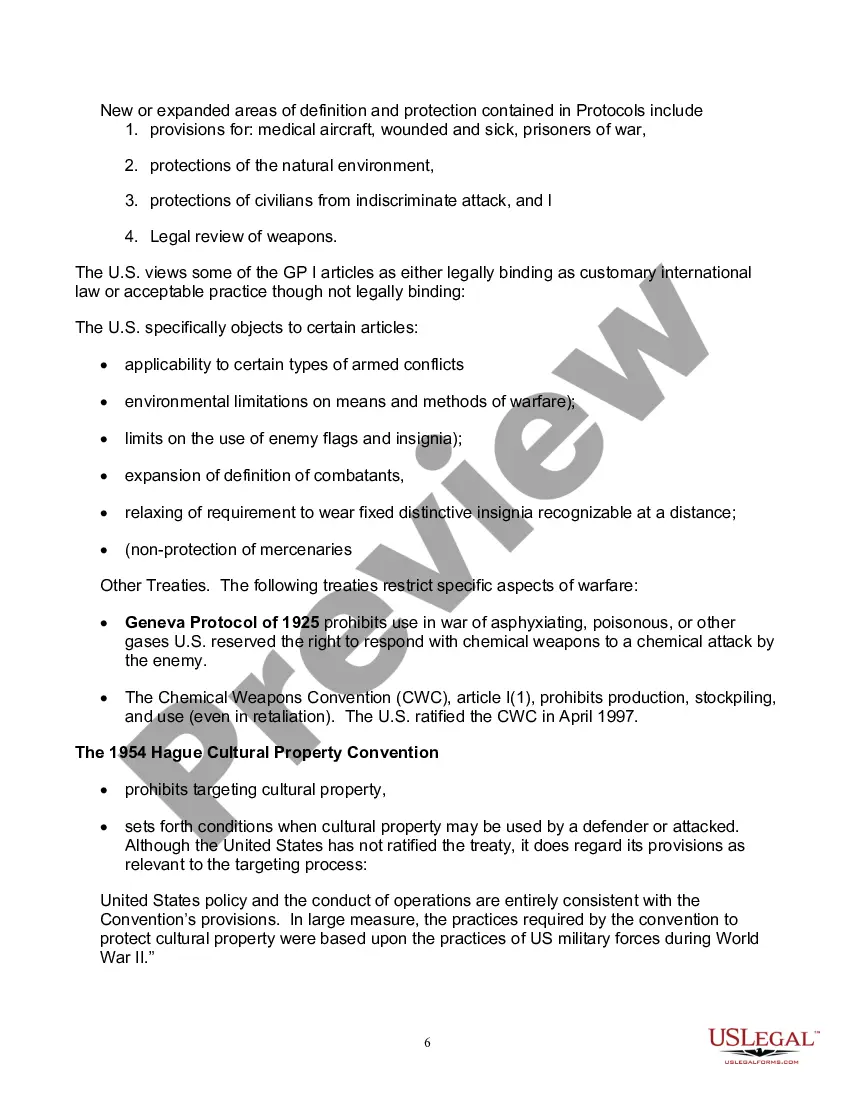
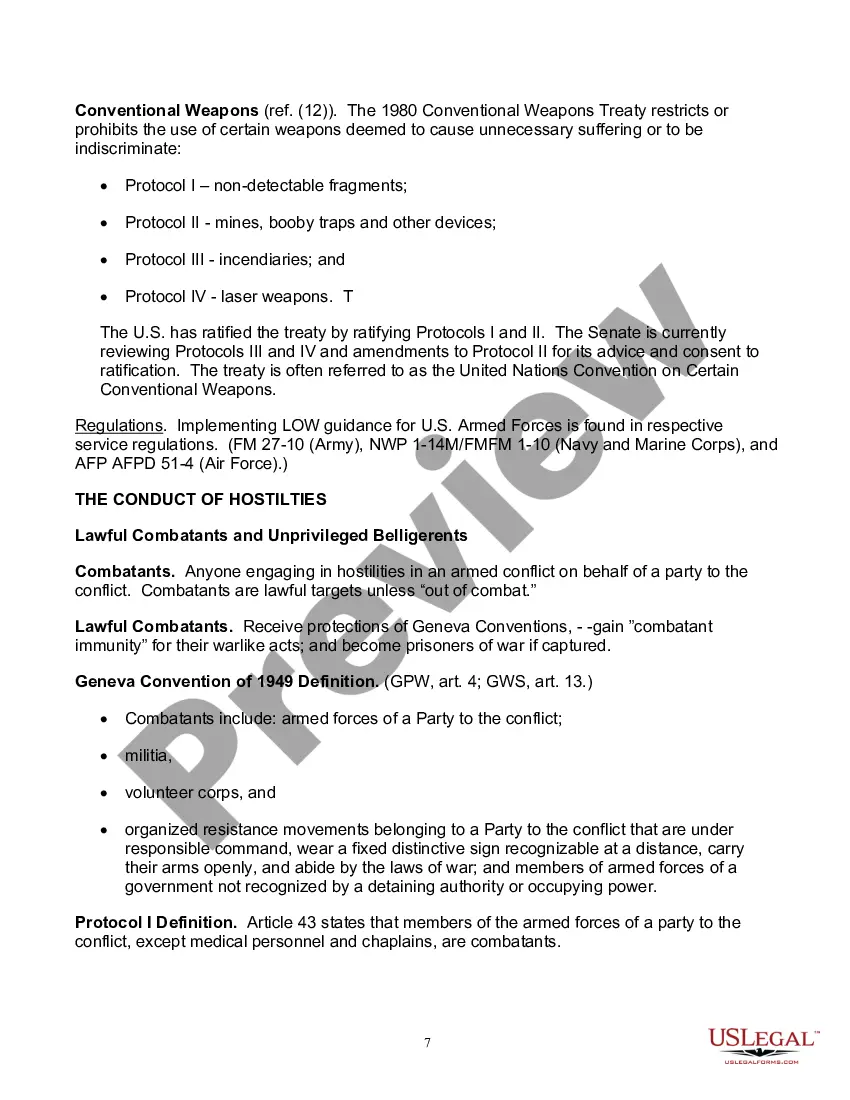
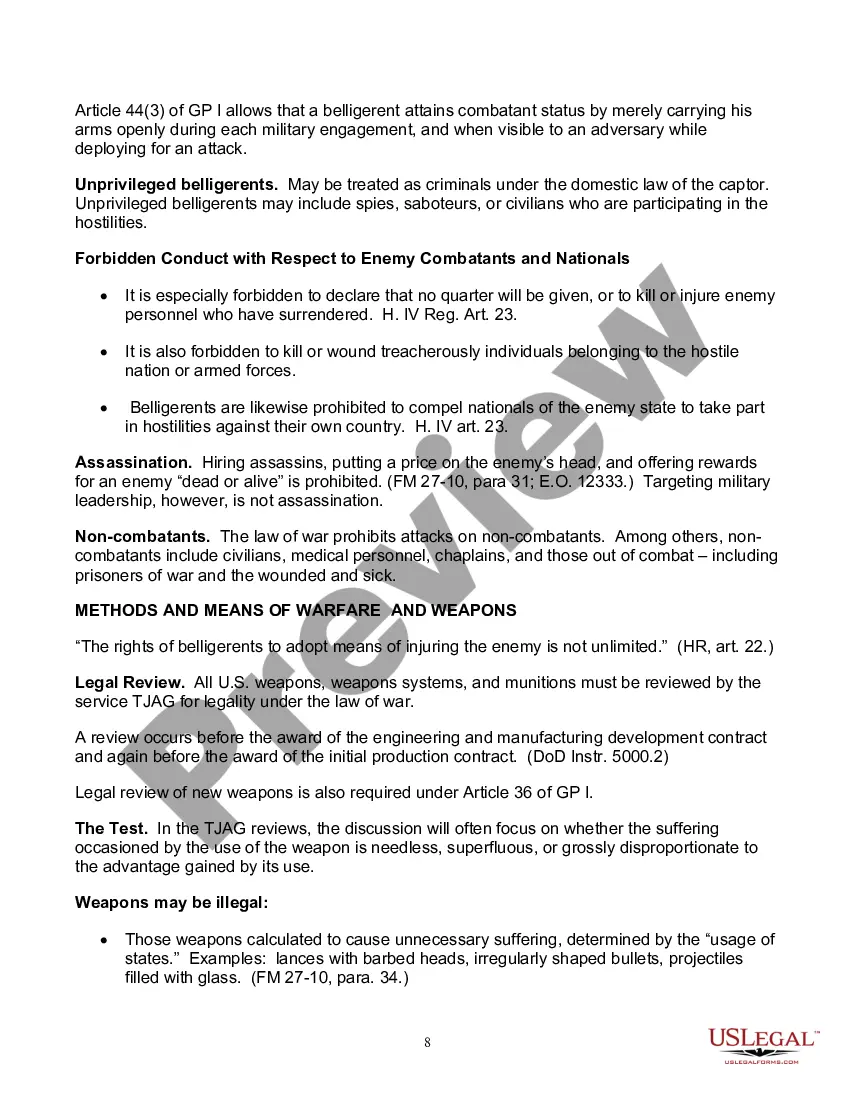
All personnel must be aware of the basic rules of the law of armed conflict, including the practical application of the principles of military necessity, proportionality, distinction and humanity.
The law of armed conflict is a branch of international law, the law that States have agreed to accept as binding upon them in their dealings with other States. As well as governing relationships between States, international law applies to the conduct of hostilities within a State.
Willful killing; • Torture or inhuman treatment, including biological experiments; Page 3 Congressional Research Service 3 • Willfully causing great suffering or serious injury to body or health; • Extensive destruction and appropriation of property not justified by military necessity and carried out unlawfully and ...
War crimes – serious violations of international humanitarian law that include wilful killings, direct attacks on civilians, torture, use of prohibited weapons, the murder or ill-treatment of prisoners of war or others who have been captured, surrendered or injured and crimes of sexual violence.
This branch of the law is aimed at protecting the victims of a conflict who are in the power of the adversary – civilians, or you, too, if you have been wounded or taken prisoner of war (POW).
Violations are serious, and are war crimes, if they endanger protected persons (e.g. civilians, prisoners of war, the wounded and sick) or objects (e.g. civilian objects or infrastructure) or if they breach important values. The majority of war crimes involve death, injury, destruction or unlawful taking of property.
Three interdependent principles—military necessity, humanity, and honor—provide the foundation for other derivative LOAC principles—most importantly, distinction and proportionality—as well as most of the treaty and customary rules of LOAC.
Principles of war – Selection and maintenance of the aim; maintenance of morale; offensive action; surprise; security; concentration of force; economy of effort; flexibility; co-operation; and administration.