Contract Law In Australia In Wake
Description



Get your form ready online
Our built-in tools help you complete, sign, share, and store your documents in one place.
Make edits, fill in missing information, and update formatting in US Legal Forms—just like you would in MS Word.
Download a copy, print it, send it by email, or mail it via USPS—whatever works best for your next step.
Sign and collect signatures with our SignNow integration. Send to multiple recipients, set reminders, and more. Go Premium to unlock E-Sign.
If this form requires notarization, complete it online through a secure video call—no need to meet a notary in person or wait for an appointment.
We protect your documents and personal data by following strict security and privacy standards.

Make edits, fill in missing information, and update formatting in US Legal Forms—just like you would in MS Word.

Download a copy, print it, send it by email, or mail it via USPS—whatever works best for your next step.

Sign and collect signatures with our SignNow integration. Send to multiple recipients, set reminders, and more. Go Premium to unlock E-Sign.

If this form requires notarization, complete it online through a secure video call—no need to meet a notary in person or wait for an appointment.

We protect your documents and personal data by following strict security and privacy standards.
Looking for another form?








Form popularity
FAQ
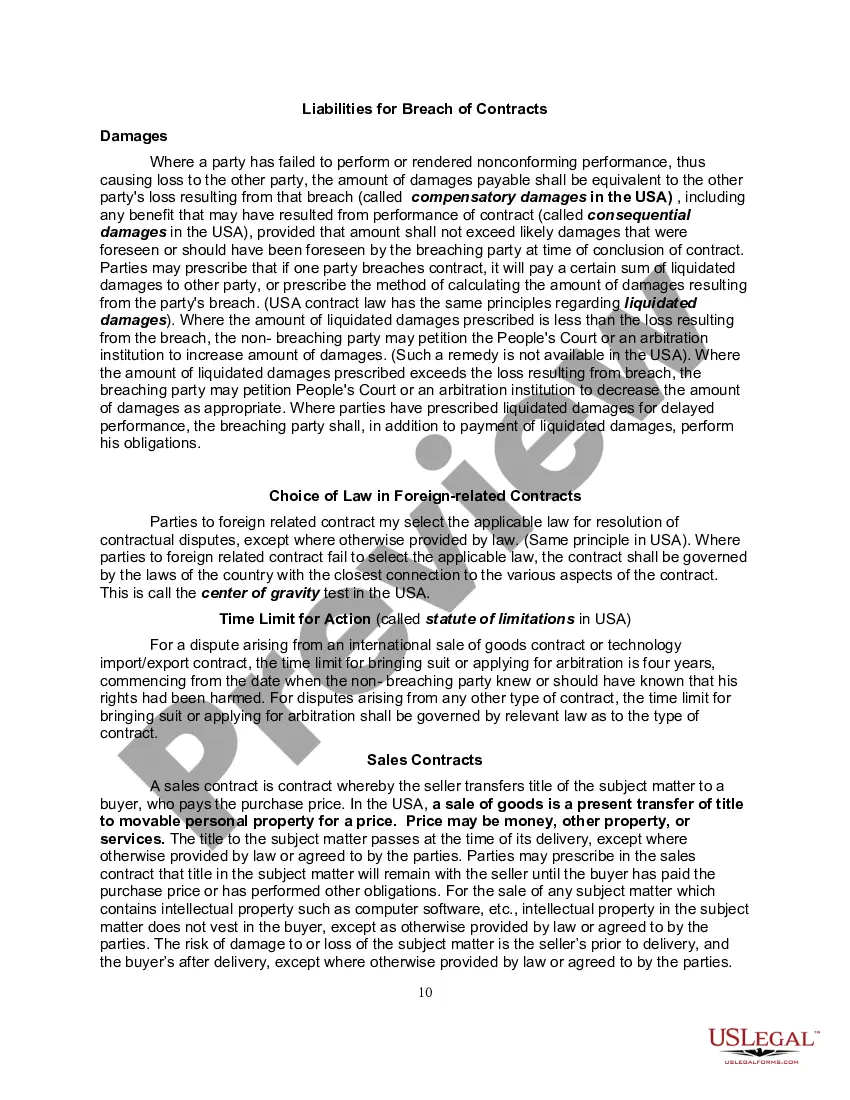
Australian contract law is based on the English common law, rather than on any codified or statute law. The basic principle of Australian contract law is freedom of contract, under which parties are at liberty to strike whatever bargain they choose.
In Australia contract law is primarily governed by the 'common law', but increasingly statutes are supplementing the common law of contract - most notably, but certainly not exclusively, in the area of consumer protection.
In order for a contract to be valid, there must be a meeting of the minds on all of the essential elements of the contract, including the offer, acceptance, consideration, capacity, and legality. If there is no meeting of the minds on any of these elements, the contract may be void or unenforceable.
4 Sources of Contract Law. There are four basic sources of contract law: the Constitution, federal and state statutes, federal and state case law, and administrative law.
First, to become a contract attorney, one must earn a bachelor's degree and graduate with good grades. It is recommended, but not required, to earn a degree in a legally-related field, such as criminal justice or political science. Before applying for law school, you must take the LSAT and get a good score.
Elements of common law contracts That the offer was accepted; That there was consideration given (most commonly a monetary amount); There was an intention to be bound by contract; The parties agree on the same thing – mutuality; The parties were legally capable of reaching an agreement – capacity; and.
There are two main sources of law in Australia, case law or common law, based on the decisions of judges in the superior courts, and legislation, the law made by Parliament.
Australian contract law is based on the English common law, rather than on any codified or statute law. The basic principle of Australian contract law is freedom of contract, under which parties are at liberty to strike whatever bargain they choose.
In the context of contracts, acceptance refers to one person's compliance with the terms of an offer made by another. Acceptance is judged objectively, but can either be expressly stated or implied by the offeree's conduct.
Acceptance must be unambiguous, have no conditions attached to the acceptance and can be verbal or given in writing. Acceptance is a key element of a binding contract in Australia. This article looks at what acceptance means, how it happens, and why it matters in Australian contract law.
