Contract Law For Construction In New York
Description




Get your form ready online
Our built-in tools help you complete, sign, share, and store your documents in one place.
Make edits, fill in missing information, and update formatting in US Legal Forms—just like you would in MS Word.
Download a copy, print it, send it by email, or mail it via USPS—whatever works best for your next step.
Sign and collect signatures with our SignNow integration. Send to multiple recipients, set reminders, and more. Go Premium to unlock E-Sign.
If this form requires notarization, complete it online through a secure video call—no need to meet a notary in person or wait for an appointment.
We protect your documents and personal data by following strict security and privacy standards.

Make edits, fill in missing information, and update formatting in US Legal Forms—just like you would in MS Word.

Download a copy, print it, send it by email, or mail it via USPS—whatever works best for your next step.

Sign and collect signatures with our SignNow integration. Send to multiple recipients, set reminders, and more. Go Premium to unlock E-Sign.

If this form requires notarization, complete it online through a secure video call—no need to meet a notary in person or wait for an appointment.

We protect your documents and personal data by following strict security and privacy standards.
Looking for another form?







Form popularity
FAQ
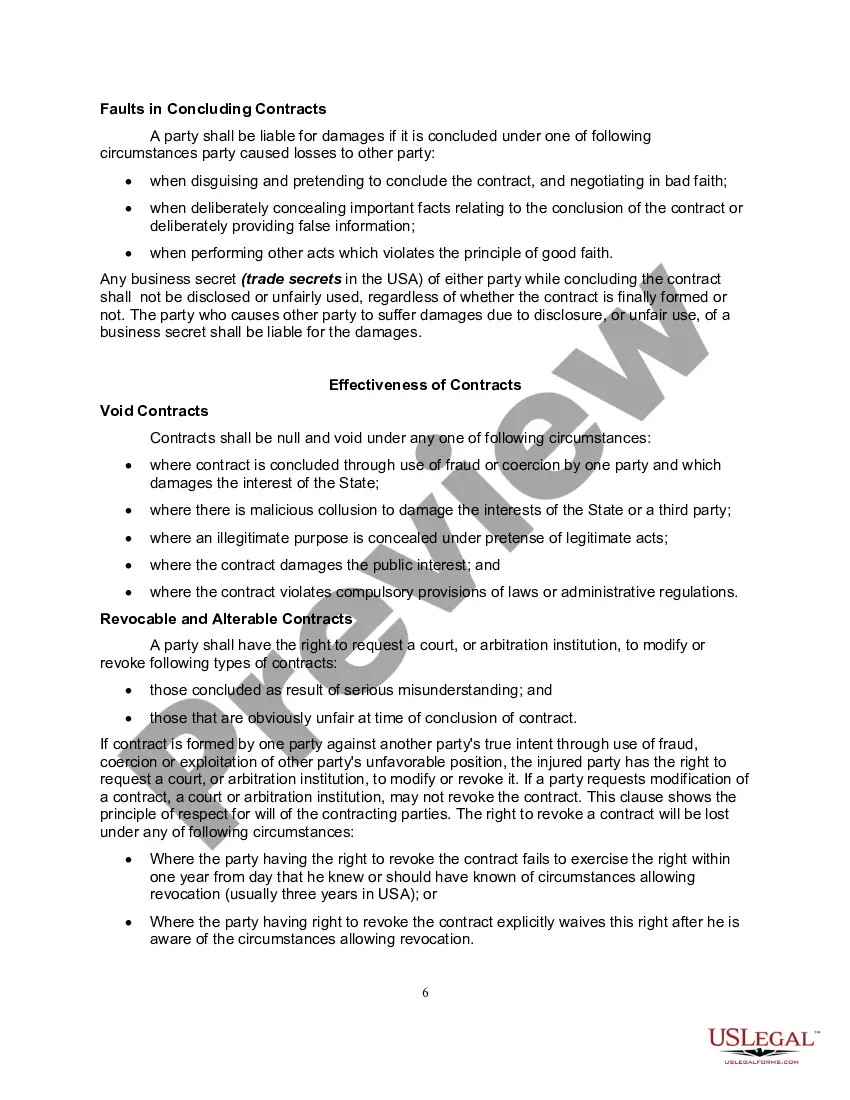
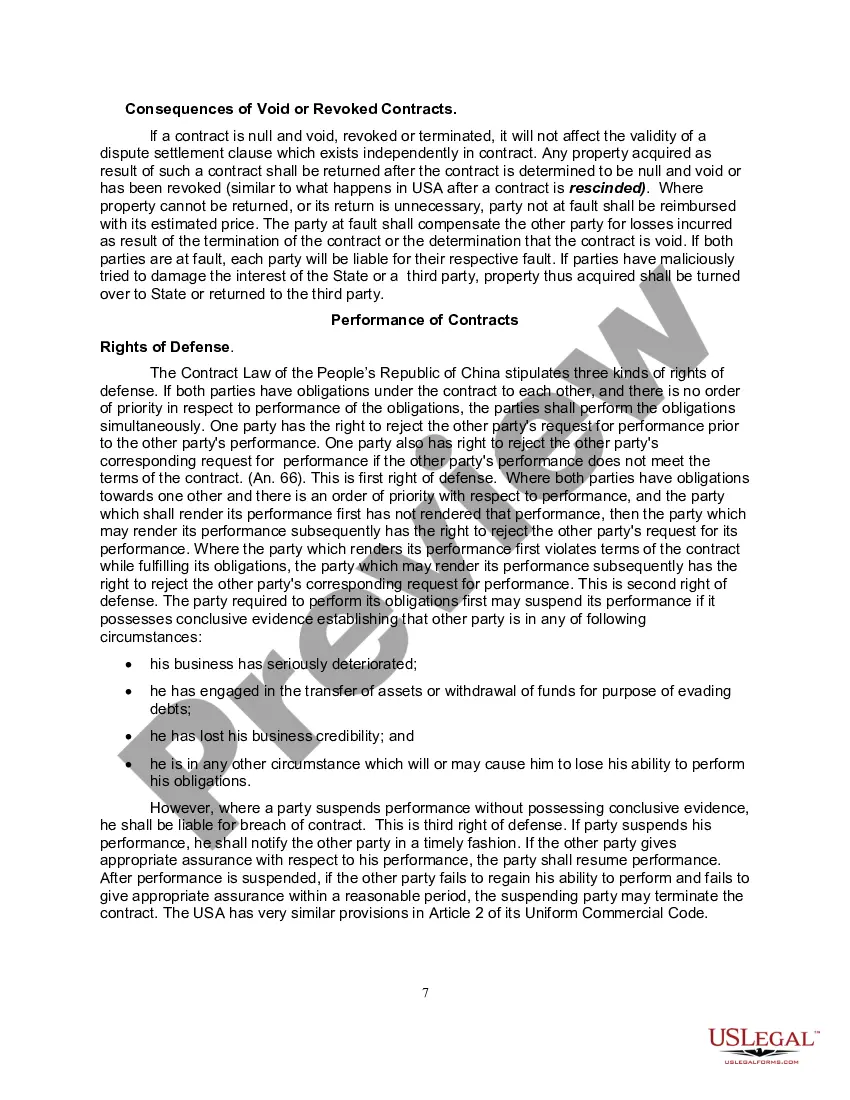
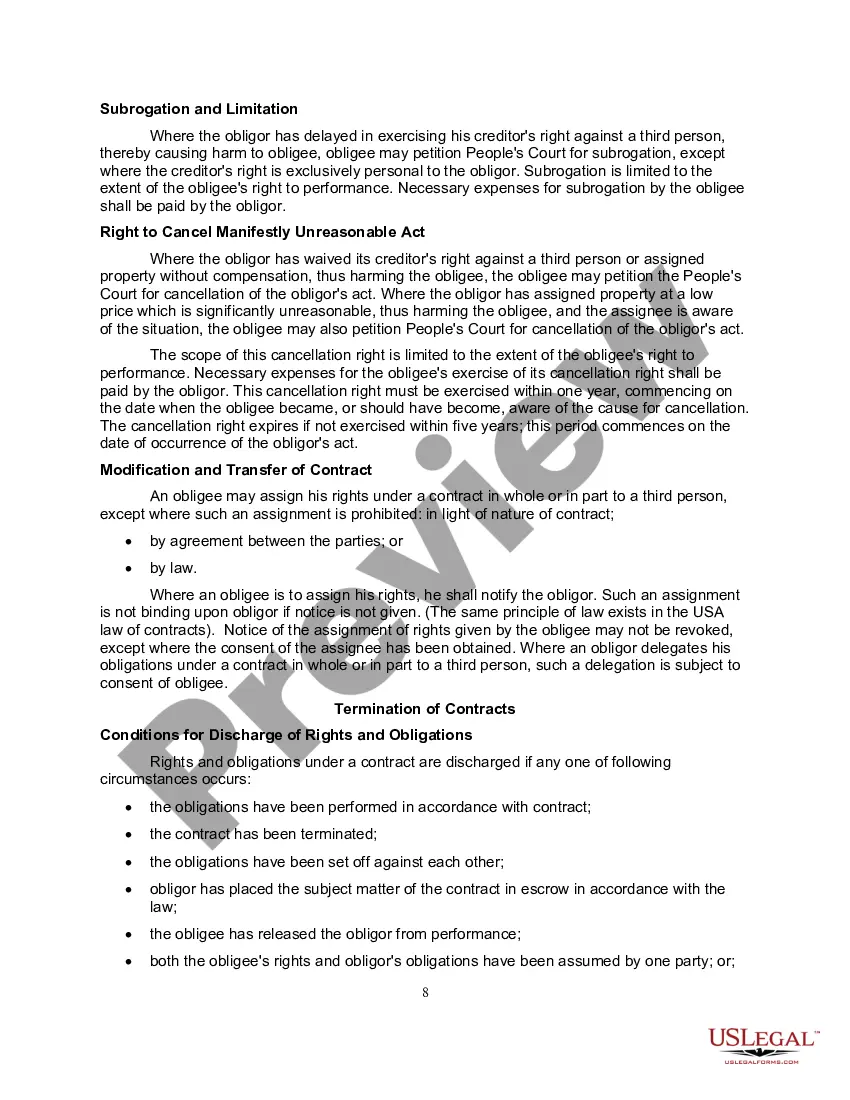
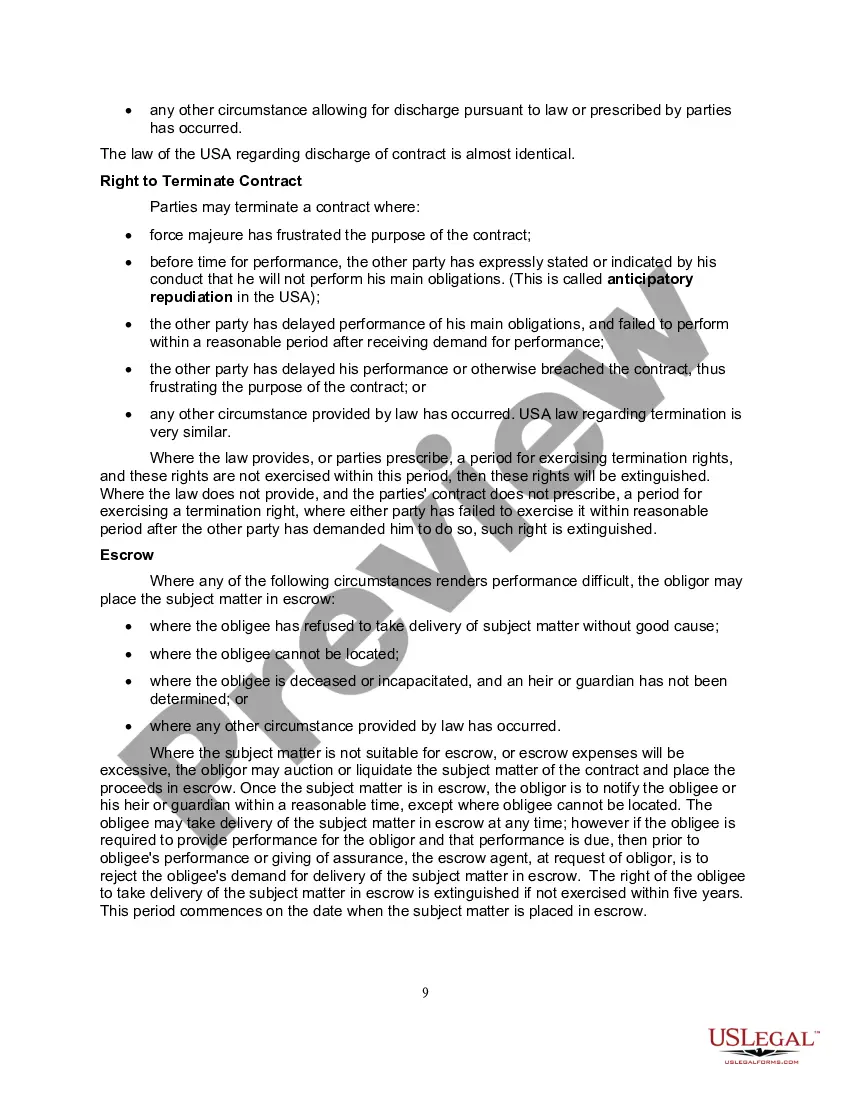
Contract Formation Offer and Acceptance – one party must make a clear and definite offer, and the other party must accept that offer, clearly and definitely. Exchange Something of Value – also known as “Consideration.” Each party must promise or provide something of value to the other party;
Lesson Summary. A contract is a legal agreement between two or more parties in which they agree to each other's rights and responsibilities. Offer, acceptance, awareness, consideration, and capacity are the five elements of an enforceable contract.
And even though contracts are infinitely varied in length, terms, and complexity, all contracts must contain these six essential elements. Offer. Acceptance. Awareness. Consideration. Capacity. Legality.
These also vary by state. In California, the statute of repose is four years for most defects, but 10 years for latent defects (those that aren't observable right away, such as a faulty foundation). In Georgia, the statute of repose is eight years for all claims related to design or construction of the building.
Call 311 or 212-NEW-YORK (212-639-9675) for help. To file a consumer complaint about a home improvement contractor working on residential property, use the Home Improvement Contractor Complaint page.
A foreclosure of a mechanic's lien must be filed while the mechanic's lien is still valid, meaning you have to file the foreclosure action within a year of filing the mechanic's lien. You must file a breach of contract or unjust enrichment lawsuit within six years.
That contract must include specific information about your rights and responsibilities. In addition, any changes made to that contract must be in writing, be legible, be easy to understand, and inform you of your rights to cancel or rescind the contract.
The one-year warranty is for claims of shoddy workmanship; two years, for defects in systems like plumbing, electrical or temperature regulation and six years for structural defects.
As the law is currently written, design professionals and contractors in New York are subject to claims for an indefinite period of time. After 10 years a claimant must serve a notice, but this could be 20, 30, 50, or more years after the project is completed.
NYC contractors need to meet these requirements to operate: General Liability Insurance: At least $1 million per occurrence, $2 million aggregate. Workers' Compensation Insurance: Required for contractors who have employees. Surety Bond: Necessary for specific licenses (such as general contractors demolition).
