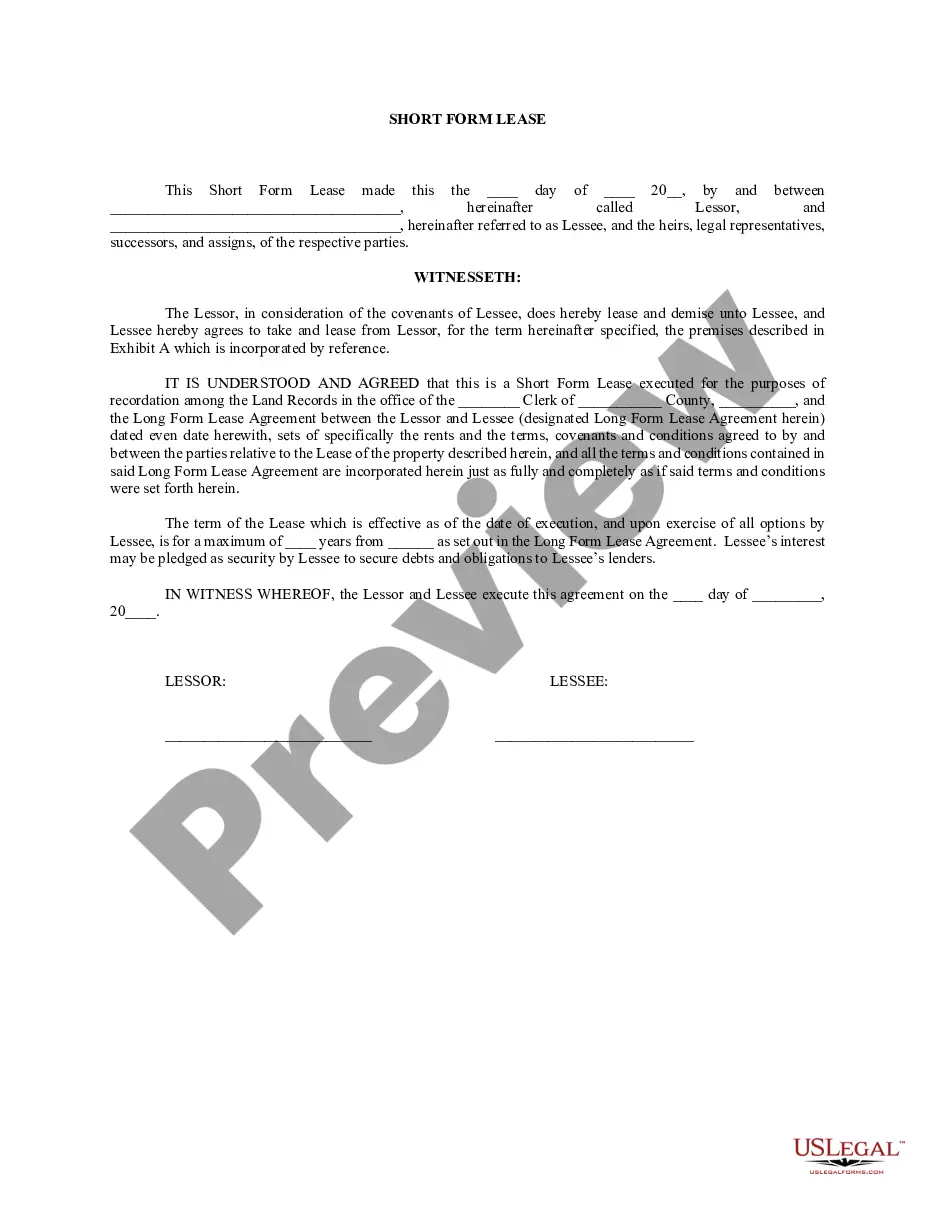
Contract Law In Hindi In Houston
Description



Get your form ready online
Our built-in tools help you complete, sign, share, and store your documents in one place.
Make edits, fill in missing information, and update formatting in US Legal Forms—just like you would in MS Word.
Download a copy, print it, send it by email, or mail it via USPS—whatever works best for your next step.
Sign and collect signatures with our SignNow integration. Send to multiple recipients, set reminders, and more. Go Premium to unlock E-Sign.
If this form requires notarization, complete it online through a secure video call—no need to meet a notary in person or wait for an appointment.
We protect your documents and personal data by following strict security and privacy standards.

Make edits, fill in missing information, and update formatting in US Legal Forms—just like you would in MS Word.

Download a copy, print it, send it by email, or mail it via USPS—whatever works best for your next step.

Sign and collect signatures with our SignNow integration. Send to multiple recipients, set reminders, and more. Go Premium to unlock E-Sign.

If this form requires notarization, complete it online through a secure video call—no need to meet a notary in person or wait for an appointment.

We protect your documents and personal data by following strict security and privacy standards.
Looking for another form?






Form popularity
FAQ
A contract is an agreement between parties, creating mutual obligations that are enforceable by law. The basic elements required for the agreement to be a legally enforceable contract are: mutual assent, expressed by a valid offer and acceptance; adequate consideration; capacity; and legality.
A contract is created at law when there is a mutual exchange of promises upon reasonably understandable terms and conditions. A contract does not have to be reduced to writing in order to be enforceable; however, for the purposes of this manual, the term contract is intended to mean a written form of communication.
Contracts only need (1) a meeting of the minds as to the terms, and (2) exchange of goods and/or services which each party considers to have some non-zero value (called “consideration”). So, yes, you can write a contract for yourself. You don't need an attorney.
There are three essential components of any contract: the offer, the acceptance, and the consideration. If all three of these characteristics aren't present, a document is not considered a contract.
Contract Law 101 A contract is an agreement between two parties that creates an obligation to perform (or not perform) a particular duty.
For example, An agreement to sell a radio set may be a contract but an agreement to go to see a movie may be a mere agreement and not enforceable by law. This contract is a bilateral transaction between two or more person.
An agreement is a promise or commitment given by one party to another party. It includes an offer that is made by one person and accepted by the other person. In simple words, an agreement happens when an offer is made by one person and accepted by another person. It consists of two or more parties.
How To Make A Legal Contract Without A Lawyer Can I Create My Own Contract? The short answer is yes. Write down all the details. Specify performance standards. Include a termination clause. Define key terms. Utilize contract templates. Additional Considerations Include. What App Can I Use To Create A Contract?
7 Essential Elements of A Contract Offer. For there to be a contract, there must first be an offer by one party and an acceptance by the other. Acceptance. Acceptance is the agreement to the specific conditions of an offer. Consideration. Intention to create legal relations. Authority and capacity. Certainty.
Simply put, yes, you can write your own legal contract. You just need to be sure to include key components such as an offer, an acceptance, an exchange of value, and the willingness of both parties to enter into a contract. Legally binding contracts can be done both in writing or orally.